Moderator’s Note: This has been posted on FAR twice, originally on April 7th, 2014 and then again on July 15, 2022. We are posting this a third time because of its importance. It is a piece of history that helps to illustrate how we got to where we finds ourselves today.
During the past week I attended a Los Angeles premiere of a new documentary Anita: Speaking Truth to Power (Dir: Freida Lee Mock USA, 2013). The screening was sold out and I had great seats saved for me– sitting with a friend who works at Samuel Goldwyn, the distributor of this fine film.
In 1991, Anita Hill provided testimony she hoped would serve to dissemble the nomination of Clarence Thomas as a Supreme Court justice. Although the vote would end up being close (52-48) Hill’s testimony did not serve to dissuade the decision — Clarence Thomas’ nomination was confirmed and he was appointed to a life term on the Supreme Court four days after Hill’s testimony concluded. Here is an outline of the debate.
Northrop Frye (1912-1991), a Canadian literary critic, is probably best known for his book THE GREAT CODE: THE BIBLE AND LITERATURE (1983). In it, he demonstrates how the Bible is foundational for our understanding of Western literature, a body of work replete with Biblical allusions.
Today, most of us are not familiar enough with the Bible to appreciate where many literary themes take root. We fail to see how its stories—gathered over centuries—relate to us. Not only does Western literature mine from Biblical text, our lives as we experience them mirror much of Biblical story and narrative.
I was raised on the Protestant Bible. To this day, I experience the world through Biblical story. There is nothing sacrosanct (to me) about the familiar text. The Bible is not unique.
This was originally posted on January 19. 2020. An ‘Update Note’ has been added at the end of the post.
Elizabeth Cunningham
When I was a child in the 1950s we often played cowboys and Indians. There is a photograph of my brother and me in no doubt inauthentic costume complete with feathered headdress. In kindergarten I named myself Morning Star. (I just googled and see that I must have gotten the name from the 50s television series Brave Eagle, the first with an indigenous main character. Morning Star is the female lead.)
When I was a teenager, my aunt came across a privately printed book The Gentleman on the Plains about second sons of English aristocracy hunting buffalo in western Iowa. My great grandfather accompanied them as their clergyman. I wish I could find that book now to see how this enterprise was presented. In my adolescent mind these “gentlemen” looked like the local foxhunters in full regalia. On opening morning of foxhunt season an Episcopal clergyman (like my father) was on hand in ecclesiastical dress to bless the hunt and then invited to a boozy breakfast.
When I offered to write the FAR post for Thanksgiving a month ago, I had no idea how difficult I would find that task to be. I suppose I had a different vision of what these days would be like. I had no idea how heartsick and wordless I would become in the wake of a second and even more bizarre and dangerous Trump presidency. It hardly feels like a time for celebrating a national holiday.
Thanksgiving in the United States and the colonies before has gone through several iterations – from the mythologized feast of the Puritan colonists in Plymouth, Massachusetts with the indigenous Wampanoag following the successful corn harvest – corn the Wampanoag had taught the Puritans how to plant after half of them had starved to death the previous winter; to George Washington’s Thanksgiving proclamation giving thanks for the successful ratification of the US Constitution; to Abraham Lincoln in 1863 acceding to Sarah Josepha Hale’s 36-year quest to establish Thanksgiving as a national holiday — “to heal the wounds of the nation.” Goddess knows we could use that now, but it seems farther out of reach than ever.
Lesser known is the proclamation of a day of thanksgiving by the Massachusetts Bay Company to celebrate their defeat of the Pequot nation following the Pequot Wars of 1636-1638 in which most of the Pequot peoples were killed or enslaved, giving rise to many indigenous peoples observing Thanksgiving as a National Day of Mourning.
Find some pine trees and a wide rock in the sun. Settle down and feel gratitude curl around your shoulders. Listen to the wind sense that there is sorrow too in this place, deep and old, threaded through the lines of sun slices of shadows. It tells of what has been lost, what has been stolen, of silenced stories, and of fracturing. Make a vow, silent and sacred, to do what you can, to rebuild the web to reweave the fabric. Lie on your back in the pine needles, feel your body soften into the ground and become still. Allow yourself to feel held, heavy bones and soft skin becoming part of the land. Wonder how many of your ancestors kept other people from becoming ancestors themselves. Watch the sunlight making tiny rainbows through your eyelashes and pines. Find a pretty rock. Don’t take it. Leave it where it belongs, on the land that gave it birth. Go home. Keep your promise.
Archy the Cockroach and Mehitabel the Cat were introduced to the world in 1916 by Don Marquis, a columnist for the New York Evening Sun. Marquis was more than a mere columnist; he was a social commentator and satirist admired by nearly every famous writer of the first quarter of the 20th century. Franklin P. Adams, for example, said Marquis was “far closer to Mark Twain than anybody I know” (see note).
Find some pine trees and a wide rock in the sun. Settle down and feel gratitude curl around your shoulders. Listen to the wind sense that there is sorrow too in this place, deep and old, threaded through the lines of sun slices of shadows. It tells of what has been lost, what has been stolen, of silenced stories, and of fracturing. Make a vow, silent and sacred, to do what you can, to rebuild the web to reweave the fabric. Lie on your back in the pine needles, feel your body soften into the ground and become still. Allow yourself to feel held, heavy bones and soft skin becoming part of the land. Wonder how many of your ancestors kept other people from becoming ancestors themselves. Watch the sunlight making tiny rainbows through your eyelashes and pines. Find a pretty rock. Don’t take it. Leave it where it belongs, on the land that gave it birth. Go home. Keep your promise.
During the past week I attended a Los Angeles premiere of a new documentaryAnita: Speaking Truth to Power (Dir: Freida Lee Mock USA, 2013). The screening was sold out and I had great seats saved for me– sitting with a friend who works at Samuel Goldwyn, the distributor of this fine film.
In 1991, Anita Hill provided testimony she hoped would serve to dissemble the nomination of Clarence Thomas as a Supreme Court justice. Although the vote would end up being close (52-48) Hill’s testimony did not serve to dissuade the decision — Clarence Thomas’ nomination was confirmed and he was appointed to a life term on the Supreme Court four days after Hill’s testimony concluded. Here is an outline of the debate.
I remember watching the hearings in 1991 at a friend’s house in Sacramento, CA where I was couch-surfing with another friend while we were in Sacramento from Los Angeles to protest for gay rights—to speak our truth to power. I remember being amazed that she was doing this—and that it was being televised. We were glued to the set before we went off to the protest we were attending.
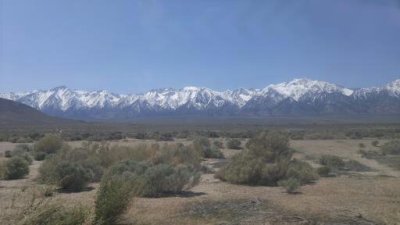
A couple of months ago I did a day trip to visit the historical site of one of the 10 internment camps which were formed due to Executive Order 9066 issued on February 19, 1942. Manzanar Relocation Camp is located between the Sierra Nevadas and the Owens Valley. Manzanar held over 11,070 Japanese Americans from 1942–1945. EO 9066 forced 120,000 American citizens to leave everything and become in all accounts prisoners; two-thirds of those were native-born American citizens. This executive order largely focused on people living on the West Coast of the United States to eliminate the possible threat of a secondary attack. They were relocated far inland and the majority of the camps were outside of the West Coast. While this was done in the 1940s, our current climate is looming to make it seem like there are forces in this world that are attempting to perform different forms of subjugation and confinement.
Manzanar, in the middle of nowhere California (and I mean nowhere—it takes over three hours to drive the more than 230 miles from Los Angeles and it is not directly accessible from Central California), is divided by the great Sierra Nevadas. This is one of the things that struck me when I arrived at Manzanar—the stark beauty and ruggedness of the mountains, the immense flat lines of the valley, and the complete isolation. Due to being so close to the Nevadas and the desert valley conditions, the weather can be extreme. Many of the detainees documented the harshness of the weather conditions, from the high winds to the stark cold at night, and the barely adequate buildings to shelter them from it.
Moderator’s note: This marvelous FAR site has been running for 10 years and has had more than 3,600 posts in that time. There are so many treasures that have been posted in this decade that they tend to get lost in the archives. We have created this column so that we can all revisit some of these gems. Today’s blogpost was originally posted July 1, 2018. You can visit the original post here to see the comments.
I bet almost no one knows this secret: the United States is being watched over by two goddesses! One of them stands on top of the Capitol dome in Washington, D.C. The other stands on an island in New York harbor.
The goddess standing above our congressional building is named Libertas, or Freedom. She’s a Roman civic goddess whose sisters are Concordia and Pax. Although the Romans hardly ever experienced freedom, civic harmony, or peace, they always kept their eyes on the possibilities. Libertas was sometimes merged with Jupiter, sometimes with Feronia, who was originally an Etruscan or Sabine goddess of agriculture or fire. In Rome, Feronia became the goddess of freed slaves. Libertas is shown on Roman coins as a matron in flowing dress and wearing either a wreath of laurel leaves or a tall pilleus, which is called a “liberty cap” and looks like a witch hat without the brim. And there’s also a bird—is it a raven?? She holds either a liberty pole (vindicta) or a spear, and in some paintings of her (she was a popular subject in the 19th century) there is a cat at her feet.
Because the late 18th century is sometimes referred to as the Augustan Age (for classicism in architecture, literature, and art and named after the first Roman emperor, Caesar Augustus), the Roman Libertas became Lady Liberty during the American Revolution. To celebrate the repeal of the Stamp Act in 1766, Paul Revere created an obelisk with an image of Lady Liberty on it, and a short time later, Tom Paine addressed her in his poem, “The Liberty Tree.” An enormous bronze statue of Lady Liberty was commissioned in 1855 for the top of the Capitol building, and she was hoisted up there in 1863, where she stands, hardly visible, to this day.
Here’s my idea. This FAR community has lots of power. We—and at least two thirds of the U.S. population—are very unhappy with the antics of the Lyin’ King and his court…excuse me, the executive and legislative branches of our national government. So let’s visualize Libertas coming to life. Watch her stomp her heavy bronze feet so hard she breaks a hole in the top of the dome. Watch her fly down into the main lobby of the Capitol. Now she turns in one direction and stalks into the Senate. “Gentlemen and Ladies,” she begins, “you were sent here to do a job. You’re not doing your jobs. Work together! Learn to compromise. Stop talking so much. Get to work!” And then she marches into the House. “Why are you here?” she asks. “And why are you here only three or four days a week, and why aren’t you working for the benefit of all the citizens of the United States?” I suspect that Libertas, who is 19 feet 6 inches tall and weighs approximately 15,000 pounds, could indeed put a scare into Congress, not to mention all the lobbyists. Remember, she also carries that spear. And she no doubt knows how to use it.
Our second national goddess? “Liberty Enlightening the World,” whom we call the Statue of Liberty, was a gift from France to the U.S. circa 1886 on the occasion of our centennial. Designed by Frederic-Auguste Bartoldi and Alexandre Eiffel (who also built a famous tower in Paris), Lady Liberty holds a tabula ansata (a tablet evoking the law) in one arm and with her other hand raises a torch, a common symbol of truth and purification through illumination. She wears a crown of solar rays similar to the crown worn by the Colossus of Rhodes, one of the seven wonders of the ancient world.
For almost a century and a half, Liberty has welcomed immigrants to our Atlantic shore. Those immigrants were the grandparents and great grandparents of nearly all of us. Now let’s visualize Liberty taking action. Goddesses can perform magic; let’s visualize Liberty multiplying herself into 10,000 Liberties, and then let them travel to Texas, New Mexico, Arizona, and California and—you guessed it—let them stand facing south. Let these 10,000 goddesses with torches of purification replace the Xenophobe-in-Chief’s wall/fence/border army. Let’s ask Liberty to welcome people into the U.S. Because she’s smart (and the flames of that torch can reveal a lot) and there are indeed drug smugglers traveling in addition to men, women, and children who are coming for sanctuary or safety or work, let her use her torch to reveal the small proportion of criminals trying to sneak in. And let her welcome and protect everyone else and keep families together. (Maybe she could send all the ICE agents off hunting coyotes, who are no doubt smarter and more humane than they are.)
Here is the full text of “The New Colossus” the poem by Emma Lazarus that Lady Liberty proclaims to the world. Maybe our senators and representatives should read it—for the first time, I bet. They should pay attention to what it says and obey the words and principles of this goddess.
Not like the brazen giant of Greek fame, With conquering limbs astride from land to land; Here at our sea-washed, sunset gates shall stand A mighty woman with a torch, whose flame Is the imprisoned lightning, and her name Mother of Exiles. From her beacon-hand Glows world-wide welcome; her mild eyes command The air-bridged harbor that twin cities frame. “Keep, ancient lands, your storied pomp!” cries she With silent lips. “Give me your tired, your poor, Your huddled masses yearning to breathe free, The wretched refuse of your teeming shore. Send these, the homeless, tempest-tost to me, I lift my lamp beside the golden door!”
Let us visualize both of these American goddesses doing their work and protecting the hard-won rights of everyone who lives in the United States.
BIO:BIO:Barbara Ardinger, Ph.D. (barbaraardinger.com), is the author of Secret Lives, a novel about crones and other magical folks, Pagan Every Day, a unique daybook of daily meditations, and other books. She really enjoys writing her monthly blogs for FAR. Her work has also been published in devotionals to Isis, Athena, and Brigid. Barbara’s day job is freelance editing for people who have good ideas but don’t want to embarrass themselves in print. To date, she has edited more than 400 books, both fiction and nonfiction, on a wide range of topics. She lives in Long Beach, California, with her rescued calico cat, Schroedinger.







 Feminism and Religion