

 A while back I gave a talk on feminist trinitarian theology to an audience of mostly progressive academics, including feminist and womanist scholars of religion. In the course of analyzing what I called the ‘trinitarian imaginary’ in Christianity and its often-patriarchal and masculinist forms, I suggested that transforming that imaginary might require recognizing the hypothetical character of theological statements until the eschaton, a theme that has been developed in depth by a German theologian named Wolfhart Pannenberg. Now, Pannenberg is decidedly neither a feminist nor a progressive theologian. To name just one example: in his three-volume Systematic Theology, his few explicit references to feminist or female theologians include a brief mention of Mary Daly (volume 1, p. 262) in connection with a critique of feminist theologians for projecting (!) masculinity into God in their readings of divine fatherhood, and a critique of Valerie Saiving and Susan Nelson Dunfee’s positions on the traditional Christian doctrine of sin as pride (volume 2, p. 243). So when I mentioned Pannenberg as a resource in my talk, one of the feminist scholars in the audience audibly gasped and flinched – it became clear in the Q&A that she had significant concerns about whether I could count as a feminist at all. After all, to mine someone like Pannenberg for constructive feminist theological work might imply an endorsement of his other positions, or might entail taking over aspects of his system that would taint my own project in anti-feminist directions – all legitimate concerns. Continue reading “When Feminists Disagree by Linn Marie Tonstad”
Category: Black Feminism
Living by an Ethic of Love by Elise M. Edwards
 If we base our love ethic in the love of God, we will be committed to the presuppositions that everyone has the right to be free and to live fully and well. We will not try to deny others access to safety, food, shelter, and companionship, nor prevent them from obtaining opportunities for growth and outlets for self-expression because of their gender, sexual orientation, race, ethnicity, class or cost to ourselves.
I enjoy Valentine’s Day, and this has been the case for many years, whether I have been in a relationship or not. I think romantic love needs to be celebrated, even if it is at the urging of greeting card companies, chocolatiers, florists and jewelers. Of course, those of us who are even the least bit critical of consumerism and media propaganda will acknowledge that these companies try to convince us that we need to buy luxury items to demonstrate our love to the important individuals in our lives. When our consumption of these goods hurts other people in our world and our planet (as in the consumption of blood diamonds or flowers that have been flown around the world, and thus contributing to environmental ills), we must recognize that they are not true reflections of love. This is not to say that the intent of the giver or recipient is untrue. I do want to challenge the predominance of these kinds of images of love, and provoke us to reflect on another way – an ethic of love rooted in the love of God. Continue reading “Living by an Ethic of Love by Elise M. Edwards”
Monthly Highlight: Emilie M. Townes
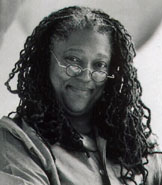
“In my teaching I want to get students excited about that notion of, you know, you’re not just here to get a Yale degree and have it on your diploma and be able to hang it on your wall…You should be here thinking about what kind of contributions can I make to society….What are you doing that helps enhance the lives of all of us, as opposed to (our) own little idiosyncratic research interests.” – – Emilie M. Townes
Emilie Townes is a pivotal person in the field of Womanist and Christian ethics as well as a foremother and pioneer in Womanist theology. Cornel West of Princeton University said:
“Emilie Townes is the towering womanist ethicist of our time….In this ice age of indifference and evasion, her powerful voice and viewpoint summon us. And we thank her for her vision and courage.”
At an opening address at the Convocation in 2005, Townes stated that there is a need to live in a “deep walking hope” that shapes lives “in ways that are not always predictable, not always safe, rarely conventional” and protests “with prophetic fury the sins of a world, and sometimes theological world views, that encourage us to separate our bodies from our spirits, our minds from our hearts, our beliefs from our actions.” Continue reading “Monthly Highlight: Emilie M. Townes”
Blessed Are The Organized, by Amy Levin
 It was a humid yet windy day in Broward County, South Florida. My long pants and sleeves were becoming hostile towards me as I proceeded to slip off my shoes, don my borrowed headscarf, and set up shop just outside the modest mosque in Pembroke Pines. I waited patiently for prayers to end, hoping that my “Register to Vote” sign was placed in optimal eyesight of the female worshippers as they exited the prayer hall. All of my hope to expand the Florida electorate to help re-elect President Barack Obama was bundled in my mix of clipboards, voter registration forms, pens, and volunteer sign-up sheets. Just moments after the Imam wrapped up the Friday afternoon prayers, two young women wearing full hijab sauntered out. “Oh, I’ve been meaning to register to vote,” one of them said. “Perfect.” Continue reading “Blessed Are The Organized, by Amy Levin”
When Music Touches Your Soul by Elise Edwards
 It’s incredibly liberating to have the co-mingled sensation of being elevated by aesthetic delight, affirmed by words that reflect the life experiences of you and your loved ones, and honored by another’s desire to relate to you. This type of liberation is spiritual.
Last month, I attended a Lalah Hathaway concert, the first live concert I think I’ve attended in about a year. For those of you who don’t know, Lalah Hathaway is an R&B singer and daughter of the late Donny Hathaway. It was my first time hearing her perform and the audience’s response to her artistry sparked some thoughts in my mind about authenticity, soul, and participation in the black church.
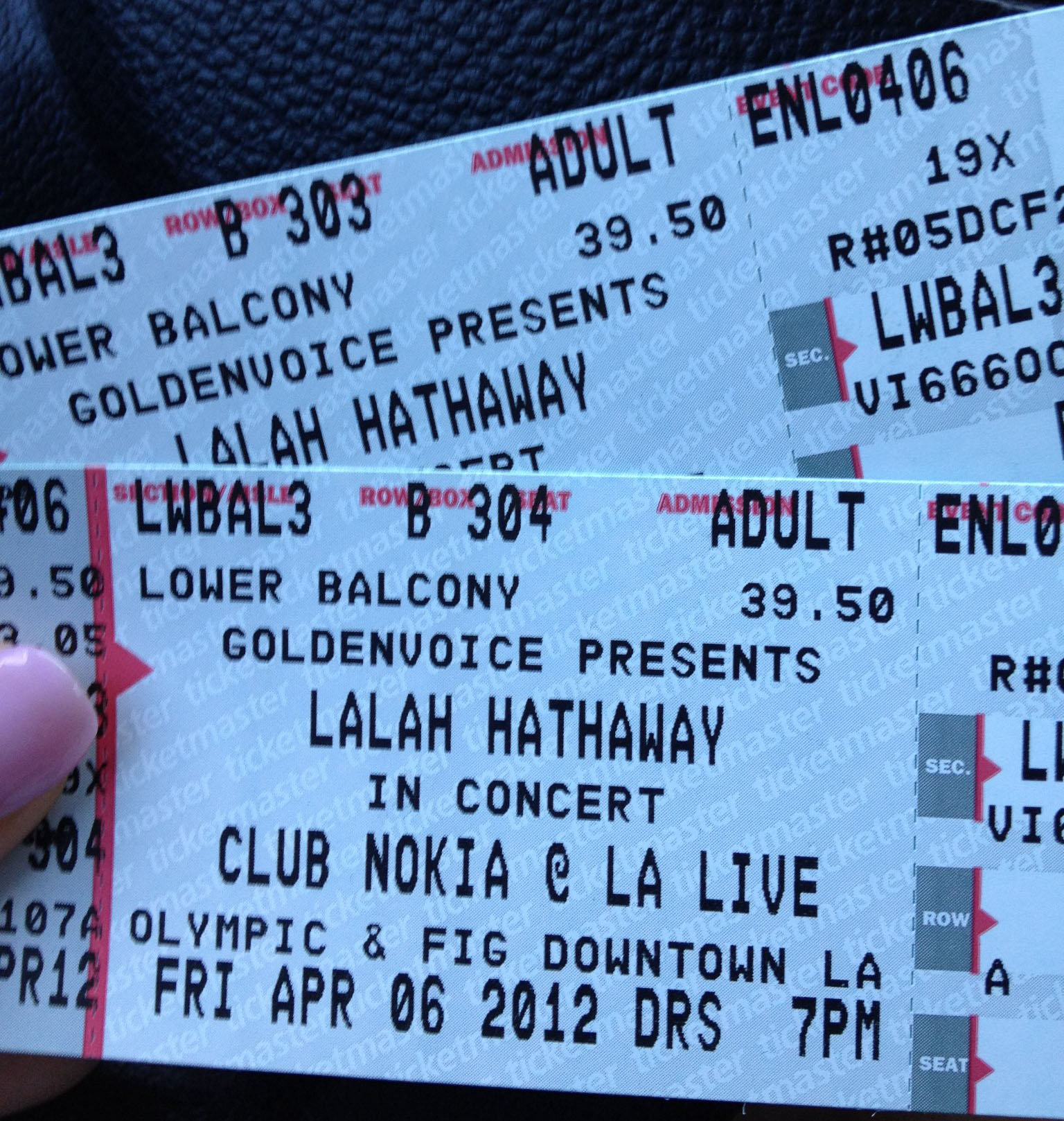 I should probably admit that my favorite genre of music is R&B/soul because of what its name suggests – the ability of the music to connect to the innermost parts of my being, the spirit inside of me that recognizes what is true. Whether they are speaking about joy or pain, love or loss, soul singers have a way of making me feel the authenticity of their souls conveyed through their music and lyrics. Because I agree with the feminist principle that the personal is political, I believe that feminists must take the time to recognize what is personally true for them and what is most real. This is so that feminists’ energies directed toward making the world a more just place can be sustained during times of struggle, and maintained with integrity, regardless of what sphere they’re located within. Soul music helps me remember who I am. Continue reading “When Music Touches Your Soul by Elise Edwards”
Get Your Laws off my Body! by Elise Edwards
After considering Virginia’s Transvaginal Utrasound Bill in light of the womanist critique, I wonder if religiously-motivated lawmakers considered that they alone do not have access to God’s intentions, but that the divine spirit is operative in a pregnant woman as well, would they be so willing to negate her moral agency?
On Tuesday, the senate in Virginia approved a law that would require women to get an external ultrasound before an abortion. This is a scaled-back version of an original bill that mandated transvaginal ultrasounds prior to abortions. According to this Washington Post article, opponents like Sen. Janet D. Howell describe the measure as “state rape,” since it is the state, not the woman and her doctor who decides that she must undergo this procedure requiring the insertion of a probe into the vagina. Although proponents of the bill say that it is designed to give women more information about a fetus’ gestational age and development, most would agree that it is ultimately intended to discourage the women from having an abortion. This is why bloggers like Kendra Hamilton believe that religion is the motivation behind this and the other 5 abortion-related bills introduced in the Virginia General Assembly connected to issues of women’s sovereignty over their bodies. Yet, as I heard about these bills, another religious response came to mind – one that expresses horror and condemnation of coercive practices regarding women’s childbearing. Continue reading “Get Your Laws off my Body! by Elise Edwards”
The Reclamation of Culture in Reality TV By Elise Edwards
In my academic life, I spend a lot of time thinking about issues of race, gender, religion and cultural production. In my free time, I watch a lot of tv. At times, the two interests converge, and I’m fortunate to have this community and forum to share the thoughts that come from it. A couple months ago, I started revising a paper I’d written a few years ago about the issue of cultural imperialism and in that process, I recognized that there had been a subtle shift in television programming that features black women. In the wide and ever-expanding reality tv genre, there are many shows that cast a black woman as a villain (the black bitch) or sexual object. But there are other shows that present alternative, positive images of black women as caring, capable, professional, and talented.[i] I’ve also noticed that several shows seemed to be overtly designed to combat the lack of positive images by celebrating the passions, skills, and abilities of women of color. I am encouraged to see black people claiming an active role in their own cultural production. The act of creating is self-affirming, and when used by marginalized peoples, it can be a source of empowerment to counter their mistreatment. In Art on My Mind: Visual Politics, bell hooks states, “It occurred to me then that if one could make a people lose touch with their capacity to create, lose sight of their will and their power to make art, then the work of subjugation, of colonization, is complete. Such work can only be undone by acts of concrete reclamation.” [ii] Continue reading “The Reclamation of Culture in Reality TV By Elise Edwards”
Why I Hated “Jumping the Broom”: Disappointing Depictions of African-American Women’s Agency By Elise Edwards
Elise M. Edwards is a Ph.D. candidate in Theology, Ethics, and Culture at Claremont Graduate University and registered architect in the State of Florida. She does interdisciplinary work in the fields of theology, ethics, and aesthetics, examining how they inform and shape each other and express the commitments of their communities.
This past spring, I thought it would be fun to spend a leisurely afternoon with a good friend, seeing the movie Jumping the Broom (now available for home viewing). The film features some of my favorite actresses, Angela Bassett and Loretta Devine, and I like going to movies that show African-American romances, families and friendships if they aren’t too stereotypical or offensive. My trusted Entertainment Weekly assured me that this would meet my criteria: “Yes, there really is a way to make a boisterous, dramatic comedy about African-American life better than Tyler Perry does….You’ll laugh — a lot — but you’ll also shed tears of recognition at this funny, salty, strife-torn look at the agony and ecstasy of family,” said critic Owen Gleiberman.
But after the opening scene, I knew it was not going to be a pleasant afternoon. Continue reading “Why I Hated “Jumping the Broom”: Disappointing Depictions of African-American Women’s Agency By Elise Edwards”
A Spirit of Competition By Elise M. Edwards
Elise M. Edwards is a Ph.D. candidate in Theology, Ethics, and Culture at Claremont Graduate University and registered architect in the State of Florida. She does interdisciplinary work in the fields of theology, ethics, and aesthetics, examining how they inform and shape each other and express the commitments of their communities.
“You should watch this. It’s inspiring,” my sister said to me about Born to Dance: Laurieann Gibson, the dance competition show on BET. So I watched. And I loved it. I can’t remember watching any other reality show–especially a competition-based one- that left me with such a sense of the spirituality of its star.
Laurieann Gibson fulfills many roles on Born to Dance: host, mentor, judge, and executive producer. Laurieann is a respected dancer and choreographer. TV viewers may remember her from MTV’s Making the Band franchise, in which she trained members of Dannity Kane in dance and sometimes clashed with P. Diddy, the star and producer of that show. In this show that features her name, we learn more about her approach to dance and to life. On Born to Dance, we see the same drive and demanding ethic that she displayed in other shows, but we also see her spirituality. She says grace before eating dinner with the contestants. She speaks of God and gifts. And most surprisingly, she prays in Jesus’ name before very elimination. These prayers are for the contestants that will be eliminated, that they may continue to grow in confidence and belief in their dreams to become dancers, and that they may have many opportunities and paths in the future to do so. Continue reading “A Spirit of Competition By Elise M. Edwards”
 Feminism and Religion