Windigo Winter Rolls On by Sara Wright

  Preface: Yesterday someone asked me to contribute an academic article that had to be cited to be included in a book. I said no because my academic years are over. My life experience has taught me that education is simply not enough to shift perception, and that Story may be equally/ or more important because story taps into the creative side of us, moving us through our childhood senses which include our feelings. Although not specifically feminist in content, I believe the underlying messages belong to feminism. The first highlights the destructive greedy ‘head’ without a body. The second addresses the complicated situation we find ourselves in – offering us a way through. The second story also highlights the primary difference between an exchange economy and a gift giving one.

Continue reading “Windigo Winter Rolls On by Sara Wright”

The Crow’s Nest by Sara Wright

 Bare tree

shadowy veil

old snow

won’t let go.

Beaded Judges

shift

spring tides

 hide

  predators

with eyes.

Crows

 reveal

 old bones…

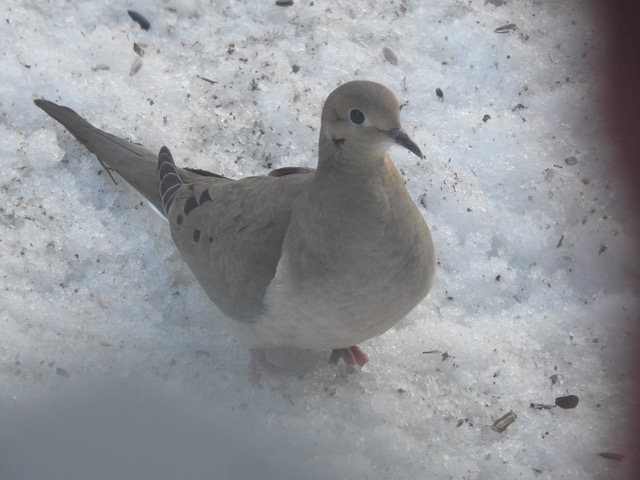
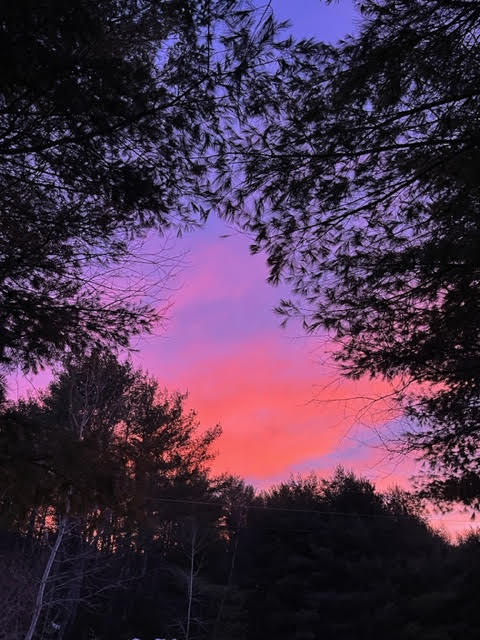
March is the month when crows scream, screeching and mobbing as they soar through indigo skies – their harsh declarations hurt my ears though I know they are mating and nesting.

Continue reading “The Crow’s Nest by Sara Wright”

Mayflower Memories by Sara Wright

Introduction to MAYFLOWER MEMORIES (‘Blood – Root’)

For the past two weeks I have been obsessed by the thought of emerging bloodroot, a wildflower I have loved since childhood that grows just outside my door (among other places). This obsession, and I take each one seriously, always provokes the same question: what’s really going on here? Bloodroot does not bloom under four feet of snow, and my guess is that this year one of my favorite wildflowers won’t burst with white stars until June.

Today, I also remembered with astonishment that in the old ways, Mother’s Day occurred on March 25th, the time when ‘Becoming’ begins, long before the snow recedes. I’m struck by the difference between the two mothers’ days, this one seems so much more authentic, no room for sentimentality when we face this messy, muddy turning from winter to spring (at least in the Northeast).

Continue reading “Mayflower Memories by Sara Wright”

Resurrection by Sara Wright

Experts quiped
you would
not rise
Too old
they said
Abandoned
Pink and Rose
No one
imagined
resilience,
pattern
birthing
form
to vine.
Gray green
veins
swell,
pulse,
pump
sugars
skyward,
powered
by a
single root.
Bowed blade
circles
round to
Beginning
Buried deep.
Spiral loosens,
ascends
seeking sun
star heat.

Continue reading “Resurrection by Sara Wright”

From the Archives: Who Owns the Sacred? A Personal Search beyond (European) Indigenous Knowledge by Eline Kieft

This was originally posted on Jan 17, 2020

For almost 35 years nature has been my sacred place. As an 8-year old, I started to pray to Mother Earth even though the protestant tradition in which I grew up only recognised ‘God the Father’. I went outside in my inflatable rowing boat to seek solitude (as an only child in a quiet family!) on a small island in the lake of our local park. I practised rowing and walking quietly to not break the sacred silence. I collected herbs to brew infusions in my little thermos flask with boiled water brought from home. I sung to the moon, and danced my love for all creation back through my moving body. Over the last 15 or so years, I spent many days and nights at Neolithic monuments, dreaming in ancestral burial mounds, time traveling in stone circles in Cornwall, Wales, Scotland, England, Ireland and Brittany. This nature-based practice evolved naturally, and later incorporated my training with the Scandinavian Centre for Shamanic Studies and the School of Movement Medicine. Nature is where I reconnect most easily with the Sacred, and listen to the whispers on the great web of life in which all of nature is a great teacher. Nature, for me, is a strong place of prayer, solace, awe, reverence, gratitude, joy, guidance, reconnection, healing and transformation. 

Continue reading “From the Archives: Who Owns the Sacred? A Personal Search beyond (European) Indigenous Knowledge by Eline Kieft”

Magic Seed Moon Meanderings by Sara Wright

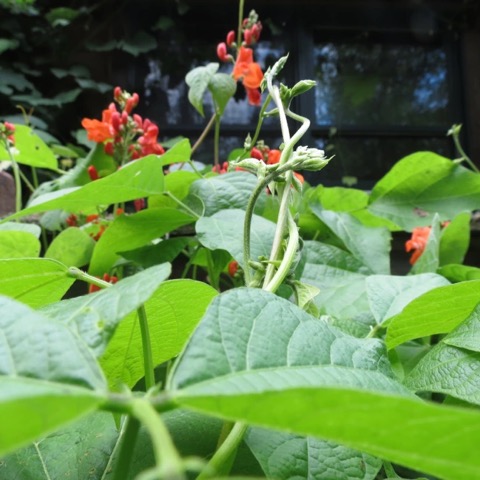
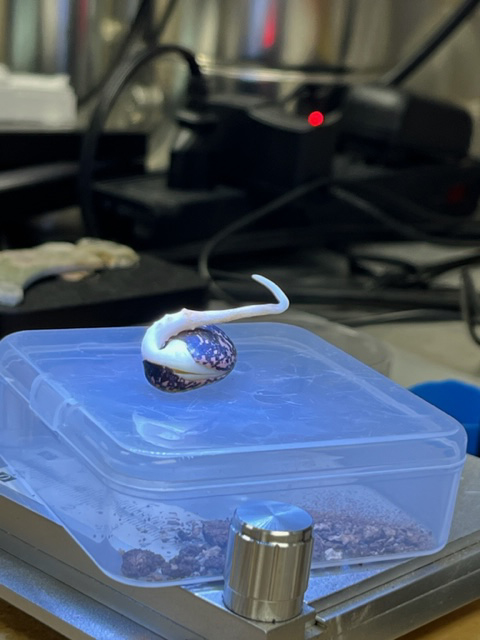
Without thinking I threw the old seed into a bag of moist liverworts that I would be looking at under a powerful microscope with my scientist friend Al in a couple of days. I have no idea why I added the seed. The scarlet runner was one I kept in a winter bouquet that I had recently dismantled. The purple and rose bean had to be four or five years old. It would not germinate now …

Imagine my astonishment when I opened the bag in the lab. The bean had sprouted! The fat twisted root was hunting for earth. Carefully I re – wrapped the bean and put it in a little container until I could get home and plant it, but not before we looked at it under the microscope. More about that later.

Continue reading “Magic Seed Moon Meanderings by Sara Wright”

The Mighty Oak or Acorn? by Sara Wright

Most of us are familiar with the mythology around oak trees. They are considered oracular beings in many traditions. The Druids considered  them to be sacred, the Greeks associated oaks with Zeus –( patriarchy strikes as the ‘ king’ of trees). In Britain there was a goddess of oak trees….but in general oaks are considered to be male beings though they bear seeds and flowers on one tree.

 Mighty male trees ? Nothing could be further from the truth in terms of behavior because oaks are found all over the world and in this country they are what is considered to be a keystone species. What this means is that oaks support and nurture an incredible amount of animals, insects and birds. A ‘ Mother ‘Tree in every way. We have four species in this country, one of which clones itself and behaves like a bush. It is believed to be about 1300 years old ( found in the west).Throughout the world oaks are also considered to be keystone species.

Continue reading “The Mighty Oak or Acorn? by Sara Wright”

Aging and Kinship by Sara Wright

When I moved to the mountains my children were grown and gone…

Finally I had land of ‘my’ own with a brook and mountains that was surrounded by forests. I felt protected by something I could not name. I was living on the edge of wilderness and a hunger I had been carrying for all of my adult life was finally appeased.

Although I had a vegetable and flower garden I felt a deep reluctance to cut trees and eventually lost most of my field to pines. When I finally built my log cabin, I did plant fruit trees, but every action was predicated on my need to give back to nature what she had given to me.

Continue reading “Aging and Kinship by Sara Wright”

Seeding Up by Sara Wright

Every spring it’s the same… the hunger to begin starting seeds. As a woman and an eco -feminist I am convinced that this need to work with seeds and soil is an ancient pattern that stretches back to our egalitarian matriarchal beginnings.

Some of us like me come from a family of gardeners so there is something to say about the influence of our ancestors directing this process on a personal level. Both patterning and ancestral influences seem to work together. Another “both and”.

After I broke my foot last year I was forced to cease gardening altogether out of necessity because I could no longer use a shovel. If I am really honest I can say I was more than ready to let go. I have grown both vegetables and flowers since I was a child, then while raising a family. At mid – life when I moved to the mountains I made (what seems today) a radical decision. I decided to plant trees, plants and flowers primarily for non – humans in a small area around my house. Nature determined what grew and thrived on the rest of my land. Today people call this re-wilding but then my intention was simple. I wanted to give back to nature what S/he had given to me. I wanted nature to be the receiver.

Continue reading “Seeding Up by Sara Wright”

Seeds of Hope: Part Two by Beth Bartlett

You can read part 1 here.

The patenting of seeds[i] has made the thousands-year-old practice of seed saving illegal, as is the sharing of seeds from farmer to farmer. The most notorious case is that of Canadian farmer Percy Schmeiser, whose canola crops were contaminated with Roundup Ready canola pollen blown into his fields from neighboring corporate farms. When Monsanto trespassed onto his fields, took samples, and found Roundup Ready canola plants mixed in with Schmeiser’s own canola plants, they sued him for violation of patents. Ultimately, the Canadian Supreme Court ruled in favor of Monsanto, but also ruled that Schmeiser owed Monsanto nothing.

In my own city, seed sharing became an issue when in 2013 our local library decided to start a seed library. The project was begun with great hopes that patrons could check out seeds for their home gardens, with the understanding that they would save a portion of their seeds and return these to the library for next year’s use. [ii] Project leaders hoped this would preserve locally adapted seed varieties. Unfortunately, after the seed library came to the public’s attention, the Minnesota Department of Agriculture informed the library that they were in violation of a Minnesota statute that prohibited the exchange of non-commercial seeds. [iii] Library Manager Carla Powers commented, “ . . . the law went so far as to make it illegal for gardeners to exchange a handful of seeds with one another.”[iv] But this did not end the library’s efforts.  Several ally organizations[v] stepped up to create an amendment to the statute that exempted the exchange of non-commercial seeds from testing, labeling and licensing laws. This inspired a state-wide effort to change the law, which was successfully accomplished in that year’s legislative session.[vi]

Continue reading “Seeds of Hope: Part Two by Beth Bartlett”