Legacy of Carol P. Christ: Essentialism Reconsidered

This was originally posted on September 15, 2014

In my Ecofeminism class we have been discussing essentialism because some feminists have alleged that other feminists, particularly ecofeminists and Goddess feminists, are “essentialists.” They argue that essentialist views reinforce traditional stereotypes including those that designate men as rational and women as emotional. I too find essentialism problematic, but I do not agree that Goddess feminism and ecofeminism are intrinsically essentialist.

Goddess feminists and ecofeminists criticize classical dualism: the traditions of thinking that value reason over emotion and feeling, male over female, man over nature. We argued that the western rational tradition sowed the seeds of the environmental crisis when it separated “man” from “nature.”

Goddess feminists and ecofeminists affirm the connections between women and nature in an environmental worldview that acknowledges the interconnection of all beings in the web of life.

Continue reading “Legacy of Carol P. Christ: Essentialism Reconsidered”
August: A Summer to Reflect, and a Time to Start Letting Go by Sara Wright

This has been an unusual summer. I can still listen to a roaring brook as I fall asleep at night. The flooding has been intense. The humidity is hardest to bare; I am grateful my cellar is finally free of water if not drying out. Our overall weather pattern remains the same; thundershowers almost every day; many clouds and thick morning fog. And tropical hurricane season is underway.

I am grateful for the moss and tall grasses that still glow lemony- lime emerald and sage green. My frog pond is empty except for snails; all the tadpoles have matured into tiny froglets that have disappeared into the dense foliage I have provided for them; ferns and anemones tower over others. A large toad only shows himself/herself  mostly at night when he hunts from the water dish I leave for him. Wild bee balm spikes are in bloom providing bees and hummingbirds with enough food for now. Some bee balm are ragged around the edges but the rain has brought in a second blooming cycle. My magic bean, the one I planted in March (in the house) has masses of deep orange flowers just outside my window. Grape leaves are climbing over the ground and visiting with the bean vine.

Continue reading “August: A Summer to Reflect, and a Time to Start Letting Go by Sara Wright”

Legacy of Carol P. Christ: Transcendence, Immanence, and the Sixth Great Extinction

This was originally posted August 4, 2014

In my recent blog “The Flourishing of Life and Feminist Theology” I discussed Grace Jantzen’s view that theology should focus on “natality” or birth and life, rather than life after death or life apart from this world. This week Tikkun magazine published its summer issue with a feature called “Thinking Anew about God.” In it two male thinkers, one Buddhist and one Christian, argue for a similar turn toward the world in their traditions. Their calls for religions to focus on this world were published the same week scientists warned that the world stands on the brink of the sixth great extinction.

I have come to believe that any religion espousing cosmological dualism (devaluing this world in favor of a superior reality such as heaven) and individual salvation (the idea that what ultimately happens to me is disconnected from what ultimately happens to you) is contributing to our world’s problems rather than offering a solution. … [Religions should] stop emphasizing the hereafter and focus instead on how to overcome the illusion that we are separate from this precious, endangered earth. –David Loy, Buddhist, writing in Tikkun Summer 2014

Continue reading “Legacy of Carol P. Christ: Transcendence, Immanence, and the Sixth Great Extinction”

The Flood by Sara Wright

Bee on butterfly weed

It is just four days from the Turning. The season of abundance is supposed to be upon us as the goddess turns the wheel towards the dark of the year. We have already lost a half an hour of light. The leaves of fruit trees are yellow, many drifting like butterflies to the ground, prematurely. The ground is sodden, like walking on sponge. Cicadas coax down the sun on the few days we have seen it since the beginning of June. A few crickets have joined the chorus. In the fields the goldenrod is painting a golden haze over emerald and lime. The quality of that green belies the changing season. No wheat- colored grasses. Flowers bloom on with a determination that reveals nature’s intention to survive. Torrential rains pour down silver sheets from the sky obliterating the possibility of peering out to see the hummingbirds dip and soar, sip bee balm nectar. Fog is a constant companion on my  pre-dawn walks – the only time I can listen to birds when the air quality is clean. That three – mile walk is my sanity and sometimes my only exercise. By 8 AM some mornings the air is already reaching the poisoning stage. Most days the windows stay shut. ‘Moderate’ is wishful thinking. If a morning sun burns through the clouds the invisible killer starts burning my eyes if I step out the door to sit on the porch. Inside, the humidity is so high that I am chilled; never below 75.

Continue reading “The Flood by Sara Wright”

Fire by Beth Bartlett

The nature and meaning of fire have been appearing in several disparate aspects of my life lately – in the fire of Celtic spring rituals; in books I’ve been reading[i]; in the fireflies of summer nights and the fireworks of the 4th of July; even as a clue in a game; and most ubiquitous of all – the smoke from Canadian wildfires. So persistent a theme begs pondering.  It first appeared in a Rewilding course as the sacred element of spring in the Celtic wheel of the year. Spring is the time of new beginnings, of the sunrise – the element of fire in the sacred direction of east, of the fires of passion and creativity, and the celebration of Beltane.

Continue reading “Fire by Beth Bartlett”

Legacy of Carol P. Christ: TWO TORTOISES IN THE WEB OF LIFE

This was originally posted on March 14, 2014

The Gods made only one creature like them—man.  Greek TV documentary

The sight of a reptile or an amphibian usually provokes, at the very least, a feeling of repulsion in most people. Natural History of Lesbos

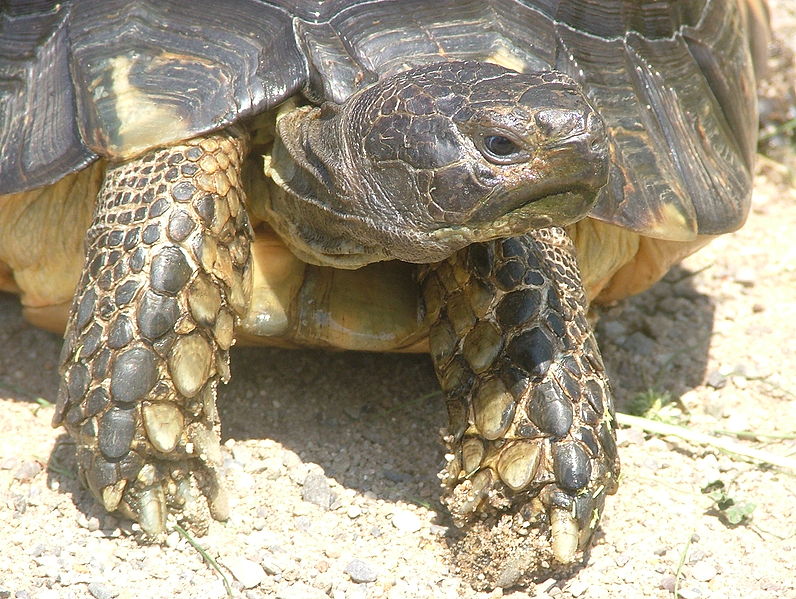
testudo marginata face

In the past days and weeks thetwo tortoises with whom I share my garden have woken up from a long winter’s sleep.  Henry, testudo marginata, has been up for a while now.  More than a month ago when I was cutting back and weeding in the area of the garden where he had been sleeping, Henry roused himself to sit in the sun near me for a few hours each day before creeping back under a shrub.  At first I thought I had disturbed him, but when he came back out day after day while I worked, I began to wonder if he was coming out to say hello.

Continue reading “Legacy of Carol P. Christ: TWO TORTOISES IN THE WEB OF LIFE”

Changes, part 2 by Sara Wright

part 1 was posted yesterday

Returning home, I peered around my house; most of my wildflowers are seeding up – only a few columbine, celandine, wild bleeding heart and a riot of Canada anemones are shining their white faces upturned to the sky. What used to be my cultivated garden has gone wild, and I have let my vegetable garden go. As more and more trees shade the house, (A blessing during these hot dry summers) I feel a tremendous sense of contentment. I am doing research on wild plants for some folks, spending time in the woods when I can. Being surrounded by so much diversity offers me hope that even now some wild places will survive – at least for now.

Because one of my beloved dogs is in heart failure, Lucy’s health is my first priority, so we walk as early as possible to avoid Lucy’s coughing and shortness of breath. Later, I walk by myself, grateful that I have this little patch of land to cover a few miles without having to leave the property. It helps that I rise so early. When I can, I head for the forests I love, but the woods and my writing life have had to take a backseat to Lucy’s illness. Since my dogs have helped me survive my life – like nature has, they will always come first.

Continue reading “Changes, part 2 by Sara Wright”

Changes, part 1 by Sara Wright

A Reflection

Two days ago, I climbed a nearby mountain on a quest to check on some wildflowers that have been disappearing. I noted the leaves in the hardwood forest were crackling under my feet and the two small brooks were dry. When I reached my destination, I felt discouraged. Not again. A whole series of trees had been cut to open a view that made no sense. Across the horizon some trees, but no mountains or water ‘views’ although I was standing on a mountain ledge (and just how many mountain views do we need here in the mountains anyway)? After perusing the area with keen attention, I was convinced. The wildflower I was seeking had been burned to a crisp under a solstice sun after the protective trees were cut, and I had to accept that this jewel was gone for good.  Worst of all this travesty occurred in what was supposed to be a protected “recreational community forest.” (translation: human centered – nature is just being used).

Continue reading “Changes, part 1 by Sara Wright”

Firefly Night by Sara Wright

Warm nights
stir
sweet
moist air
waft
through
open windows
golden lights
begin to
blink

Continue reading “Firefly Night by Sara Wright”

Understory by Sara Wright

If this isn’t the manifestation of the Great Goddess Greening the Earth I don’t know what is.” – Sara

Time stretches, folds back on herself as I gaze out the window squared by the four directions. A slanted sun glows golden green in early twilight. How comforting to see the trees rotting on the ground and new green wrapped all around me like a cape. The hemlock branches are almost black against the sun that sets early in the gorge. The phoebes are still – a few leaves flutter – lemon lime emerald – we haven’t names for all the impossible hues of green. I am suspended. All thought disappears into shadowy sheltering hemlock and pine against a darkening sky – the day is fading into twilight…. To be steeped in green is to be blessed by the trees who will get to live out their lives as Nature intended because of the people who cared enough to save these forests – a gift for all who see…. Beyond the window a steep gorge has sprung to life – jewelweed and oxalis bubbling out of stone. Crystalline water flows down the hillside…It is clear to me why springs were experienced as holy places. The crisscrossing of downed trees fallen under wind and winter weather is nourishing the next generation of seedlings. Fallen birches send anti- bacterial mycorrhizal mycelial fungal threads to protect other trees and plants from disease. We know almost nothing except that the skin of this precious earth holds the seeds of new life. No wonder I can sleep…\

Continue reading “Understory by Sara Wright”