


“Freud once asserted that mortals are not made to keep secrets;
what they would like to conceal oozes from all their pores.”
Psychoanalyst Theodore Reik[1]
It’s remarkable how much female imagery there is in the Bible hidden within its wording. The more I delve into its passages, the more that I have found these hidden/not so hidden sacred feminine images, even deities. I have begun a project of digging in and rooting out these little gems. When people think about the sacred feminine or female deities in the Bible the most well known is the Shekinah. The Shekinah is a lovely presence. The word means “dwelling” and usually represents “god’s divine presence” or a place where the divine resides.
The problem is that the Shekinah as a feminine essence of the divine is never stated explicitly, it is an interpretation of how the word is used. I love the concept of the Shekinah but as an essence that upholds the entire weight of the feminine divine in the bible, I find it unsatisfying by itself. Luckily for me, Goddess Shekinah has lots of company. Sometimes they are indeed hiding in plain sight. Sometimes they hide in the translations. The passage I am presenting today has some of both going on. The following is the King James Version of Genesis 49:25. Jacob has been giving blessings to each of his sons and this is part of the blessing he gives to Joseph: Continue reading “Yes, There are Goddesses in the Bible by Janet Maika’i Rudolph”
 I was released from a national hospital in Crete on Friday afternoon after a seven day stay. During that time, I had over fifteen tests, including several ultrasounds, two CTs, a colonoscopy, a gastroscopy, and an excruciating forty-five minute MRI.
 Regionalism
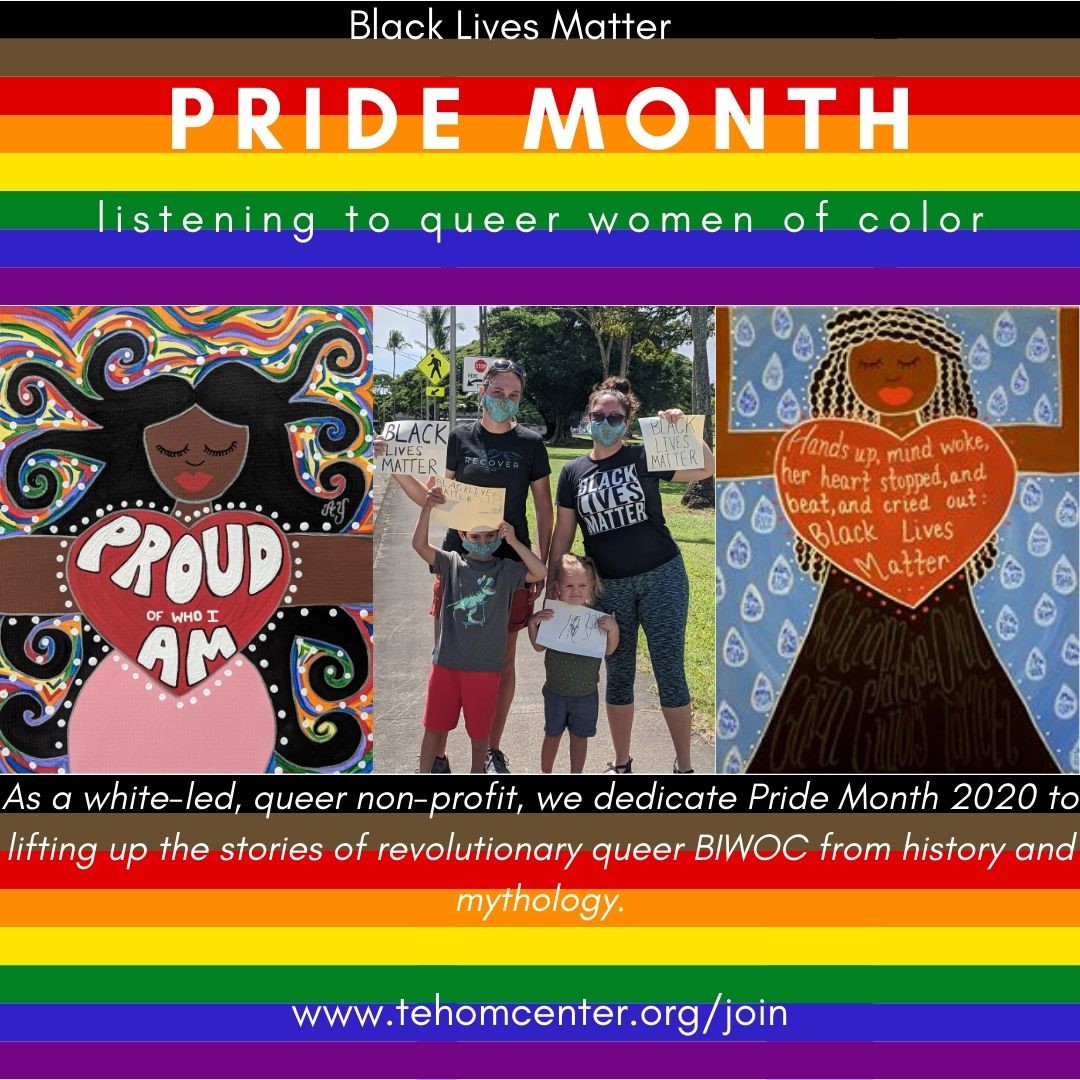 As Pride Month and Black Lives Matter protests co-exist, the spirituality of queer women of color teaches white allies how to listen.
 My ancestors built great circles of stones that represented their perception of real time and space, and enabled them to tell time: the
  Amongst Celtic peoples, the capacity to speak poetically was a divine attribute, regarded as a transformative power of the Deity, who was named by those peoples as the Great Goddess Brigid: She was a poet, a Matron of Poetry (along with her capacities of smithcraft and healing). And at Delphi in Greece, the oracular priestesses delivered their prophecies in poetic form: Phemonoe invented the poetic meter, the hexameter. And from Sumeria, humans have the first Western written records of literature, which is poetry written by the High Priestess of Inanna, Enheduanna in approximately 2300 B.C.E.. Poetry has been recognised as a powerful modality: Barbara Mor and Monica Sjoo described “poetic thinking” as an wholistic mode, wherein “paradox and ambiguity … can be felt and synthesized. The most ancient becomes the most modern; for in the holographic universe, each ‘subjective’ part contains the ‘objective’ whole, and chronological time is just one aspect of a simultaneous universe” (
 When I look at the two chapters on Goddess history in my book
  Feminism and Religion