I Am Wicked by Chaz J.

*When I refer to Black women, I am referring specifically to descendants of African peoples that were forced to experience the dehumanization of chattel slavery in the United States.  I refer to those who would build the foundation of the country, uncredited. Those whose descendants continue the legacy of fighting for liberation.  

When a sister-friend invited me to see Wicked, I was hesitant. I’d never seen the show, and my attention span hadn’t even allowed me to finish The Wizard of Oz or The Wiz (the Black rendition). However, seeing the wicked witch, Elphaba, portrayed as a Black woman changed everything. It felt deeply personal; a reflection of my own life as a Black woman in predominantly white environments. As a womanist theologian, centering Black women’s experiences is central to my daily and theological framework, and this felt like a powerful synchronicity and spiritual experience aligning with my newly entered villain era!

Continue reading “I Am Wicked by Chaz J.”
Hal’s Backyard Hustle directed by Annie Spiegelman

All female Bay Area film crew. Photo credit: William Buzbuzian

An email with a video titled “Hal’s Backyard Hustle” and a short introduction came into our inbox recently. The video is meant as comedy but with the serious intent of inspiring younger adults to vote. It made us (the behind-the-scenes FAR co-weavers) chuckle a couple of times. We’re delighted that people are creatively finding ways to encourage voting and, with that, protect our rights.

As the imitable Carol P. Christ started writing and teaching us so many years ago, the underlying purpose of patriarchy is to control women’s bodies and fertility.

We are seeing this taken to the extremes in our own country here in the U.S. Women who can’t access the most basic standards of care are left traumatized and some are dying. Police forces have been pressed into the duty of policing women’s bodies. Legislatures are writing laws for maximum cruelty. Exceptions (for rape, incest, blah, blah, blah) are nothing more than gaslighting projects to make the law makers seem more compassionate because in practice they are meaningless. Just how close to death does a women need to be before she can be treated? Does the rapist have to be convicted before a pregnant rape-survivor can access care? Because, really, according to patriarchy, you can’t trust women. Nor doctors.

Continue reading “Hal’s Backyard Hustle directed by Annie Spiegelman”

The Case for Women’s Visionary Films by Freia Serafina

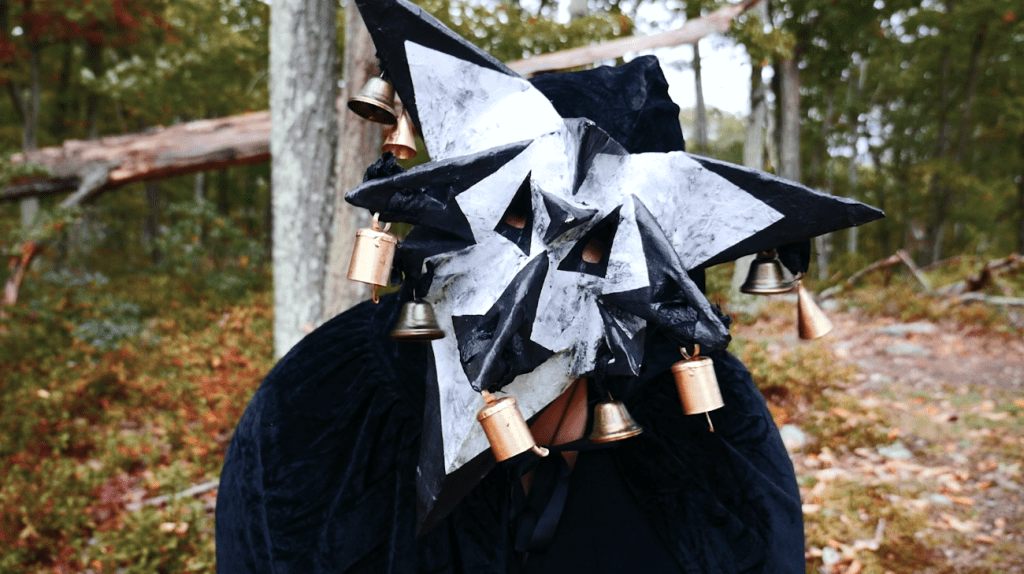
Power in the woods.
Creation of artist Jym Davis.

As a film history professor, I am intimately aware that women’s representation on screen is historically lacking. While preparing to teach a new course, I found myself hard-pressed to uncover significant academic discourse that highlights the divine feminine that doesn’t solely live in the realm of a Christian worldview. Indeed, film scholar Tenzen Eaghll points out that much of the existing scholarship from the past 100 years “all tend to equate religion with Christian theology in some manner, and … focus[es] narrowly upon Christian themes such as Jesus, salvation, faith, etc.” He states that scholars of religion and film essentialize all religion as Christianity, and that many scholars of cinema additionally speak of religion as an all-encompassing umbrella organization giving us a condensed notion of a shared theological worldview, devoid of nuance and alternate meaning. Eaghll goes on to argue, as I do, for a more critical approach to the study of film that requires us to pay closer attention to how “representations of religion in film conceal issues of race, class, gender, colonialism, secularism, and capitalism – common themes in ideological critique – as well as notions of origin, authenticity, narrative, violence, and identity.” I believe the solution lays in the inclusion of women’s visionary films.

Continue reading “The Case for Women’s Visionary Films by Freia Serafina”

Is “Barbie” Feminist Media?

Is Barbie a kind of counter-apocalyptic feminism? I am quick to embrace liminal violence in my own theories. Why not liminal joy or fun? Or, is Barbie just product placement?

Lately I’ve been thinking a lot about the idea of feminist media in light of all the hype around the Barbie movie and the backlash over the fact that neither director Greta Gerwig nor Margot Robbie (Barbie) received Oscar nominations. And while America Ferrera did receive a nomination for best supporting actress, a lot of critical attention has gone to the fact that Ryan Gosling (Ken) received a nomination for best supporting actor. I see the point. I understand the feminist critique here: female power is given an “atta girl,” but her creative contribution and leadership is overlooked. All that said: I didn’t really love the movie and the performance of the “I’m Just Ken,” song was my favorite part. Ferrera’s “iconic” monologue fell flat for me. Haven’t I read those words before, all over social media? The Barbie movie leaves me wondering, not for the first time, just what is feminist media?

When Game of Thrones was at its height of popularity, I saw so many online posts about the amazing female power (read feminism) of the show. But, having read the books, I took great issue with this characterization of the HBO blockbuster. Book five of The Song of Ice and Fire features, from what I recall, a double-digit number of sexual assaults against women. Every strong female in the story uses power as violence and dominance, and then of course, they are punished for it (as I wrote about in another blog). HBO’s Girls received similar feminist (and/or “post-feminist”) cred, featuring women who were supposedly friends but clearly seemed to disdain or ignore one another. Carter Hayward’s concept of “alienated power,” runs rampant in these two shows, and we enjoy it, because, as she explains, we have a hard time seeing power as anything else in a patriarchal system.

Continue reading “Is “Barbie” Feminist Media?”

Welcome to the Psychopomp Dreamhouse! by Stacey Simmon, PhD

When I first heard a Barbie movie was going to be released this summer I groaned. Like the awful complements of GI Joe, American Girl, and Trolls, I assumed that the content of this film would be designed to fleece parents out of the cost of tickets and popcorn. I am delighted to report that I was completely mistaken. Not only does Barbie enchant, she also delivers a complex message about idealism and womanhood.

But Barbie’s most important revelation is in her role as a psychopomp between the world of the ideal and the world of the real. Barbie Land is like a patriarchal heaven. Women are ideal, they don’t have flaws. They get shit done without breaking a sweat or wearing comfortable shoes, and the men are the accessories. It is what I imagine all the men who struggle with patriarchy idealize about what it would mean to be a beautiful, flawless woman- all of the power, where men can relax and be accessories for a change.

Continue reading “Welcome to the Psychopomp Dreamhouse! by Stacey Simmon, PhD”

The Blue Beetle: “¡No contaban con mi astucia!” by Yara González-Justiniano

Literally, you did not count on my astuteness. Or in other words, you underestimated my intelligence. It is the perpetual trick of arrogance that white supremacy and classism plays on racially and ethnically minoritized people and the joke/yoke these people carry. It is the most frequent microaggression I experience in academia in the supposed –– disque–– compliment of “you are so articulate!”

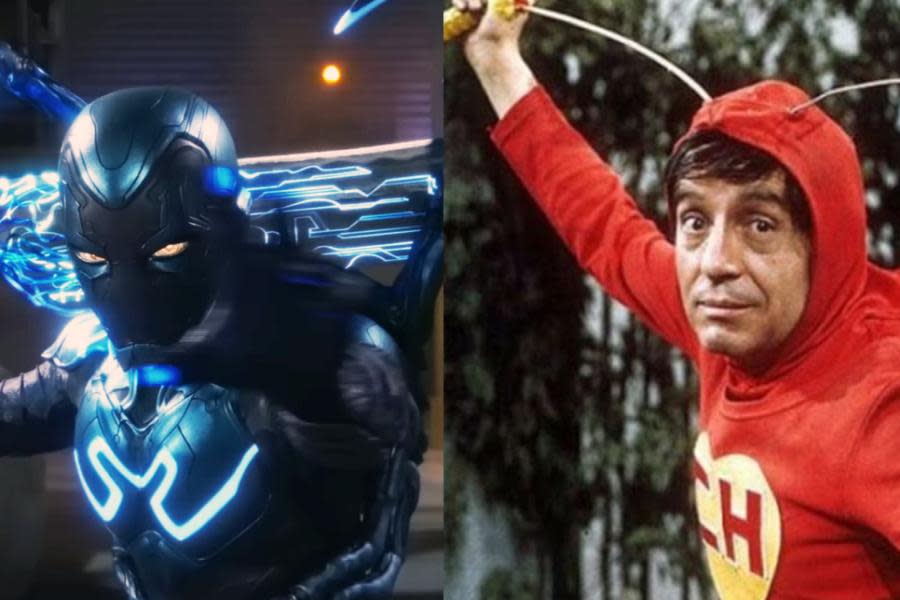
Source: Yahoo News

El Chapulín Colorado (The Red Grasshopper) is a Mexican comedic superhero character created by artist Roberto Gómez Bolaños, better known as Chespirito (little Shakespeare), in the 1970s. Whenever Chapulín untangles a mess, whether on purpose or by chance, he says “¡No contaban con mi astucia!” The movie Blue Beetle, which pays homage to this beloved character across Latin America and Latinx people is ––entre otras cosas–– exactly that, astute! Puerto Rican director, Angel Manuel Soto, and Mexican writer, Gareth Dunnet-Alcocer, take the DC comic book story of Jaime Reyes’s Blue Beetle (2006) and transform it into a film that, more than responds to a Latino superhero gap, it takes representation, impact, and issues of capitalism seriously. The truck, the heart-shaped shield, the tools, and the crickets playing in the background of the outdoor scenes ––to name a few–– are an extension of the characters’ parallelisms and the possibilities of what it means to have higher numbers of representation in mass media-produced films with integrity and astucia. ¡Awiwi!

Continue reading “The Blue Beetle: “¡No contaban con mi astucia!” by Yara González-Justiniano”

Love and The Last of Us

I was excited and thought I knew what to expect. I know what happens in the game after all. But after watching episode three, Long, Long Time (aired Jan. 29, 2023), I found myself considering what seems like something new in a zombie story as well.

Warning: Contains spoilers for The Last of Us video game and HBO series! (Oh, and for The Walking Dead… And maybe a few other zombie films too.)

I remember when Naughty Dog released the first iteration of its popular game, The Last of Us (2013) because a friend of mine worked with the sound design team for the game. This friend started out as a game tester and through years of effort, was eventually creating game sound and dialogue. The release was a BDF for his personal success and at the time, felt like something new in gaming: it was realistic, cinematic, and emotional. (And incidentally, it was reviewed very, very well.) This past month HBO released The Last of Us as a TV series. I was excited and thought I knew what to expect. I know what happens in the game after all. But after watching episode three, Long, Long Time (aired Jan. 29, 2023), I found myself considering what seems like something new in a zombie story as well.

Continue reading “Love and The Last of Us”

Considering “Everything Everywhere All at Once”

The multiverse as a metaphor for trauma is rather compelling to me. It speaks to the way in which different realities and experiences impose themselves on others as a matter of fact rather than malintent. These realities necessarily co-exist in interrelationship but may compound the weight and confusion of present experience.

Warning: Spoilers Ahead!

Everything.

Everywhere.

All at Once.

I remember thinking, this is kind of a weird name for a movie, even if it is about the multiverse and shifting realities. But I’m a big sci fi fan, so of course, I jumped at the chance to see it when my friend said she wanted to see the movie, again, with me specifically. Mom’s day out for both of us. Check. A… m.o.v.i.e. I remember movies from a time pre-pandemic: there’s a big screen, right? And food? I like food. Sign me up. (j/k). I seem to remember movie theaters being more crowded though—my friend and I had almost a private viewing. And sitting practically on top of my friend by the end of the film, after laughing so hard I cried, crying because I was so sad, gaping in shock, horror, and even disgust, and wondering what I just saw, I reflected: this movie was perfectly named.

Continue reading “Considering “Everything Everywhere All at Once””

From the Archives: Frozen 2: Can the Christian Church Hear its Gospel Song? by Trelawney Grenfell-Muir

This was originally posted on March 5, 2020

The first time I saw Frozen 2, I was impressed by the ecofeminism and the efforts to respect the Sami culture. The second time, I thoroughly enjoyed the superb music and the character development. The third time… was a religious experience.

Other contrubutors have written wonderful reviews of Frozen 2, and I agree wholeheartedly that its animation reinforces the sexist idea that females should be tiny compared to males, except for our eyes, which should be larger than our wrists. These disempowering representations saturate today’s media, and I regularly spend a whole lot of time deconstructing them with my daughters.

However, there is a lot to love about Frozen 2, and as a Christian, I found myself resonating with several of the symbolic truths the film offers. I spent some time looking into the Sami religion, to see how much of it was incorporated into portrayals of the Northumbra. I knew that Disney had consulted with Sami representatives to portray their culture with respectful accuracy. The Sami history is an all too familiar tale of violent imperial conquest allied with Fundamentalist Christian Dominionism. The wounds of Sami history certainly give me terrible grief as a white American and a Christian, and I hope that the anti-colonialist messages of the film spread awareness of such violence in my country. 

Continue reading “From the Archives: Frozen 2: Can the Christian Church Hear its Gospel Song? by Trelawney Grenfell-Muir”

From the Archives: Slavery and God/dess by amina wadud

Moderator’s note: This marvelous FAR site has been running for 10 years and has had more than 3,600 posts in that time. There are so many treasures that have been posted in this decade. They tend to get lost in the archives. We are beginning this column so that we can revisit some of these gems. Today’s blogpost was originally posted January 28, 2014. You can visit it here to see the original comments.

Well the Golden Globe awards have been handed out.  I don’t have a television, so I didn’t actually watch, but a quick google search gives the results.  Highest honors go to a movie about blacks as slaves and whites as criminals.  That’s appropriate. 

But this is feminism and religion, so let me get to the point.  It’s about a chance discussion on social media about the “merciful god” and historical institutions like slavery (holocaust, or oppressions like misogyny, homophobia, Islamaphobia and others…).

My view of the divine, the cosmos and of the world is shaped by my slave ancestry.  Recent area studies about Islam in America estimate that one third of the Africans forced to the Americas were Muslim.   My first African relative on US soil identified as Moor (another term used for “Muslim”).  But Islam did not survive slavery.

Continue reading “From the Archives: Slavery and God/dess by amina wadud”