To Garden by Kathryn House

My work is transformed when I view the task at hand through verbs I learned through gardening: tend, nurture, sow, dig, weed, share, till, harvest, nourish, rest.

Yesterday was the autumnal equinox, which means that fall is officially here. Right on cue, the first leaves are changing from green to shades of gold and crimson. The air is crisp, and the nights are cooler. In the Northern Hemisphere, fall also marks the beginning of the harvest season. Tending a garden has certainly changed the way I think about food, but it has also given me a lens through which to reflect more broadly on community, justice, faith, and hope. I love that gardening invites me to consider a way of being that is governed by a rhythm all its own. This steady beat brings my tendency to rush without reflecting to a halt. Every garden is unique and every gardener has a different philosophy, of course. For myself and for the housemates with whom I have gardened over the years, these three raised beds have come to constitute a sacred space. A space of hospitality, of nurture and delight, they are a space around which we are reminded of finitude, of beginnings and endings, of gratitude. Continue reading “To Garden by Kathryn House”

Working and Working Out: “Health,” Obesity, and Labor by Stefanie Goyette

What I think we must consider in analyzing any form of “health” that is encouraged, and even enforced, is that such encouragement comes back in the end to the ability to work, to be “productive,” and, in turn, to spend the money that one earns. 

What is “health”? What does it mean to be “healthy”? Physical well-being and energy? Mental and emotional balance? A sense of general control over one’s body and self? I had originally meant to speak of the frequent reduction in our culture of “health” to appearance: sexual attractiveness, muscle tone, body size, etc., but Lesley Kinzel has already given an analysis of this paradigm, twice, in fact. Go read her articles, then come back here and we’ll talk about some other stuff.

Attractiveness as a measure of “health,” which we will consider as being already established as a cultural fact, effectively defines health neither as a personal sense of well-being nor as a set of conditions agreed upon in consultation with a physician. Rather, aesthetic criteria render health a metric that lets other people judge – and judge others on – a level of “health.” This judgment affects women disproportionately and, being external, reduces the value of female subjective experience and the power of subjectivity in the individual. Yet this externalization by no means ends with quotidian social interaction, but also extends to the medical establishment and the regulation of bodies in terms of the normal and the pathological – no great revelation here (Foucault already said it) – and these measures are already part of the intrinsic layout and values of the culture to which a given medical establishment belongs. Continue reading “Working and Working Out: “Health,” Obesity, and Labor by Stefanie Goyette”

Discrimination, the Catholic Bishops, and Chick-fil-A by Michele Stopera Freyhauf

You may be tired of the controversy about Chick-fil-A, but the events of the last few weeks revealed a big issue in the organization – that of discrimination and the illusion of religious freedom.  However discrimination exists beyond the LGBTIQ community, it applies to Catholics and those “outside” their strict fundamentalist belief system.  However, the hierarchy in the Catholic Church seems to be embracing many of the beliefs put forth by Evangelical Fundamentalists in the political arena.

When it was time for my eldest daughter to get her first job, she applied and was hired to work at Chick-fil-A.  Knowing they were a  Christian organization, I felt that she would be well treated and we could still have family time on Sundays.  Everything started out o.k. but the longer she worked there, problems developed.  First, when I stopped through the drive-thru to show my support as her mother, I received apocalyptic material in my bag talking about the end times, where my soul would go, and inviting me to their church.  I found the material offensive and never returned. Despite the organization’s community support and “Christian” values, I was still fairly naive about their discriminatory practices that many experience on a daily basis.

Continue reading “Discrimination, the Catholic Bishops, and Chick-fil-A by Michele Stopera Freyhauf”

What I Learned (and Found) Dumpster Diving, Part II, by Grace Yia-Hei Kao

“I had known that dumpster diving is subversive….What I hadn’t considered previously is its arguable feminist and biblical precedents.”


The following is a continuation of a two-part blog. Read part I for what prompted me to go dumpster diving, what freeganism is, and what three things surprised me the most about dumpstering beyond the sad and shocking reality of tremendous waste. 

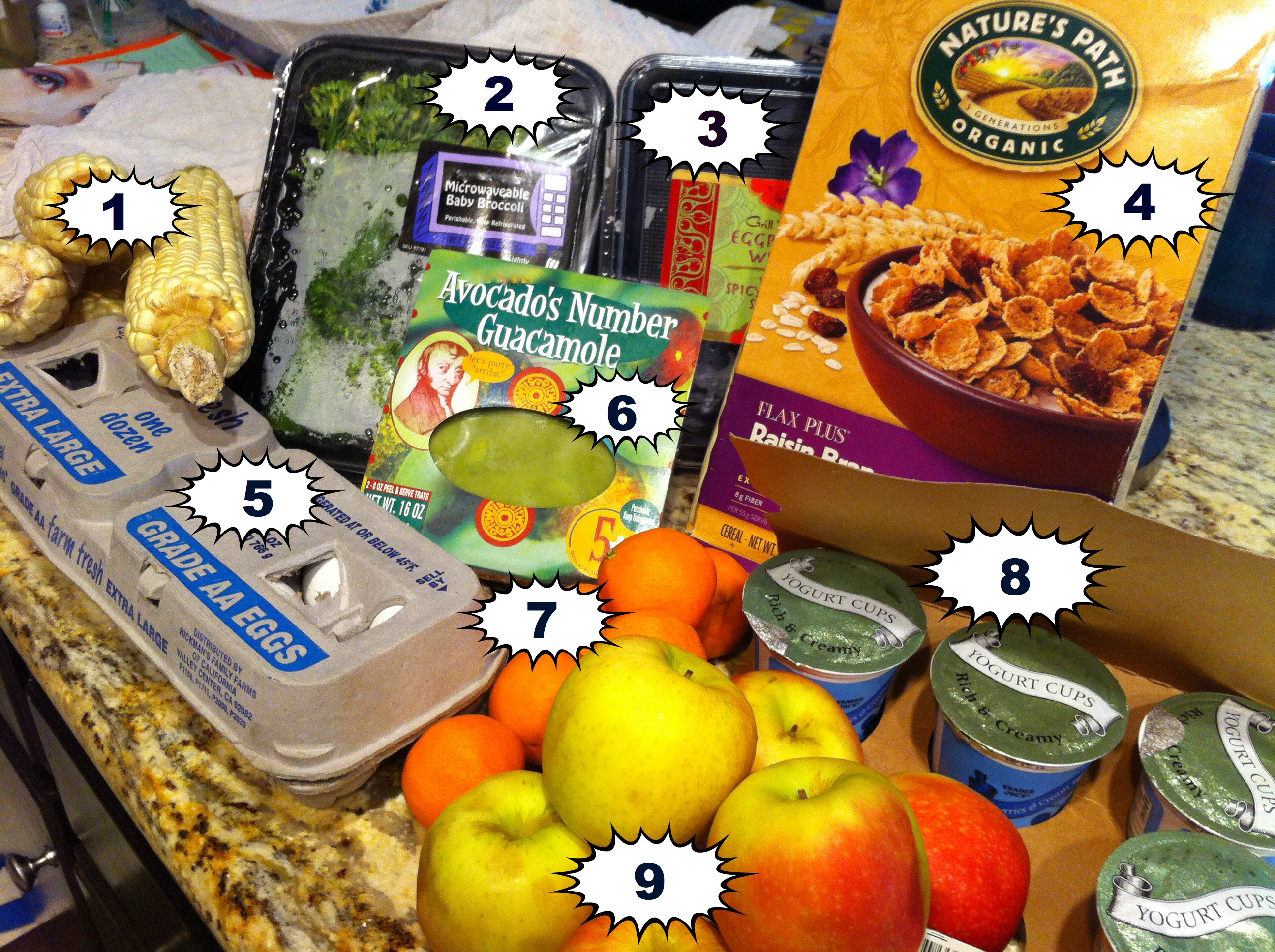
My Dumpster Dive Haul

After sorting through several trash bags of edible food in the approximately 10 minutes that we spent at one site in my first ever urban scavenging trip, this is what I ultimately brought home.


(Reminder: As explained in part I, I have intentionally photoshopped out the store’s name and the use-by/best by dates).

Continue reading “What I Learned (and Found) Dumpster Diving, Part II, by Grace Yia-Hei Kao”

What I Learned (and Found) Dumpster Diving, Part I, by Grace Yia-Hei Kao

“I get that consumers generally prefer to buy produce that looks a certain way, but can the routine act of trashing whole bags of clementines, apples, or tomatoes because of a few imperfections be justified in a world that is full of hungry and malnourished people?”


Renowned climate change activist and author Bill McKibben spoke at our graduation earlier this year. Among the charges he gave to all of us in attendance (i.e., not just the graduates) was for us older folks to be willing to bear more of the possible “costs” of political activism. His reasoning was that being a 20-something with an arrest record was not a particularly good thing for young job-seekers today.

I was inspired. I thought to myself, “I have tenure, I work with colleagues who champion prophetic civil disobedience, and my class privilege would allow me to post bail if arrested.”

When chatting with a graduate that afternoon, I told him that I’d like to make good on something we once discussed in class during a session on the ethics of consumption—I’d like to go dumpster diving with him.

Mind you, I don’t fit the stereotypical urban scavenger profile (although middle class dumpster diving is on the rise). I grew up in a gated community, once brought my portable curling iron on a junior high church group camping trip, and today am more bourgeois than Bohemian. So what interest did I have in electively digging through garbage?

Continue reading “What I Learned (and Found) Dumpster Diving, Part I, by Grace Yia-Hei Kao”

“Eating Our Words” Decoupling Women’s Eating Habits from the Language of Sin: Part 2 by Stefanie Goyette

This post is the second part of a two-part series. Read Part I here.

In my previous discussion of the language associated with women’s eating habits, I mostly left aside the problem of weight. Weight, and certainly obesity, was hardly a concern in the Middle Ages, whereas I do not think that it would be controversial to suggest that fatness in the modern era is viewed as nothing less than a moral weakness, a failure of self-control. This viewpoint that is emphasized by weight-loss programs on television, in magazines, etc. But this is another matter that deserves a full discussion, which I cannot offer today. Rather, I would like to suggest that gluttony as a moral concern has shifted in meaning between the Middle Ages and the modern era, building on the fact that in medieval Europe, gluttony was an explicitly religious problem, a cardinal sin, even when separated from the related issues of libido and lust.

Despite the intense moralization of alimentary behavior in the Middle Ages, medieval writers often refused constrictive, moralized models of food and eating. Hildegard of Bingen, in her manual of natural medicine, the Physica (twelfth century), recommends different foods that help feed and diminish sexual desire, in order to balance the body rather than to suppress its needs. Continue reading ““Eating Our Words” Decoupling Women’s Eating Habits from the Language of Sin: Part 2 by Stefanie Goyette”

“Eating Our Words” Decoupling Women’s Eating Habits from the Language of Sin: Part 1 by Stefanie Goyette

Any woman who has eaten a big holiday meal with her family or had a weekend brunch with girlfriends has probably heard the following words: “I’m so bad, but I’m going to order…” or “I shouldn’t, but…” or “I’m being good; I skipped dessert.” Foods and the recipes in cookbooks marketed towards women are described as “sinfully delicious,” especially if they are low-carb, or low-fat, or low-sugar. “Sinfully delicious” diet food can be enjoyed “without the guilt.” Further marking the matrix of food, women, and “bad” behavior or sin, is the intimate relationship between food, women, and sex. Recent Carl’s Jr./Hardee’s commercials feature swimsuit model Kate Upton making out with – nearly making love to – a hamburger. This love scene takes place in a convertible, at a drive-in, the classic site of American, teenage, illicit sex. The take-out bag is used as a prop to conceal Upton’s vagina, as she spreads her legs for the camera. Another commercial, for Lay’s potato chips, features a women biting her lip while she slowly peels open the bag, set to Al Green’s “Let’s Stay Together.”

A seeming contradiction emerges between these two discourses: one that persists within and between women, who are expected to be on a diet and who speak, and are spoken to, about food in terms of morality, “good” and “bad.” At the same time, women eating, especially eating greasy, fatty, comfort food, as long as these women are thin and attractive, has become a quintessential symbol for sex, and is used most particularly to market food to men. Continue reading ““Eating Our Words” Decoupling Women’s Eating Habits from the Language of Sin: Part 1 by Stefanie Goyette”

On Cooking and Eating by Ivy Helman

In patriarchal heterosexist societies women do most if not all of the cooking for their families.  Women are also usually assigned the tasks of cleaning, raising children, tending the family garden, gathering water and anything else that is considered part and parcel of caring for the family.  These feminine tasks are often devalued compared to the activities men spend their time doing.  I wholeheartedly support the reevaluation of the significance of these tasks and the movement toward shared responsibility for family life among heterosexual couples, however that is not what I want to discuss today.

I want to explore the religious and spiritual significance of the food cooked by our mothers, grandmothers, aunts, sisters and female friends, especially those dishes we would consider to be comfort food.  Every person, every family has their own idea of what meals are comfort foods.  Bubbe’s matzah ball soup on Shabbat maybe?  Aunt Betsy’s Easter ham?  Mom’s turkey, gravy and oyster stuffing on Thanksgiving?  Your sister’s famous mac and cheese?    Continue reading “On Cooking and Eating by Ivy Helman”

My Body Image: Between Perception and Incarnation By Cynthia Garrity-Bond

No matter what shape or size, the words “body image” conjure-up pictures of the self that are like looking into those funny mirrors which distort and expand the body.  With few moments of relative slimness in my life, I have struggled with a poor self-image. It started when I was a child, who while deeply wanted, was not the hoped for frail and delicate daughter my parents had imagined.  My mother, all 5’ 100 lbs was forever reminding me that I took after my father’s Swedish side of the family, more akin to “peasant stock,” you know, those larger boned women who could birth a baby one day and return to the fields the next—you get the picture.  This is the image I came to accept of my own body, which was far from the wispy, delicate girl I longed to be.

And then my baptism into feminism, with all its corrections of the androcentric world to which I belonged. Of the many hopes within feminism, it was the release from my own body image that I longed for.  I wanted to feel at home and at one with what I was, not what I hoped to be.  Truth be known, it has never happened.

A few years back in my Medieval Theology course we were examining the Catholic doctrine of the Resurrection of the Body through such thinkers as Irenaeus, Aquinas and Bonaventure. In what my instructor thought was an affirmation of the body, she interpreted the doctrine to mean that after death we will take on our bodies as they were in life, meaning, we would look pretty much the same as we did while tromping around on earth.  In contemplating her words I sought clarification.  “So” I asked, “the body I have now will be the body I carry with me throughout eternity?”  “Well, yes” my slight and thin professor responded. Letting her words sink in for a moment I finally responded with a resounding, WTF!”   I don’t want this body to haunt me in the next life, I want Ashley Judd’s, or Jennifer Aniston’s, hell, I’ll even consider an anonymous model from the LL Bean catalog, but not THIS body!” Continue reading “My Body Image: Between Perception and Incarnation By Cynthia Garrity-Bond”