THE “G” WORD By Carol P. Christ

Recently, I saw the following line in a promotion for a book to which I contributed: “This volume includes voices from Christianity, Judaism, goddess religion, the Black church, and indigenous religions.” The editors of this book are to be strongly commended for expanding the dialogue in feminism and religion beyond the confines of the Christian hegemony in which it is still all too often framed.  Nonetheless, I felt hurt and offended.  I immediately wrote to the editors asking how they would feel if a book were promoted using the words:  “This volume includes voices from Goddess religion and god traditions such as judaism and christianity.”

I am well aware that the conventions of English grammar dictate that the word “God” is to be capitalized when referring to the deity of the Bible and the Koran and in some other cases where a monotheistic deity is intended.  I have been fighting this battle with editors of my work for years.  Usually they automatically change “Goddess” to “goddess.” When I gained the courage to question this, an exception would usually be made for me, but the grammatical convention remained in force for other works by the publisher.   Continue reading “THE “G” WORD By Carol P. Christ”

Women Blogging Thealogy By Gina Messina-Dysert

In Rebirth of the Goddess: Finding Meaning in Feminist Spirituality, Carol Christ offers a thealogy that is grounded in embodied thinking and begins with personal experience. She explains that experience is “embodied, relational, communal, social, and historical” (p. 37),  and that experiences of the Goddess are shaped and inspired by the experiences of others. Consequently her thealogy, in addition to being personal, is also communal.

According to Christ, the “voices of women are a lifeline” (Rebirth of the Goddess, p. 41), a sentiment that has been loudly echoed by women in blogging communities. Although some may claim that a blog is nothing more than an online diary, it is a powerful tool that offers individuals the opportunity to express their thoughts and experiences in a public forum; blogging gives a voice to anyone who wants it. Recent statistics have Continue reading “Women Blogging Thealogy By Gina Messina-Dysert”

In the Web of Life — No Exceptions By Carol P. Christ

Carol P. Christ is a founding mother in the study of women and religion, feminist theology, women’s spirituality, and the Goddess movement.  She teaches in the Women’s Spirituality program at CIIS and through Ariadne Institute offers Goddess Pilgrimages to Crete. Her books include She Who Changes and Rebirth of the Goddess and the widely used anthologies Womanspirit Rising and Weaving the Visions.

Does God love me more than She loves my doggies? Does She love animals more than She loves trees and flowers? Does She love trees and flowers more than She loved the first cells that formed in the waters of our planet? Did She not also love the atoms and particles of atoms that coalesced to form the earth?

In her books Sacred Gaia and Gaia’s Gift Anne Primavesi questions the notion that the dialogue between God and the world began with “our entry onto the scene.”  Primavesi argues that “human exceptionalism,” the view that the world exists for us, and that we are an “exception” to the world, has been and is the predominant Christian view.  In the stories of Adam and Noah, God gives dominion over the creatures of the earth to man.  Theologians asserted that of all the creatures that inhabit the earth, only man is in the image of God, and the image of God in man is found in his rational intelligence, which is shared with no other creature.  Because he is in the image of God, man will escape death, which is the lot of every other living thing.  Rather than challenging human exceptionalism, modern science furthered it, asserting that “matter” was “dead,” and that therefore it was right and just for man to subdue “nature” through technology and to harness it for his needs.   Continue reading “In the Web of Life — No Exceptions By Carol P. Christ”

Running for the President of the American Academy of Religion By Kwok Pui Lan

Dr. Kwok Pui-Lan is an internationally recognized scholar and pioneer in Asian feminist and postcolonial theology. She teaches at the Episcopal Divinity School and is the 2011 president of the American Academy of Religion. Dr. Kwok has published extensively and is the co-editor of two volumes Off the Menu: Asian and Asian North American Women’s Religion and Theology (Westminster) and Empire and the Christian Tradition: New Readings of Classical Theologians (Fortress). Her other publications include Postcolonial Imagination and Feminist Theology (Westminster), Discovering the Bible in the Non-Biblical World (Orbis), and Introducing Asian Feminist Theology (Pilgrim).

“Pui Lan, would you be willing to run for the Vice-President of AAR?” the chair of the Nominations Committee of the American Academy of Religion (AAR) called and asked me back in April 2008.

The AAR, with 10,000 members, is the world’s largest professional organization of scholars in religion. The majority of its members are from the U.S., but approximately 17 percent are international scholars from over 70 countries.

It was a great honor to have been nominated—for the Vice-President would be in line to become the President in 2011. The problem was that there would be an election and I would have to compete with another candidate, who happened to be a professor at Harvard University.

I thought, “If I win, that’s good. But what happens if I lose?”  Continue reading “Running for the President of the American Academy of Religion By Kwok Pui Lan”

Football as a Ritual Re-enacting Male Domination Through Force and Violence By Carol P. Christ

Carol P. Christ is a founding mother in the study of women and religion, feminist theology, women’s spirituality, and the Goddess movement.  She teaches in the Women’s Spirituality program at CIIS and through Ariadne Institute offers Goddess Pilgrimages to Crete. Her books include She Who Changes and Rebirth of the Goddess and the widely used anthologies Womanspirit Rising and Weaving the Visions.

The other day when Paula McGee asked on this blog how Penn State students could rally in support of Sandusky, I was also reading a student paper quoting Rianne Eisler’s opinion that peace and environmental justice cannot be achieved in dominator cultures. Xochitl Alvizo commented that we should not be surprised by the reactions of the students as we live in a “rape” culture.  I would add that we must examine the culture of male domination through force that is “football,” one of the “sacred cows” of American patriarchy, just as we need to examine the culture of hierarchical male domination of the Vatican in the context of child-rape by priests.  Continue reading “Football as a Ritual Re-enacting Male Domination Through Force and Violence By Carol P. Christ”

Dr. Mercy Oduyoye and the Ninth Annual Patricia Reif Lecture By Gina Messina-Dysert

Dr. Mercy Oduyoye is the Ninth Annual Patricia Reif Lecture speaker and will present “Women and Violence in Africa: the Plight of Widows and the Churches Response” on Monday, November 14, 2011 at 7pm at the Mudd Theater on the Claremont School of Theology campus.  Oduyoye is Africa’s foremost feminist theologian whose contributions have greatly impacted worldviews on gender and religion.  I am familiar with Oduyoye’s work and today had the honor to meet her in person and have a one on one conversation about violence against women, feminism, and religion.

Oduyoye was incredibly gracious and entertained all my questions about her work, her insights in regards to violence against women, and her thoughts about feminism and religion and where the field is going.  She explained that although some believe feminism is dead, the marginalization of women continues to be a serious issue.  Although the issues women face change over time, women continue to be oppressed.  According to Oduyoye, we must recognize that the issues women faced 50 years ago are different from the issues women face today; however this does not mean that gender-based inequalities have seized to exist.  Rather, it means that the culture has manifested itself in a new way.  We must come to recognize this and continue to work towards the eradication of gender-based violence.    Continue reading “Dr. Mercy Oduyoye and the Ninth Annual Patricia Reif Lecture By Gina Messina-Dysert”

Forty Years and Counting: Women and Religion in the Academy By Carol P. Christ

Carol P. Christ is a founding mother in the study of women and religion, feminist theology, women’s spirituality, and the Goddess movement.  She teaches in the Women’s Spirituality program at CIIS and through Ariadne Institute offers Goddess Pilgrimages to Crete. Her books include She Who Changes and Rebirth of the Goddess and the widely used anthologies Womanspirit Rising and Weaving the Visions.

The receipt of an invitation to the Fortieth Anniversary Celebration of the Women’s Caucus in the American Academy of Religion and the Society for Biblical Literature this week, takes me back to the summer of 1971.  At the first meeting of Women Theologians at Alverno College (which was followed up at Grailville in succeeding years), I proposed that we form a feminist caucus in the field of religion, as had already been done by feminists in several other fields.

Since I was one of the few women at Alverno who had attended the annual meetings in the field of religion, I was delegated to call Harry Buck, then director of the AAR, to ask for space on the program.  Harry, who continued to support the work of women in the field through lecture series at Wilson College and the magazine Anima which he founded, offered not only space at the meetings, but a print-out of the names and addresses of all of the members of the AAR who were not obviously male.  I invited all of them to come to a feminist meeting at the AAR in Atlanta. It is hard to imagine now, but before 1971, the women who attended the AAR in any given year could probably have been counted on one hand. Continue reading “Forty Years and Counting: Women and Religion in the Academy By Carol P. Christ”

Rosemary Radford Ruether’s Women and Redemption: A Theological History By Gina Messina-Dysert


Women and Redemption : A Theological History. 2nd ed. By Rosemary Radford Ruether.Minneapolis: Fortress Press. 2011.

Women and Redemption: A Theological History

Having been critically impacted by the work of Rosemary Radford Ruether, I was anxious for the release of the second edition of her crucial book, Women and Redemption: A Theological HistoryRedesigned with illustrative material, research questions, and suggested reading for further research, as well as the addition of a new chapter exploring recent developments in feminist theology, this text does not disappoint.

With this newest edition, Ruether acknowledges the ongoing journey in the field of feminist theology and emerging issues faced by women in religion and society. Examining the Christian claim of an inclusive and universal redemption in Christ, she traces paradigm shifts in understandings of gender over the last two millennia.  Ruether offers an historical exploration of women and redemption in the first five chapters followed by a global survey of contemporary feminist theologies in the final four chapters, which includes a concluding section that gives attention to “Fourth World” feminisms and post-colonialism in an effort to “bring this volume up to date” (xvii). Continue reading “Rosemary Radford Ruether’s Women and Redemption: A Theological History By Gina Messina-Dysert”

What Does It Mean to Say that All White Feminists Are Racist? (Questions Posed to White Women/Myself about Our Part in the Dialogue with Women of Color) By Carol P. Christ

Carol P. Christ, a founding mother in the study of Women and Religion and Feminist Theo/a/logy, has been active in anti-racist, anti-poverty, anti-war, feminist, pro-gay and lesbian, anti-nuclear, and environmental causes (in that order) for many years.  All of these issues have informed her teaching, her scholarship, and her politics.

The recent posting of Mary Daly’s letter to Audre Lorde on the Feminism and Religion blog is a correction of a piece of feminist history that is important in its own right and because of the way Lorde’s letter has shaped feminist discourse and politics up to the present day.  Knowledge of the existence of Daly’s letter and the facts surrounding Lorde’s distortion of history has been in the public domain since the 2004 publication of Alexis DeVeaux’s Warrior Poet, but when I searched the internet for a copy of “Mary Daly’s letter to Audre Lorde” a few days ago, what came up was Lorde’s letter to Daly — not Daly’s letter to Lorde.

I often hear younger feminists say that “all white feminists” of the older generations “were racist.”  Sometimes Mary Daly is mentioned.  Setting the record straight about Mary Daly is one step in retelling the history of feminism in a more complex way.  Continue reading “What Does It Mean to Say that All White Feminists Are Racist? (Questions Posed to White Women/Myself about Our Part in the Dialogue with Women of Color) By Carol P. Christ”

Mary Daly’s Letter to Audre Lorde

Note: This is an old conversation, in so many ways (including, historical). The more important elements of this exchange is the content, experience, and work that Audre Lorde was communicating in the writing of her original letter to Mary Daly. It is the plea we continue to hear today from those whose voices are systematically marginalized, brutalized, and erased. To that point, this post fails to take heed, and reflects the personal relationship many had to Daly, and not to Lorde, and is therefore another example of the wrongheaded emphasis so many of us continue to fall into. We must and will do better. And the post remains here as another negative example and a case study, the lesson of which is a call to renew one’s commitments to be willing to hear, see, and feel the cries of those bearing the brunt of injustice, and respond in justice-making actions. Here is Audre Lorde’s letter, which, as Ellen in the comments below rightly states, is a “deep, heart-felt, informed, impassioned, desperately empathic response,” written of her great beneficence. Spend time with Lorde’s powerful words:  https://www.historyisaweapon.com/defcon1/lordeopenlettertomarydaly.html.
– Xochitl, 2/22/23  

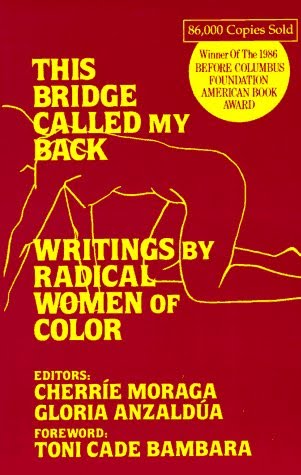
In May of 1979, Audre Lorde shared her critique of Gyn/Ecology with Mary Daly via a letter.  Lorde claimed she had received no response from Daly and subsequently published her assessment of Daly’s work as an open letter, first in This Bridge Called My Back in 1981 and then in Sister Outsider in 1984. Lorde had commented on this issue over the years and in 1982 claimed in an interview that if she had received a response from Daly, she would not have published her critique as an open letter. Lorde’s letter was widely republished and has been used as a paradigmatic teaching tool for the study of “white feminist racism” in Women’s Studies courses.

However, in 2003 as Alexis De Veaux was completing research for her forthcoming biography about Lorde, Warrior Poet, she  found Daly’s letter of response in Lorde’s papers.  On the letter Daly’s last name was written in the bottom corner in Lorde’s handwriting.  On June 9, 2003 De Veaux contacted Daly explaining her discovery and asked permission to quote from Daly’s letter that was dated September 22, 1979.  DeVeaux wrote about the existence of the letter and what must have been an unsatisfactory encounter between the two women at a conference in late September 1979; she also speculated on the reasons Lorde chose not to disclose receiving the letter.

In Amazon Grace Daly tells her version of the story and explains that it was gratifying that De Veaux thought it was crucial to publish the letter and correct the widespread misbelief that Daly had not responded to Lorde (26).  Shortly after Daly received a copy of her letter from DeVeaux, she called friends and colleagues asking them to help make this information more widely known.  Carol P. Christ gave me access to the copy of Mary’s letter she received at that time.  Because parts of the letter itself may be difficult to read, I am also posting a transcription.

September 22, 1979

Dear Audre,

First, I want to thank you for sending me The Black Unicorn.  I have read all of the poems, some of them several times.  Many of them moved me very deeply – others seemed farther from my own experience.  You have helped me to be aware of different dimensions of existence, and I thank you for this.  

My long delay in responding to your letter by no means indicated that I have not been thinking about it – quite the contrary.  I did think that by putting it aside for awhile I would get a better perspective than at first reaction.  I wrote you a note to that effect which didn’t get mailed since I didn’t have your address.  Then there was a hope of trying to get to Vermont in August, but the summer was overwhelmingly eventful.

Clearly there is no simple response possible to the matters you raise in your letter.  I wrote Gyn/Ecology out of the insights and materials most accessible to me at the time.  When I dealt with myth I used commonly available sources to find what were the controlling symbols behind judeo-christian myth in order to trace a direct line to the myths which legitimate the technological horror show.  But of course to point out this restriction in the first passage is not really to answer your letter.  You have made your point very strongly and you most definitely do have a point.  I could speculate on how Gyn/Ecology would have been affected had we corresponded about this before the manuscript went to press, but it doesn’t seem creativity-conducing to look backward.  There is only now and the hope of breaking the barriers between us – of constantly expanding the vision.

I wonder if you will have any time available when I come to New York for the Simone de Beauvoir conference?  Since I have a lot to do here, I had thought of just flying down Friday morning and returning that night.  Are you free Friday afternoon or evening?  Or will you be in Boston any time soon?  I called and left a message on your machine.  My number is …. Hope to see you and talk with you soon.

[Handwritten] I hope you are feeling well, Audre.  May the strength of all the Goddesses be with you – Mary

Click the link below to view a copy of the actual letter from Daly.

Mary Daly’s letter to Audre Lorde

Also see:

Mary Daly speaking about discovering that she responded to Audre Lorde in writing and that Audre Lorde kept the letter and deposited it at Spellman College

Mary Daly’s recollection of the events in Amazon Grace, p. 22-26

Warrior Poet, p. 233-238, 246-248, 251-253

Adrienne Sere’s In remembrance of Mary Daly: Lessons for the Movement

Carol P. Christ’s response to the publication of Daly’s letter on this blog: What Does It Mean to Say that All White Feminists Are Racist? (Questions Posed to White Women/Myself about Our Part in the Dialogue with Women of Color)

(This blog was revised on October 8, 2011)