

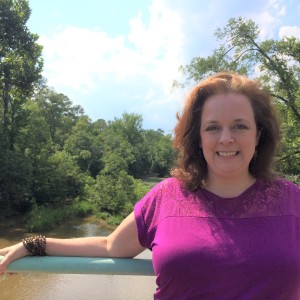
 Over the past few months, a precious person has come closer into my family’s life in such a way that their presence in my home, among my loved ones, has come to feel natural and easy. This is someone I love, someone who adores my children and appreciates my partner of 18 years and whose sweet spirit and vibrant laughter have added joy and mirth to our family home.
Yesterday, they rode with me to drop my freshly-mohawked teenager off at a farm to help with preparations for an upcoming arts camp. I introduced them by name to the camp assistant and walked over to chat with the camp director for a bit. Later, as we got back into the car to head to lunch, I asked what they thought of the farm.
“It was nice,” they said. “I’m glad your children have a place like that. Also, while I was chatting with the camp assistant, she asked if I was family.”
“What did you say?”
“I said yes.”
They weren’t wrong.
The meaning the word “family” holds for me is something I’ve given much consideration over the years. For generations, many of us have been expected to turn a blind eye to the ways patriarchal domination of women’s and children’s bodies perpetuates abuse in our own family systems. My inability to sweep these abuses under the carpet, to keep silence and pretend all is well, has led to my estrangement from one entire side of my family. It’s an estrangement I feel will be permanent, and while I grieve the loss of an ideal I never had, I welcome the opportunity to live authentically and boldly, confident in my dedication to my ideals, which include honesty, justice, and the unconditional protection of children and vulnerable populations.
For a while, I sat with the gap this estrangement created in my life, unwilling to fill it with harmful relationships with those to whom I am blood-related, yet hesitant to broadly redefine it in a way that negates the importance of those who have chosen to love and raise up a child, however imperfectly. Continue reading “Family, Interdependence, and Mutual Support by Chris Ash”
 I recently arrived in Las Cruces, New Mexico, after driving across much of the country from Richmond, Virginia. It’s the second summer I’ve driven this distance (2,000 miles) so I varied my route a bit from last year, stopping at the Abbey of Gethsemani in Trappist, Kentucky, for a short visit. This is the place the popular and prolific monk, Thomas Merton, also known as Brother Louis, called home for twenty-seven years (1941-1968) . (Merton was accidentally electrocuted by an electric fan in Bangkok while attending a conference—December 1968.)
 Book Title: Interreligious Friendship after Nostra Aetate
 Normally—and I mean normally as in the past thirty-seven years of my life, this is the time of year when I start thinking about the upcoming Michigan Womyn’s Music Festival and the fact that I will be seeing friends of mine from around the world for our one ten-day excursion deep into “womyn’s land.” Where I will howl at the moon with thousands of women. Where I will stay up late around my favorite campfire –the DART fire pit—where the physically challenged folks camp and where I am unofficial DART support. One of my best friends at Fest is a fabulous moonshine maker from Appalachia. Every year we have a date in the back of night stage—where literally this past year 7,000 women were dancing and singing and listening to a world class concert/rock n’ roll show under the moonlight. Way in the back my friend H. and I toasted on our annual “date” with her latest brew…that she trucked in by wagon next to her chair and her service dog. “So raise a glass,” we toasted with red cups high in the air, singing along with the woman way down front on the stage, performing in synchronicity with our toast.
 (With apologies to Jean de La Fontaine for significant changes to his fable)
 “Not on your life,” muttered this grandmother, most of whose conversations with her many daughters and granddaughters consisted of instructions on how to properly clean their homes and hills and how to prepare and store food for the winter. “Life is serious business, it is, it is. We need to plan ahead.”


 communities to create a more just, compassionate world through building connection, sacred truth telling, and striving for the common good. She has written for outlets including Huffington Post, Sojourners, Religion Dispatches, Response magazine, the Good Mother Project, the Journal for Feminist Studies in Religion, and the United Methodist News Service. Find her on Twitter at @ktzeh or on her website
 Feminism and Religion