Making a New Home: It’s Not So Easy by Carol P. Christ

I am sitting in my studio apartment with my computer on my lap on a cold, windy, and rainy day in Voutes, Heraklion, Crete. My little dog is curled up asleep, seeing no reason to awake on a day like this.

I made the decision to leave my beautiful home in Molivos, Lesbos last winter, renting a small Air BNB house in Heraklion the winter and a small house in Pachia Ammos for the summer. Then back to Lesbos for 2 weeks, on to the Goddess Pilgrimage to Crete for 2 weeks, back to Lesbos for 2 weeks, on to America for a speaking tour, back to Lesbos for a few more weeks with an interval in Thessaloniki, and on to Crete for the New Year holidays.

Things went pretty much as planned up until my return to Crete. There were a few glitches, but I enjoyed being in Heraklion and then in by the sea in Pachia Ammos, and I was beginning to make new friends. I enjoyed my time in Lesbos and my trips to the US and Canada. I was looking forward to my return to Crete. Continue reading “Making a New Home: It’s Not So Easy by Carol P. Christ”

Leading by Mandala by Nurete Brenner and Elizabeth Meacham

Liz and Nurete (L to R)

Lake Erie Institute

The old myths and images that sustained us in earlier periods are no longer serving us during this time of breakdown of the old and the uncertainty about the future. The lone wolf, the frontiersman, the all-powerful superhero – these tropes fade into irrelevance as it becomes clear that no messianic figure is going to step forward and part the sea for us. We need to find new stories to accompany us and new images to illuminate the path as we shift from a patriarchal-hierarchical structure to a collective, relational, participatory one born in partnership rather than domination.  Women’s leadership is the emergent idea that leadership is about co-creating a new story for the world during a time of radical transformation in Earth history.

The word “leadership” stems from the Indo-European root leith which means to cross a threshold. How does a society cross the threshold from the myth of the strong leader to a new story of collective leadership? One answer is by telling new stories. Traditionally women have been the storytellers of our culture, relaying and relating the fairy tales, the bedtime stories, the family-history narratives and cultural myths. The men who share in this story-telling role are those who are at one with their feminine aspect and we recognize that this activity is not at all new for Indigenous cultures which have maintained an ongoing tradition of participatory story-telling leadership. Continue reading “Leading by Mandala by Nurete Brenner and Elizabeth Meacham”

I’m [Not] Batman by Sara Frykenberg

A little tongue-in-cheek, somewhat punchy, somewhat angry reflection for your consideration. Thank you for reading.

Ever have trouble speaking your mind? I do. I do, particularly in situations where I was taught (in all sorts of ways, violent and nonviolent alike, religious, patriarchal) to be “a good girl.” The “good girl” training I received is so deeply ingrained in me that I often don’t realize when I’m doing it. I catch myself being agreeable with people when I want to be arguing. I use extra exclamation points in communications with my online classes to appear more likable, friendly or non-threatening. I also have a peculiar habit of, unconsciously, changing my clothes repeatedly until I ‘match’ someone around me, usually in color. I honestly don’t mean to do this, and only became aware of the habit in the last decade because my husband started pointing it out to me ALL THE TIME.

But I’m working on it. “Be authentic, Sara.” “Be yourself.” That’s got to be different than being good, right? I probe my habits and relationships for the tell-tale signs of this “good girl.” Continue reading “I’m [Not] Batman by Sara Frykenberg”

Just When We Thought It Couldn’t Get Worse, It Did by Carol P. Christ

Like many of you I have been following discussions of the revelation that Virginia Governor Ralph Northam dressed in blackface or as a member of the Ku Klux Klan when he was a medical student. It was reported that Northam was earlier known as “coonman,” an epithet which suggests that he had blackened his face more than once. His later admission that he put only a little bit of black shoe polish on his face because it is hard to get off, when he dressed up as Michael Jackson, seems to confirm that blackface was something he had tried before. There was also the fact that students had been asked by the yearbook committee to submit photographs for their pages: Northam did not say if he submitted the photographs on his page.

Some commented that Northam’s was not a (possibly forgivable) youthful offense, but one committed by a twenty-six year-old adult. Others said that Northam’s failure to take full responsibility for his apparently repeated behavior and the hurt and harm his actions and actions like them had caused was the more serious offense. Perhaps he could still have governed if he had apologized fully, told the story of how he came to understand race relations on a deeper level, and immediately offered to meet with black leaders and restorative justice experts to discuss what he could to earn back the trust of the people who elected him.

Everyone seemed relieved that Northam would be replaced by a young progressive black man. It seemed like a happy ending to a very sad story.

And then the other shoe dropped. Lt. Governor Justin Fairfax was accused of forcible sexual assault by a black woman named Dr. Vanessa Tyson who had absolutely nothing to gain by telling her story. Continue reading “Just When We Thought It Couldn’t Get Worse, It Did by Carol P. Christ”

On Tetzaveh by Ivy Helman

29662350_10155723099993089_8391051315166448776_oThe Torah parshah for this week is Tetzaveh (Exodus 27:20 – 30:10).  Mostly it describes the priesthood, both of Aaron and his sons. It details how they should be consecrated, what they should wear, the difference between the garb of the high priest and the others, institutes the daily burnt offerings of rams, and provides instructions for the construction of an altar for locally-sourced incense.  

The parshah works to establish differences between members of the Israelite community through consecration as well as in function and in dress by decreeing the institutionalized of the priesthood.  Priests undergo an elaborate consecration ceremony which includes the sacrifice of animals, the smearing of their blood, the waving of various animals parts into the air and the burning/cooking of the sacrificed animals’ flesh.  In addition to the blood smearing and animal sacrifices, the priests are also anointed with oil and offer oil and grain offerings to the divine. In terms of function, priests should offer daily sacrifices to the divine in the form of two rams (one in the morning and one in the evening).  Also, all priests have four items of similar clothing: tunic, girdle, turban and short pants. However, the high priest has four special items only he wears, like the breastplate and a golden forehead piece. His clothes are laden with gold, precious stones, and royal dyes.   Continue reading “On Tetzaveh by Ivy Helman”

Reclaiming Sacred Music by Mary Sharratt

Women Singing Earth by Mary Southard

Here is a hymn of praise, a beautiful and intimate piece meant to be sung. Reader, I invite you to guess the author of this text and the sacred figure to whom this work is addressed.

Hail, O greenest branch,
sprung forth on the breeze of prayers.

. . . . a beautiful flower sprang from you
which gave all parched perfumes
their aroma.
And they have flourished anew
in full abundance.

The heavens bestowed dew upon the meadows,
and the entire earth rejoiced,
because her flesh
brought forth grain,
and because the birds of heaven
built their nests in her.

Behold, a rich harvest for the people
and great rejoicing at the banquet.
O sweet Maiden,
no joy is lacking in you . . . .
Now again be praised in the highest.

Continue reading “Reclaiming Sacred Music by Mary Sharratt”

Generosity and Community: the Alternative Worldview of Women’s Ritual Dances, Part 2 by Laura Shannon

Dr. France LeJeune Milchberg taking her turn to lead the dance line, Lesvos 2007. Photo: Sheryl Ackerman

Starhawk describes the work of her Reclaiming collective as the creation of ‘spaces of refuge from a harsh and often hostile world, safe places where people can heal and regenerate, renew our energies and learn new skills.’[i] These words also apply to the women’s traditional dances. One participant on my courses expresses it thus: ‘In the circle no-one is left out, no-one is ignored, all are held and included, all have their place, all are connected.’[ii]

Crucially, women’s ritual dances empower everyone to develop leadership skills. Every woman must know how to lead the line at the appropriate time, and she must also know how to pass on the responsibility afterwards. Continue reading “Generosity and Community: the Alternative Worldview of Women’s Ritual Dances, Part 2 by Laura Shannon”

For Love of Trees by Sara Wright

Yesterday I dreamed that I discovered a bird’s nest that was hidden in the center of an evergreen tree. This little dream moved me deeply because this is the time of year I celebrate my love and gratitude for all trees, but especially evergreens, and the dream felt like an important message. For me in winter, the “Tree of Life”  is an evergreen.

Outdoors, I recently placed a glass star in the center of my newly adopted Juniper here in New Mexico, repeating a pattern that began in Maine years ago with my Guardian Juniper in whose center I also placed a star…Inside the house an open circle created out of a completely decayed tree trunk sits at the center of my Norfolk pine; around the room spruce, juniper and pinion boughs are twinkling with miniature lights. The tree has a festival of lights at her feet. The point of making these gestures is to keep me mindful that tree bodies are sacred in their wholeness and each tree explicates the immanence of divinity. Another way of saying this is to say that Natural Power lives in trees. This goddess is steadfast. Continue reading “For Love of Trees by Sara Wright”

The Mud and the Lotus: What India Is Teaching Me by Vanessa Soriano

About 5 years ago, I began a consistent yoga practice.  Right around the same time, I started a PhD program in Women’s Spirituality at the California Institute of Integral Studies where I eventually wrote my dissertation on Women’s Spiritual Leadership.  Throughout my studies, I realized that the path of the Divine Feminine is an intricate journey that accentuates the mind, body, soul connection.  The yogic path does the same.  In late 2018, I enrolled in an intensive 5-week 300-hour yoga teacher training in India where I continued my spiritual explorations.  Hindu culture reveres the Divine Feminine and Divine Masculine and yoga is viewed as a pathway into God/dess through the body.  Here’s the first part of the story…
I’m in India and it’s 5:30 a.m. and an hour of pranayama awaits me.  The yogis define prana as the life force that animates the entire body and yama relates to discipline.  The practice of pranayama consists of breathing techniques that aim to control the breath in order to connect to the life force that resides within.  Accessing this life force can invoke feelings of bliss and a connection to the Divine.

Class starts, I’m officially starving, and I haven’t had enough coffee. Continue reading “The Mud and the Lotus: What India Is Teaching Me by Vanessa Soriano”

Seeking Enlightenment? Let’s Try Endarkenment by Barbara Ardinger

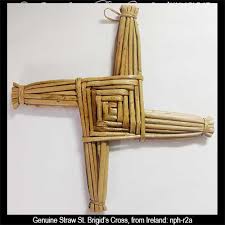
In the version of the calendar I follow, February 1 is the true beginning of spring. That’s because early February is when we can see the light coming back. We know spring is really coming. February opens with a holiday/holy day variously known as Imbolc, Brigid, and Groundhog Day. Imbolc is the name of a traditional Celtic festival. The word is related to milk, possibly ewes’ milk, as lambing starts around this time. Brigid, whose name means “bright one,” is a triple goddess and ruler of (1) the sun and fire (and smithcraft), (2) poetry and inspiration, and (3) healing and medicine. It’s said that the straw left over from making Brigid’s crosses and other charms has healing powers. The newer Brigid is the Catholic saint who refused to marry and became a nun. And, of course, Groundhog Day is a secular holiday that uses helpless animals to make silly predictions. (But the movie is good.)

February (from the Latin word februa, which mean purification) gives us opportunities to become both enlightened and endarkened (yes, another word I invented).

ENLIGHTENMENT: “You light up my life.” A charismatic person “lights up the room.” When we become aware of something, the “lights go on” or we suddenly “see the light.” In cartoons, a light bulb turns on over the head of the guy who has the idea. Conversely, we call someone who isn’t enlightened “a dim bulb,” or maybe we say, “The lights are on but nobody’s home.”

Continue reading “Seeking Enlightenment? Let’s Try Endarkenment by Barbara Ardinger”