
Along with spending more time in silence, another spiritual practice I’m cultivating is creating space for the wisdom of the room to emerge. At a basic level this involves talking less and listening more.
Keeping quiet is a discipline I’ve had to learn. I was the type of kid who raised my hand to speak in class at every opportunity. One day in fifth grade I was especially especially eager to give the right answer to our class’s math problem. The moment I heard my name called I promptly began articulating the solution. I was so caught up in sharing that I didn’t realize that my teacher actually hadn’t called on me to respond, but instead had called on on another student with the same name. Whoops
A decade later in a different classroom, I sat silently and a bit uncomfortably while the woman across from me talked for what seemed like an eternity. This exercise for our pastoral care class was for my conversation partner to speak for two full minutes (not quite an eternity) while I maintained eye contact and nodded but gave no verbal feedback. Afterwards I was to share with her what I had heard her say. That simple act of mirroring revealed how unnatural it was for me to listen. For so much of my life I had been jockeying for more space to speak. Not talking took focus and listening attentively required skill, but there were also great rewards in doing so: better understanding, deeper truth, and more compassion.
Last week I received this fitting bit of wisdom in an email from the Enneagram Institute:
Listen to others: they are often right, too. And even if they are not, there is almost always a kernel of truth to the point of view they are expressing. By listening to others, you not only will learn more but will become more informed and sensitive. Don Richard Riso, Understanding the Enneagram
Since graduating from seminary ten years ago I have found myself applying the discipline of sacred listening in my group facilitation work and while presenting at conferences. How many of us have attended a workshop or conference breakout session only to spend the majority of the time listening to one person lecture? I’ve decided that I no longer want to reinforce that kind of lopsided dynamic, which leaves little space for others to share their truth. How much wisdom have we all been missing as a result?
Recently, in a room full of wise women gathered for the United Methodist Women’s Assembly, I invited those attending my workshops to dive into the same biblical texts that I focus on in my forthcoming book Women Rise Up. I divided them into small groups, assigned each one a story, and asked them to explore together two simple, though not necessarily easy questions about the passage:
- What about this story troubles you?
- What about it inspires you?
As I passed the mic from table to table, I was moved by the thoughtful reflections they shared, and I was heartened to hear that some of their understandings aligned with my own. But then one woman shared an insight about the Book of Ruth that was so profound that it sent a shiver down my spine. In all the time I had spent studying and reflecting on this story I had never read the passage in quite that way.
Her wisdom-sharing transformed and deepened the conversation in the room. And it reinforced for me the importance of cultivating space for the wisdom held in the room to emerge. I can’t tell you how many times I’ve approached a text, even a situation, with the belief that nothing new could come from it. I was thankful to be proven wrong once again by the wisdom in the room.
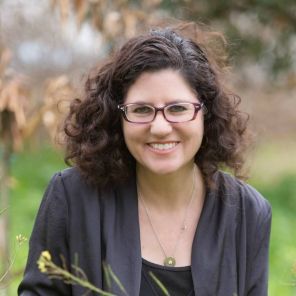
 Rev. Katey Zeh is an ordained Baptist minister, a nonprofit strategist, writer, and speaker at the intersections of faith and gender justice. She is the co-host of Kindreds, a podcast for soul sisters. Her book Women Rise Up will be published by the FAR Press this year. Find her on Twitter at @kateyzeh or on her website kateyzeh.com.


 Many of us have a growing sense that we are at a crucial inflection point in our civilization and at a crossroads for the future of our planet. I’m not sure if that point needs to be defended, explained or expounded upon. To me it seems completely transparent, glaringly and frighteningly obvious. I live with that knowledge constantly, which translates into grief for the biodiversity that has already been lost and is accelerating; fear for the turmoil and human-made ecological catastrophes that will cause more and more people to lose their land and homes, leading to increased acts of violence towards the vulnerable; and anger towards the elites of the world who siphon up the resources of our planet for themselves and then barricade themselves behind their wealth.
  I started this blog June 18, 2018, writing about the horrific policy of the trump administration of separating children from their parents who seek asylum at the border. And this is where we are…
 It was my twelfth birthday and I was in New York vacationing with my parents and brother. New York was a world away from the sleepy town of Luanshya, Zambia where I was from (and which I loved). The noise, the lights, the gigantic stores, and oh, the people. So many of them! My heart could barely contain the excitement.
 On June 8, Cleveland watched the Cavaliers lose the NBA championship. Outside of Cleveland, according to the commentators I heard, no one really expected our guys to pull it off. But, here in Cleveland, we felt otherwise. Up until the final four minutes of the fourth quarter, when the Herculean LeBron took the bench, we were still thinking something magical could happen. When he stopped, the game ended. We lost. And, the city, once again, had to recast its disappointment, redirect its energies, and rediscover the eschatological hope that is the core of Cleveland’s athletic grit: “there’s always next year!”


 Feminism and Religion