
A-mazing Grace by Carol P. Christ

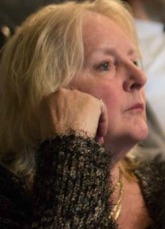
carol p. christ photo michael bakasA few days ago I received a message out of the blue on Facebook:

Thank you for your accepting my friend request. I am fighting to find my way out of depression during a life transition as I move into retirement from my years of work as an educator. I look forward to your book this spring. I have long called myself a Goddess feminist having struggled with patriarchal Christianity since my youth, but have felt abandoned by the Goddess for many years now. I’m not sure how I found you today. I stumbled onto a blog from you on your book while googling something else. Your words gave me a spark of hope. Laurel

In my blog I said that when I began to write A Serpentine Path, I felt abandoned by the Goddess. I wrote back, hoping that sharing what I had learned on my journey would be helpful.

The short answer is that the Goddess has never abandoned any of us. However, She does not have the power to make everything turn out as it could be or should be or we wish it would be. Hers is the power to inspire but not to control. If you have been unhappy, She is with you, She understands your pain, and She will be with you as you seek to find your way. I hope this doesn’t sound too preachy. It is from the heart of my experience. Take care of yourself.

I immediately received an answer back.

Thank you. Those were just the words I needed to hear with my heart. I am “too much in my head,” having spent a life in academia.

This interchange got me thinking about how we import toxic ideas from traditional theologies into what we believe are new religious worldviews. In this case the toxic idea is omnipotence—the idea that the Divine Power is in control of everything. It follows from this that the Divine Power can answer our prayers. If the Divine Power does not answer our prayers, there must be a reason. The reasons we give are many, including: because we are sinful and unworthy or because the ways of God are not our ways. We sometimes conclude, as Laurel and I did: the Divine Power simply does not care about me.

The prominence of magic in Wicca, the most widely known form of contemporary Goddess religion, can contribute to this feeling of abandonment. The Western occult or magical tradition teaches that there are practices, including rituals and spells, through which we can manifest our wills and achieve our deepest desires. In Goddess practice rituals and spells are directed to or through the Goddess. In this situation, it can feel logical to blame the Goddess when, after working very hard and doing every ritual and spell we can think of, our will or desire is not manifested. “Why me,” the child within us asks. “Why has the Goddess abandoned me?”

In the story I tell in A Serpentine Path, I felt precisely that. What I learned was that the Goddess had never abandoned me. She had been with me all along. Where I went astray was in believing that the world could become as I wanted it to be.

The world is made up of a multiplicity of wills, including my will and the will of the Goddess, but also the wills of every other individual, human and other than human, who has lived or is living now. If individuals, human and other than human, have the power to affect the world, then even the Divinity cannot have all the power. This means that Her power (and our power) is the power to influence the world, but not to determine or control it. This is one of the key metaphysical insights of process philosophy, but it is also an existential truth.

The Divine Power is not omnipotent. And neither am I. It may seem odd to put these two statements together. Yet they are mirror images: both ideas deny the reality that a multiplicity of wills have shaped and continue to shape the world we experience. The world really is not at my beck and call. Not even the Goddess gets that.

I would never have said that I believed that the world revolved around me. Stating it so baldly makes it clear how silly idea that idea is. For me “enlightenment” came when I realized—really understood—that the world is not “about me.” Once I gave up having to have what I thought I needed to have, I found, felt, and experienced love and beauty all around me. This truly is a-mazing grace. To feel love and beauty is not to deny suffering. Yet much of our suffering is caused by ideas about how life should be, as Laurel recognized, by living too much in the thoughts of our heads.

Email from Laurel Tangen-Foster, Ph.D.

Carol P. Christ is author or editor of eight books in Women and Religion and is one of the Foremothers of the Women’s Spirituality Movement. She leads the Goddess Pilgrimage to Crete in Spring and Fall. Photo of Carol by Michael Bakas.
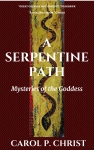
A Serpentine Path Cover with snakeskin backgroundA Serpentine Path: Mysteries of the Goddess will be published by Far Press in the spring of 2016. A journey from despair to the joy of life.
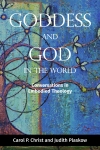
Goddess and God in the World: Conversations in Embodied Theology with Judith Plaskow will be published by Fortress Press in June 2016. Exploring the connections of theology and autobiography and alternatives to the transcendent, omnipotent male God.

Slant the Truth by Esther Nelson

esther-nelsonSeems to me that our society nowadays “believes in” slavishly following step-by-step instruction found in “how-to” manuals.  By following such rigid-like instruction, we hope to find meaning that enables us to live fulfilled lives.  This became evident to me (all over again) during a recent departmental meeting at the university where I teach.  We put aside discussion of items on the agenda because our director had invited a guest speaker, the Vice President of the Division for Inclusive Excellence, to talk to our group about “equity and inclusivity.”
In the wake of the University of Missouri students’ complaints (Fall 2015) regarding persistent racism (among other things) and their demand for more inclusion within the university, a group of students recently made their way into our university president’s office to demand change.  More Black professors.  More Black counselors.  Cultural training on campus.  After listening to the students, the president invited them to participate in an upcoming forum on diversity and inclusion, promising that his staff would work to get them excused from class.  Continue reading “Slant the Truth by Esther Nelson”

Mor, Celtic Goddess of Sun and Sea by Judith Shaw

judith Shaw photoMor is an ancient Celtic Goddess of the Sea and the Sun, bringing to mind the shining days of summer and the abundance of the harvest. Yet in a typical Celtic paradox in which opposites exist as one whole she is also a Dark Goddess of Death and Rebirth.

She is depicted sitting on a throne, revealing her association as a sovereignty goddess.  But no ancient stories of courtship and marriage are associated with Mor, no making of a king through marriage to Her.  So She must have been a sovereignty goddess in the most ancient sense – as a protector and guardian of the land, as the spirit of Earth itself. Continue reading “Mor, Celtic Goddess of Sun and Sea by Judith Shaw”

Remembering to Be Thankful by John Erickson

Remembering to be thankful may just be a privileged illusion that individuals in positions of power get to write about in the December of each year to self-congratulate themselves about being actually able to be able to be thankful. It may just seem like people who write about being thankful are complaining or pontificating that being thankful is in itself a chore.

WEHO CA (June 7, 2015)©2015 Rebecca Dru Photography All Rights Reserved    www.rebeccadru.com
WEHO CA (June 7, 2015)©2015 Rebecca Dru Photography All Rights Reserved
http://www.rebeccadru.com

With the holidays just around the corner and the frazzled, crisp ping of anxiety, rush, and panic take over the air around us, it is easy to forget to stop and “smell the roses.”  In times where teaching positions continue to shrink and more universities switch to adjunct labor, fees and class costs continue to rise, or just simply life becomes a little more complicated, due to the nature of balancing life, activism, work, friendships, or relationships, remembering to remind myself to be thankful is another task, I find adding to the never-ending list of stuff I always seem I have to do.

However, remembering to be thankful, scheduling it into one’s daily schedule are vital to our success as new and emerging faculty or activists or just in general because being thankful reminds us that we have aspects of our lives that are worth being thankful for.  Remembering to be thankful proves that we are in some way, connected to a larger sense of life that, at times, grants our wishes, wants, or desires, brings us despair, and then allows us to get through it, or even makes us feel alive.

As I sit back and look at the personal and professional landscape around me I understand that I have a lot to be thankful for both consciously and unconsciously.  Most recently at AAR, I participated on a panel in response to Bernadette Barton’s Pray the Gay Away.  During the course of our panel, the conversation of chosen vs. biological families came up.   Most recently, my mentor and panel moderator, Dr. Marie Cartier, talked about the same topic here on FAR and the difficulties many of us experience in regards to our chosen families vs. our biological families.   With the holiday season all around us, and regardless of what or if, you celebrate it or not, it is quite hard to get away from it all without realizing who your “family” is and whether or not you’re close or connected with them can be traumatizing during these times where we’re taught or expected to be with them.

After our discussion on the panel and then at the hotel bar, people discussed the pains and traumas in relation to not having a biological family to go home to during the holidays.  Sitting there and listening to the conversations, I realized that, for once in my life, I had nothing to say. Continue reading “Remembering to Be Thankful by John Erickson”

Announcing A Serpentine Path: Mysteries of the Goddess by Carol P. Christ

carol p. christ photo michael bakas“The serpentine path is the path of life, a snakelike, meandering path, winding in and out, up and down, with no beginning and no end, into the darkness and into the light.”

As the year draws to a close, I am putting the finishing touches on A Serpentine Path: Mysteries of the Goddess. In the spring of 2016 it will be published by the Far Press, founded by Gina Messina-Dysert.  A Serpentine Path is the original title of the memoir of my journey from despair to the joy of life on the first Goddess Pilgrimage to Crete. It was published in 1995 as Odyssey with the Goddess, a title chosen by the publisher.

A Serpentine Path marked a turning point in my life and in my career as a writer. During the time described in my memoir I had fallen into a deep despair, sparked by the end of a marriage, the end of a love affair, and disappointment in my career. Hoping to make a fresh start, I moved to Greece. Not surprisingly, my despair followed me there. Nonetheless, as I would learn, I made the right decision, for as my Greek therapist was to tell me, I needed to learn to live in my body, not my head, and Greece was the place to learn that.

I was at a crossroads in my spiritual quest. I left Christianity for Goddess feminism, yet I felt the Goddess had abandoned me. I had a contract to write the first Goddess thealogy, but as I said in a speech at I gave at Harvard Divinity School just before I made the decision to move to Greece, I was not sure of the meaning of the symbol of the Goddess. Is Goddess a personal being who cares about the world? Or the name we give to the cycles of birth, death, and regeneration in nature? My inability to answer this question led my editors to return draft of my Goddess thealogy with the comment that something was missing. Continue reading “Announcing A Serpentine Path: Mysteries of the Goddess by Carol P. Christ”

My Terrible Transition Year and the Return of my Humanity by Xochitl Alvizo

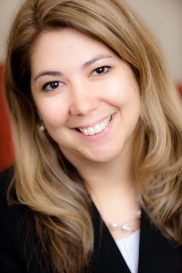
Alvizo headshot smallI have called it, The Terrible Transition Year, this year of finishing dissertation, uprooting from home, moving cross-country, and starting a new full-time teaching job. Last year at this time I was in LA for a 7-8 week stay, away from home – which at the time was in Boston – writing dissertation nonstop. I spent the holidays apart from my family and shared in none of my traditional holiday celebrations as I intensely pushed forward to complete the dissertation. After (seemingly) endless edits back and forth with my advisor and second reader, I finished the dissertation just in time to successfully defended it in May.
During most of this dissertation-writing time, I never had the sense that there would be a successful end to it all. I wrote and submitted each chapter-draft always with the underlying fear that I would be told my work was unworthy, my logic lacking, and my thesis unsubstantiated. So I vividly remember the moment (I can actually still feel it) when I got definitive affirmation that my dissertation would reach a successful end. I remember the shock, the relief, and the physiological rush that coursed through my body as I read the words of approval that came in response to my last chapter. I remember my body shooting up off the chair and saying, “No!” as I read the email. It was a “No” of disbelief, as in “Can this really be?!” And it was. And only at that point did I believe my dissertation would be successful. Continue reading “My Terrible Transition Year and the Return of my Humanity by Xochitl Alvizo”

The Sisterhood of the Traveling Pantsuits by Gina Messina-Dysert


Gina Messina-Dysert profileI originally shared this post in 2011.  Here we are, nearly 5 years later and I while I don’t think a great deal has changed, some things have.  Many may not agree with my avid support of Hillary Clinton’s presidential bid; nonetheless I think it is clear that Clinton is focused on running a women’s centered campaign, and that is something I find very hopeful.

Hillary Clinton announced her campaign online, but her first meatspace speech was held Thursday at the Women in the World Summit in New York City, an annual feminist shindig that’s all about improving women’s fortunes around the world. The choice of the location in itself sends a strong signal, and if there was any doubt that Clinton intends to run a woman-centric campaign, her speech erased it. “When women are held back, our country is held back. When women get ahead, everyone gets ahead,” she declared.

While I still have not heard Clinton refer to herself as a feminist – please correct me if I am wrong – her focus on gendered issues is much more prominent.  She has also acknowledged that while we should not vote for her just because she is a woman (there are many female politicians who would not get my vote) – her abilities to serve as president are critical – gender is an important factor in this race.

Joan Wages, President of the National Women’s History Museum has pointed out time and time again, you cannot be what you cannot see.  If we want to raise our children – especially our daughters – to know they can be whatever they want when they grow up – they must have the opportunity to see a woman serve in office.


In Clinton I believe we have a candidate that is committed to working towards positive social change that will impact our children’s lives – my daughter’s life.  A woman in office will finally shatter the ultimate glass ceiling.

My point here is not meant to be a political ad for Hillary Clinton, but rather acknowledgment that while change is slow – it is happening.  And so, my post from 2011 on the ways women are strategic in upholding their feminist values.

————————————–

July 11, 2011

Last week Cynthia Garrity-Bond shared a post about Michele Bachmann and the misuse of the word feminism to describe her.  Commenter Kate Barkernoted that Bachmann does not self-identify as a feminist, a very important point I think.  It led me to wonder whether there are any women in politics who self-identify as feminist, and while there may certainly be some or even many, I cannot think of any who do so publicly.

During the Democratic National Convention in 2008, Hillary Clinton spoke of working towards women’s rights around the world, putting 18 million cracks in the glass ceiling, and being a member of the “sisterhood of the traveling pantsuits,” but did not directly identify herself as a feminist.  I found Clinton’s membership to this “sisterhood” an interesting method of feminist self-identifying without employing the label.

It seems to me, to call oneself a “feminist” in the world of politics today would be to commit career suicide.  This term has joined the likes of “communist” or “socialist” and is utilized to create fear.  “Feminism” has become the new “F-word” and to self-identify as such, in politics, in religion, and in other spheres, often leads to marginalization.

Although we have been having conversations about feminism for quite sometime, entering the 21st century, we – society in general – continue to struggle with the meaning of the word.  Does it only acknowledge women? Does it exclude men?  Is it a Western term supporting a Western agenda?

Rosemary Radford Ruether’s definition (“What is Feminism and Why Should we do it?”) addresses these questions stating that feminism is “the affirmation of the full humanity of women… a critique of patriarchy as a system that distorts the humanity of both women and men…[and] is relevant cross culturally because all known cultures presently existing have been shaped in one way or another by patriarchy.”  This is why her article has become such a central piece to this blog.

All this being said, we continue to struggle with feminism as an ugly word and thus women and men look for creative ways to identify with feminist values, like Clinton’s reference to the “Sisterhood of the Traveling Pantsuits.”  While teaching a theology course this past semester I had several students comment that they felt the word “feminism” should be trashed in favor of a new term that doesn’t have such baggage.  An interesting idea, but wouldn’t we simply be throwing in the towel and allowing a patriarchal system to define a term meant to support women’s full humanity?

To wrap up, I think this video from IFC’s Portlandia (which is highly amusing) does a great job of mocking some of the issues we face with feminism.  For your entertainment:

Gina Messina-Dysert, Ph.D. is Assistant Professor of Religion and Gender Studies at Ursuline College and Co-founder of Feminism and Religion. She writes for The Huffington Post, has authored multiple publications and most recently co-edited the highly acclaimed Faithfully Feminist: Jewish, Christian, and Muslim Feminists on Why We Stay. Messina-Dysert is a widely sought after speaker and has presented across the US at universities, organizations, conferences and on national platforms including appearances on MSNBC, Tavis Smiley, NPR and the TEDx stage. She has also spoken at the Commission on the Status of Women at the United Nations to discuss matters impacting the lives women around the world. Messina-Dysert is active in movements to end violence against women and explores opportunities for spiritual healing. Connect with her on Twitter @FemTheologian, Facebook, and her website ginamessinadysert.com.

What If Jesus Had Gone to Daycare? by Katey Zeh

Screenshot 2015-12-08 09.47.34

As a maternal health advocate, I cherish the season of Advent as an opportunity to connect a beloved Christian story to the lives of women today who struggle to bring new life into the world under horrific circumstances. Every year I write something about Mary’s pregnancy and birth. In many ways she is no different from the “Marys” around the world who are young, poor, and unexpectedly pregnant, and who go on to give birth in unclean environments. I often pose the question to communities of faith, wasn’t the Christmas miracle equally that Mary survived the birth? How different would Jesus’s life have been if he’d never known his mother?

I continue asking these questions, but after my daughter was born last October, I have found my Advent reflections shifting to mirror my own parenting experiences. I began to think beyond Mary’s birth and into her early months of motherhood. One morning last December, after a particularly awful night’s sleep, I came downstairs to hear “Away in a Manger” playing on the radio. When it got to the line “But little Lord Jesus/No crying he makes,” I rolled my eyes dramatically and pictured Mary doing the same as she bounced a screaming baby Jesus in her arms. Continue reading “What If Jesus Had Gone to Daycare? by Katey Zeh”

Jewish Feminists and Progressives Protest the Man Who Could Become America’s Hitler by Carol P. Christ

carol p. christ photo michael bakasJust before I went out on Friday night in Lesbos, my friend and sister feminist theologian Judith Plaskow emailed me from New York: “Right now we’re headed down to the Plaza Hotel to attend and try to disrupt a Trump luncheon!” That night, a friend asked me how I felt about Donald Trump. I threw my hands in front of my face and said: “I’m really glad I am not an American anymore.” Of course I am an American, but sometimes I don’t want to be one.

The next morning, I received an update from Judith: “We were part of a small group from Jews for Racial and Economic Justice in New York City who got inside the Trump fundraising luncheon and disrupted it. We were interviewed afterwards by CBS news, AP, Reuters, and the Philadelphia Inquirer.” Continue reading “Jewish Feminists and Progressives Protest the Man Who Could Become America’s Hitler by Carol P. Christ”

Painting Marys, Welcoming Refugees by Angela Yarber

angelaThis holiday season, in the midst of our ever-repeating mass shootings and debates about the welcoming of Syrian refugees, I have seen a meme, a pithy quote, a bumper sticker time and time again amidst my fellow liberals:

“If only we had a seasonally appropriate story about Middle Eastern people seeking refuge being turned away by the heartless.”

Similarly, many have posted pictures of nativity scenes with a tongue-in-cheek quip, “I’m so glad people are placing these lawn ornaments in their yards to indicate that they welcome refugees into their homes.”

Myriad articles have been published encouraging Christians to remember our calling to welcome the refugee, and as an ordained clergywoman, I affirm these thoughts. I believe it is our responsibility, as Christians and particularly as feminist Christians, to welcome the marginalized, the oppressed, the refugee. I am also a strong believer in the separation of church and state, a distinctive imperative both to my Baptist tradition and to my home country of the United States. So, in many ways, it doesn’t really matter politically that my faith tradition teaches me to welcome the refugee because my country is not a Christian nation, but it does matter that the primary symbol of my country—the Statue of Liberty—proclaims boldly and without apology: “Give me your tired, your poor, Your huddled masses yearning to breathe free, The wretched refuse of your teeming shore. Send these, the homeless, tempest-tossed to me, I lift my lamp beside the golden door!” Continue reading “Painting Marys, Welcoming Refugees by Angela Yarber”