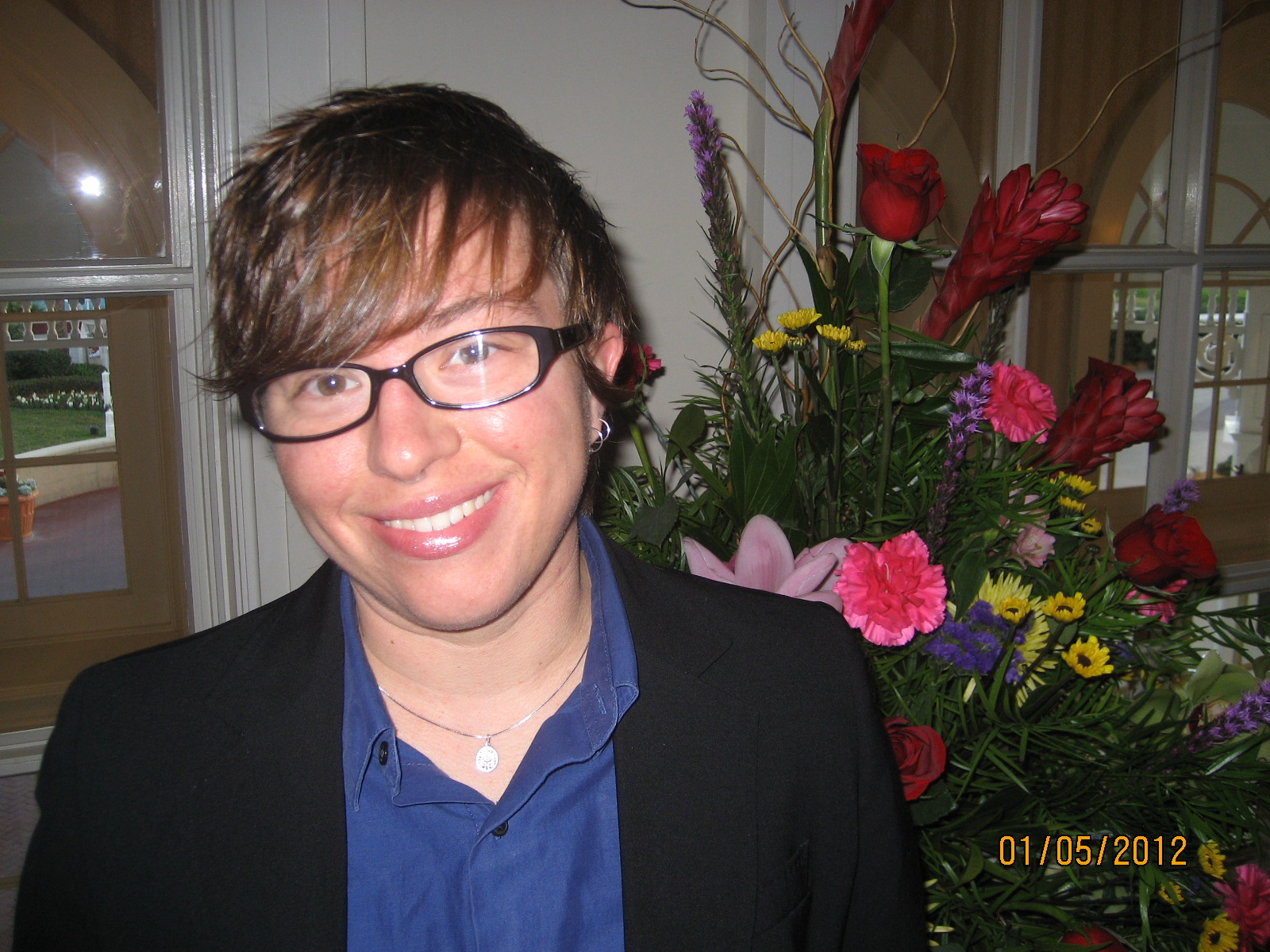
Reflecting on the Construction of Race as our National Identity Shifts By Helene Slessarev-Jamir

The following is a guest post written by Helen Slessarev-Jamir, Ph.D., Mildred M. Hutchinson Professor of Urban Studies at Claremont School of Theology.  Her research focuses on the character of religiously inspired justice work in response to globalization and American empire.  Helene is a member of the Board of Directors and writes for Sojourners; she has authored multiple articles and books including most recently published Prophetic Activism: Progressive Religious Justice Movements in Contemporary America.

Today my son Stephan celebrates his 31st birthday. In the year Stephan was born he was one of very few bi-racial children in the U.S. I personally knew of no one else who had a bi-racial child. His father and I agreed that given the racial realities of the U.S. in 1980, he needed to be raised as an African-American because that was how he would be perceived. We consciously constructed Stephan’s identity as black.

We lived on the Southside of Chicago in an all-black neighborhood. Yet, when he was ready to enter elementary school, I was advised to register him as “white” so that he would have a better chance of being admitted into the local public magnet school. Having resisted any significant plans to desegregate its public schools, the Chicago Board of Education used racial diversity as one of the main criteria for admission into their magnet schools. As a result, Stephan became one of the “white” children in his 1st grade classroom even though all the faces in his school photo were varying shades of brown. Continue reading “Reflecting on the Construction of Race as our National Identity Shifts By Helene Slessarev-Jamir”

Be-ing in the Church By Xochitl Alvizo

Sometimes it is difficult to make sense of the peculiar paths our religious lives take, much more so to make sense of one another’s paths which can be so different from our own.

I was raised in a Mexican American family and grew up in Los Angeles, California(my parents say I was “made in Mexico, assembled in the U.S.”). And I grew up going to Spanish-speaking Catholic mass. I have often said that the God I know in Spanish is so different from the God I came to know in English when I began to roam Protestant circles in undergrad. Growing up, the Spanish speaking God I knew was  as assumed and as basic as the air that kept us alive: always available and always with us in the good, the bad, and the ugly. God was a constant without which we could not exist.  But in undergrad, my Protestant friends seemed to have a completely different understanding of God than the one I had grown up with. Theirs was a God that required obedience, a God of very specific expectations, and a jealous God at that! It was a very confusing time for me and my engagement with Christianity wavered.

Then in graduate school, eight years after undergrad, something happened that revolutionized my life – I discovered radical feminists! As ironic as this might seem, radical feminists provided me with a way to make sense of Christianity. They gave me a language and the tools to both critique and engage Christianity and the church. I have often said that if it wasn’t for Mary Daly, I wouldn’t be able to call myself a Christian(!). Continue reading “Be-ing in the Church By Xochitl Alvizo”

Mary’s Feast Rooted in Lesbian Goddesses Diana and Artemis By Kittredge Cherry

Kittredge Cherry

The following is a guest post written by Rev. Kittredge Cherry, lesbian Christian author and art historian who blogs about LGBT spirituality and the arts at the Jesus in Love Blog.  Her books include “Equal Rites” and “Art That Dares: Gay Jesus, Woman Christ, and More“.

August 15 was once the festival of the lesbian goddess Diana (Artemis), but it has been adapted into a feast day for the Virgin Mary.

Midsummer feasts have celebrated the divine feminine on this date since before the time of Christ.  Now devoted to Mary, August 15 carries the torch of lesbian spiritual power to a new generation.

Saint Mary, mother of Jesus, is honored by churches today in a major feast day marking her death and entrance into heaven.  Catholic and Orthodox churches call it the Feast of the Assumption or Dormition, when Mary was assumed into heaven, body and soul.

The Virgin Mary’s holiday was adapted — some would say appropriated — from an ancient Roman festival for Diana, the virgin goddess of the moon and the hunt.  Diana, or Artemis in Greek, is sometimes called a lesbian goddess because of her love for woman and her vow never to marry a man.  The ancient Roman Festival of Torches (Nemoralia) was held from Aug. 13-15 as Diana’s chief festival. Continue reading “Mary’s Feast Rooted in Lesbian Goddesses Diana and Artemis By Kittredge Cherry”

Hearing Each Other to Speech in the Academy By Xochitl Alvizo

Sometimes when I write, especially when I am writing an academic paper but even when I am writing for this blog, I imagine that I am writing it to my feminist peer-group.  I am part of a group of four feminist women who have intentionally decided to stay involved in our religious traditions.  We are Unitarian Universalist, American Baptist, Presbyterian, and Disciples of Christ, and we started our peer-group in order to enCourage, support, and inspire each other as we participate in our churches with our full feminism selves. We get together regularly and we listen deeply to each other, we celebrate, we cry, we mourn, we rage, we laugh, and, of course, we eat together. On many occasions we have each expressed that we are better versions of ourselves because we are part of each others lives.

One of the reasons it is easier for me to write to my peer-group instead of my academic audience is because I know that my peer-group is invested in my empowerment, my liberation, and my continual be-coming – they understand that my well-being contributes to theirs, and vice versa. Thus, when I write for them, I do not fear; I trust that my peer-group will truly hear me and encourage me, and that when they raise questions and point out weaknesses in my writing, they do so not in an attempt to tear down my work but in order to strengthen it and build on it.

My peer-group

My peer-group, while being able to point out the blind spots and shortcomings on my work, never fail to recognize, honor, and express appreciation for my contribution as well. They hear me to speech and understand the importance of that for bringing out my academic best. Continue reading “Hearing Each Other to Speech in the Academy By Xochitl Alvizo”

Love, Loss and Longing: The Rebooting of a Feminist Heart By Cynthia Garrity-Bond

It has been said time heals all wounds, I do not agree.  The wounds remain, in time the mind, protecting its sanity, covers them with scar tissue and the pain lessens, but it is never gone.  Rose Kennedy

 This past Saturday, August 6, would have been my 34th wedding anniversary.  Next Saturday, August 13 will be the wedding of my once fiancé.  The former lasted 20 years, the latter 10.  I have recently begun the delicate dance of getting to know another man; continuing to second-guess myself as if I’m a schoolgirl with her first crush, only I’m not.  I’m a woman drawing upon 30 years of the good, the bad, and the ugly.    Without sounding like Carrie Bradshaw from Sex and The City, I am asking myself what does a feminist relationship look like as it unfolds?  How do I trust another with a heart that is held together by Elmer’s glue?  And more importantly, how do I make myself present to another without past wounds surfacing and then projected onto the innocent?

In a recent post, XochitlAlvizo wrote on the difference, as she understands it, between sacrifice and love. All too often, argues Xochitl, we confuse the two, believing our sacrifice is what redeems us and others, when in reality, it is always love.  The distinction, while at times difficult to discern, is what can bring life to a healthy, loving relationship.  I can’t imagine not being steeped in a committed relationship without some sacrifice on my part.  But when does this practice of sacrifice become the support system for sustaining love?  How do I hold the balance of love and at times sacrifice for another without losing love of self? Continue reading “Love, Loss and Longing: The Rebooting of a Feminist Heart By Cynthia Garrity-Bond”

“I’m in love with Judas”: Names and Taboos within the Scholarly Arena of Religion and Biblical Studies By Michele Stopera Freyhauf

Names provoke opinions, responses, and even controversy.  Lady Gaga’s song “Judas” is a perfect example of this.   Before this song was released, the title “Judas” stirred controversy throughout the nation just because of its name.  If one takes the time to read the lyrics, you find a human struggle summed up with the phrase, “Jesus is my virtue but Judas is the demon I cling to.”   To look beyond the name, a deep theological fight that is relevant to every one of us emerges; struggling between what you know is right but being drawn to what you know is wrong.  Within this song lays a fundamental dichotomy of betrayal and forgiveness that is overlooked because of a name, Judas, or what Mary Elizabeth Williams calls a “Christian taboo.”

The word “taboo” refers to something that is inappropriate or unacceptable by society , and can also indicate ostracizing.  It seems strange to apply this word to female scholars in the field of Religion and Biblical Studies; but it fits.  Scholarship that is identifiably authored as female brings about scrutiny and opinions of inferior quality or lack of creditability; after all “what does a woman know?”  Women and scholarship, especially in the male-dominated fields of Religion, Biblical Studies, and Archaeology, are in fact “taboo;” unaccepted, improper, ignored, and shunned.  This issue was first brought to my attention at a Women’s Luncheon at the annual meeting of the Society of Biblical Literature (“SBL”) in 2008.  Carol Meyers, a professor of Religion at Duke University, was being honored for her mentorship to women in the field of biblical studies.  Amy-Jill Levine, an earlier recipient of this award, introduced Meyers. Continue reading ““I’m in love with Judas”: Names and Taboos within the Scholarly Arena of Religion and Biblical Studies By Michele Stopera Freyhauf”

What about “the final frontier?” Saying goodbye to the Space Shuttle Program By Sara Frykenberg

The following is a guest post written by Sara Frykenberg, Ph.D., independent scholar and graduate of the Women Studies in Religion program at Claremont Graduate University.

“It all started when they messed with Pluto,” my husband joked to me as we listened to the NPR report last week about the end of NASA’s Space Shuttle Program.  I imagined a slighted god of the underworld smiting our exploration of the heavens!  “How dare you tell me that Pluto doesn’t count,” he yells, dragging our shuttles out of the sky.  But joking aside, I am really, truly bummed about this new “development” is US space exploration.  The idea that human beings have the ability to travel in outer space is a great source of hope and inspiration for me— but why?  And why am I so bummed?  I decided that I needed to examine these feelings from both a feminist and a spiritual dimension.

Does feminism care about the Space Program?  That is a question, because I really don’t know.  I know particular feminists do.  I know some don’t. Continue reading “What about “the final frontier?” Saying goodbye to the Space Shuttle Program By Sara Frykenberg”

What Feeds Your Soul? By Cathy Dundas-Reyes

The following is a guest from Cathy Dundas-Reyes, Ph.D.

I have finished coursework in Leadership Studies, but feel like I could use another three years to read all the additional leadership literature out there. I took comps two weeks ago and now get to wait…for the results. I had prepared my mind before I headed back for my test. I knew it would be hard to switch gears – having nothing to really study anymore. But it has been harder than I thought.

For a few days, I was restless and irritated. I tried to study for lit review but was not productive. All I felt was exhausted. I napped everyday and still wanted to sleep at night. I realized I could use the time to minister to my own soul. My feminine soul to be more specific.

I had a glimpse of her in my mind. She was a runner in a race and was worn out. She had kept up for the race, but she was done. Her head was down and she needed to rest. She was toned and in good shape – she had been a faithful companion. But now she needed something from me. Could I just sit and listen? When was the last time I did something that fed my soul?

What feeds your soul? I thought about lots of things that feed my feminine soul. A visit to the Getty museum, exploring the coast for unexpected beauty, a massage, dancing…chocolate ice cream. So that is what I will do…while I wait.

Interestingly, I had another image of my feminine soul almost a year ago. She was a slave, in chains, at the mercy of the task master. She was malnourished, neglected and in torment. I was struck by the contrast of the two images. Now, she may be tired, but she is powerful and strong. She grew from a slave to a powerful running partner. Lady Wisdom says “I am understanding, power is mine” (Prov 8:14). Find out what feeds your feminine soul – find that deep understanding and power. I would love to hear your comments about what you discover.

For more about the feminine soul – see Janet Davis’ book, The Feminine Soul: Surprising Ways the Bible Speaks to Women (2006).

Mary Daly: Radical Elemental Feminist and Sinner By Gina Messina-Dysert

While some argue that Mary Daly was too radical, I have been greatly influenced by her contributions to the field of feminism and religion.  I can still remember the first time I read a piece of her work.  It was during my undergraduate career at Cleveland State University in a course entitled “Women and Religion.”  I was immediately impacted and wanted to know more about this bold, strong and courageous woman, and although I had already considered myself a feminist, it was in that moment I recognized the existence of patriarchy in religion.  Shortly thereafter I applied to a graduate program in religious studies and became better acquainted with Daly’s work and the intersection of feminism and religion.

While I must admit that I am troubled by some of Daly’s claims and disagree with some of her contentions, I have also been significantly influenced by her foundational work in feminist theology, her demand for women’s liberation and Spinning of new tales and new ideas.  Daly called for women to have the courage to be, to experience a new fall out of patriarchal systems and into a new being that allows women to discover their capabilities, the dynamic power women possess within themselves.

According to Mary E. Hunt, co-founder and co-director of the Women’s Alliance for Theology, Ethics and Ritual (WATER), “Her contributions to feminist theology, philosophy, and theory were many, unique, and if I may say so, world-changing. She created intellectual space; she set the bar high. Even those who disagreed with her are in her debt for the challenges she offered…She always advised women to throw our lives as far as they would go. I can say without fear of exaggeration that she lived that way herself.”[1]

While I never had the opportunity to meet Mary Daly, I have no doubt been inspired by her brilliance, courage, wit, and spirit.  My feminist and theological views have been shaped through her influence. I have been able to spiral into freedom and rename and reclaim my own experiences; I have found my own creative power.  Thank you for having the courage to sin big Mary Daly.

“There are and will be those who think I have gone overboard. Let them rest assured that this assessment is correct, probably beyond their wildest imagination, and that I will continue to do so.” – Mary Daly