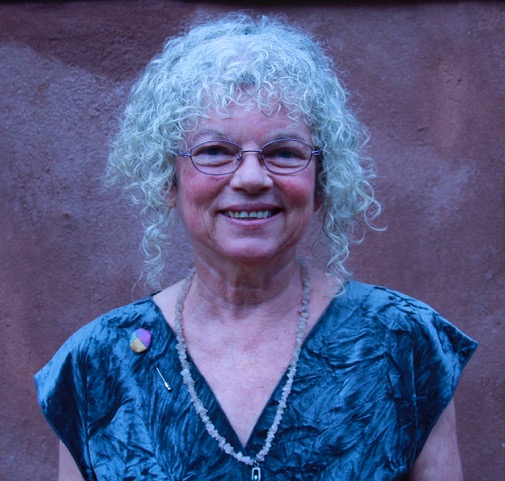
Remembering Karolina by Judith Shaw

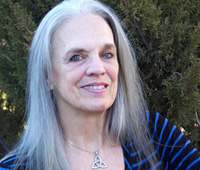
judith shaw photo


Early in the morning of July 15, 2021, I was sitting amid the chaos of boxes in my new home which I had just closed on a week earlier. I had woken at 5 am to a leak in the new roof and was feeling very tired and somewhat dazed by all the work to be done. Then I got a text with the news that Carol Christ had passed away the previous day.  It took a few minutes for that reality to sink in past my state of overwhelm and exhaustion and then the tears and the memories flooded through me. 

Carol and I became friends in 1987 when we both had begun living on the Greek island, Lesvos, in the village of Molyvos. At that time Carol was mainly using her Greek name, so for many years I called her Karolina. As the months wore on we discovered our mutual interests –  in Goddess, in social justice, in living a life more connected to nature and in the desires of younger women to kick up their heels and have some fun. We became constant “parea” (company) for each other. 

Continue reading “Remembering Karolina by Judith Shaw”

The Goddess in Portugal by Mary Sharratt

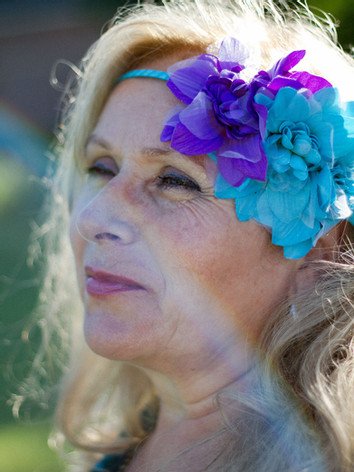
Luiza Frazão

Most people know Portugal as a deeply Catholic country with a rich Islamic past and an ancient Sephardic Jewish heritage reaching back to Roman Lusitania. But what about the country’s pre-Roman, pre-Abrahamic Goddess cultures? 

Like many foreigners, I moved to Portugal knowing nothing about Portugal’s Goddess heritage.

Then I met Luiza Frazão, Priestess, author, and independent scholar who studied at the Glastonbury Goddess Temple in England with Kathy Jones. After years of training and steeping herself in the lore of the Celtic Goddesses of the Avalonian Tradition, Luiza returned to her native Portugal to research the rich Goddess lore of her country. Intrigued and eager to learn more about her research, I met up with Luiza in the medieval town of Óbidos.

Continue reading “The Goddess in Portugal by Mary Sharratt”

The Crafting the Wisdom Loom By Mary F. Gelfand


Over 20 years ago, I randomly came across the following passage from Sonnet X by Edna St. Vincent Millay:

Upon this gifted age, in its dark hour,
Rains from the sky a meteoric shower
Of facts . . . they lie unquestioned, uncombined.
Wisdom enough to leech us of our ill
Is daily spun; but there exists no loom
To weave it into fabric

I was just learning to spin and weave and so was struck by this passage. I’ve been contemplating Millay’s words ever since.

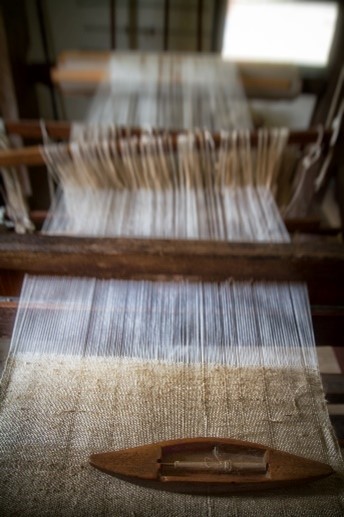
image of Loom
Photo by Nickolas Nikolic

Weaving is a fascinating process that the ancients in many cultures believed was a gift from the Goddess. Before the Industrial Revolution, clothing was valuable because of the sheer amount of both labor and skill necessary to create it—tasks that were primarily delegated to women.  The process of collecting, cleaning, and preparing plant or animal fiber to be spun into thread or yarn is a lot of work.  And all you have now is spun fiber.  It still needs to be dyed and used to warp the loom—a tedious and time-consuming process.  Next the weaving itself—dancing the shuttle in and out across the width of the warp—over one, under one, over two, under two—or some more visually appealing pattern which is also more complex to do. Finally, the woven fabric must be measured, cut, and sewn to make a garment.

Continue reading “The Crafting the Wisdom Loom By Mary F. Gelfand”

Wisdom from our Ancient Female Lawgiver and Judge Traditions by Carolyn Lee Boyd

Carolyn Lee Boyd


As I have witnessed both the joy of so many across the world at the nomination of Kamala Harris for Vice President and the deep sorrow at the death of Ruth Bader Ginsburg, I am struck by the fact that, in 2020, supremely qualified women still need to be trailblazers to hold high office. After all, goddesses and wise women gave a number of cultures their systems of laws and governance and have been celebrated for their wisdom as judges for millennia. 

Here are a few of the goddesses and wise women lawgivers:

The Goddess Themis
  • the Italian goddess Egeria gave Rome its first laws and taught the correct rules for Earth worship; 
  • the Babylonian Kadi, was goddess of Earth and justice; 
  • Ala of the Ibo people of Nigeria is both the Earth Mother and lawgiver of society; 
  • the Greek Themis, daughter of Gaia, symbolized the social contract and cohesion of people living on Earth; 
  • the Inuit Sedna both gave humanity abundance from the ocean for life from her own body and withheld it when her laws were broken;
  • Marcia Proba, whose historical reality is unclear, is said to have created the ancient Celtic system of laws known as the Marcian Statutes that may have influenced later British law;
  • past and present Women’s Councils and Clan Mothers of the Iroquois and other Indigenous peoples as well as those of Societies of Peace have brought harmony and well being to their people for tens of thousands of years.

Continue reading “Wisdom from our Ancient Female Lawgiver and Judge Traditions by Carolyn Lee Boyd”

Loss of Good Friend and Elder Claire French by Glenys Livingstone

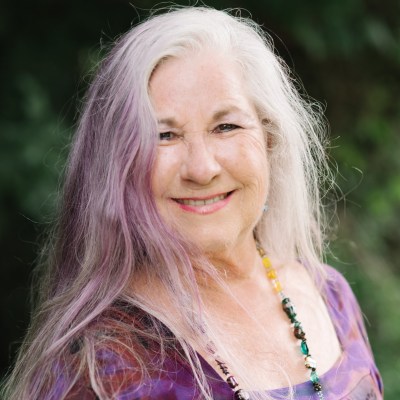
image of author - Glenys Livingstone
Dr. Claire French was born in 1924, Claire Anna Maria Margaretha Wieser, “in the backwoods of Bavaria” as she has described, where “pagan beliefs and superstitions were rife” and “so was Communism amongst the factory workers who lived in her neighbourhood.” She described her mother as “a staunch Lutheran”, her father as “a freethinking artist from the Tyrolean mountains”, and her paternal grandmothers and aunts as “bigotted Catholics”. She has said that she received some of all these ideologies right from her earliest childhood, and that “to this were added the experience of fascist and national socialist authoritarianism during her school years.” In early years she was educated by nuns in Italy. For high school her education was in Germany, where the teachers were partly nazi and partly anti-nazi. She has described her education as “pluralistic in the extreme”.

During the war she was conscripted to the German paramilitary organisation for women working for Tyrolean mountain farmers and later in the military hospital. That year of paramilitary service was conditional for enrolment of women at any German University: educated women were seen as dangerous … the authorities wanted “incubators”, as Claire named it. After the war she studied modern languages and politics at the University of Austria, and in 1945 she was conscipted as interpreter to the military government first by the American and then the French Army Forces. She has said: “In 1951 she finally had enough of Europe and embarked for Australia, where she worked as a housemaid, grape picker, and interpreter and finally as a secretary at Melbourne University. There she started her studies from scratch again as a part time student, graduating in 1956. In that year (an Olympic year she noted), she married Jack French, with whom she had a daughter and two sons. Continue reading “Loss of Good Friend and Elder Claire French by Glenys Livingstone”

Lammas after Lockdown by Laura Shannon


Today, August 1, 2020, is Lammas, the Celtic festival of late summer, the ‘feast of bread’, time of harvest and of golden grain. Here in the UK, Lammas arrives just as we are emerging from our coronavirus lockdown. It’s hard to feel a personal sense of ‘harvest’ when most people’s lives have been on hold since the spring.

Confined to our homes, many people could throw themselves into tending their own gardens (if they had one), but most of us could not cultivate the symbolic gardens of our lives and work in the way that we wanted. Many have faced deep loss, the withering of seeds planted in the past which could not now come to fruition.

Despite the tragic times, the earth continues to dance to the sacred rhythms of sun and moon. The trees are full of fruit, the fields are full of grain. Although I too have had my share of sorrow and grief in recent months, today I feel moved by the season to look at what we can harvest from our experience of the coronavirus pandemic.

Continue reading “Lammas after Lockdown by Laura Shannon”

The Benefits of The Plague….and Trump by Karen Tate

You might be asking yourself, “Is Karen losing her mind?” Last post she’s asking us “Are Your Shackles Showing?” as she writes this morbid and scary piece reminiscent of movies where someone is being held captive by a serial killer, and now this (I think most of you realized I was writing about being held captive by patriarchy and predator capitalism.), talking about the benefits of the Black Death – while we’re shuttered-in trying to dodge this virus.  And she sees a benefit of Trump?!

Stay with me here.  Let me explain. 

When the Orange Jumpsuit moved his clan of crooks and cronies into the White House I told my friends to take a deep breath and wait.  I could understand people gave him a shot because neither party, the Republicans nor the Corporate Democrats, were doing much for them.  Desperate voters turned a blind eye to what many of us could have predicted came along with Trump.  As scary as this man was and is, he was necessary.  He was the perfect and tactical move of Goddess or the Universe, who is sometimes about tough love and not just sweetness and light. Continue reading “The Benefits of The Plague….and Trump by Karen Tate”

Outtadeway-O: A Found Goddess of Public Transportation (well, you asked for Her last month) by Barbara Ardinger

Tall, hearty. sometimes pushy, and usually very loud, Outtadeway-O is easily able to propagate and multiply Herself so that we can find Her in crowded airport terminals, at bus and subway stops, and just about anywhere people are traveling from or to. She’s in charge of trains, planes, and taxi-cabs. She’s the One who, when we’re in a hurry to get somewhere on time, shouts, “Please, oh, please get out of the way!” Pilots, engineers, station masters, ticket agents, and ÜberAlles drivers all hear Her. You better bet they get out of Her way.

Although there are apocryphal reports that Outtadeway-O was present when Hannibal crossed the Alps (who do you think was in charge of those elephants?) and in the Roman Colosseum (She supercharged some of the chariots, horses, too), She’s most familiar as the gal in the New York subway system who kindly tells you which side of the tracks to stand on so you get on the train going in the right direction. Whether you’re lost in La Guardia, O’Hare, Hartsfield, or LAX (and in the smaller airports, too), She’s the gal in the uniform who explains how to use those dratted ticket machines on the curb and gives you a tidy map that shows where the gates are and how to find them without tripping over the people sleeping on the floor because their flights were delayed or canceled. She’s also the helpful agent who finds food for those people when they wake up and points them toward the bathrooms. Continue reading “Outtadeway-O: A Found Goddess of Public Transportation (well, you asked for Her last month) by Barbara Ardinger”

The Sanctuary of One Another by Molly Remer

53850207_2292227257656150_5800641319395131392_o“Please prepare me
to be a sanctuary.
Pure and holy
tried and true.
With thanksgiving
I’ll be a living
sanctuary
for you.”*

Beautiful Chorus (Hymns of Spirit)

In March, my husband drove our daughter into town to work at her Girl Scout cookie booth and released me to prepare for an all-day Red Tent retreat for my local women’s circle. After I packed my supplies for ritual, I set off on a walk in the deepening, rain-dark twilight. As I walked, I sang a song of sanctuary over and over, until I felt transported into a different type of consciousness, my feet steady on muddy gravel, the leafless branches stark against grey sky, moss and stones gleaming with sharp color against the roadside. A fallen tree absolutely carpeted with enchanting mushrooms caught my eye and invited me off the road and into its arms. As I stood there, feeling as if I had stepped out of ordinary reality and into a “backyard journey,” the spring peepers in the ephemeral pool in our field began their evening chorus. It has been so cold out with below freezing temperatures, snow, and ice for days since first hearing them in early March that I actually wondered if they would survive to continue their song.

Mercifully, though, it is not a silent spring. Continue reading “The Sanctuary of One Another by Molly Remer”

Ritual Theory: Sharing Stories by Molly Remer

“Ritual that is alive encourages each person to touch what is sacred in their own way, in their own time, through their own unique experience. So there evolves a dynamic dance between guiding and shaping the group’s experience and encouraging and supporting the individual’s experience, so there is a smooth and cohesive flow to the ritual.” –Suzanne Reitz and Sandy Hoyt (Celebrating, Honoring, Healing)

As a practicing priestess, one of the dynamic dances that I engage in is with the power of story. I both find that women’s stories are the vital lifeblood of conscious engagement and power-building with one another and that they can be one of the elements that bogs down a ritual and makes it lose power and magic. This is partially because the dominant culture may teach us to bond using stories in a way that actually drain our energy through “venting,” swapping complaints, trading to-do lists, and through describing behavior, motives, and character of other people. In women’s ritual space, I encourage people to dig deep, but also to share a here-and-now connection of shared experience rather than a ­there-and-then­ rendition of past experiences.

Chameli Ardagh in her Create Your Own Women’s Temple manual from Awakening Women explains:

To hold the group and space as sacred is one of the most important guidelines, and the guideline that may bring up the most questions or protests. It goes against our habits as women and against our identification with the small self; we are quite used to creating intimacy through sharing our wounds and problems. The Temple Group is not a place for processing wounds, analyzing ourselves, solving problems, complaining about our lovers, healing our addictions or sharing the stories of the personality. Many women’s circles (and support groups or sharing circles) are focused mostly on the personality. The Temple Group is, in a way, impersonal because it focuses on the larger vast nature of our true self. In the Temple Group we focus not so much on our identity as separate women, but on the whole group as one feminine divine body and expression. The impersonal guideline may sound uncaring at first, but as you explore new ways of being intimate and nourish each other as women, beyond the words, you discover that those are infinitely more fulfilling and caring than the personality talking and processing (p. 61).

I believe that we live in a storied reality and that we are constantly in the process of 22338975_2058326864379525_7570131764764457268_ostorying and re-storying our lives and that seeing our lives, and the lives of others, through a mythopoetic lens, can have a radically transformative impact on our experiences and our relationships. I have written about this for FAR in the past and noted that my personal lived experience is that stories have had more power in my own life as a woman than most other single influences. The sharing of story in an appropriate way is, indeed, intimately intertwined with good listening and warm connection. As the authors of the book Sacred Circles remind us “…in listening you become an opening for that other person…Indeed, nothing comes close to an evening spent spellbound by the stories of women’s inner lives.”

So, what is special about story as a medium and what can it offer to women that traditional forms of education cannot?

Stories are validating. They can communicate that you are not alone, not crazy, and not 23319504_1994649147413964_2818983018590835346_nweird. Stories are instructive without being directive or prescriptive. It is very easy to take what works from stories and leave the rest because stories communicate personal experiences and lessons learned, rather than expert direction, recommendations, or advice. Stories can also provide a point of identification and clarification as a way of sharing information that is open to possibility, rather than advice-giving.

Cautions in sharing stories while also listening to another’s experience include:

  • Are you so busy in your own story that you can’t see the person in front of you?
  • Does the story contain bad, inaccurate, or misleading information?
  • Is the story so long and involved that it is distracting from the other person’s point?
  • Does the story communicate that you are the only right person and that everyone else should do things exactly like you?
  • Is the story really advice or a “to do” disguised as a story?
  • Does the story redirect attention to you and away from the person in need of help/listening?
  • Does the story keep the focus in the past rather than the here and now present moment?
  • Is there a subtext of “you should…”?

Several of these self-awareness questions are much bigger concerns during a person-to-person direct dialogue such as at a women’s retreat rather than in written form such as blog. In reading stories, the reader has the power to engage or disengage with the story, while in person there is a possibility of becoming stuck in an unwelcome story. Some things to keep in mind while sharing stories in person are:

  • Sensitivity to whether your story is welcome, helpful, or contributing to the other person’s process.
  • Being mindful of personal motives—are you telling a story to bolster your own self-image, as a means of pointing out others’ flaws and failings, or to secretly give advice?
  • Asking yourself whether the story is one that will move us forward (returning to the here and now question above).

This work is beautiful. It is complex. It is multilayered. It is simple. It is hard. It is easy. It is rich and rewarding. It is dynamic and evolving and flowing. It is never the same.

May you be blessed with many stories together.

mollyatparkNote: there is a detailed audio exploration of the themes of this post available here.

Molly has been “gathering the women” to circle, sing, celebrate, and share since 2008. She plans and facilitates women’s circles, seasonal retreats and rituals, mother-daughter circles, family ceremonies, and red tent circles in rural Missouri and teaches online courses in Red Tent facilitation and Practical Priestessing. She is a priestess who holds MSW, M.Div, and D.Min degrees and wrote her dissertation about contemporary priestessing in the U.S. Molly and her husband Mark co-create Story Goddesses, original goddess sculptures, ceremony kits, and jewelry at Brigid’s Grove. Molly is the author of WomanrunesEarthprayer, and The Red Tent Resource Kit and she writes about thealogy, nature, practical priestessing, and the goddess at Patreon and at Brigid’s Grove.