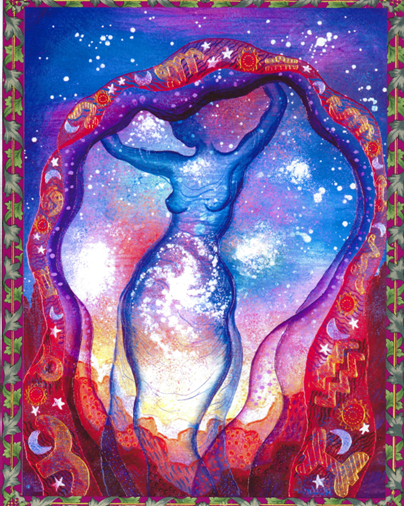
My Goddess is unconfined
–unbound
–unlimited
–unrestricted.
My Goddess exists beyond
–the images of Her created by men
–the words describing Her written by men
–the laws coercing Her, enacted by men.

Exploring the F-word in religion at the intersection of scholarship, activism, and community.

My Goddess is unconfined
–unbound
–unlimited
–unrestricted.
My Goddess exists beyond
–the images of Her created by men
–the words describing Her written by men
–the laws coercing Her, enacted by men.
This was originally posted on November 25, 2013
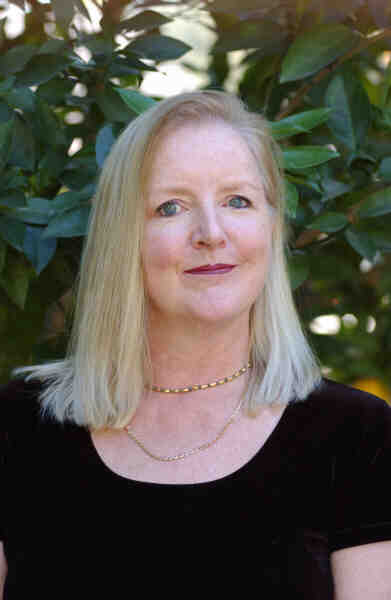
The charge of “essentialism” has become equivalent to the “kiss of death” in recent feminist discussions. In this context it is taboo to speak of Mother Earth. Yet, I would argue there are good reasons for speaking of Mother Earth that do not add up to essentialism. What if the values associated with motherhood are viewed as the highest values? What if the image of Mother Earth encourages all of us to recognize the gift of life and to share the gifts we have been given with others?
For those not familiar with the “essentialism” debate in feminist theory, it might be useful to define “essentialism.” In philosophy, essentialism is the idea that every “thing” has an “essence” which defines it. In its pure form, essentialism is a by-product of Platonic “idealism” which states, for example, that the “idea” of table is prior to every actual table and that every actual table is an embodiment of the idea of table.
Continue reading “Legacy of Carol P. Christ: Is It Essentialist To Speak Of Earth As Our Mother?”This was originally posted August 4, 2014

In my recent blog “The Flourishing of Life and Feminist Theology” I discussed Grace Jantzen’s view that theology should focus on “natality” or birth and life, rather than life after death or life apart from this world. This week Tikkun magazine published its summer issue with a feature called “Thinking Anew about God.” In it two male thinkers, one Buddhist and one Christian, argue for a similar turn toward the world in their traditions. Their calls for religions to focus on this world were published the same week scientists warned that the world stands on the brink of the sixth great extinction.
I have come to believe that any religion espousing cosmological dualism (devaluing this world in favor of a superior reality such as heaven) and individual salvation (the idea that what ultimately happens to me is disconnected from what ultimately happens to you) is contributing to our world’s problems rather than offering a solution. … [Religions should] stop emphasizing the hereafter and focus instead on how to overcome the illusion that we are separate from this precious, endangered earth. –David Loy, Buddhist, writing in Tikkun Summer 2014
Continue reading “Legacy of Carol P. Christ: Transcendence, Immanence, and the Sixth Great Extinction”I always approach the Dark Goddesses with trepidation, preferring to focus on the bright, life affirming aspects of the Goddess. Yet now I find that the difficult break-downs and violent conditions of these days are calling me to explore the terrifying aspects of the ones called “Dark Goddesses.”
But who are the Dark Goddesses and why are they called dark? That question is one of controversy within the Goddess community. Carol Christ has written that the Dark Goddess only exists as a projection of patriarchal values onto the Goddess, turning the Goddess into a force of war and terror, in particular the War Goddesses found in various cultures. Christ views war as an abnormal desire for the Goddess. Whereas others view the Dark Goddess as a part of the one Great Goddess, who encompasses all.
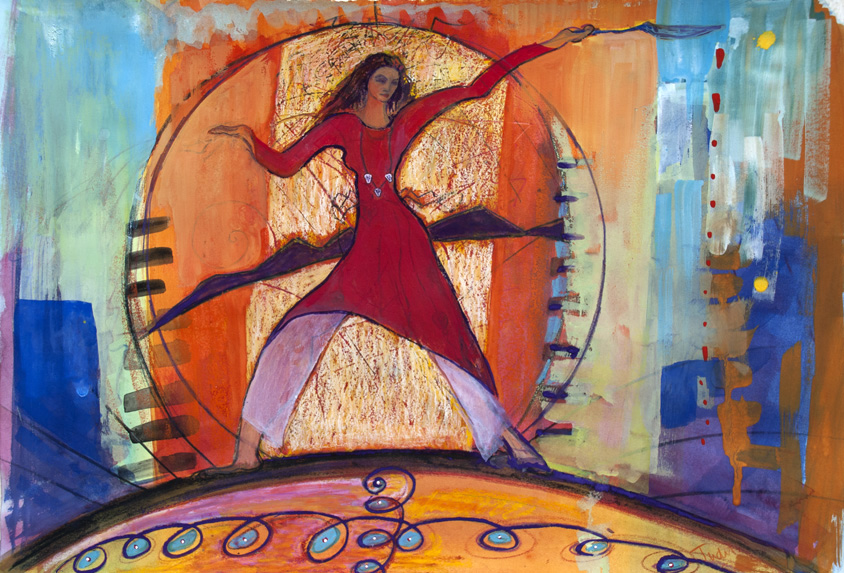
The spiritual life need not be
divorced from the physical.
It is with our hands that we make magic
It is with our breaths that we offer prayers.
It is with our eyes that we see beauty.
It is with our hearts that we know love.
It is with our ears
that we hear birdsong and ballads.
It is with these bodies
that we reach out to touch the holy
every day.
This morning, I watched the baby woodpeckers. Still nestled safe within their tree they stab wildly at their brave parents who cautiously poke snacks into the trunk and then dive away again, narrowly evading the enthusiasm of their progeny. I peek at the baby phoebes too, heads nearly full-feathered, no more room for a parent in the nest against the wall of our house. They peer back at me, black eyes solemn, while the hummingbirds dodge and weave and battle it out between branches. I hear the thin and persistent cry of a broad-winged hawk from somewhere in the oaks just outside my vision. Summer is settling into the woods, though spring seems just barely to have arrived. The woods are becoming heavy and green and closing to exploration as the bugs and brambles stake their claim and exact their blood prices for entry. The blackberries are in bloom, wild and riotous, their white flowers open gratefully to both rain and sun. The wild raspberries have already begun to set their fruits, hard knobs of green clustered hopefully on each cane. The mulberries were brave enough to try again after frost crisped their efforts to black, now re-leafed, small green flowers and starts of berries once more emerge to hang with delicate promise next to their ruined brethren. As I finish writing my poem and offer my prayers, I look up to see a bald eagle making great wide circles above the house. The sky is clear and blue and the air is sweet and fresh and full of promise. I sit, as I do, in this cocoon of green, my heart wide, my mind soothed, and my soul replenished by the magic of place and all it manages to hold and teach each day.
Continue reading “Spiritual Practices for Summer Flourishing by Molly Remer”This was originally posted on June 10, 2012

A man in the group leaned forward and asked, “But how did the Goddess get overcome?” So I told him. Young “warrior heroes” came galloping out of the Russian steppes and the Caucasus Mountains, including Afghanistan, which no one (not even Alexander the so-called Great) has ever conquered. The boys were carrying their thunder-solar-sky gods with them.
Continue reading “From the Archives: Where Did the Gods Come From? by Barbara Ardinger”
Imbolc brings an invitation into change,
to step into the forge of transformation,
to sink into the holy well of healing,
to open ourselves up to an evolving path
of growth and discovery.
It is now that we remember
we are our own seeds of promise
and while there is time yet
to stay in the waiting place
biding our time
and strengthening our resources
so we have what we need to grow,
soon we will feel the wheel
urging us onward,
the call to set forth
becoming unmistakable and strong.
Let us settle ourselves into center,
nestle into trust and determination,
and extend outward from here
feeling the sweet wind caress us
and the fiery forge beckon us
as we heed the summons to roll on,
the path opening up before us as we move.
Just for right now,
let the swirling soften.
Exhale into the day,
wherever you are,
whatever is happening.
Allow a cloak of comfort
to settle across your shoulders
and enfold you
with peace and restoration.
Draw up strength from the earth
beneath your feet.
Settle one hand on your belly
and one hand on your heart.
Feel the pulse of the sacred
you always carry within.
Breathe in
and know you are loved.
Breathe out
and know you are free.
Trust that you are carried
and enfolded
as you go along your way.
A chill is in the air and Winter’s Queen has spread her gray cloak across the land. She has stilled the leaves and frosted the hills, has quieted the scurrying, and placed her fingers firmly on the pause. In this waiting place, hushed and chilled, we remember the preciousness of the light of renewal, we remember how essential the warmth of connection. Just as the earth does, let us, too,
lay aside what is unnecessary and draw close to one another once more, rekindling the fire of community, offering one another what nourishment we can. Let us enter a time of deep restoration with intention. Let us listen to the call of contemplation that twinkles in these dusky hours of replenishment and renewal. Let us pause and wait with grace.
This was originally posted on Sept. 9, 2011

In my last blog I wrote that the image of God as a dominating other who enforces his will through violence–found in the Bible and in the Christian tradition up to the present day–is one of the reasons I do not choose to work within the Christian tradition. To be fair, there is another image of God in Christian tradition that I continue to embrace. “Love divine, all loves excelling” is the opening line of a well-known hymn by Charles Wesley. Charles Hartshorne invoked these words and by implication the melody with which they are sung as expressing the feelings at the heart of the understanding of God that he wrote about in The Divine Relativity.
Love divine, all loves excelling also expresses my understanding of Goddess or as I sometimes write Goddess/God. Though I am no longer a Christian, but rather an earth-based Goddess feminist, I freely admit that I learned about the love of God while singing in Christian churches. Hartshorne wrote that he knew the love of God best through the love of his own mother, and I can say that this is true for me as well. My mother was not perfect, and she did not understand why I wanted to go to graduate school, my feminism, or my adult political views, but I never doubted her love or my grandmothers’ love for me. (I count myself lucky. I know others did not have this experience.) Like Hartshorne, I also learned about the love of God through the world that I always understood to be God’s body. Running in fields and hills, swimming in the sea, standing under redwood trees, and encountering peacocks in my grandmother’s garden, I felt connected to a power greater than myself.
Continue reading “Carol P. Christ’s Legacy: Love Divine, All Loves Excelling”
Moderator’s Note: Carol Christ died from cancer in July, 2021. Her work continues through her non-profit foundation, the Ariadne Institute for the Study of Myth and Ritual and the Goddess Pilgrimage to Crete. This blog was originally posted June 30, 2014. You can read its original comments here.
Is Goddess feminism an old religion or a new creative synthesis? Can it be both? Goddess feminism draws on the feminist affirmation of women’s experiences, women’s bodies, and women’s connection to nature; the feminist critique of transcendent male monotheism as the symbolic expression of male domination of women and nature; and 19th and early 20th century discussions of Goddesses and matriarchy.
Most Goddess and other spiritual feminists have experienced Wiccan rituals, which are often simply called Goddess rituals. For many of us, elements of Wiccan practice strike a chord of knowing, while other aspects seem odd or strange or even just plain weird. What are the roots of Wiccan ritual?
Continue reading “Carol P. Christ’s Legacy: “THE OLD RELIGION” OR A “NEW CREATIVE SYNTHESIS”?”
