Queer Chicana feminist author, Gloria Anzaldúa, once claimed, “The world I create in my writing compensates for what the real world does not give me.” I’ve long connected with the revolutionary Anzaldúa, believing in the prophetic power of the written word to create new worlds, worlds big and wide and just and beautiful enough for all people. Worlds where the perspectives of the marginalized are brought to the center.
This is what I aim to do as a publisher and writer myself. It was a meandering path to get here, but on the cusp of a new year, I find myself finally in place with my calling and vocation where all my skills as an activist, writer, professor, artist, and pastoral presence are coming together.
In honor of November being the month dedicated to the remembrance of veterans, our Herstory Profile will be focused on an unsung hero/veteran of WWII, Noor Inayat Khan. Born into an Indian Muslim Royal Family but removed from their ancestral home, Noor spent the majority of her life in Europe. She would answer the call as thousands of others did during the onset of World War II. She would become one of the most successful Spies in Occupied France. Noor would eventually lose her life in the Dachau Concentration Camp. It is only in the last 17 years that Noor’s incredible story and contributions have resurfaced.
You say you want the truth, and I want to give it to you—I mean you asked for it and I want to give it you. I mean—I do want to tell the truth but— to be honest I’m not sure I want to be the person that truth belongs to – but I want to tell the truth
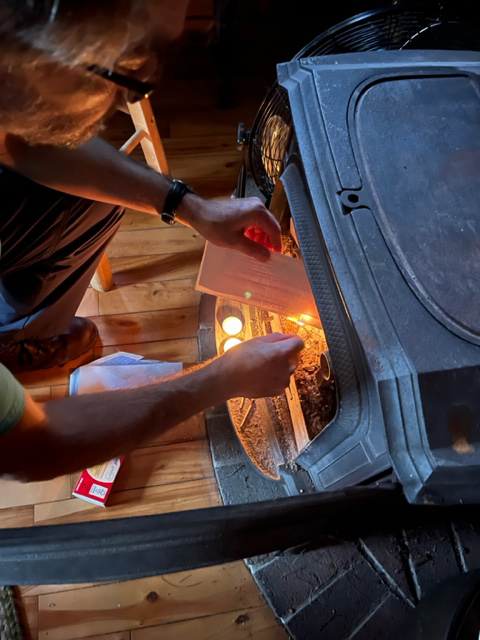
So- ok. To be honest. You know, transparent– I am out of candles. Totally – even tea lights, never mind seven-day candles I am out. In all colors: red, pink, blue, orange, even white. And I have no intention of getting any more. Done with candles. I am also out of quilt squares, and quilt materials and thread— and I – well, I am just out of anything to do with sewing, quilting. And nope- not getting any more. Done.
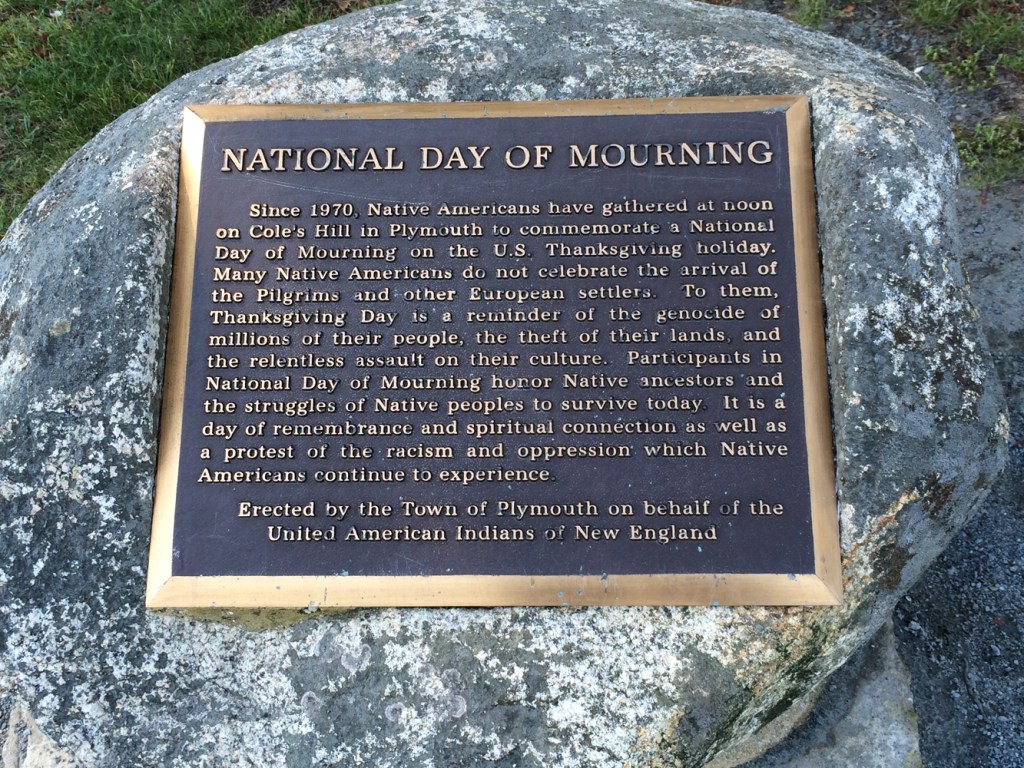
Thanksgiving is a complicated holiday. As a child, it was simple – a happy day of family and feasting. I would awake at dawn to help my mother stuff the turkey that would roast all day in the oven, and while she prepared all the rest of the meal, the younger of my brothers and I would head downtown with my nextdoor neighbor to delight in the Christmas displays in the department store windows. Our home would be filled – my older siblings returned from college and their adult lives, with a roommate, or girlfriend, and in later years, spouses and children. We would stuff ourselves with turkey, stuffing, and cranberry jelly, mashed potatoes and gravy, black cherry Jello, squash with mini marshmallows, and as my mother would always say, “corn for the Indians.” That would be the only mention of Native Americans on this day celebrating what has become a romanticized version of a harvest feast, shared by a few of the Waumpanoag people and the English settlers who owed their survival to their generosity.
My daughter used to love Dr. Seuss’s book Wacky Wednesday. The premise of the book is that you are supposed to find the things that are off in the picture: an upside down picture, a tiger instead of a baby in the stroller and steps leading up to a house with no door.
My daughter was always so excited to find these anomalies: giggling and pointing them out.
‘See, the world makes sense! But this doesn’t. And this doesn’t either.’
It seems that the hearts of the whole world, and especially the hearts of women, are grieving now, as war and warmongering take over more and more of the Earth. Patriarchy rages on, like a monster in its death throes, and we wonder, “will they take us all down with them?” It is my hope that these poems will help us to keep on keeping on, keep on loving Her.
My grief, my love for the world
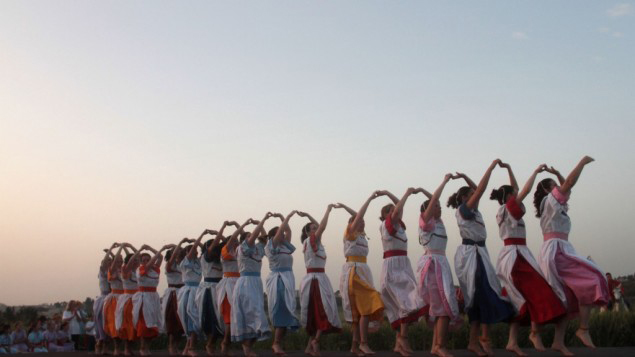
I watch the dancer, one arm framing her face, one hip drawing upward in the belly’s rhythm. The dance of mature women, Raqs Sharqi born of the sensuous music of the Middle East. Her hips pull us into infinity, an inward-outward shout of beauty and desire.
Joseph Campbell spoke of ‘mentors’ appearing to help the sojourner, and what Maureen Murdock called the gathering of allies. In my hybrid of these two archetypal journeys, there may be several mentors – human, power animals, divine guides or a combination. She could be a wise elder who helps the heroine prepare for the journey or gives her a gift for later use. In my case the wise elder was my 93 year old mom who became one of my mentors. When I expressed my excitement and fears, she said what she always says when I – one of her seven children – am facing a challenge: “Go get’em Tiger!” She also offered financial support so I could take time away from my psychotherapy practice.
Two other mentors showed up in what Carl Jung called my ‘active imagination’: Carol Christ and Marija Gimbutas. Both have transitioned so my active imagination conjured their support as divine intervention. I reread Carol’s reflections and teachings on the pilgrimage, and watched the videos she made as inspiration. I felt her invitation. I was ready to change.
Carol Christ’s Legacy honored by Laura Shannon, and the Ariadne Institute
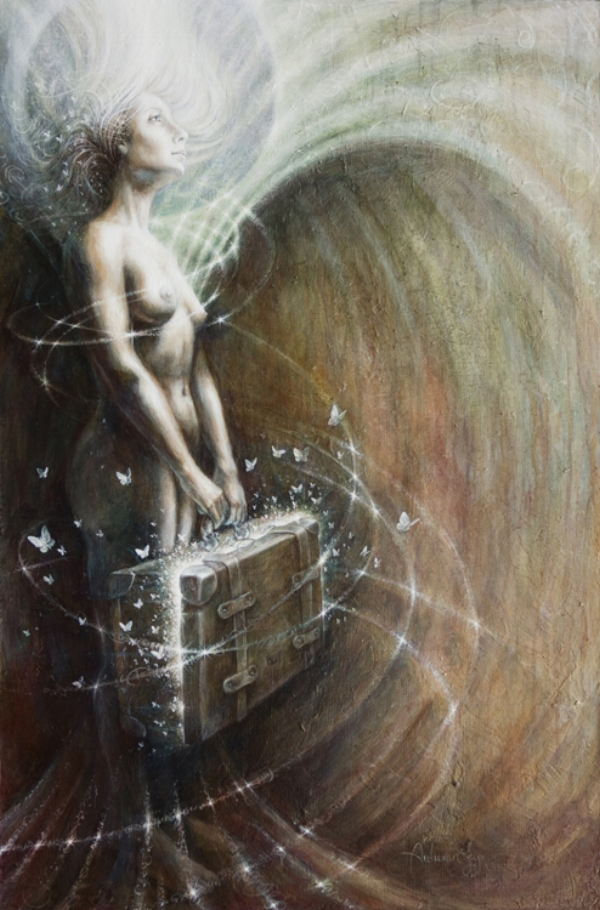
Adventure by Autumn Skye with permission of artist
When I teach the Heroine’s Journey in my Sophia Women’s Wisdom Group, I draw on Joseph Campbell’s idea of the mono-myth, an archetypal story that resonates with every human across time: The Hero’s Journey. I combine Campbell’s ideas with pieces of feminist Maureen Murdock’s heroine’s journey to recognize the unique pathway of the feminine. I call this my hybrid heroic journey. If you are not familiar with Maureen Murdock’s work, I invite you to see how she brought her feminist eye to Campbell’s iconic Hero’s Journey in her book The Heroine’s Journey: Woman’s Quest for Wholeness. After her conversation with Joseph Campbell six years prior to his transition, Murdock felt he missed “that the focus of female spiritual development was to heal the internal split between woman and her feminine nature” (p. 2). In my hybrid heroic journey, that split in the early stages is internalized negative masculinity. The rejection of our feminine nature may appear differently in each woman’s life but it is often characterized by treating ourselves how we imagine men perceive us.
My recent Pilgrimage to Crete was astonishing; my epiphany, gradual. As I share my adventure, imagine stages of your own heroine’s journey wherever you are in that cycle. I hope that by sharing this series, you will experience a real life example of Dion Fortune’s definition of magic: ‘The art of changing consciousness at will’. Starhawk, Truth or Dare, 1988.
Recently I had a serious accident and ended up in a nursing home after the surgery. My experience in this house of horrors was terrifying. Without any family support I was left to a health system that is hopelessly broken.
Drugged on my arrival it was a few days before I realized that the 17 drugs were making me sicker than I already was. I take only one regular medication and it wasn’t until I refused all but my one medication for PTSD/anxiety that my head began to clear. I was left alone under bright lights for my entire stay, and it remains to be seen whether I have suffered permanent eye damage as a result because I am so photophobic. The noise was unbearable making it impossible to sleep. No one bathed me or cleaned the filthy room. Ringing for help brought no one to my aid most of the time. It is important to state that there were exceptions, a couple of dedicated aides and three nurses, but no one was reliable on a daily basis. Because I was unable to eat the fatty unpalatable food, I lost pounds every few days. I was slowly starving. I remember thinking that I was going to die in this place, and it was this dawning realization that brought be back to the edge of life.




 Feminism and Religion