Andrew Young famously said that ‘anything is legal if 100 businessmen decide to do it.” I would add a more modern take. Nothing is too low, too immoral, too illegal if 5 or 6 Supreme Court justices decide to allow it.
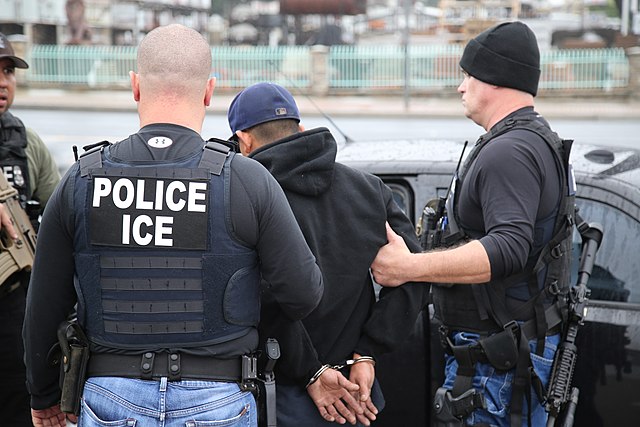
Their recent decisions could fill a book on how corrupt they are. (I’ve discussed this before. But this post is looking at immigration and the cruelty that this administration is fomenting. We have always been a cruel nation. Patriarchy has honed cruelty as its worked to crush women’s bodies while silencing women. How else would women have agreed to our loss of power? Carol Christ has written eloquently about this. Immigration policy has blown the lid off this pot. Perhaps because it is too new, too shocking. Because ICE is in our faces with agents flooding neighborhoods and engaging in unfettered cruelty.
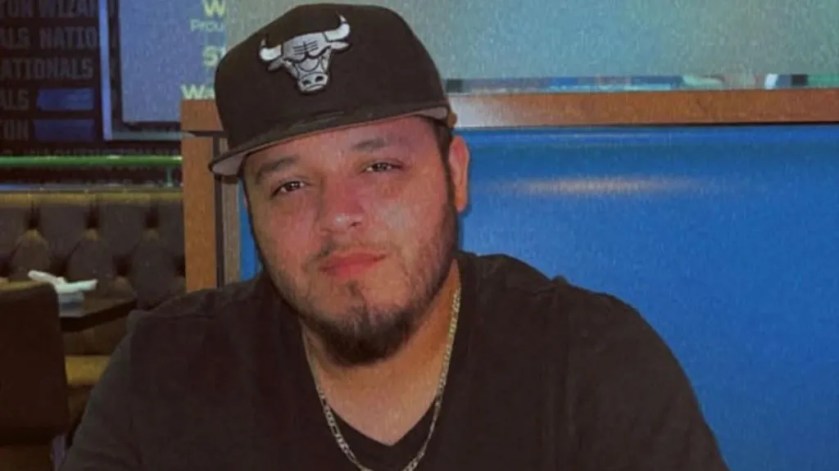
For example, when ICE raided an apartment building in the Bronx on Feb 24th, they arrested 19 year old Merwil Gutiérrez. When they realized they had the wrong person, their response was “take him anyway.” Read that again, “take him anyway.”
Merwil Gutiérrez was then deported to the notorious prison CECOT in El Salvador. For months, his family couldn’t find him. He was eventually sent to his native Venezuela.
Marie Cartier performing this rant poem at the John Lewis Good Trouble Lives On Rally in Lakewood, CA July 17th. Photo by Mel Saywell
This I can guarantee you: there will come a day when it seems you cannot stop crying.
When will that day come? Today it came for me reading The Atlantic while I drank my morning coffee:
This is what they are reporting: the Trump administration has given the order to incinerate food instead of sending it to people abroad who need it. Nearly 500 metric tons of emergency food—enough to feed about 1.5 million children for a week—are set to expire tomorrow…the food, meant for children in Afghanistan and Pakistan, will be ash.
There will come a day.
And here we are in these United States with people in hiding, speaking of food. Why are they hiding? They are hiding from immigration officials and some of us are sending those people in hiding – food. Toiletries. Macaroni and cheese boxes line my grocery cart,
In these United States, we are building more prisons. And I read the detention center known as Alligator Alcatraz puts thirty-two people in a cage. Each person/prisoner costs the United States taxpayer approximately $275 a day. I guess I mean not prisoner,immigration detainee.
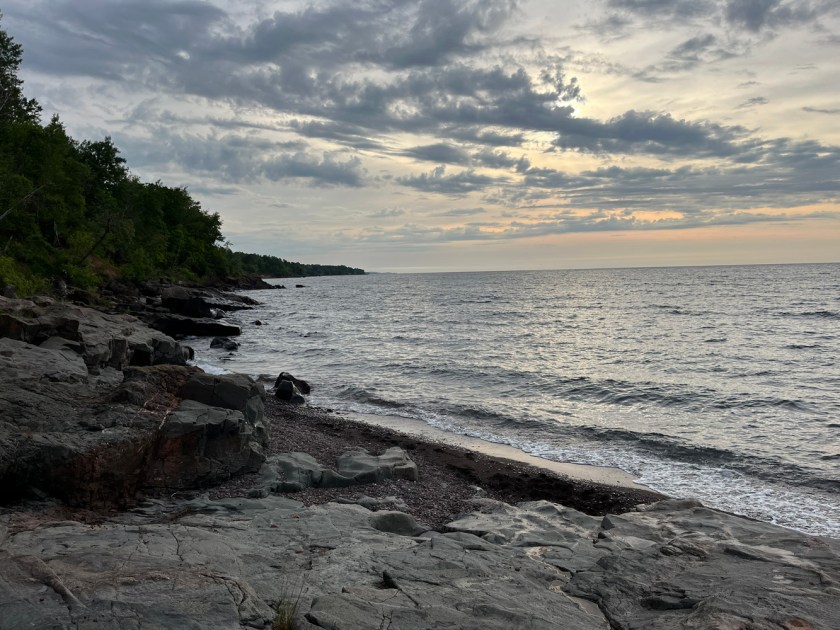
I went to the lake this morning, seeking the peace, sustenance, and perspective it so often provides. I had been particularly distressed and distraught the day before after watching the documentary on Christian Nationalism, “Bad Faith.” It was chilling to say the least. Among other things, the film demonstrates the longevity of Christian Nationalism in this country, dating back at least to the Ku Klux Klan, founded in 1865. However, the central theme of the documentary is the staggering influence of conservative political operative Paul Weyrich, who orchestrated the merger of conservative Evangelical Christians with the Republican Party in the 1980s. He founded the Moral Majority with Jerry Falwell, the Heritage Foundation which authored Project 2025, the American Legislative Exchange Council, and the Council for National Policy – all of which seek to undermine democracy in order to bring about what these organizations and their followers call a “Christian nation,” by force if necessary. But as former Republican strategist Steve Schmidt states in the film, there is nothing “Christian” about this movement. It is pure nationalism, a striving for power requiring the dismantling of the institutions of democratic government as we know them. These extremist Republican strategists found a powerful base of voters by tapping into Evangelical Christians and manipulating the messages they received to fill them with fear, and found just the puppet they needed in the charismatic and amoral figure of Donald Trump. As we’ve seen in recent years, they have been quite successful in the destruction of government. After filling the Supreme Court with their chosen nominees during Trump’s first term, getting Christian Nationalist Mike Johnson installed as Speaker of the House, and getting Trump elected a second time despite the January 6th insurrection, or perhaps because of it, they are now successfully dismantling or otherwise destroying the Departments of Education, Health and Human Services, Energy, Defense, Agriculture, Justice and more along with the Environmental Protection Agency, the Food and Drug Administration, the Social Security Administration, the Federal Regulatory Agency. . . the list goes on. It’s all part of the plan to fulfill the “Seven Mountain Mandate” of dominionism[i], which seeks to impose its beliefs in seven spheres of influence: religion, family, education, government, media, arts and entertainment, and business. As one of the Christian Nationalists interviewed in the film proudly said, “It’s the Christian Taliban.”
I’ve often thought that we (in the USA) have been somewhat, albeit reluctantly, willing to discuss and perhaps even change our minds, behavior, policies, and laws when confronted about the long-lived presence of racism in our local and national institutions. However, when it comes to misogyny—not so much.
Shirley Anita ChisholmSt. Hill (1924 – 2005), was an American politician who, in 1968, became the first black woman to be elected to Congress. “Chisholm represented a district centered in Bedford-Stuyvesant, Brooklyn, for seven terms from 1969 to 1983. In 1972, she became the first black candidate for a major-party nomination for President of the U.S. and the first woman to run for the Democratic Party’s presidential nomination. Throughout her career, she was known for taking ‘a resolute stand against economic, social, and political injustices’ as well as being a strong supporter of black civil rights and women’s rights” (Wikipedia).
Chisholm noted that “…she had faced much more discrimination during her New York legislative career because she was a woman than for her race” (Wikipedia). Why are not more of us aware of Chisholm’s confession?
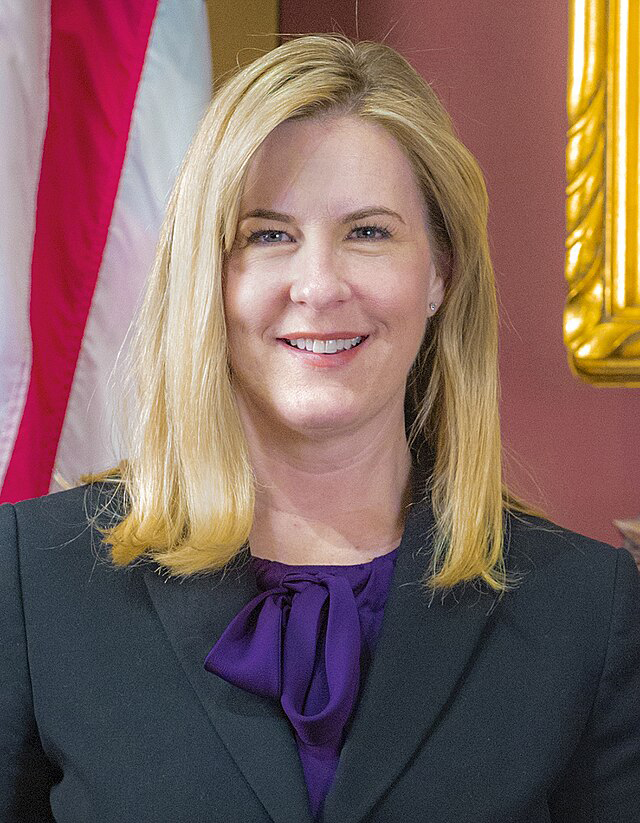
It’s been over a week now since I first heard the news on MPR that four people had been shot in their homes near a golf course in Brooklyn Park where my son once lived. My first thought was that I was glad my son was no longer living there. A little while later I learned that this was not a random act of violence, but rather political violence targeting two Minnesota lawmakers and their spouses. Gradually the details came in. The lawmakers were Democratic lawmakers, former Speaker of the House Melissa Hortman and State Senator John Hoffman and their spouses. And then came the tragic news that Hortman and her husband had been killed. As I drove to pick up a friend to attend the “No Kings” protest downtown, I listened to the news reports of warnings not to attend the protests out of an abundance of caution, with the shooter still at large, as well as the voices of protest leaders saying the tragic events of the morning only strengthened their resolve. In the first few moments of the protest, we observed a moment of silence for Hortman and her husband, and for the recovery of Hoffman and his wife. The entire rally felt like a strange mix of grief and rebellious revelry.
As the identification and eventual arrest of the suspected shooter became known, the tragic events took on an even more ominous tone. The suspect, Vance Boelter, is a far-right Christian nationalist extremist who had preached against abortion and gay rights. He was schooled in his religious beliefs at the Christ for Nations Institute in Dallas, Texas[i] and was aligned with a charismatic Christian movement whose leaders, in the words of The Atlantic columnist Stephanie McCrummen, “speak of spiritual warfare, an army of God, and demon-possessed politicians.”[ii]
Mahmoud Khalil, one of the first people arrested under the administration’s ICE raids. He was targeted because of his outspoken views on Palestinian rights. He is a legal green card holder and was never charged with a crime. Nevertheless the administrations flew him to a holding cell in Louisiana (from NY) in a particularly cruel move that prevented him from being present at the birth of his first child. Even after the baby was born, the government tried to put up roadblocks for his family to visit him and for him to touch his newborn son. He has now been freed by court order but US government is still trying to deport him. He has vowed that he will not be quiet and has already been seen at protests. He is a profile in courage.
Kilmar Albrego Garcia is another case entirely. The eyes of the government have turned his way and now that this has happened, they are doubling down on their cruelty. Just think for a moment of what it is for the government which the power of law enforcement, the powers of detainment to focus their sights on one person. He was originally deported to El Salvador in March. After the government ignored court orders for months he was finally brought back to the US to face federal charges. It is likely this was a face-saving move on the part of the government so they could say, “see he’s a bad guy who deserves this, look at these horrible criminal charges.”
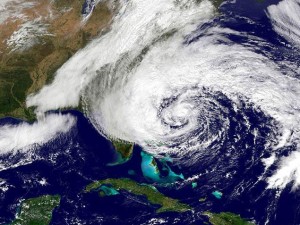
Climate change is in the news again due to the devasting storm known as Hurricane Sandy. Scientists, activists, journalists, and politicians are telling us that Sandy is not just another “unpredictable event” brought to us by “Mother Nature.” Will we listen this time?
Hurricane Sandy is a human-made and entirely predictable and sure to be repeated environmental consequence of the use of fossil fuels, especially oil and coal. Burning fossil fuels puts carbon dioxide into the atmosphere. This raises the global temperature in the air, land, and sea. Melting of polar ice caps is a result of the rise in global temperatures. This will cause a 3 foot or more rise in the seas, leading to the permanent flooding of the seacoasts and sea coast constructions, including homes, restaurants and shops, office buildings, and harbors and ports.
The warming of the seas is also producing extreme weather conditions, including high winds and hurricanes, along with colder winters and hotter summers. Extreme weather conditions will lead to regular storm-related flooding of rivers and sea coasts, erosion of hills and mountains in winter, followed by catastrophic fires in summer. Prolonged droughts and unseasonal rains will devastate farms and food production. Wildlife habitats will be destroyed. Places where people live will become too hot, too cold, too wet, and generally unfriendly to life.
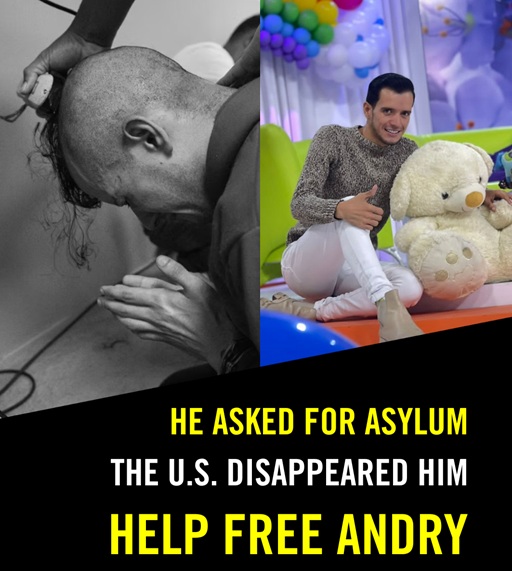
Photo from Amnesty International. For more information and to support his petition click here.
This is a project that FAR has started to share the stories of immigrants who are targeted by the US administration. It is our belief that when people are recognized as human beings, it is harder to dehumanize them and to take away their civil rights. We are facing a devastating situation where in the United States people are being “disappeared” without any recourse to the legal system. The viciousness of what is happening is growing. Some of those arrested have been released but it is a small drop in the bucket of the flood of arrestees, most not even receiving a day in court and some caught in legal mazes that show no sign of ending.
Take Mahmoud Khalil, whom we have already discussed. He was arrested in March due to his outspoken Pro-Palestinian views. In May, U.S. District Judge Michael Farbiarz in New Jersey ruled that Secretary of State Marco Rubio likely violated the Constitution when he stripped Mahmoud Khalil of his green card and ordered him deported. Even so the Judge declined to release him because he has not proven “irreparable harm” caused by his detention. I think an elementary school child can even understand the irreparable harm one suffers by being detained, esp. in Trump prisons that are designed for harshness. And to add to it, Khalil is a new father who only got to hold his son while in prison after a flurry of lawsuits.
Once there was a tree who loved two young children, twins, a boy and a girl.
Thay came everyday to play under her canopy.
Gather her leaves and play fairies of the forest.
Climb her trunk and play in her branches
And sleep with their backs against her trunk
They loved the tree and the tree loved them.
Time went by and the twins grew older.
They didn’t come to visit the tree as often.
One day when they did come, the tree asked them to play but they responded they needed money because they wanted to go on dates.
The tree responded, take my apples to sell. But leave enough behind for the squirrels and birds and other animals so they can eat too. Leave enough behind for the seeds.
I recently attended an event in Salem, Virginia, put on by The Salem Choral Society titled “People Get Ready,” directed by S. Reed Carter IV. This popular group has sung on numerous occasions locally as well as performing at Carnegie Hall in New York City and the National Cathedral in Washington D.C. The choir (11 men and ~45 women) sang fourteen selections. The song arresting my attention was “People Get Ready.”
From Wikipedia: “‘People Get Ready’ is a 1965 single by the Impressions, the group’s best-known hit, reaching number three on the Billboard R&B chart. The gospel-influenced track was a Curtis Mayfield (1942–1999), American singer-songwriter, guitarist, and record producer. This particular composition displayed [his] growing sense of social and political awareness…. In 2021, Rolling Stone named this song the 122nd greatest song of all time. Martin Luther King Jr. named the song the unofficial anthem of the Civil Rights Movement and often used the song to get people marching or to calm and comfort them.”