Hey, diddle, diddle
The cat and the fiddle.
The cow jumped over the moon.
The little dog laughed to see such sport
And the dish ran away with the spoon!
From her lips to our ears.
What is this? Maybe it’s an absurdist play. An operetta. An oracle. A carnival. Or all at once. I’m only a Seeing Woman, not a Priestess or a Thealogian, but I’ve permission to be present at great events and small. So I was there. I was watching. It was indeed a carnival, but one of our old-time carnivals where we celebrate all there is celebrate in life. Not one of those new-fangled carnivals of those new religions, where they grab everything good they can for one day before they have to give up all the pleasures in life while their god does…well, whatever he and his disciples and prophets do up there in the sky.
 What on earth, I hear you asking, got into that dish? Why did she run away? Well, let me tell you. It was at one of our last carnivals. It was an enchantment. That dish was our Princess, and she was under the enchantment. Actually, the whole Royal Family was enchanted. The warriors came galloping in from the steppes beyond the river, but first they sent a Prince. He told our Queen that they were coming to “protect” us, that they were bringing new gods to us. Bringing what they called new civilization and new ways, bringing us what they called “good news.” Well, our Queen and Her Consort were rightly skeptical about all these news, and they locked the Princess up in a safe tower. Kept her there for who knows how long while that handsome but rapacious Prince came and went and the warriors surrounded our lands. Back and forth, back and forth. It was them that declared the carnival and threw that enchantment on all our important people. The Prince lured her down out of the tower—he’d stolen the magic words that unlocked the door—and then he told her he was going to eat her up. She thought it was a joke. He dressed himself up as a big spoon and persuaded her to dress herself as a dish. And then, when the invasion got serious, she ran away with him. Maybe she thought she was saving herself. Continue reading “Hey, Diddle, Diddle by Barbara Ardinger”


 This semester I am teaching Myth, Religion and Culture, which is by far one of my favorite courses to teach. On the first day of class, I usually ask my students what they think is the purpose and importance of myth. I receive a wide variety of answers ranging from myth being rather unimportant or only important historically, to myth being necessary for teaching lessons (particularly to children) or even critical as a foundation for society and communication. I then, over the next several weeks, introduce students to many theories of mythology and its significance: Continue reading “Politics and Mythology by Sara Frykenberg”
 Niamh (meaning ‘bright’ or ‘radiant’) of the Golden Hair, one of the Tuatha de Danann and daughter of Mannanan mac Lir, Celtic God of the Sea, was Queen in the land of Tír na nÓg (pronounced Tear na Noge), the most famous of the Celtic Otherworlds.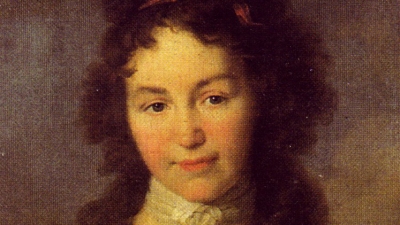
 Sci-fi fan that I am, I would feel remiss if I failed to discuss
 Dear Friends,
 1 The beginning could not be reckoned in the time before time was reckoned. 2 For, what was had yet to know itself, and it could not know itself alone. 3 But, for its love, it could not be known. So it was that the beginning that could be reckoned was not the beginning but the beginning of loving, which was the beginning of knowing, which was the beginning of being. 4 And, in that beginning, a great ellipsis had already become of particle and light, and the particle and light thrummed through darkness forming a whole body. 5 Of the great ellipsis of particle and light, a body and a body and a body were formed, in and of the great ellipsis, thrumming through darkness. 6 The thrumming ellipsis pushed forward so far that its particle and light extended beyond itself and then beyond itself and then beyond itself, as though it were to separate, but it did not. 7 A whole body was formed, which was the beginning of the simultaneity of what was and what is and what will have been.
  Fall, the time of the Day of the Dead and All Souls Day, is a perfect season for us to contemplate “fearless spirituality” as we face our most essential fear, that of death. Though humans have celebrated these days for millennia, fear with a religious veneer pervades our culture, whether in hate towards women and the LGBTQ community, lies that demonize followers of other religions, terror of eternal punishment and spiritual unworthiness, and more.
 Feminism and Religion