Written two weeks ago on December 5, 2014, but offered still as some food for thought:
I’m supposed to be writing my dissertation. Hand on the plow, no looking back. I have even left town for the whole month of December in order to minimize the everyday distractions that are part of my life in Boston and increase my focus on writing. I’ve set up shop in my friends’ living room, surrounded by multiple windows, perfect natural lighting, and festive Christmas decorations. But, two days in, and I have yet to get into my dissertation writing groove.
So I am writing this blog post instead in an effort to work my way back to the dissertation. I read somewhere that writing is thinking – which is why dissertations, and every other kind of writing project, often change direction along the way. If writing is thinking, then, I’m hoping that writing this post will help me think my way back to the dissertation, because at the moment, all I can of think is, I can’t breathe, I can’t breathe, I can’t breathe. Continue reading “The Work of Justice-Making by Xochitl Alvizo”
Recently, Ben of Ben’s Tallit Shop commented on an older post of mine on this website entitled: “How Literal is Too Literal? My Experience with Tallit Katan.” He wrote, “In my opinion, it makes sense to first try the mitzvah of tzitzit in private for a month or two to ensure you are undertaking it for the right reasons. Making a political statement is not a valid reason (though some people, I imagine, would argue otherwise). Mitzvahs and politics don’t mix.”
First of all, this comment is both sexist and patronizing! A man would never suggest to another man to do what he suggested I do and “try the mitzvah… in private… to ensure you are undertaking it for the right reasons.” I’d dismiss it entirely if I was that kind of person, but I’m not. Sexism and patronizing aside (as if one could do that really), I would like to engage with his thoughts on the mixing of politics and mitzvot because I think that can lead to great reflection and insight for Jewish feminists.
Not all mitzvot have an inherently political nature, but many do. In fact, one could even argue something as seemingly apolitical as lighting Shabbat candles could be political. Lighting candles ushers in Shabbat peace for one’s household and ideally for one’s community even if that peace is only for one day a week. Since this is at odds with the world’s political environment of fighting, war and violence, it could be interpreted as a political act. After all, won’t every day in the redeemed world be Shabbat? Continue reading “The Politics of Miztvot by Ivy Helman”
While I sit and write this post, Christmas celebrations are concluded and I prepare, with the rest of the world, to embark on a new year; a year with my idealistic hopes and want for a better future for humanity. So for New Year’s I am taking out my golden lamp and making three big wishes: peace, kindness, and dialogue in the Catholic Church.
Peace
“True peace is not a balancing of opposing forces. It’s not a lovely façade which conceals conflicts and divisions…. peace calls for daily commitment.” – Pope Francis
Peace transcends governments and countries. Peace should be a daily commitment that each one of us lives every day and practiced in each of our relationships. Looking forward to a new year, I hope to put this into practice and we will see a shift in politics and attitudes that reflect an ideal of peace and reconciliation – not just nationally, but communally.
With peace also comes reconciliation. Fighting takes too much energy. Making a point to reconcile with that relative or friend that you had a falling out with is a goal that has the potential to bear fruit and be restorative.
Kindness
“Kindness is the language which the deaf can hear and the blind can see.” – Mark Twain
With peace and reconciliation comes kindness. This wish is a large request and one that the Pope calls us to embrace. A kindness is required that reaches the poor and oppressed, that reaches non-Catholics including atheists, and, that touches every race, class, and orientation. We do not have the right to judge – a sentiment that the Pope continues to reiterate.
According to Julia Baird, “even scientists are now touting the physical and psychological benefits of kindness, compassion, and selflessness. Multiple studies now show: a single act of kindness can trigger dozens more … and repetitive acts of kindness can make people happier, and less depressed.” This is not a new revelation, but a reminder of the benefits of kindness – a reminder we need to carry into the New Year.
We should, however, remember help the homeless, the children, and the oppressed. This group of people is often ignored the news media, but lack of attention to a problem does not diminish it. According to the Pope, scandals are the news of today, but the children without food are not news worthy. According to Pope Francis, we should not “interfere in the lives of others” in a way that is malicious, like gossiping or being boastful. This behavior brings hurt, bitterness and envy. Kindness is necessary for a better future for all of humanity.
Dialogue with the Catholic Church
“Fifty years ago, Vatican II spoke of communications. Let us listen to, dialogue with, and bring Christ all those we encounter in life.” – Pope Francis
Let us not focus on rituals and rules in the Church; rather, we need to focus on the people of the Church. People,
after all, make up the Church – not brick and mortar. Because of this, we need to focus on dialogue – a dialogue with each other, regardless of belief or life choices. This dialogue should be rooted in a positive attitude and carried out with love and humility. It should include a focus that reaches out to facilitate peace. This dialogue should also include the discussion of women’s roles in the Church. There are so many things to discuss. The Church is a human church. With the invitation to dialogue and re-address so many of the untouched or misinterpreted teachings of Vatican II, might we move forward and rebuild this Catholic Church on the shoulders of one who served the poor, loved everyone, and gave of himself?
What are your wishes for the new year? I would love to hear from you.
From my family to yours, may you have a peace-filled, prosperous, and delightful 2014.
Michele Stopera Freyhauf: Doctoral Student in the Department of Theology and Religious Studies and a Member of the Centre for Catholic Studies at Durham University as well as an Instructor at John Carroll University’s Department of Theology and Religious Studies, Adjunct Professor in Religious Studies at Ursuline College and the University of Mount Union. Michele has an M. A. in Theology and Religious Studies from John Carroll University, and did post-graduate work at the University of Akron in the area of History of Religion, Women, and Sexuality. She is also a Member-at-Large on the Student Advisory Board for the Society of Biblical Literature and the student representative on the Board for Eastern Great Lakes Biblical Society (EGLBS). Michele is a feminist scholar, activist, and author of several articles including “Hagia Sophia: Political and Religious Symbolism in Stones and Spolia” and lectured during the Commission for the Status of Women at the United Nations (2013). Michele can be followed on Twitter @msfreyhauf and @biblicalfem. Her website can be accessed here and is visible on other social media sites like LinkedIn and Google+
In this post I interview Lyz Liddell, Director of Campus Organizing at the Secular Student Alliance. I first got in contact with Lyz about the idea of building a Humanist Center at my school, Claremont Lincoln University. She was very helpful and inspiring. I then had the pleasure of meeting her face-to-face when I gave a presentation on “Atheism and Interfaith” at the Secular Student Alliance’s Annual Conference in Las Vegas. So once again, I give you an interview with a strong female non-believer:
Lyz Liddell of the SSA
Can you give us a little background to how you became interested in secular activism and how you became the Director of Campus Organizing for the Secular Student Alliance?
I first became interested in secular activism via our Executive Director August Brunsman, close to ten years ago. The editor of our newsletter had recently acquired some fame (that was Hemant Mehta, with the fame from his experience of selling his soul on eBay) and was no longer able to commit to the regular editorial schedule; I was asked to step up, and since I had some editing experience, I took it on. Up until that point, I had been a “layman,” if you will – secular for sure, but not really an activist. Through several years of editing that newsletter, I learned what secular student groups were doing, and what was happening in the secular movement at large. The more I encountered, the more enthusiastic about it I was. I started going to conferences to get more information and news for the newsletter, and got more involved with the organization’s staff and volunteers and affiliates. When the campus organizer position opened up in late 2008, I stepped up into that position, and we’ve grown it from there (2 full time staff and some volunteers, a board of mostly college students) to the professional organization we are today (9 full time staff, 4 part-timers, a professionalized board and dozens of dedicated volunteers; we’ve grown from ~100 affiliates in 2008 to over 400 today).
“They used chemical weapons, we must do something to stop them.” A justification widely used in support of President Obama’s decision to launch a military strike against Syria.
We fought the Civil War to end slavery and racism. We fought the Second World War to end fascism. Did we end racism? Did we end fascism? Howard Zinn
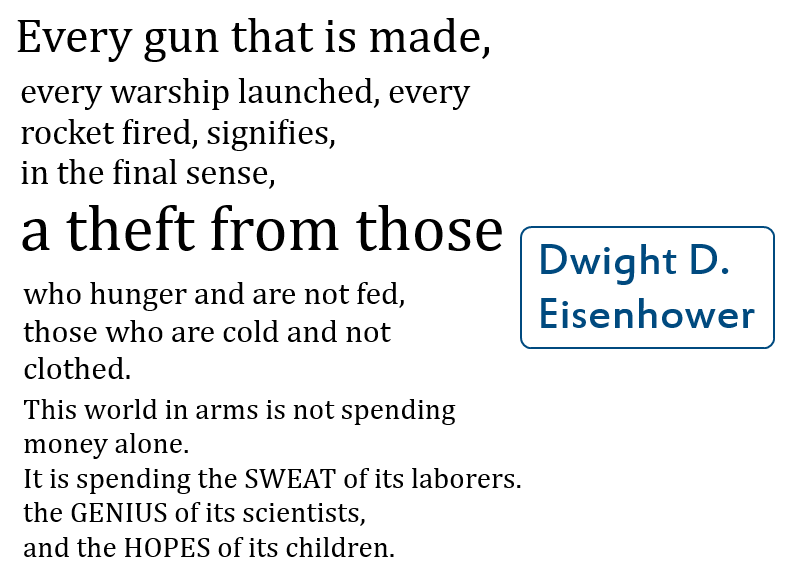
The drums of war have stopped beating publically–at least for now. Obama’s decision to ask Congressional authorization to bomb Syria for 90 days—remember that number, 90 days–has been tabled—at least for now. But make no mistake, the military industrial complex is still barking at the heels of US government decison-makers. The notion that while women may be for peace, “real men must make war” is still operative in the American psyche. Continue reading “WAR, WAR, WHAT ARE WE FIGHTING FOR? by Carol P. Christ”
I don’t know why this came to me as the discussion I want to have in blog form today, but here you go–
Imam al-Ghazzali (d. 1111) said that Allah (God) only stops forgiving when the believer stops asking for forgiveness. This is the crux of the Islamic view of divine forgiveness. Start with the fact that we have NO FALL story, because despite mis-conduct in the Garden, Adam and Eve ASKED for and were granted forgiveness. Thus, they leave without the mark of some eternal “original sin.” They live as we all do, here on earth, not as some punishment but because that is where they were intended to live in the first place. The creation story in Islam describes human creation as per a primordial conversation between the Creator and the unseen creatures known as angels, when God says, “Indeed, I will create ON THE EARTH a khalifah (moral agent, vice-regent of God).”
Thus, the relationship between divine forgiveness and human sin or error is fixed in a dialectic where sin and error might be part and parcel of the human being but likewise forgiveness is part and parcel of the Divine Creator. In fact, the language used is telling. Taubah, which is also translated as forgiveness, means “returning to the original place/station.” Our original place is at one with the Creator, and we are in that station in harmony with all of creation ~ a sort of cosmic bliss. When we err, we fall away from our true nature and the nature of the entire universe so must return to realign ourselves with this cosmic harmony… and everything will be alright. Continue reading “Forgiveness (is a two-way street) by amina wadud”
From June 25th through July 2nd 2013, I participated, as one of three Jewish mentors, in IFYI (Inter-Faith Youth Initiative), an inter-faith immersion experience for high school and college-age youth sponsored by Cooperative Metropolitan Ministries (CMM). The mentors and the rest of the staff guided, encouraged, empowered and supported 30 participants. Throughout the week, I also led an art interest group and co-led an affinity group with Beau Scurich, the Muslim chaplain at Northeastern. The entire community of participants and staff gathered around the week’s theme: the ways of truth and love. As Mahatma Gandhi said: “When I despair, I remember that all through history the ways of truth and love have always won. There have been tyrants and murderers, and for a time, they can seem invincible, but in the end, they always fall. Think of it–always,” (emphasis added).
IFYI was not only an exercise in how to live out the ways of truth and love, but it also became a vehicle through which the participants and staff expressed to the larger world what the ways of truth and love meant to us. Here is some of what the ways of truth and love came to mean throughout our journey together. Continue reading “The Inter-Faith Youth Initiative and Feminism by Ivy Helman”
On Thursday, November 29, 2012, the United Nations officially recognized the Palestinian Authority as a sovereign state and granted its petition for observer status within the international decision-making body. Sixty-five years before the United Nations had approved a two-state solution for the region, UN Resolution 181, that officially ended the British occupation of the territory and sanctioned the possibility of two states. It says:
“The resolution recommends that the United Kingdom (as mandatory power for Palestine) evacuate; armed forces should withdraw no later than August 1, 1948; independent Arab and Jewish States and the Special International Regime for the City of Jerusalem administered by the United Nations should come into existence; the City of Jerusalem should preserve the interests of Christian, Jewish, and Muslim faiths.”
While the Palestinian Arab population disagreed with that solution, when British forces left on August 1, 1948, Israel declared statehood. The United States recognized its statehood the same day. Russia was soon to follow suit.


 Written two weeks ago on December 5, 2014, but offered still as some food for thought:






 Feminism and Religion