A New Glossary for Crete: The Power of Naming and the Study of History by Carol P. Christ

carol-christThe words we use affect our thinking. In the case of ancient Crete the repetition of the terms “Palace,” “Palace of Knossos,” “King Minos,” “Minoan,” “Priest-King,” and “Prince of the Lilies” shape the way we understand history–even when we ourselves know these terms are incorrect. We must engage in “new naming.”

Ariadne. May have been a name of the Goddess of pre-patriarchal Crete. The ending “ne” signifies that Ariadne is not of Greek or Indo-European origin and thus predates the later Greek myths.

Ariadnian. The name I have given to the Old European pre-patriarchal culture of Crete, from arrival of the Neolithic settlers from Anatolia c.7000 BCE to the Mycenaean invasion c.1450 BCE. Arthur Evans named the Bronze Age (c.3000-1450 BCE) culture of Crete “Minoan” after King Minos of Greek mythology, son of Zeus and Europa, husband of Pasiphae, father of Ariadne, whose gift of the secret of the labyrinth to Theseus led to the downfall of her culture. Evans assumed that Minoan Crete was ruled by a King.

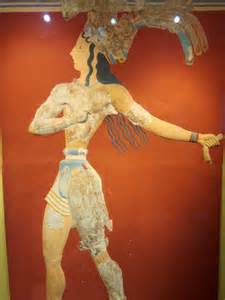
This image I call “Ariadne Dancing” could become the new “icon” of Ariadnian Crete.

minoan woman dancing

It could and should replace the “icon” of  the “Priest-King” Arthur Evans’ “imaginatively” reconstructed and named the “Prince of the Lilies.”

 prince of the lilies

Once we remove the crown which probably belonged to a Sphinx, the figure’s white color and athletic body suggests it was intended to portray a young female bull-leaper leading a bull. Continue reading “A New Glossary for Crete: The Power of Naming and the Study of History by Carol P. Christ”

Coming Together to Honor the Mother by Carol P. Christ

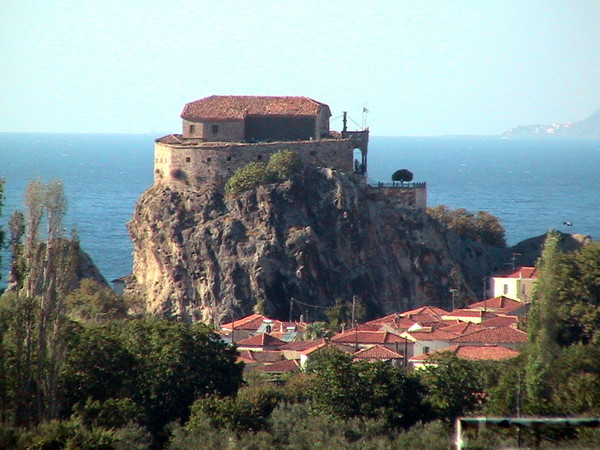
petra churchcarol-christFrom the evening of the 14th through the day and night of the 15th of August, thousands of pilgrims ascended the Holy Rock of Petra to honor the Panagia—She Who Is All Holy. 

There is “something really beautiful”* in being among them.

Six of us set out from Molivos at 7:30 on the 14th to meet in the square of Petra to ascend to the church.  Petra was already full of so many pilgrims that police had forbidden traffic in the main square and were directing cars into a nearly full parking lot in a field.  When we got out of the car, the two others who came with me and I had a perfect view of the steady stream of pilgrims climbing the rock, which was already lit up in the twilight.

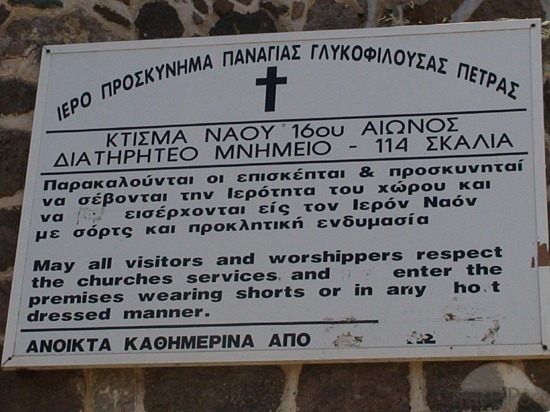
When we found the others, I said that we would climb to the church on the top of the rock where we would light candles and approach the icon of the Panagia to silently pray or express a wish for the coming year.   The others followed me through the square into the winding streets lined with stalls and gypsy beggars to the bottom of the rock.  While we waited for our turn, we saw the sign advising pilgrims of proper dress (read carefully).

instructions-before-getting-in-the-church-petra

Continue reading “Coming Together to Honor the Mother by Carol P. Christ”