

This post follows Part I, which you can find here.
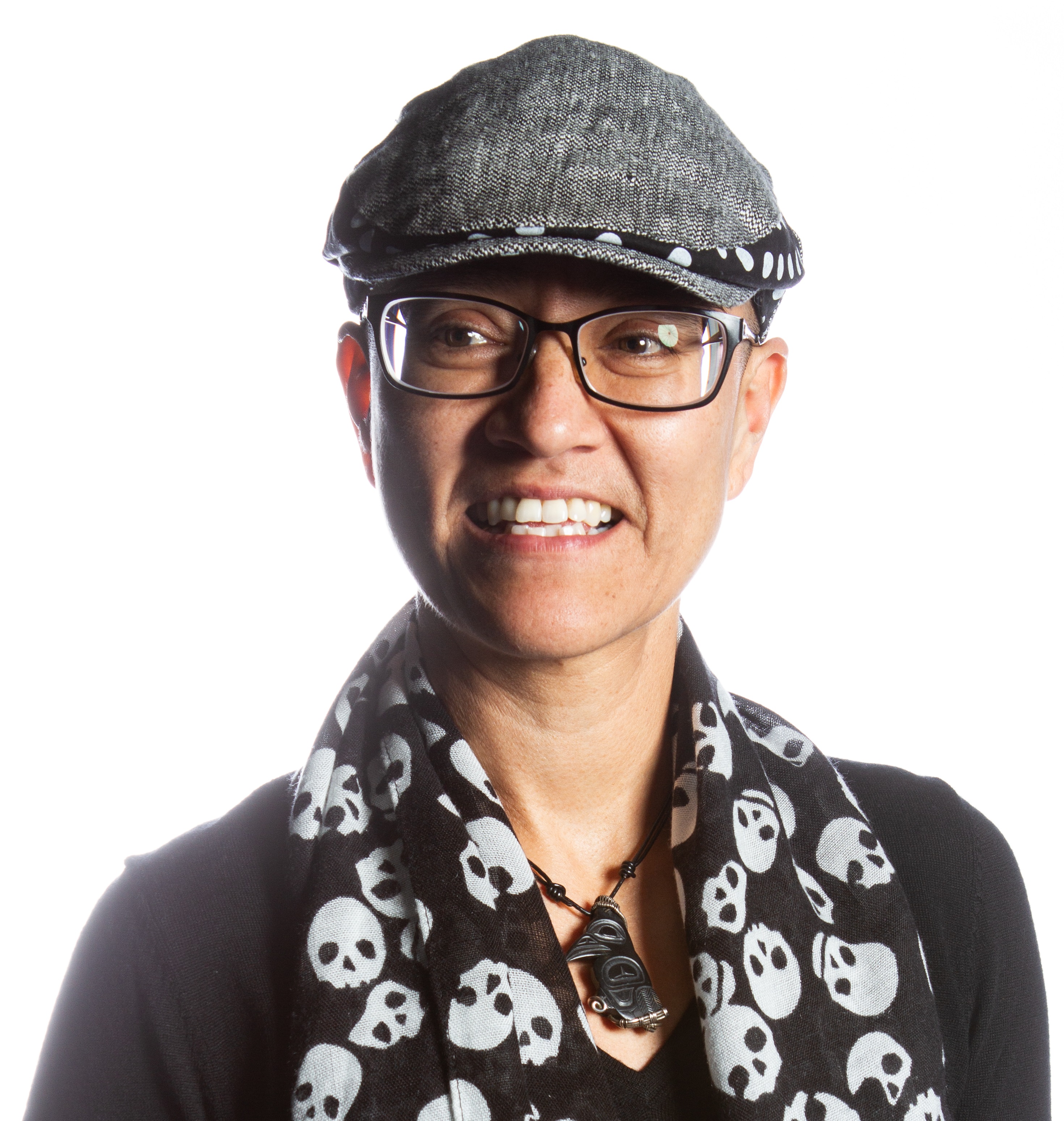
My journey of “seeing” continued from undergrad, to my first job, and then into grad school. After eight years of satisfying and life-giving work at the family center in Los Angeles (where I thankfully recovered my sense of self), I moved across the country to attend graduate school at Boston University (BU). I was there for eleven years, completing a Master of Divinity and a Doctor of Philosophy in Practical Theology. And, again, especially during my early years at BU, I was often the only Latina in the room.1 It was the next predominantly white context where I continued to develop as a scholar and find my way in the academy.
It is the case for most of the Latino/a scholars I know that they too were often one of just a few, if not only, Latino/a doctoral students in their program.2 This has varied impacts. Being continually in places where you do not share the culture of the majority can be taxing, psychically and emotionally. It is work.
One of its more fruitful impacts, however, is its potential to raise your knowledge of the web of systems at work that creates these disparities in the first place and to awaken a commitment to work to change these structures in both their small and large manifestations. If taken on, the shape this work takes will different for everybody and must begin in the specific and particular place one finds oneself standing – I found myself standing in mostly white spaces.
What I can say, though, is that the white scholars and theologians who to this day are my collaborators and friends are people who are likewise committed to helping uncover, undo, and counteract interlocking systems and structures of oppression–those that enable a hierarchy of valuing and materially privilege some persons or people groups over others. To be in this work is what mujerista theologian Ada María Isasi-Díaz refers to as being en la lucha, in the struggle, for liberation.3 It is active work in the face of strong political forces that would rather preserve the status quo, but it can be taken on by people across difference if they have the shared commitment.
It is good news when we get to be in the struggle together, but it takes being willing to be present to the concrete realities of our very particular place and context. Being present is part of the journey to seeing in a new light, which can be an unsettling one. As comrades en la lucha, we need courage to see and take on the complexities of the systems that exploit our differences.
To be en la lucha means that we are willing to open our eyes to truths we’d sometimes rather not see – such as the history of race and racism in our contexts – for seeing can undo us, make us vulnerable, and unsettle our certainties. Seeing is work, good and difficult justice-making work. But when we do it, we join a diverse community of revolutionaries who have heeded the call to turn around to live into a new divine reality and may even join in on what is already real and at work in the commonwealth of God or radical kinship (as ways to language the vision of a healed world).
During the first Trump administration, a friend (non-white Puerto Rican) asked me about my resiliency in being in majority white spaces. She mentioned how she was personally worn down and exhausted post-Trump election and that she recently told a mutual white friend how she was finding it difficult to be in white spaces, feeling like she did not know how to talk to white people anymore. At the time, when progressive white folks were still in shock at Trump’s first election, she was experiencing the toll of being present to the struggles of her white progressive friends and peers as they began to see in a new light, even while they often did not know how to do the same for her (an experience not uncommon for people who are continually in spaces where they are the minority). Her story helped me answer her question to me.
In being honest about her exhaustion with her white friend, my friend took the risk of being vulnerable, hoping that her friend could and would hold her in that space. She risked vulnerability, and as she did, her friend was able and willing to meet her where she was. This is not always the outcome, and also many times when we do not have it in us to risk, when we just don’t have the resources or reserves for it. But this was one of the two factors that easily came to mind when thinking about my own resiliency; the first was that when I needed it, I intentionally put myself in places where I could “feel at home;”4 and the second was that I had friends with whom I could risk. I have friendships (with white folks), developed over time, during which we were able to hang in there through enough vulnerable, risky, moments to be able to move into relational possibilities that were previously not imaginable. It has made all the difference.
I invite us each to see one other as en la lucha together; to know and live into the reality that our liberation is tied to each other’s (and to our non-human beings as well); to the truth that we are inextricably connected, and that to see ourselves as set apart, distinct from one another, is a distortion that does us harm. Let us instead be comrades for our collective liberation, and face the systems of oppression together.
- The diversity, especially in reference to Latino/a students, definitely increased over the elevens years I attended BU. Now, both in the faculty and the student body, there is much more Latino/a and Latin American representation than when I started in 2004. ↩︎
- The first time I was in a room full of Latino/a academic peers was a transformative experience. In that moment I felt affirmed and validated as a scholar in way I never had before, even though I have always benefitted from supportive white friends and mentors in the academy. There was something about being able to see myself in them, people that shared a similar cultural and ethnic background and who were also academic, that solidified in me my identity as a scholar. I wrote about this experience and my gratitude for the Hispanic Theological Initiative that brought us together, on Feminism and Religion (blog). See Xochitl Alvizo, “Being Renewed at the Hispanic Theological Initiative,” Feminism and Religion (blog), August 20, 2012, https://feminismandreligion.com/2012/08/20/being-renewed-at-the-hispanic-theological-initiative-by-xochitl-alvizo/. ↩︎
- Ada María Isasi-Díaz, En La Lucha/ In the Struggle: Elaborating a Mujerista Theology (10th Anniversary Edition) (Minneapolis: Fortress Press, 2004). ↩︎
- In my early years in Boston, I re-sourced by going back home to Los Angeles at least 3 times a year. I have a similar need to re-source in regard to feminist spaces and, at times, women-only spaces (by which I include all women). The need for periodic separation is something Alice Walker includes as part of her definition of Womanist and resonates with many: “Committed to survival and wholeness of entire people, male and female. Not a separatist, except periodically, for health.” Many who do justice-making work resonate with Walker’s statement. Alice Walker, In Search of Our Mothers’ Gardens (Orlando, FL: Mariner Books; Reprint edition, 2003), xi. ↩︎
Discover more from Feminism and Religion
Subscribe to get the latest posts sent to your email.


XOCHITL, AS USUAL EXCELLENT -“Being continually in places where you do not share the culture of the majority can be taxing, psychically and emotionally. It is work.” I think the damage this can do over time is enormous – I know in my situation being ‘different’ has left me an outsider – the doors remain closed here in Maine – However when I lived in NM where diversity was celebrated I or tolerated – depending – it opened me to people joy – something I have not felt since. I do have friends but none that live here – and that’s what I miss the most. These are hard times – last night I dreamed that a dead tree was stretched across the road in front of me – I could not move it – This is where Grace becomes the hope. You are in a very different situation and a place where you can initiate genuine change! YAY for Xochitl – Little Flowers blooming everywhere.
LikeLiked by 1 person
My kin sister, thank you for your comment, which has raised my spirits today. I’m so sorry about the dream you had – it really seems to reflect the heaviness of our current political-social reality, and the isolation we often live within it. Small moments and spaces of grace really are what keeps me going. Sometimes I don’t know how hopeful I feel about genuine change, but, it’s also the only way I find worth living, which is toward a new divine reality of justice, reciprocity, and relationality. So, onward we go!
LikeLike
Yes, sadly these dreams are reflections of personal and collective heaviness – in the end – we make a choice – we must go on – regardless of outcome – ‘small spaces of grace’ YES – these moments keep me going too… it’s what we have…. love, sara
LikeLike
‘Seeing is work, good and difficult justice-making work. We join a diverse community of revolutionaries who have heeded the call to turn around to live into a new divine reality and we join in on what is already real and at work in the commonwealth of God.’
This stuck out to me most because it reminds me that ‘small’ actions like using our voice, hearing others, and being willing to stand before what is make the biggest ripple effects. Thank you for sharing your voice and heeding the call to herald the new world.
LikeLiked by 1 person
Thank you, Jsabél. I of course agree with you about the “small” actions and their ripple effect. They are how I try to create, enact, hope for myself, through small actions that are within my reach. Which, by the way, makes me realize the limiting language I used in my post when referencing the “commonwealth of God” – I usually try to use more expansive language, but slipped this time around! Thank you for your gracious comment.
LikeLike
Thank you Xochitl. This is an important piece in helping us understand the different eco-spheres of human relationships. I think this needs to be read by everyone. My hope is that FAR lives and works in the EN LA LUCHA space.
LikeLiked by 1 person
Yikes, where is my comment?????I submitted it yesterday morning?
LikeLike
Thank you for this post, Xochitl, for challenge and invitation. En la Lucha!
LikeLike