 It should have been a wonderful journey, organized by three dear friends who run a yoga center in Costa Rica. I would be traveling with my husband, these friends, and thirteen other like-minded folk to the Sacred Valley of the Incas in the Andes highlands of southern Peru. We’d be staying at a lovely retreat center just outside Pisac, an ancient market town encircled by imposing mountains. And our itinerary would take us to some of the most important Inca sites, including the iconic, hauntingly beautiful and remote Machu Picchu.
We’d made the plans almost a year ago, and I’d been looking forward to the trip. But I fell sick several weeks beforehand and was hesitant to leave my Brooklyn home. Everyone assured me the journey would be magical, and so, feeling better but still uncharacteristically fearful, I reluctantly decided to go. Continue reading ““Para limpiar el corazon”: To Cleanse the Heart by Joyce Zonana”
 I had never imagined visiting Eastern Europe, a place toward which I felt no attraction, or, if anything, a deep aversion. To my mind, these were the killing fields, where six million Jews, Roma, political prisoners, homosexuals, and others were massacred by the Nazis during World War II. As a bisexual Jew, a dark-skinned Middle Easterner sometimes taken for a gypsy, why would I want to go there?
 The Sabarimala Temple has received an influx of global attention since last October. In my last
  The Sabarimala Temple in Kerala, India has been recently thrown into the news. It has made world news due to the two centuries long tradition of denying females from the age of 10-50 entrance into the Temple. As of September 2018, the Indian Supreme Court ruled in favor of allowing women entrance into the Temple. Needless to say, this ruling was met by both large numbers of supporters and protestors. But what makes the Sabarimala Temple so controversial?
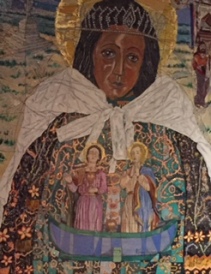
 I know that you all will be reading this the day after Christmas…so this is my Christmas and/or winter holiday gift to you. I so love the Feminism and Religion (FAR) community—its discourse, intelligence, and its community of like minds. And I appreciate that so many of us offer lessons to each other on how to live—wild. For in some ways the very juxtaposition of the words “feminism” and “religion” posits an out of bounds existence. What does it mean?
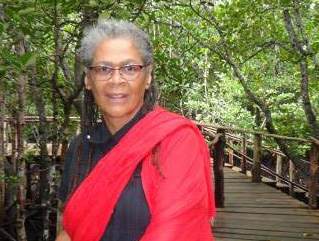 This weekend those of us not performing the ritual pilgrimage, or Hajj, will enjoy the Festival of the Sacrifice of Eid al-Adha. Celebrated on the 10th day of the 12th lunar calendar month, it tends to creep up without warning, since we operate on the solar Gregorian calendar. The next day I jump a plane to Southeast Asia so my attention is already diverted.