

part 1 was posted yesterday
Women weavers who made the Viking world possible
Viking Women were also farmers, running their own farms, merchants running their own businesses, and voyagers upon the seas, locating and settling new territories in Iceland, Greenland and even Vinland in Canada.
The chapter on the Viking weavers is truly astounding. Pringle details the importance of and vast amount of weaving the Viking women produced to support the excursions of the ships and to dress their husbands and sons — maybe wives and daughters—safely for battle.
“In 2016, archaeologist Morten Ravn, a curator at the Viking Ship Museum in Denmark, published an estimate of the total time required to construct two medium-size Viking ships, from keel to sail. Ravn based this estimate on projects documented by the museum staff. His calculations showed that spinning and weaving enough cloth for just one sail accounted for as much as 36.9 percent of the total number of hours logged by builders of an average-size Viking ship. This meant that just over a third of all the work that went into constructing such a ship was performed by women. And if the crew carried enough spare cloth to mend the sail—a practice recommended by one Old Norse text, King’s Mirror—that statistic climbed to 53 percent, more than half of all the necessary work.
But the women weren’t done there, they also produced a wealth of other high-quality gear for the raiders themselves, from heavy seafaring blankets to water-resistant clothing. And last but certainly not least, research now suggests that they made a surprisingly effective form of body armor”(NW 114).
Viking women invented new kinds of wool gathered from particular sheep and wove and stitched them together in such a way as to make them waterproof and arrow resistant. These are female-driven advances in textile engineering.
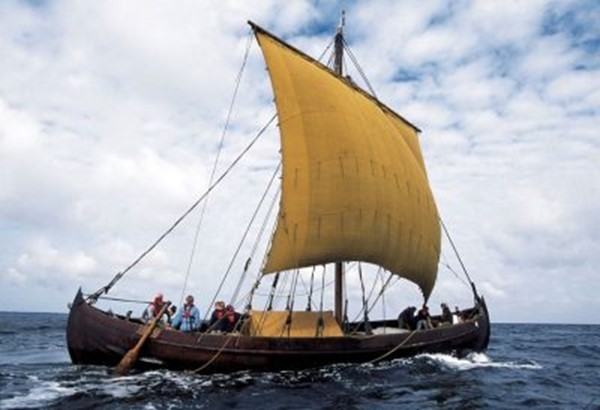
So much wool was needed for the fleets of Viking warships that Pringle guesses that many of the females captured in the raids and kept or sold as slaves by the Vikings were used for just such a purpose. This is another version of women’s lives lived among the Viking people that Pringle explores in detail: the enslaved women. It is a tough chapter to read, but necessary if we are trying to be equitable and cover all the lives lived by women who were either Viking or captured and enslaved by them.
“It’s unclear today just how many women lived in bondage in Scandinavia during the Viking era. But one prominent researcher, university of Oslo archaeologist Jón Vidar Sigurdsson, has estimated that between 20 and 30 percent of Scandinavia’s population consisted of slaves by the beginning of the 11th century. If Sigurdsson is right, as many as 300,ooo men, women, and children may have lived in subjugation in Scandinavia by the end of the Viking Age”(NW 143).
Viking women warriors
And then there are the women warriors arising out of the earth more and more with each passing year and confirmed more and more with advances made with DNA analysis.
It was an article by Pringle in the March 2025 issue of National Geographic, “The Warrior Women of the Viking Age,” that alerted me to this book and subject. I have long been interested in burials of warrior women, aka Amazons. The piece has very compelling illustrations to go with the text. I highly recommend it.
The site of the grave detailed in the article is on Birka, an island west of Stockholm, the location of an active and enlivened Viking town and center of trade. The grave which had been excavated years earlier was only recently proven to be the burial of a woman.
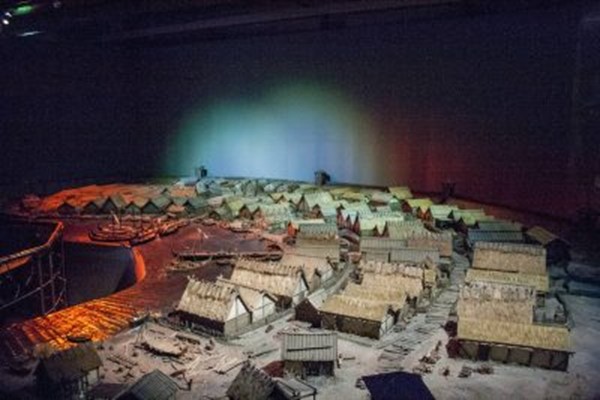
First uncovered in 1877, complete with horse skeletons, weapons— including arrows, axe and sword, the burial became famous. Proving that this warrior was a woman has been both groundbreaking and controversial. Pringle posits that this important woman was not only a warrior but a military leader.
“From the start, the equestrian character of the grave stood out. Although the Vikings are best known for their seafaring abilities, prosperous families in the North bred horses for riding and for work on their farms, and their children became skilled equestrians. The Birka woman likely came from just such a privileged background. The hinged position of her skeleton suggested that she had been buried in a seated position—possibly on a saddle, whose wood and padding had rotted away over time, leaving only stirrups found by her feet. Moreover, one of the two horse skeletons on the ledge was bridled, as if ready to be ridden. In addition the grave contained other equestrian gear: iron crampons that could be fastened to a horse’s hooves for winter travel and what was likely a large curry comb carved from antler”(NW 219).
“Other objects in the grave hinted at leadership abilities. In a bag on her lap, she had 28 gaming pieces and three dice. Near her skeleton were remnants of a playing board. It was a complete set for a board game that was popular in the ancient Norse world. Played by two, the game pitted an attacker against an evader, and it required both creativity and strategic thinking to win. In Sweden, archaeologists have found other complete sets of the game in lavish burials given to important pre-Viking Age warriors. There the sets seems to symbolize military acumen and leadership, and they may have carried a similar message in the burial of the Birka woman”(NW 220).
Identifying this burial as that of a woman warrior, and perhaps military leader, indicates that there are many more such discoveries to be found and, as with the other women covered in The Northwomen, continues to open new and powerful truths about women of the past.
Heather Pringle is an award-winning author and science journalist who currently lives in Victoria, Canada. She has traveled extensively for her work and writes for many prestigious magazines. She is the author of four other books, and her website says she is working on a novel. Here’s hoping!!
Heather Pringle is a Nasty Women Writer.
© Theresa C. Dintino 2025
Discover more from Feminism and Religion
Subscribe to get the latest posts sent to your email.


Women’s art in the form of weaving is considered a craft eve. today – not an autuhentic Art form – so nothing about this saga surprises me although I didn’t;think know the story. So ridiculous.. Woman Weaeers rise up and take a bow!
LikeLike