I remember the words so clearly: “I know what it’s like to have my body broken, I know what it’s like to have my blood spilt. I won’t celebrate anyone else’s broken body or spilt blood, and I don’t want anyone doing that on my behalf.” Sitting in the pew next to me, my friend spoke her truth in a soft and tentative, but somehow still firm, voice. She then slumped in her seat and folded up her legs, hugging them against her body. While everyone else got up to take communion, I stayed in place beside her.
There was a period of time in my life when I was not willing to participate in communion. My friend’s words stayed with me, transforming the communion table from one of hospitality to one of violence. “Celebrating” communion didn’t feel celebratory anymore. I chose not to take communion for several years. I let my friend’s words guide and deepen my reflection on the practice of communion—especially in light of the trauma suffered by all too many bodies.
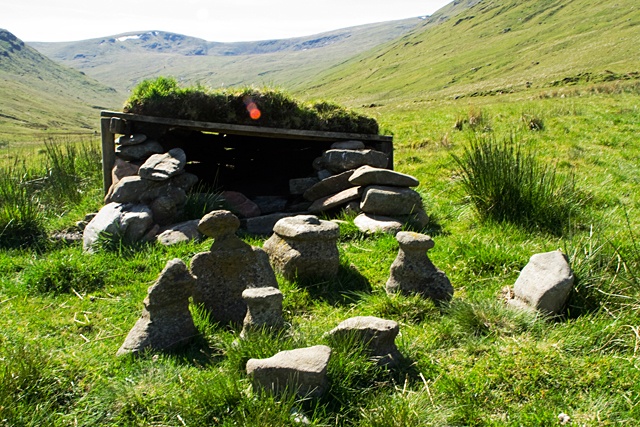
Tigh nan Cailleach, House of the Cailleach, Glen Lyon, Scotland
Samhain is the beginning of winter according to the Celtic calendar. On this day, people brought their livestock in from the pastures and settled by their hearths to survive the coming cold until the magical renewal of spring. Here in New England, leaves are beginning to blaze red-gold, plants to brown as nutrients fill their roots, and animals to nestle underground to hibernate. Across the northern hemisphere, we should once again begin our own retreat below the the busyness of our lives to re-energize and plan for the fruition of spring works.
I’ve usually thought of winter as a time of withdrawal from other beings and the world, but maybe Celtic tradition offers us a more nuanced way of perceiving this season. A wonderful Scottish Samhain story has made me rethink of winter as a time to also reconnect and re-vitalize each other and chart our course to spring’s promise together. I cannot say what the story means to those from whose land it emerged, but I can share the thoughts it evokes in me. Settle in, get comfy, and listen…
A Modern Pilgrimage to the Isle of Lewis & Harris, Part 2
In the previous post of October 14th, I introduced my recent pilgrimage to meet the Goddess, honour the physical and psychological changes that have happened inside me recently. I described the different mountain ranges that resembles the bodies of sleeping women, and an ancient well dedicated to the Celtic goddess Brighde.
If I was traveling over the body of the goddess, the Callanish Standing Stones would be her navel. It seems as if energy is flowing out from there to all edges of the island. The shape of the site resembles a Celtic cross. Unusual is that the site consists of one large, central standing stone, surrounded by 13 stones, and with stone avenues to the cardinal directions. With its solar alignment, paraphrasing Jill Smith, the configuration looks like a cosmic dancer who juggles the sun from east to west. The “arms” are aligned exactly with the sunrise and sunset at this time of year.
Model of the Standing Stones as seen from above, in Callanish Visitor Centre
Callanish 1, the main stone circle, is connected to 11 other sites across the island, some circles, some solitary standing stones. Together they are called the Callanish Complex. I visited Callanish 1 many times that week, and I was lucky to spend the Autumn Equinox there.
I’ve never come across stones that were so alive and expressive. Light would bounce off differently at different times of the day, accentuating irregularities, dulling, or sharpening edges, emphasising different aspects. I saw lion and wolf heads, young maidens, hooded wanders, gargoyle and dragon-like creatures, dolphins and even a Horned Dancer… Most importantly, it felt like in each of the stone circles in the area (Callanish 1, 2, 3, 4, and 8), there was at least one stone resembling a woman’s body, and I came to think of them as the Grandmother Guardians. They had a real living presence, that became even stronger as the day-visitors disappeared.
Usually there were 2-5 people there, sometimes I found myself alone. The sunset of the Equinox, however, drew many more people. There were about twenty tourists, who were taking snapshots of this magnificent light show, leaning, or pushing against the stones, talking, and giggling. Several professional photographers tried to capture a magical moment. And there were 5-7 fellow pilgrims, whom, like me, would stay long into the night. Everyone was so focused on the sunset, was I the only one who noted the rainbow in the east?
The below images were literally taken a minute apart – rainbow to the east, sunset and silhouettes to the west.
Rainbow during the Sunset at Callanish 1, on the Autumn Equinox, September 22, 2022Sunset at Callanish 1, on the Autumn Equinox, September 22, 2022
Eventually the tourists and photographers disappeared, and the rest of us gathered at the heart of the circle, in the remains of an ancient burial mound. With African and shamanic drums, a whistle, a singing bowl, an old man tapping his walking stick to the bottom of his tin mug, and some rattles, we improvised a rhythmic invocation to the spirits of the stones. With the rain becoming heavier, I soon found myself alone with the stones. Now I could finally sing, dance, weave between the stones without disrupting anyone, lean into the stones, close my eyes, and pray.
I felt very aware of the ‘balance’ in the year, the point of equally long days and nights. I asked for guidance on balance in my own life: between work and leisure, between doing and resting, between the first and second half of my life, between gathering wood for the fire and sharing it, between birth and death, and how I can better look after my body and energy living with an invisible auto-immune condition in these fast and demanding times.
After the rain departed, the clouds tore open, revealing the clearest and most brilliant night sky I’ve ever seen. The silhouettes of the stones reaching up into the night was truly magnificent. Moving, weaving, pausing, I made my way clockwise around all the 13 stones in the circle. I stood at either side of the stones, outer and inner, and took my place in between them, as if I was a moving stone myself. I reflected on centre and circumference, on axis, on direction, on the wheel of life, turning, turning, turning, turning… and felt connected to similar circles across Europe lighting up in the darkness, as a radiant hub of energy-places.
Photo Collage: Impression of Night Sky, by Eline Kieft October 1, 2022
After having completed my weaving of the circle, by which time I had enjoyed half of my ginger tea for a warm kick, I decided to return to our cottage – also an act of balance. Having a cold already, I did not quite have the proper gear to stay out in the windy and rainy night. My lovely bed was calling! On my way home I saw three deer next to the road. I stopped the car and could be with them for several moments before they wandered off.
I had been so attuned to the rhythms that I woke up well before the alarm. I laid in the comfortable darkness, until it was time to return to the stones to witness the sunrise. My mom came along this time. Again, there were several photographers ready for ‘the moment’ (no tourists at this hour!). I just HAD to dance, and chose my spot at the far western end, out of line of any cameras. A dance of ground, earth, mountain, honouring the mother and my mother, weaving the light, the turn of seasons, changing, praying, calling, giving thanks, celebrating, welcoming, and letting go. Strong, soft, vibrant, still…
Both Images of Sunrise at Callanish 1, on the Autumn Equinox, September 23, 2022
Standing against the central menhir, looking east, we finished the last of the ginger tea. So special to be able to share this together. Mother and daughter in a circle of ancient Grandmother Guardians, witnessing the sun rise on a new day. Sacred land, ongoing cycles of time, and a modern-ancient pilgrimage…
It will take many moons to fully digest and integrate the richness of this journey, but I already know this precious experience seeped deep into my bones.
May the magic of the land touch you too, wherever you are.
Mother and Daughter – this photo was in fact taken at another moment, against another stone, mid-afternoon on 22nd…
I’d love to invite you for my series of Embodied Spirituality Masterclasses that are going to start today, 21st October! Have a look if you’re interested in reconnecting body and spirit, re-anointing the body as sacred, nature as a temple, contemporary ceremony and much more… You can still join until Christmas, so don’t worry if you can’t make the first session live, it will be available in replay!
Jill Smith is a deep well of goddess lore on Lewis:
Mother of the Isles (2003)
The Callanish Dance (2000)
Bio
Eline Kieft danced from a young age, including rigorous classical and contemporary training to become a professional dancer. She then studied anthropology, deepening her fascination with worldwide similarities between indigenous traditions regarding intangible aspects of reality and other ways of knowing, including embodied epistemologies and shamanic techniques.
She completed her PhD in dance anthropology at Roehampton University, trained in depth with the Scandinavian Centre for Shamanic Studies and the School of Movement Medicine. Eline worked at the Centre for Dance Research (C-DaRE) at Coventry University for five years, where she created a Somatics Toolkit for Ethnographers, and pioneered soulful academic pedagogy. Her recent book Dancing in the Muddy Temple: A Moving Spirituality of Land and Body was well received as a unique blend of theory and practice and a medicine for our times.
She is now a full-time change-maker and facilitates deep transformation through coaching and courses both online and in person. Her approach The Way of the Wild Soul offers a set of embodied, creative, and spiritual tools to re-connect with inner strength and navigate life’s challenges with confidence.
“Sometimes there is small magic
and scraps of enchantment.
Sometimes we push for more
and sometimes we yield,
joining hands
to welcome the sweet what is
as we witness the wheel’s turn…”
Each year fall waltzes in, slow and supple, her golden light illuminating the pines, her slowed rhythm tugging at our hearts and bodies, her red and brown cloak settling over the land. We are invited to yield to grace, offering up our gratitude and celebration, releasing our stored up worries and concerns into her capable hands, remembering how to let things go, how to scatter our offerings and our troubles into the winds. Now is the time to sit in the stillpoint, to call ourselves back home, to accept her invitation to sit in the center of our very own lives and choose, to recall our strength and to be held. Extend your hands into autumn.
This post started as a comment to Annie Finch’s part 1 of Abortion As A Sacrament post. Realizing it was a story that was getting too long, I’m sharing it here as a reiteration of the practical significance of ritual, and finding our way through the no-longer-charted territories of being a female human — in the sense that if we were a female of any other animal form, we would still know exactly how to navigate all the challenges.
I had a years-long pregnancy-related experience in which ritual was the only thing to finally bringing closure, though the real issue was more the other being’s feelings or intent than mine. About a year after the birth of my only child, still nursing full time and using what should have been sufficient birth control, I became pregnant and aborted at Planned Parenthood. I had been well along, not having suspected anything because my menses hadn’t yet returned.
At the time, there was no debate in my mind, if I had added another responsibility to my already excessive load, I would have failed at everything, the most important being my daughter.
Labyrinths are magical. I’ve always been drawn to them. About two years ago, a local Episcopalian Church rebuilt their beautiful outdoor labyrinth and opened it to the public. In concert with them, I have been delighted and honored to offer guided walks there. Doing these walks, both in leading them and in walking myself, have given me the opportunity to reflect deeply on what they mean from many perspectives: historical, personal, spiritual, philosophical, experiential.
When I walk a labyrinth, it feels like I am mirroring the universe while expanding my internal journey. Teresa of Avila agrees with me (or, more accurately, I with her). She wrote, “If we learn to love the earth, we will find labyrinths, gardens, fountains and precious jewels! A whole new world will open itself to us. We will discover what it means to be truly alive.”
It is important that we share these rituals of celebration and affirmation with our sons as well as our daughters. Men, too, should know the power of joined hands in a circle, voices lifted in song, and sweet words of connection surrounding one another on a bright spring day…
I rose early seeking Beltane dewdrops with which to anoint my brow. the cupped violet stems and clover were dry and I found no dewdrops in the chickweed stars. Instead, I put out oranges for the orioles, ran my fingers through the dandelions, and pressed my nose into the lilacs. I spotted green flowers on the mulberry trees, found the first wild pink geraniums and tender bells of columbine and came face to face with the quiet black eyes of solemn deer in the raspberry bushes. These things their own kind of anointing, their own small and significant rites of May Magic.
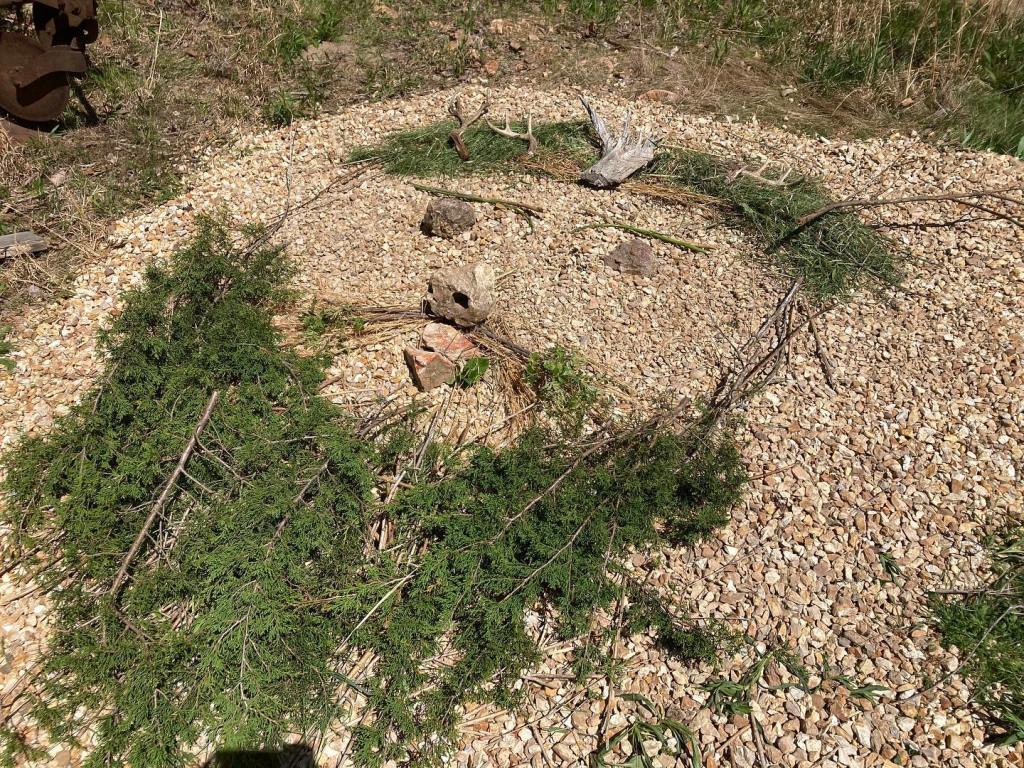
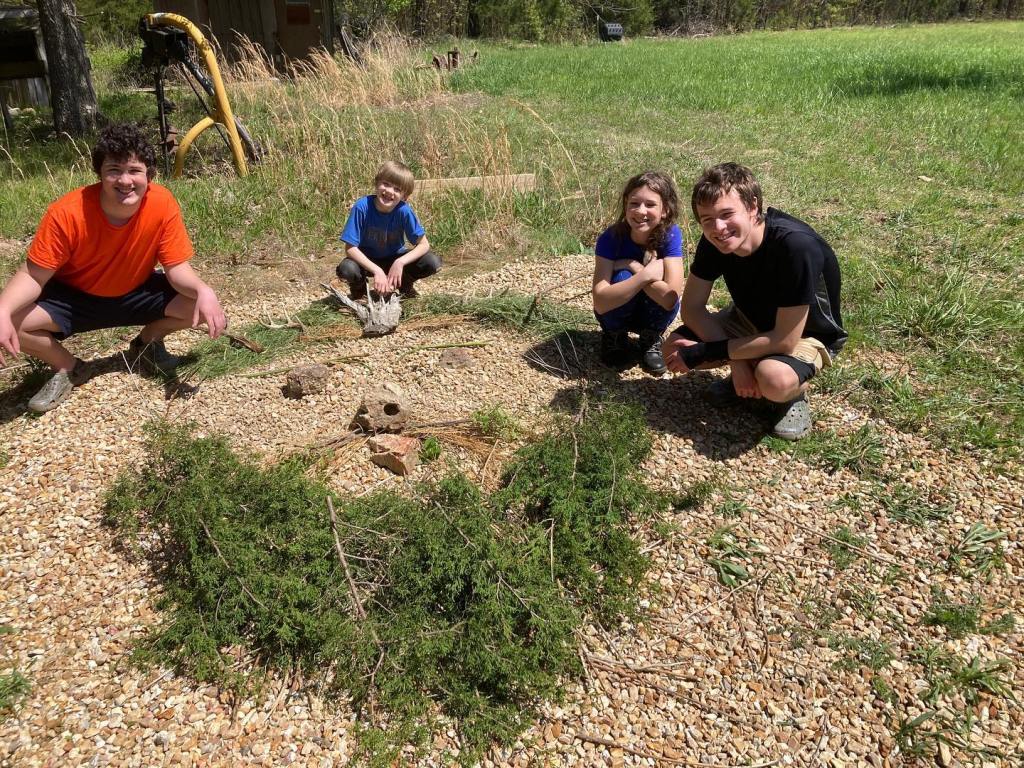
As a family, we traditionally celebrate the May by making a Green Man face in our field, using natural items that we find that day. As a goddess-focused person who walks an almost exclusively goddess-centered/nature-based path, this is one of our few family rituals that centers around more masculine sacred imagery. It is a favorite for my kids—rituals involving multi-age groups should always be as highly participatory as possible. I have written several times for FAR about how my hearth-priestessing has evolved over the years, letting go of more and more control, doing less and less planning, and being more freeform, spontaneous, flexible, and playful. My four children now range in age from 7-18. We have celebrating the turning of the Wheel of the Year for their entire lives. I love how our memories of past rituals inform the present—for example this year’s Green Man had the same rock for a nose that we used for last year’s Green Man.
This year, May Day was bright and sunny with a wild wind. We circled near the driveway, building our Man on the gravel, where his features would stand out against the brown rocks. We gave him antlers formed from cedar branch and white-tailed deer and a crown of a split stump of gray oak. My oldest son trimmed off cedar branches for his beard, my husband pruned the hydrangeas of last year’s dead growth to frame his face, my sixteen year old gathered golden stalks of dry bluestem grass for a mustache, and my 11 and 7 year olds gathered pieces of grass and cinquefoil to trim his hair and beard.
We stood around him in admiration for a few minutes and then I spoke of the bounty, growth, and renewal of this time of year. We stood hand in hand and read the following blessing together (me calling a line and then all repeating it):
A sweet blessing of the singing sky to us.
A slow blessing of the shining flame to us.
A strong blessing of the crashing wave to us.
A soft blessing of the pulsing earth to us.
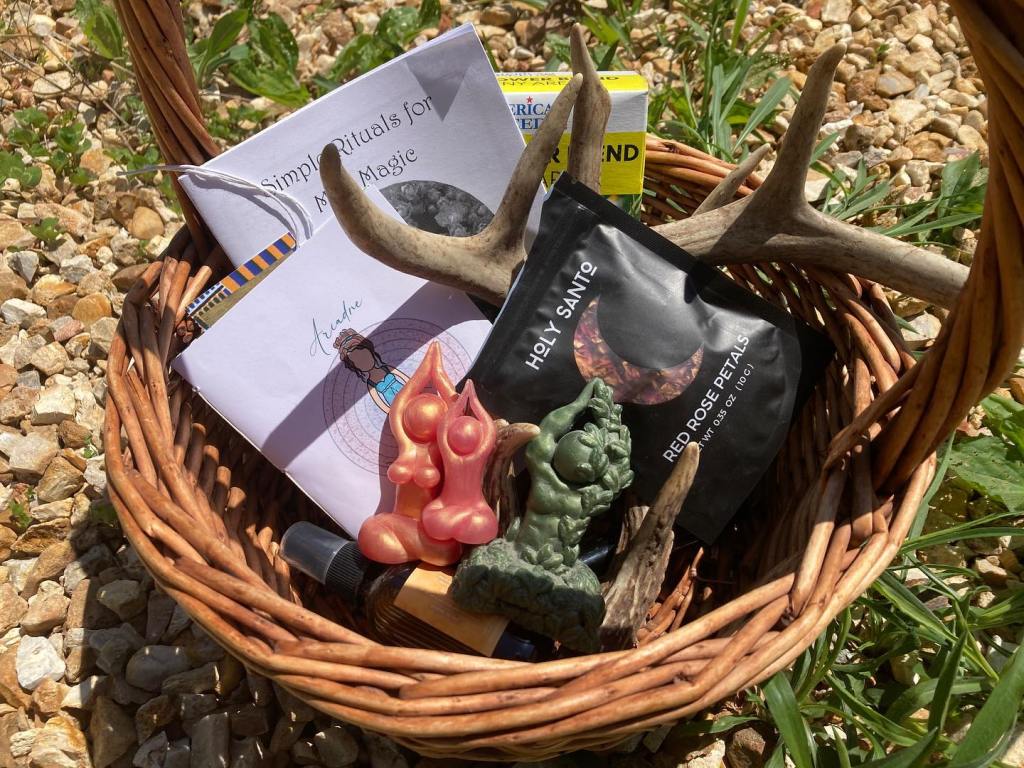
We then offered a wish to one another in turn with a spritz of “Valiant Heart” spray (from Honey and Sage Co). For example, I spritzed my daughter (11) and wished her curiosity and creativity and then she turned to her father and spritzed him wishing him health and prosperity.
I gave everyone four rose petals (whole flowers would have worked well, but I was working on the fly!) and invited everyone to kiss each petal in turn and then offer it to the Green Man (the wind whirled most of our petals away as we released them, which was pleasant as well—our wishes, accepted), based on this past poem:
Find four flowers and bring them to your lips one at a time. One for wonder. One for joy. One for love. One for magic. Make your promise invite them in, one by one the spell is done.
We sang a few lines together, laughing, from one of Tom Bombadil’s ditties in The Fellowship of the Ring and shouted out, “Happy May!” after finishing our raucous rendition:
Now let the song begin! Let us sing together! Of sun, stars, moon and mist, rain and cloudy weather, Light on the budding leaf, dew on the feather, Wind on the open hill, bells on the heather, Reeds by the shady pool, lilies on the water…
We then each took a handful of wildflower seeds and sang “Call Down a Blessing” over them, each of us plugging in a blessing word in our turn.
Call down a blessing Call down a blessing Call down a blessing Call down __________before you __________behind you __________within you and around you.
This song is based on Cathy Parton and Dave Para’s song, but is sung collaboratively with each person choosing a blessing to sing together in the blank space. (A recording of our women’s circle singing this together during a ritual is available here.) We then scattered to plant our handfuls of seeds in whichever place we wished to do so.
This whole ceremony took less than thirty minutes and we closed our largely spontaneous ritual by joining hands and offering our family’s usual closing prayer (learned from our own dear Carol Christ): May Goddess bless and keep us, may wisdom dwell within us, may we create peace.
It is important that we share these rituals of celebration and affirmation with our sons as well as our daughters. Men, too, should know the power of joined hands in a circle, voices lifted in song, and sweet words of connection surrounding one another on a bright spring day.
My oldest son is graduating from high school this month and this week I took him to register for his first college classes. At this threshold moment in parenting, I feel the odd psychological sensation of overlapping generational “timelines,” sometimes feeling like I, myself, have become my parents, while at the same time, feeling like I am a college student myself. But, for now, at this moment, we stand here together under a Beltane sun, laughing together around a Green Man in the stones.
Molly Remer, MSW, D.Min, is a priestess, teacher, and poet facilitating sacred circles, seasonal rituals, and family ceremonies in central Missouri. Molly and her husband Mark co-create Story Goddesses at Brigid’s Grove (brigidsgrove.etsy.com). Molly is the author of nine books, including Walking with Persephone, Whole and Holy, Womanrunes, and the Goddess Devotional. She is the creator of the devotional experience #30DaysofGoddess and she loves savoring small magic and everyday enchantment.
Originally posted on February 7, 2021. You read the original comments here.
Here’s a simple spiritual practice that I’ve been doing for longer than I can remember. During the regime of the Orange T. Rex, I started doing it at bedtime to calm my mind so I could go to sleep. We’re hopefully living in a more optimistic and peaceable time now, but that’s no reason not to add a new spiritual practice to our lives. I hope you’ll like this one and will try it for yourself.
We’re accustomed to seeing people praying with rosaries or reciting mantras and counting repetitions with strings of beads. We can do that, too. But how about using a simpler “tool” to keep track of our mantras and affirmations—our own hands?
Sometimes the best rituals are those we cannot plan, requiring only pine needles and wind, open eyes and a long, slow-sinking sun settling gently into shadows. Sometimes the best magic of all is made with what is exactly right now, bluestem grass and gray feathers, raccoon footsteps between the trees, laughter and joined hands, a faith in the cycles of retreat and renewal. This is what we are here for, days like these.
One crow behind the house greeted me on a frosty solstice morning. Five more slid across the road in front of me as I reluctantly left home to go to the dentist. A red-shouldered hawk glided across the road next and I spotted a kestrel perched on a wire. I drove and sang, memories of our bright candles and solstice spiral the night before behind my eyes, sun bread left rising golden on the counter at home. The dentist has devised a pulley system to hang bird feeders by each of his second story windows and I watch house finches collect sunflower seeds as I lie in the chair. I spot a vulture circling in the distance slow and graceful above the trees. The sky is blue. When I leave the office, I hear a crow’s voice call from across the street and as I drive back home to my family and our winter holiday celebrations, another red-shouldered hawk swoops in front of me, while a red-tailed hawk sits solemnly in a tree by the field, watching the ground. I’m amazed how birds, so unbound, tether me so reliably to the magic of place, to being present with the ensouled and singing world as I move within it and I am grateful.
In the late afternoon on the solstice, my family and I carry the sun bread we have made out to the field by our studio. We join hands and sing and then toss small bits of our golden bread to the sun, calling out our wishes for the year to come and offering our thanks to the spinning world we walk on, beneath this burning sun.
The kids go inside and my husband, Mark, and I walk down the road to finish watching the sun set. It sinks low and slow behind the bare oak trees, growing larger and redder as it goes. It seems to be one of the most drawn out sunsets of this year and we sit down in the frost-crisped dittany by the side of the road, our backs against the oak trees, watching. I turn to look at Mark smiling and say: this is what I am here for, days like these.
I decided to take social media break as 2021 drew to a close, something I’ve wanted to do for a long time, something I’ve needed to do for a long time, and yet, something I’ve always talked myself out of. I need this for our business, I think. It is part of my work. How else will I reach people? I will just post a few more things. While, inside, the hunger to really listen, to de-fragment my mind and re-collect my soul continued to build to a peak of fervency and desire. The blessing and the curse of social media is that everything is in one place. Convenient, yes. Holds you hostage, also yes. Exposes you to more information than you can reasonably hold and process, also yes. The first day of my break, I was amazed how often I was tempted to cheat, how many ways I came up with to sneak around the limit and to just do one little thing anyway. I was also surprised to discover how much extra space there is in my mind and how liberating it is to step away from the clamor of so many other voices. As Cal Newport explains, we all need time each day when we are outside of the influence of other minds. And, I was surprised by how invisible I felt, how unseen and unheard. As the days passed, I felt it though, my scattered pieces coming home. I knew that social media was affecting my focus and my brain functioning, could feel it fragmenting my thoughts, and making my focus and attention jumpy and scattered. In these days of silence, something began to heal inside. I feel a bit invisible, yes, but I also feel whole. I feel like I am coming back online, to my own life.
What was intended only as a ten day break over the winter solstice, extended through the first month of new year and while I’m not saying I’m never going back, I find I am in no rush to re-engage, certainly not in the way I had before.
In the reclaimed attentional space within, I discovered the soulsong of a new book walking up to me, hands extended and eyes wide.
We walk again under long wings of twilight, last vestiges of day sinking purple and mauve into the horizon. Somehow we end up talking about cryptocurrency and NFTs.
Give me dirt and give me stars, I say, as our feet crunch across the brown gravel, our shoulders hunched slightly against the wind. Give me life, right here, where it is.
As we come back up our driveway, we spot a doe at the compost pile, she watches us silently as we turn to make one more lap down the dusky gravel road.
Molly Remer, MSW, D.Min, is a priestess facilitating women’s circles,seasonal rituals, and family ceremonies in central Missouri. Molly and her husband Mark co-create Story Goddesses at Brigid’s Grove. Molly is the author of nine books, including Walking with Persephone, Whole and Holy, Womanrunes, and the Goddess Devotional. She is the creator of the devotional experience #30DaysofGoddess and she loves savoring small magic and everyday enchantment.
Note: this essay is excerpted in part from a book in progress, tentatively titled Walking with the Goddess.
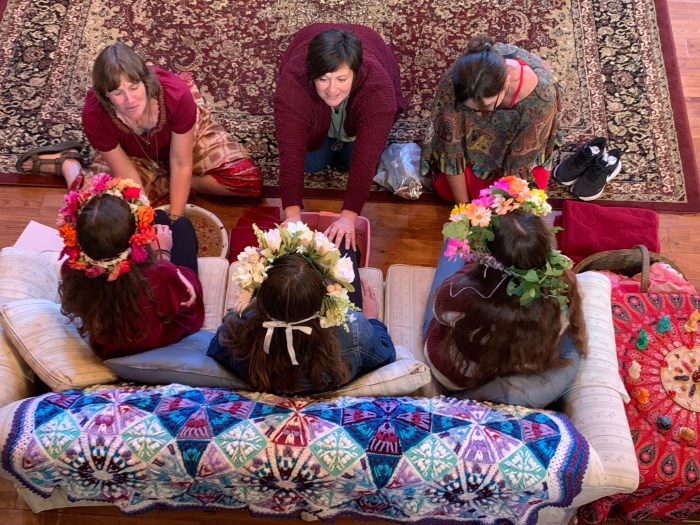
We gathered roses and bright zinnias to crown their heads with flowers, these shining daughters who we’ve cradled and fed and loved with everything we have and everything we are. We knelt before them and sang, our hands gently washing the feet that we once carried inside our own bodies and that now follow their own paths. For a moment, time folded and we could see them as babies in our arms, curly hair and round faces, at the same time seeing the girls in front of us, flowers in their hair, bright eyed and smiling, and so too we see women of the future, tall and strong boned kneeling at the feet of their own girls as the song goes on and on. We tried to tell them what we want them to know, what we want them to carry with them as they go on their ways: You are loved. We are here. You are loved. You are strong. You are magical. We treasure who you are. This love that carried them forth into the very world they walk on, we hope it is enough to embrace them for a lifetime, and so we kneel and sing and anoint and adorn and hold their hands in ours. We are here. You are not alone. You are wise in the ways. You belong. We are not sure if tears can say what we mean to say, but they fall anyway as we try our best to weave our words and wishes and songs and stories, with strength and confidence into a cloak of power that will encircle them with magic, no matter how far away from us they journey.






 Feminism and Religion