Quite a number of years ago I had a conversation with one of my professors, a feminist theologian, who posed the question “Why do I need a man to purify my baby with the waters of baptism? Is there something wrong or impure about the blood and water from a mother’s womb – my womb?” Before you jump and shout the words Sacrament or removal of original sin, this question bears merit in exploring, especially in today’s world where women are taking a serious beating religiously, politically, and socially. In today’s world, violations and rants are causing women to stand up and say STOP! This is MY Body. This outcry was provoked by chants of ethical slurs against women– Slut! Prostitute! Whore! The cry got even louder when the issue of religion and government was raised in the fight of healthcare coverage of contraception. The cry got even louder with the enactment of the laws in Virginia and Texas (and many other states to follow suit) that forces women to undergo transvaginal ultrasounds in early stage abortions. The mandatory insertion of a wand into a woman’s vagina (mandated by the government, mind you), is a violation and has women crying RAPE!
While I celebrate the rise in status of Hildegard to official saint and soon to be Doctor of the Church, I cannot help but be suspicious of the Vatican’s motivations. One only has to take in the last two months behavior of the CDF, sanctioned by Pope Benedict, to see the real intentions of this papacy—the continued subjugation of all women to clerical authority.
The past month or so has been a very busy time for the Congregation for the Doctrine of Faith or CDF and their examination of women. First they (and this includes Pope Benedict XVI) decided American nuns are guilty of the sin of silence by not speaking out on abortion & homosexuality. Their “radical feminist” ideology of standing with the poor and disenfranchised, while good, is not good enough for the CDF. The firestorm of solidarity coming from both laity and religious surely caught the Vatican off guard. Right? Well, not quite. This past week the CDF began its investigation of the Girl Scouts for their purported association with the likes of Planned Parenthood and Oxfam. While both address the needs of the poor, it is the latter and its troubling advocacy for safe sex via condom use that initiated the inquiry. Keep in mine that in 2010 Pope Benedict retracted from his earlier position and bane on condoms, seeing instead their use as a “lesser evil” in the fight against HIV/AIDS. The CDF angst is that the message of condom use might be too much sex-talk for impressionable young women. And now the real conundrum, Pope Benedict officially declared Hildegard von Bingen a saint and will soon declare her the fourth female Doctor of the Church along with Catherine of Sienna, Theresa of Avila & Teresa of Lisieux. News articles credited the pope as feminist-friendly and minded by his endorsement of Hildegard. It is stated that Pope Benedict turned to the writings of the 12th century visionary with her sharp critique of clergy and the church during her own 12th century milieu as a contemporary diagnosis for the sins of its priest in the global sex scandal. So what is it that attracts Pope Benedict to Hildegard?
Earlier this week, social media was all abuzz about the Pope’s investigation into restoring women to the diaconate. In the complete transcript of the Pope’s comments, the traditional notion of women’s maternal role in the church is mentioned in relation to the Church. Certainly this is nothing new. Here the Pope describes important “maternal” work such as working with the marginalized, catechesis, and caring for the sick – once again, nothing new.
However, in the next sentence, a very subtle shift is seen when it comes to normative gender roles:
…. there are men who do the same [work as consecrated women], and it is good…..and this is important.
What does this mean – a change in language? a laying of groundwork? or nothing at all?
It is no secret that cultural constructs of women as maternal and how a mother is defined as or even does has radically changed in today’s society; but, the Church continues to remain steadfast in normative roles between the priesthood and the “motherhood” of the Church (and therefore “motherhood” in general).
A theology of complementarity, referred to by Pope Francis as an “anthropological fact,” has had a strong influence on American politics. According to the Vatican teaching, women and men have distinct but complementary roles, meaning that women’s value is found in the home as wife and mother and men are responsible for providing for the family. Such a teaching is highly problematic in that it demeans women’s value and places women on the underside of dualism.
As a woman with an ongoing struggle with infertility, I find it troubling that my church sees my value as less because my womb is barren. Likewise, do women have less value if they choose a career over motherhood? What if they choose not to marry? There are also clear implications for single parents, LGBTQ parents, and so on. In addition, societal norms make clear that women’s work in the home is not valued as the work of men in society. Likewise, it is damaging to men in that it refuses to acknowledge the critical role men play in the household, in the lives of their children, and their responsibilities to be partners and co-parents.
The idea of complementarity upheld by Pope Francis greatly contributes to economic injustice for women. The Vatican’s refusal to value women’s roles outside the home influences US social policy on women’s issues. The continued struggle to close the pay gap, implement paid parental leave, and create viable options for childcare and early childhood education are directly connected to complementarity. If women are supposed to remain in the home and be wives and mothers, then there is no need to address any of these issues. How can we possibly have women in leadership roles if they are supposed to be at home cooking dinner and caring for children? And so, when women do pursue careers the social attitude is that women do not belong. Such an idea is even more problematic for women of color who suffer a lower pay rate – $.64 on the dollar for African American women and $.54 for Latina women. Furthermore, many have have been forced to work outside of the home as a result of economic and racial injustice. In this secular nation, Christian values dominate our political debates and perpetuate the idea that women are subordinate to men. And to be frank, these are community issues that impact men as well as women; yet they have been deemed women’s issues as a result of the manifestation of theological teachings.
As republicans focus on defunding Planned Parenthood, ending marriage equality, protecting religious freedom, and claiming issues like parental leave are not federal issues, women continue to be relegated to second class status. In a time of turmoil and multiple threats to the progression of our nation, there is greater concern for regulating women’s bodies than guns.
Pope Francis has been praised for his commitment to the poor; yet he has been unable to make the connection between poverty and the women’s issues that exist as a result of complementarity. Likewise, the Church’s stance on reproductive justice continues to perpetuate the very issues that the pope seeks to address. As Sr. Joan Chittister points out:
I do not believe that just because you’re opposed to abortion, that that makes you pro-life. In fact, I think in many cases, your morality is deeply lacking if all you want is a child born but not a child fed, not a child educated, not a child housed. And why would I think that you don’t? Because you don’t want any tax money to go there. That’s not pro-life. That’s pro-birth. We need a much broader conversation on what the morality of pro-life is.
No doubt, his lack of relationships with women is a major contributing factor to his ignorance when it comes to such issues – by the way, which could be easily fixed by embracing women’s ordination. And so, as Pope Francis has become an international figure deemed a savior to the people, these disconnects fuel ongoing US political debates that keep women in a marginalized position and continue a cycle of poverty and oppression.
Pope Francis has called for a “Year of Mercy” in which he has stated that if a woman confesses having an abortion, she will be forgiven. Many have praised the pope for taking such a step towards healing; yet, I can’t help but think, “how judgmental and irresponsible.” Without knowing a woman’s circumstance, her decision making process, her doctor’s concerns, etc., why should one be told to repent? To deny women the right to reproductive justice is to deny women the ability to make decisions about their physical, emotional, and financial health – and we see this play out in the US as a result of the influence of complementarity in our political system. So, in this “Year of Mercy,” I wonder will the Vatican confess its sins against women, LGBTQ persons, and others it has marginalized?
Portions of this article are excerpts from If Jesus Ran for President coming from the Far Press in Spring, 2016.
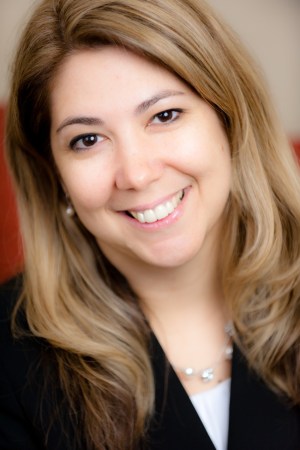
Gina Messina-Dysert, Ph.D. is Assistant Professor of Religion and Gender Studies at Ursuline College and Co-founder of Feminism and Religion. She writes for The Huffington Post, has authored multiple publications and is the co-editor of the highly acclaimed Faithfully Feminist: Jewish, Christian, and Muslim Feminists on Why We Stay. Messina-Dysert is a widely sought after speaker and has presented across the US at universities, organizations, conferences and on national platforms including appearances on MSNBC, Tavis Smiley, NPR and the TEDx stage. She has also spoken at the Commission on the Status of Women at the United Nations to discuss matters impacting the lives women around the world. Messina-Dysert is active in movements to end violence against women and explores opportunities for spiritual healing. Connect with her on Twitter @FemTheologian, Facebook, and her websiteginamessinadysert.com.
In my class yesterday (a survey of Christian thought and practices), I was lecturing about monastic life in the Middle Ages. Among other points, I mentioned that medieval religious orders provided settings where women could be educated and assume leadership roles (primarily among other women), thinking of Hildegard of Bingen (1098-1179) who was the Abbess of a monastic community in Rupertsberg. Other women medieval writers who developed influential writings, like Mechtild of Magdeburg (ca. 1210-1282) and Catherine of Siena (1347-80), belonged to tertiaries or third orders, which were monastic community for laypersons. This part of the lesson emphasized that monastic reforms around the 12th century opened religious orders more extensively to women and laity.
Still speaking of medieval reforms, I displayed a picture of Francis of Assisi on the screen at the front of the room. I mentioned that Francis was concerned about the poor and the animals and that he has inspired some contemporary Christians, including the current pope who took Francis as his name. We talked about how both St. Francis and Pope Francis are seen as reformers.
Because earlier in my lesson I’d made a point of speaking of women’s experience, when I spoke about the Pope’s name as a possible sign of renewal or reform, Gina Messina-Dysert’s question “What about the women?” came to mind. In her recent post, she responded to the Pope’s exclusion of many issues that concern women in his address to the US Catholic Bishops. Like Gina, I applaud many of the Pope’s reforms but I am confused about how rarely he is criticized for maintaining the long-held Catholic view that disallows women to be ordained as priests.
Let me provide an example: During the Pope’s visit to the US, one of my students described Pope Francis as “very liberal.” When I interjected that he has not supported the ordination of women, the student laughed and said the pope would be accused of heresy for supporting that! While that may be true, my more immediate concern was that in a classroom of students who are mostly supportive of women in ministry, the Catholic restrictions on the priesthood were seen as a part of the tradition not worth challenging. Why is it that preserving male leadership is excused as a part of the tradition while preserving exclusive marriage practices is something to be challenged? They are interrelated.
As we know from blogs and social media sites, many people who support LGBTQ rights were upset over news stories about the Pope meeting with Kim Davis, the county clerk who was jailed for refusing to issue marriage licenses to same-sex couples. Certainly such a meeting is disturbing to same-sex marriage advocates. But is it surprising? At least one womanist ethicist I know, Eboni Marshall Turman, pointed out in a Facebook discussion that the church has long since been public in its support of male privilege and heteronormativity. My intent is not to single out Catholicism for sexist practices. When recently asked about women’s ordination and leadership in Baptist churches in my own town of Waco Texas, I had to admit that even though ordination of women is permissible and practiced in many of the churches, the number of churches that have called women to the position of senior pastor is shockingly few.
My point is this: When we find teachings in particular religious traditions that justify the exclusion of one group, we should expect to find justifications for excluding other groups, too. In the same discussion I referenced above, Eboni Marshall Turman said, ”Oppressions are compounded and intersectional. If they come for me, it is just a matter of time before they come for you. This is basic theological ethics.”
The experiences of varied groups are not the same; our oppressions and marginalizations also differ. But practices of exclusion are constructed on the same logic that values some persons (the in-group) more than others (the outsiders). Therefore, feminists have a responsibility to advance the well-being and interests of other groups (besides women) who are being marginalized.
Another reason for this advocacy is that many women are included in other marginalized groups. To ignore the intersectionality of oppression is to deny its pervasiveness and the realities of women’s lives. This is why feminists of color are often critical of white feminism. (The recent debate over the photo shoot for the movie Suffragette is a new instance of a persistent critique of white or mainstream feminism. See Rebecca Carroll’s piece on “Suffragette’s Publicity Campaign and the Politics of Erasure”).
To counter the limitations of our own experiences and be consistent in our pursuit of equality, feminists should intentionally cultivate practices of solidarity and coalition-building in our work. I, like everyone else, am often unable to see the inconsistencies in my own practices and teachings without others’ experiences to expand my view. This is one reason I value this Feminism and Religion community. Thank you for the wisdom and practices you offer from your own religious traditions and your own experiences of marginalization. You make me a better feminist through your writings and comments.
Perhaps working together, we can bring about religious reforms that our descendants will recognize in the centuries to come.
Elise M. Edwards, PhD is a Lecturer in Christian Ethics at Baylor University and a graduate of Claremont Graduate University. She is also a registered architect in the State of Florida. Her interdisciplinary work examines issues of civic engagement and how beliefs and commitments are expressed publicly. As a black feminist, she primarily focuses on cultural expressions by, for, and about women and marginalized communities. Follow her on twitter, google+ or academia.edu.
Pope Francis offered many words of wisdom and discussed key issues in his address to US Bishops in Washington DC. He acknowledged the sex abuse scandal as a crime and called for bishops to be healers. He asked that bishops move beyond their own perspectives and be open to dialogue. And his personal call to act as pastors to immigrants in the US is one that we should all adhere to. However, I must ask, what about the women?
Noticeably absent from Pope Francis’ address are the many issues that are directly connected poverty and keep women suppressed in the Catholic Church. While he has addressed particular women’s issues on certain occasions, the pope’s comments have been brief and not followed with action. In addition, they do not honor the ongoing struggles women endure as a result of institutional violence that stems from Vatican teaching.
The headlines blared, “Who am I to judge?” News outlet after news outlet led with the pope’s conciliatory stance toward gays, expressed during an interview aboard the pope-plane as he returned from Brazil. Among the several headers from Fox News (I encourage not clicking!), we find discussions of the pope’s “reaching out” to gays and even one that combines this development with his “urging” of a “greater role” for women. The New York Times story introduced the pope’s comments as follows: “For generations, homosexuality has largely been a taboo topic for the Vatican, ignored altogether or treated as ‘an intrinsic moral evil,’ in the words of the previous pope.” Ignoring the astonishing comment that this has been the case “for generations,” as though homosexuality has historically been the kind of issue for the church it has become in the wake of radical queer movements – see Mark Jordan’sseveralbooks on this for the most helpful treatments – the story went on to say that the pope’s comments “resonated throughout the church.” Although the NYT article did a better job than some contextualizing and nuancing the pope’s comments, they were still termed “revolutionary” in an assessment better suited to an opinion page than to a news report. Better-informed commentators, such as James Martin, offered a measured response. Martin said that although the pope’s remarks didn’t really signal a significant change in policy, “in the church, style often proves substantial,” implying that the “pastoral” tone might have effects in the implementation of policy. More significantly, Martin praised the pope’s adherence to Jesus’ injunction not to judge as an instance, first and foremost, of the pope’s commitment to mercy as the hallmark of his pontificate.
My Facebook feed, predictably, lit up with links to and discussions of these comments. While most were thrilled, a few posts noted that, even if Pope Francis is in fact (which is not proven) walking back Benedict XVI’s language of “intrinsically disordered,” the church’s policy has not and will not change in any significant way. What was missing in all but a few instances was attention to the pope’s comments in the same interview on women, and the deep theological problems with the assumptions contained in those comments. And while I, as a queer theologian, would never wish to downplay the struggles of LGBTQI people in the Roman Catholic church, there are rather more women than queers in that church (as elsewhere!). What’s more, it is arguable that it is the sexism and heterosexism of what Marcella Althaus-Reid memorably termed “T-Theology” that underlies condemnation of homosexuality in Roman Catholic theology. Continue reading “Who is the Church? by Linn Marie Tonstad”
“We, the women and men of the church, we are in the middle of a love story: each of us is a link in this chain of love. And if we do not understand this, we have understood nothing of what the Church is.” Pope Francis
Welcome words of love and acceptance.
Not so the words and actions of Cardinal Tim Dolan who shut of the doors of St. Patrick’s Cathedral in the faces of LGBT Catholics and their supporters on Sunday, May 5.
Leading a silent—but eloquent—protest in New York in response to the Cardinal’s recent likening of LGBT Catholics to “dirty hands” that needed to be washed clean, Joseph Amodeo describes what happened when the group tried to quietly enter the Cathedral with symbolically charcoal-blackened palms:
We were greeted by four police cars, a captain, and eight uniformed officers. We were informed by the NYPD’s LGBT liaison that the Archdiocese was prohibiting us from entering the Cathedral, because of our dirty hands. When we tried to enter the Cathedral, security advised us that we could not enter. The representative for the Cathedral said that we could only enter the church if we washed our hands. I truly believe that Christ would have welcomed and embraced us. Instead, we stood vigil in front of the Cathedral for an hour. The Archdiocese’s response further reinforces the feeling of spiritual homelessness that many LGBT Catholics and their friends feel. Continue reading “The Catholic Church: Love Story or Scold Story? by Dawn Morais Webster”
The Vatican has created an entire theology of womanhood without the input of a single woman! Searching the Vatican archives reveals a wide range of documents pertaining to women, some of which mention women tersely only in their capacity as workers needing protection (Rerum novarum, 1891) and others are fully dedicated to describing the status, role and mission of women in the family, society and the world (Mulieris dignitatem, 1988). Within the documents, as time passes, women become their own category of theological importance. This is due to the influence of feminism on the status and roles of women across the globe. Yet, there is vehement anti-feminism in the documents as well.
A thoughtful non-Catholic friend, Mei Li, in largely Muslim Malaysia, wondered aloud in a Facebook chat after the election of Pope Francis: “How many people get to start anew like this? A new name, a new life, a new kingdom here on earth. He could be what keeps thousands, maybe millions of people from getting AIDS. Even if my vote does not count, so to speak, I have to care what he teaches.”
Yes, believers or not, we all have to care. The skeptics were right. Picking a Pope from the ranks of the nuns was expecting the current crop of cardinals to cast their net further than they could. But Pope Francis may yet prove to be a fisherman who casts a different kind of net.



 Earlier this week, social media was all abuzz about the Pope’s investigation into restoring women to the diaconate. In the
 A theology of complementarity, referred to by Pope Francis as an “anthropological fact,” has had a strong influence on American politics. According to the Vatican teaching, women and men have distinct but complementary roles, meaning that women’s value is found in the home as wife and mother and men are responsible for providing for the family. Such a teaching is highly problematic in that it demeans women’s value and places women on the underside of dualism.
 Portions of this article are excerpts from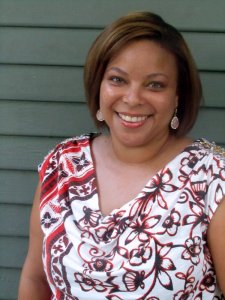



 Feminism and Religion