After a spring semester-long sabbatical this year, I am back to campus and to teaching. I was effectively off from January to August and the timing could not have been better. After my dad’s death last July (2021), my world was turned upside down. One of the things that happened with his death was a deep realization that he had a lot to do with my sense of grounding. I wrote about this in a previous post, but I hadn’t quite realized how much he was a source of affirmation and grounding for me, an external one—his death was a catalyst for me to learn how to access that grounding more fully for myself, from within.
Having been on sabbatical, then, was helpful in terms of regaining my brain for research and writing, which was its objective, but also for giving me the time and mental space to work on the grounding aspect of my internal life. A few things came together for me during this time. Leading up to the sabbatical and overlapping with it, I got to participate in the Latinas in Leadership (LIL) program with the Hispanic Theological Initiative – a program designed to strengthen the professional development of the Latina women participants.
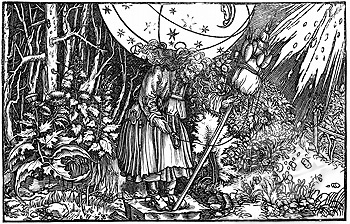
Old woman (witch or fairy) spinning. Woodcut attributed to Holbein from Boethius, De consolatione philosophiae 1547
The Pendle Witches
As a spiritual person, I am fascinated with women’s experience of the sacred. We women, for the past five-thousand years of patriarchy, have been side-lined and marginalized by every established religion in the world. But in every age, there have been women who have heroically rebelled against this patriarchal stranglehold to claim their authentic spiritual experience. Often it has involved looking within rather than without for spiritual guidance.
Thus far in my essay series, A Visionary History of Women, I’ve discussed Hildegard of Bingen and Margery Kempe who carved out their own woman-centered paths as mystics.
But what about women whose mystical experiences fell outside of the parameters of any organized religion?
One of the most important texts I have ever read was J. Kelly Gadol’s essay, “Did Women Have a Renaissance?” She points out that while elite European men were experiencing a Renaissance, women’s rights and lifestyle choices were becoming increasingly constricted during this period. The Renaissance was a very dangerous time to be female–women were the primary targets of the mass witch-hunting hysteria sweeping across Europe. Witchcraft persecutions were not a phenomenon of medieval superstition, as is commonly believed, but of the Renaissance and the Reformation, stretching up to the dawn of the Age of Enlightenment.
Anton Woensam’s idea of the perfect Renaissance woman: silent and obedient
The pre-Reformation Catholic Church, for all its problems and abuses, at least offered a space for female mystical and visionary experience. However, the hard-line Protestantism that followed the Reformation offered no space at all. If you saw visions or whispered prayer charms or left offerings at a holy well or lit a fire on midsummer eve to protect your cattle, you were suddenly seen as a witch, in league with the devil.
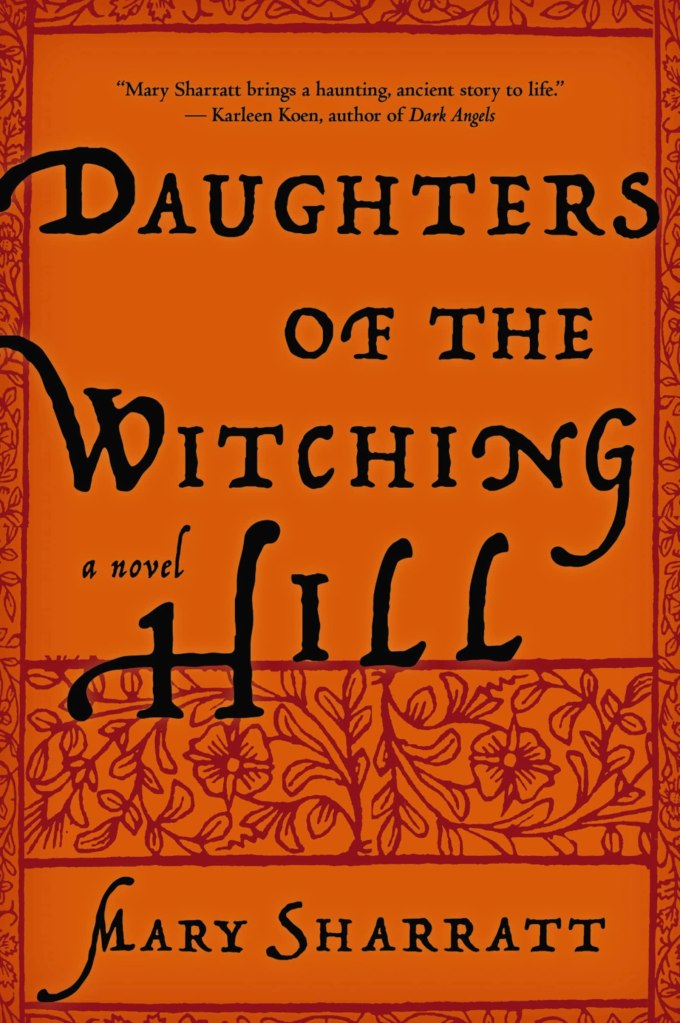
In winter 2002, I moved to Lancashire, in northern England. The back of my house looked out on Pendle Hill, famous for its legends of the Pendle Witches of 1612, the amazing real women at the heart of my novel Daughters of the Witching Hill.
In 1612, in one of the most meticulously documented witch trials in English history, seven women and two men from Pendle Forest were hanged as witches, based on testimony given by a nine-year-old girl.
The most notorious of the accused was Elizabeth Southerns, alias Old Demdike. Allow me to introduce you to a woman of power who changed my life forever.
This is how Thomas Potts describes her in The Wonderfull Discoverie of Witches in the Countie of Lancaster, the official trial transcripts.
She was a very old woman, about the age of Foure-score yeares, and had
been a Witch for fiftie yeares. Shee dwelt in the Forrest of Pendle, a vast
place, fitte for her profession: What shee committed in her time, no man
knows. . . . Shee was a generall agent for the Devill in all these partes: no
man escaped her, or her Furies.
Bess Southerns was a wisewoman of longstanding repute. What fascinated me was not that she had been arrested on witchcraft charges, but that she practiced her craft for decades before anyone dared to interfere with her or stand in her way. Cunning craft, the art of using charms to heal both humans and livestock was her family trade. When interrogated by her magistrate, she freely admitted to being a wisewoman and healer, even bragged about her familiar spirit Tibb, who appeared to her in the likeness of a beautiful young man.
At the time of her arrest, she lived in a place called Malkin Tower. Widow and matriarch of her clan, she lived with her widowed daughter and her three grandchildren, the most promising one being Alizon, a teenager who showed every promise of becoming a wisewoman as mighty of her grandmother.
In England, as opposed to Scotland and Continental Europe, witchcraft persecutions had been rare. Bess had been able to practice her craft in peace. This all changed when the Scottish King James I ascended to the English throne. King James was obsessed with the occult and had even written a book called Daemonologie—a witchhunter’s handbook—that his magistrates were expected to read.
The tide was turning for Bess and her family.
When a pedlar suffered a stroke after exchanging harsh words with Bess’s granddaughter Alizon, the local magistrate, eager to make his name as a witchfinder, played neighbors and family members against each other until suspicion and paranoia reached frenzied heights.
Alizon, first to be arrested, was the last to be tried at Lancaster in August, 1612. Her final recorded words on the day before she was hanged for witchcraft are a passionate tribute to her grandmother’s power as a healer. John Law, the pedlar Alizon had supposedly lamed, appeared before her. John Law, perhaps pitying the condemned young woman, said that if she had the power to lame him, she must also have the power to cure him. Alizon sadly told him that she lacked the powers to do so, but that if her grandmother, Old Mother Demdike, had lived, she could and would have healed him and restored him to full health.
Other novels have been written about the Pendle Witches, but mine is the only one to tell the story from Bess and Alizon’s point of view. I longed to give these women what their own world denied them—their own voice, their own story.
May the voices and visions of our motherline guide us to claim our own voice, our own story, our own vision, our own power. May we all be wisewomen walking forward.
Mary Sharratt is committed to telling women’s stories. If you enjoyed this article, you might want to check out her novel Daughters of the Witching Hilland visit her website.
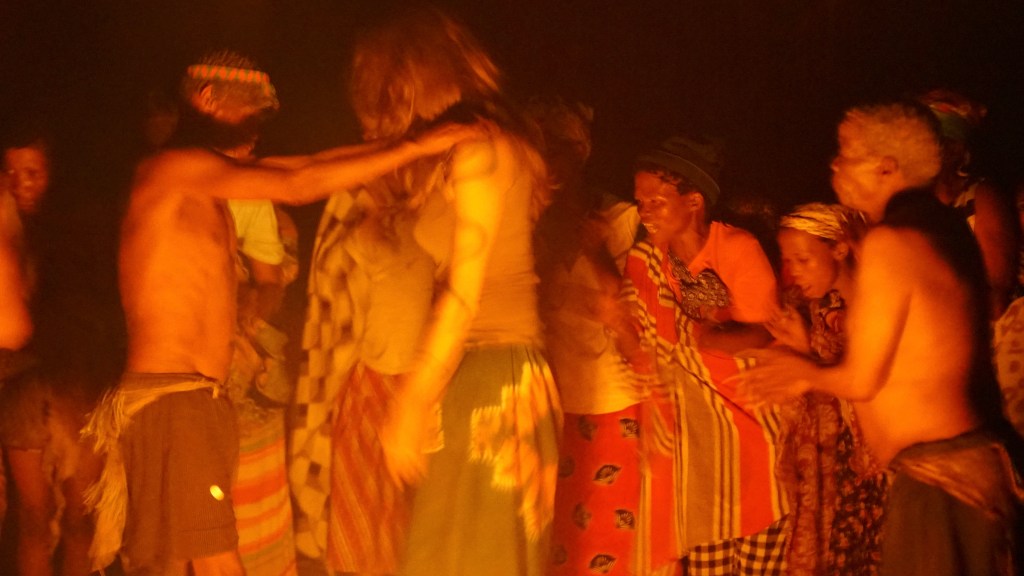
Nature and dance are my gateways to the mystery, where I can bring my worries, exhaustion, prayers, celebrations and gratitude. These gateways open to places deep within and far beyond my perception and imagination. They create an impromptu sacred space that emerges, flexes, stretches, and nurtures, and always ‘meets’ me regardless of my emotional state.
In this post I reflect on the possibilities of danced spirituality in relation to the overarching theme of Feminism and Religion. How does dance relate to our sense of personal expression, freedom and take on life as gender-aware people, and our experience of spiritual intimacy?
Dance is a versatile practice to move through life in an empowered way and to strengthen our connection with the numinous. I truly believe that everyone can dance, and one of my roles as a ceremonial dance facilitator is to help people re-connect with the dancer inside them.
Greetings Feminism and Religion family! It has been soooo long and I have missed you so much!!
I have been working on a few projects that were rudely interrupted by a heartbreaking divorce, decisions of survival, and the subsequent recovery that followed this period. I have spent the past at least 6 months healing from the shame, guilt, pain, and blame that was placed in my lap for the collapse of the marriage. Needless to say, that shit is heavy and it kept me in an endless and perpetual night- not the beautiful mysterious, infinite, expansive darkness that I have come to know but the night that I was afraid of when I was young. No one could save me from the ways that I tormented myself or questioned my womanhood, motherhood in particular. Even more, no one could save me from being an emotional punching bag from my ex-spouse, who also torments himself.
That being said, I am on the mend and am settled in my own apartment furnished with peace, wholeness, and healing for myself and my daughter. As an earth sign, stable ground and a comfortable home in which I can be myself means the world to me. I am a spiritual advisor at a recovery center in Massachusetts and therefore have studied the art of recovery in many ways. Recovery from loss and recovery of self are two procedures that I address in my upcoming book, Black Gold: The Road to Black Infinity!!
Because I don’t have the money to fly somewhere else other than …here
Where I can’t get one
I need an abortion and I can’t get one
Because the kid, or the cells of a maybe kid, were put in here by the guy that raped me and if I have to have it, I will kill myself
I need an abortion and I can’t get one
Because I have four kids already and I can’t feed another one
I need an abortion and I can’t get one
Because it’s my dad’s…did you hear me say that? I have never said that. I have never said what he does to me…and now I have to show everyone… if I can’t get this out of me I will…
“thea-logy begins in experience” – Rebirth of the Goddess
It is hard to believe that Carol P. Christ – Karolina as she dubbed herself in her beloved Greece—has been gone for a year. She remains such a vivid presence in my life—in all of our lives. I think of her and draw strength from those thoughts daily, the way so many women say they think of and feel close to their deceased mothers. For Karolina was indeed a mother to me—a nurturing spiritual mother who initiated me into the ways of the Goddess she adored and, whom she so beautifully defined as “the power of intelligent love that is the ground of all being.”
I first met Karolina in June of 1995 on a bare hotel rooftop in Athens. I had just flown there from New Orleans to join the Ariadne Institute’s Goddess Pilgrimage Tour, a leap of faith inspired by my reading the previous year of Weaving the Visions: Patterns in Feminist Spirituality, a pioneering anthology edited by Carol and her long-time friend and collaborator, Judith Plaskow. That book, along with Carol’s Diving Deep and Surfacing and Judith’s Standing Again at Sinai had spoken to me more deeply than anything I had ever read before. I had grown up in a Middle Eastern Orthodox Jewish family. drawn to spirituality, I had never able to find a place for myself in the deeply patriarchal structures of synagogue or even family rituals … Carol and Judith offered me a way in, and I wanted immediately to embark on the paths they were clearing. I wanted to meet them, to know them, to learn from them, to share with them. Boldly, I decided to join the Pilgrimage, signing up for my first trip overseas trip, the most costly vacation I had ever granted myself. How could I have known that it would transform my life and bless me with a miraculous, deep friendship?
So, what trail of crumbs has your soul been dropping for you? And how might you savor and kiss these fallen crumbs, rescuing them from where they’ve been kicked under the table?
Something that I keep coming back to in recent years is accepting the reality of our lives as they are right now, really inhabiting where we actually are. To be clear, this does not mean settling for injustice or not taking action—it does not mean settling into apathy or turning away from suffering, it means inhabiting our own lives in full, in the present.
My word of the year for this year is attend and with that I mean, pay attention to where you are, pay attention to your life right now, not what you think your life should be, not what you think other people’s lives are, not what you want to pretend to be, but what is your life right now? Can we take an actual unflinching look at the reality of our lives, right now? I invite you to take a brief pause and let yourself inhabit your own life right now, as it is, no need to change anything about it. It is what it is. For example, I hear the distant sounds of my brother mowing. I hear birds. I am looking at full-leafed trees and the drippy little fingers of green pollen on the oaks, the long, green flowers on the mulberry trees. This is the first sunny day and blue sky that I’ve seen in what feels like several weeks (possibly exaggeration). I feel a tightness in my shoulders, but here I am. And, here you are. What do you feel where you are? What do you see where you are? What are you hearing where you are? What is your life like right now?
I feel at strange, tender, and tentative point of reemergence this summer. I know that the pandemic experience has been very different for different people according to your geographic region, according to the culture and climate of the state in which you live, and according to your type of employment or your life’s structure. Many people who are employed in some kind of service industry did not have the luxury of just stepping out of society and retreating to their homes during the pandemic years. For people like me who work at home and who already school their kids at home, it wasn’t that big of a stretch to just further close off my life and just stay home and not go places. It took me practically two years to even miss doing things outside my house externally with other people. So, acknowledging that there are some people who never had the choice of just retreating to their homes and stepping out of society, people who had to keep riding public transportation, people who had to work at restaurants or in stores or in health care, people who are students and had to go to classes. There wasn’t the option to step out and away for some of us. For others of us, the last two years have been almost a kind of hermitage where you’re suddenly just withdrawn from everything and in a type of waiting place. For me, I have in many ways appreciated this withdrawal in its own way, the opportunity become small and closed in. And, now, at the cusp of summer, I’m also starting to recognize that becoming so small and closed in is now beginning to feel tight and confining. As we consider reemergence, we may find it is time for us to decide: What do we want to step back into and what do we want to stay out of?
In Jennifer Louden’s Oasis program (of which I am a long-time member), she spoke of reemergence as a theme and one of the things she noted that I found really powerful is that we may have in some ways forgotten how to exercise our “no” or our boundaries, because we’ve had an automatic built-in, “oh, it’s a pandemic. I’m not going to do whatever.” Now, as we re-emerge, we have to actually say, “No, I still don’t want to do that.” Or, “Yes, I do, let’s try to rebuild that.” What I’m recognizing in myself is that it’s very hard to tease apart what I still actually want to do and what I’ve actually just gotten out of the habit of doing and so actually feel some type of trepidation or anxiety about doing again. For some things that I haven’t been doing, it is not that I truly don’t want to do them again, it’s that I am also holding some kind of fear of stepping back into it. And, these things may be all rolled up together. For example, I am unsure whether I really do not want to have a big summer solstice ritual this year, or whether I just feel nervous about it, because it’s been several years since I’ve had a bigger group ritual and so I’m afraid I don’t know how to do it anymore. Which is it? When is it really your heart or intuition saying, “I laid this down and I want to leave it laid down.” When it is your heart or intuition saying, “This is something I want to pick back up.” What is obligation telling us we should pick back up when inside we know we no longer want it? And, what is fear making us afraid to pick back up that we really DO want to pick back up?
One of the books I just finished this year is A Woman’s Book of Soul by Sue Patton Thoele. It is a book of daily meditations that is a little more Christian in orientation than I usually prefer, but it also has some interesting things in it too. In a section called savoring our souls, Thoele writes: because the demands of day to day life have a way of dulling our spirits and cutting us off from our hearts, it’s essential that we find ways to reinstate solitude into our lives and through it experience the beauty of heart and soul. One day while suffering from solitude starvation, I ran across a poem in which the poet talked about wandering alone through his house savoring and kissing the ‘fallen crumbs’ of his soul. I smiled as I read the poem because it validated the feelings I often have when home alone. I wander. Touching, appreciating, remembering, singing, gathering, and kissing the fallen crumbs of my soul. Very often, this is the time I choose to change the symbols in the miniature Zen Garden given to me by my son, a simple task taking only a few minutes at the most, but nonetheless, a richly replenishing ritual in which I savor my soul. If your soul has been dropping a trail of crumbs as it accompanies your body through its days, how would you like to savor and nourish it? Can you arrange for some solitary time at home in which you sweep up and kiss your soul crumbs? Gently close your eyes and imagine a time in your own home when you are blessed by the renewal of solitude. Cherish it. Wander or sit quietly. Give yourself the gift of enjoying the solitude in ways that warm your heart, fill your spirit, and revitalize your soul. It is a sacred assignment to rescue the crumbs of our souls that have been kicked under the table by too much activity and too little aloneness, to collect and kiss them all better.
The affirmations at the end of this section are: I need and deserve time alone and I am adept at balancing time alone and time with others.
So, what trail of crumbs has your soul been dropping for you? And how might you savor and kiss these fallen crumbs, rescuing them from where they’ve been kicked under the table?
Deep breath, a hand on your heart, let yourself settle into center and then perhaps you may wish to read this prayer aloud:
I dedicate myself to the full living of my own life in all its joys and complexities. I dedicate myself to walking my path. I dedicate myself to being present. I dedicate myself to brave and joyful wholeness.
May you nourish the crumbs of your soul.
Molly Remer, MSW, D.Min, is a priestess, teacher, and poet facilitating sacred circles, seasonal rituals, and family ceremonies in central Missouri. Molly and her husband Mark co-create Story Goddesses at Brigid’s Grove. Molly is the author of nine books, including Walking with Persephone, Whole and Holy, Womanrunes, and the Goddess Devotional. She is the creator of the devotional experience #30DaysofGoddess and she loves savoring small magic and everyday enchantment.
In my last blog I wrote that the image of God as a dominating other who enforces his will through violence–found in the Bible and in the Christian tradition up to the present day–is one of the reasons I do not choose to work within the Christian tradition. To be fair, there is another image of God in Christian tradition that I continue to embrace. “Love divine, all loves excelling” is the opening line of a well-known hymn by Charles Wesley. Charles Hartshorne invoked these words and by implication the melody with which they are sung as expressing the feelings at the heart of the understanding of God that he wrote about in The Divine Relativity.
Love divine, all loves excelling also expresses my understanding of Goddess or as I sometimes write Goddess/God. Though I am no longer a Christian, but rather an earth-based Goddess feminist, I freely admit that I learned about the love of God while singing in Christian churches. Hartshorne wrote that he knew the love of God best through the love of his own mother, and I can say that this is true for me as well. My mother was not perfect, and she did not understand why I wanted to go to graduate school, my feminism, or my adult political views, but I never doubted her love or my grandmothers’ love for me. (I count myself lucky. I know others did not have this experience.) Like Hartshorne, I also learned about the love of God through the world that I always understood to be God’s body. Running in fields and hills, swimming in the sea, standing under redwood trees, and encountering peacocks in my grandmother’s garden, I felt connected to a power greater than myself.
It is important that we share these rituals of celebration and affirmation with our sons as well as our daughters. Men, too, should know the power of joined hands in a circle, voices lifted in song, and sweet words of connection surrounding one another on a bright spring day…
I rose early seeking Beltane dewdrops with which to anoint my brow. the cupped violet stems and clover were dry and I found no dewdrops in the chickweed stars. Instead, I put out oranges for the orioles, ran my fingers through the dandelions, and pressed my nose into the lilacs. I spotted green flowers on the mulberry trees, found the first wild pink geraniums and tender bells of columbine and came face to face with the quiet black eyes of solemn deer in the raspberry bushes. These things their own kind of anointing, their own small and significant rites of May Magic.
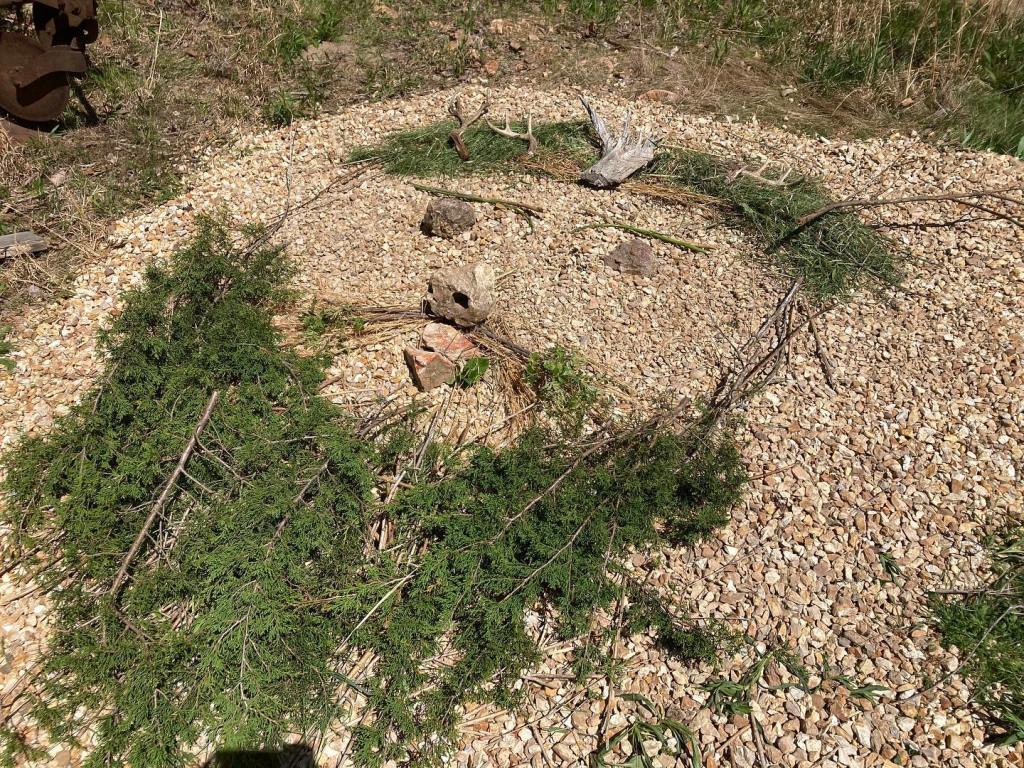
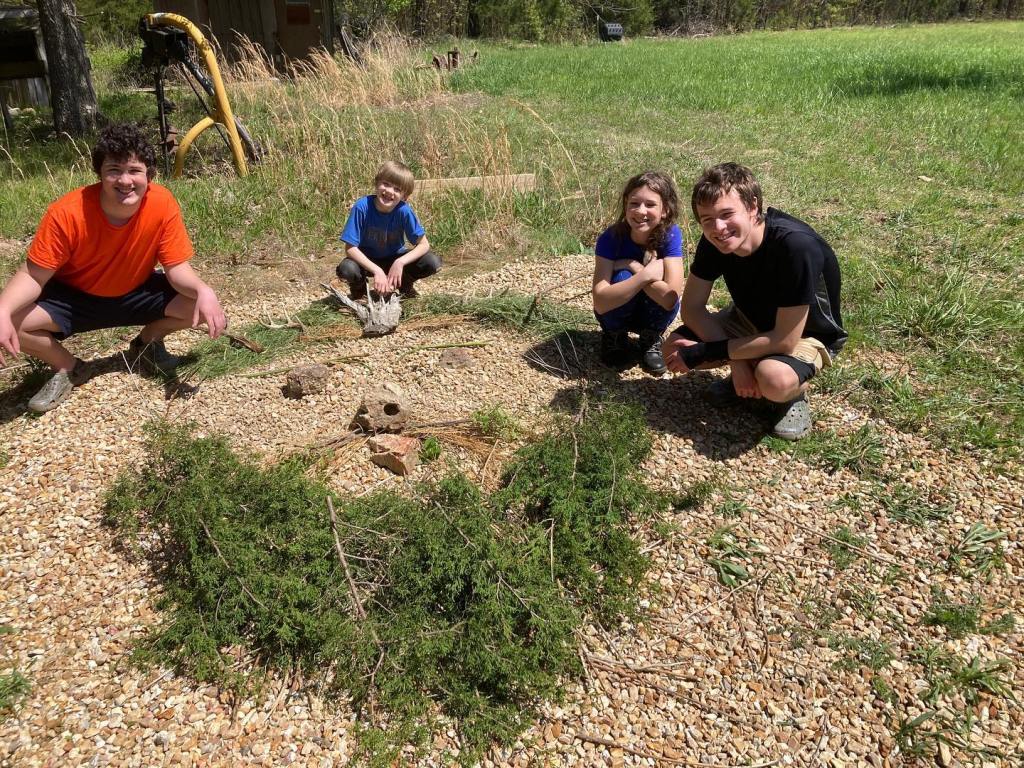
As a family, we traditionally celebrate the May by making a Green Man face in our field, using natural items that we find that day. As a goddess-focused person who walks an almost exclusively goddess-centered/nature-based path, this is one of our few family rituals that centers around more masculine sacred imagery. It is a favorite for my kids—rituals involving multi-age groups should always be as highly participatory as possible. I have written several times for FAR about how my hearth-priestessing has evolved over the years, letting go of more and more control, doing less and less planning, and being more freeform, spontaneous, flexible, and playful. My four children now range in age from 7-18. We have celebrating the turning of the Wheel of the Year for their entire lives. I love how our memories of past rituals inform the present—for example this year’s Green Man had the same rock for a nose that we used for last year’s Green Man.
This year, May Day was bright and sunny with a wild wind. We circled near the driveway, building our Man on the gravel, where his features would stand out against the brown rocks. We gave him antlers formed from cedar branch and white-tailed deer and a crown of a split stump of gray oak. My oldest son trimmed off cedar branches for his beard, my husband pruned the hydrangeas of last year’s dead growth to frame his face, my sixteen year old gathered golden stalks of dry bluestem grass for a mustache, and my 11 and 7 year olds gathered pieces of grass and cinquefoil to trim his hair and beard.
We stood around him in admiration for a few minutes and then I spoke of the bounty, growth, and renewal of this time of year. We stood hand in hand and read the following blessing together (me calling a line and then all repeating it):
A sweet blessing of the singing sky to us.
A slow blessing of the shining flame to us.
A strong blessing of the crashing wave to us.
A soft blessing of the pulsing earth to us.
We then offered a wish to one another in turn with a spritz of “Valiant Heart” spray (from Honey and Sage Co). For example, I spritzed my daughter (11) and wished her curiosity and creativity and then she turned to her father and spritzed him wishing him health and prosperity.
I gave everyone four rose petals (whole flowers would have worked well, but I was working on the fly!) and invited everyone to kiss each petal in turn and then offer it to the Green Man (the wind whirled most of our petals away as we released them, which was pleasant as well—our wishes, accepted), based on this past poem:
Find four flowers and bring them to your lips one at a time. One for wonder. One for joy. One for love. One for magic. Make your promise invite them in, one by one the spell is done.
We sang a few lines together, laughing, from one of Tom Bombadil’s ditties in The Fellowship of the Ring and shouted out, “Happy May!” after finishing our raucous rendition:
Now let the song begin! Let us sing together! Of sun, stars, moon and mist, rain and cloudy weather, Light on the budding leaf, dew on the feather, Wind on the open hill, bells on the heather, Reeds by the shady pool, lilies on the water…
We then each took a handful of wildflower seeds and sang “Call Down a Blessing” over them, each of us plugging in a blessing word in our turn.
Call down a blessing Call down a blessing Call down a blessing Call down __________before you __________behind you __________within you and around you.
This song is based on Cathy Parton and Dave Para’s song, but is sung collaboratively with each person choosing a blessing to sing together in the blank space. (A recording of our women’s circle singing this together during a ritual is available here.) We then scattered to plant our handfuls of seeds in whichever place we wished to do so.
This whole ceremony took less than thirty minutes and we closed our largely spontaneous ritual by joining hands and offering our family’s usual closing prayer (learned from our own dear Carol Christ): May Goddess bless and keep us, may wisdom dwell within us, may we create peace.
It is important that we share these rituals of celebration and affirmation with our sons as well as our daughters. Men, too, should know the power of joined hands in a circle, voices lifted in song, and sweet words of connection surrounding one another on a bright spring day.
My oldest son is graduating from high school this month and this week I took him to register for his first college classes. At this threshold moment in parenting, I feel the odd psychological sensation of overlapping generational “timelines,” sometimes feeling like I, myself, have become my parents, while at the same time, feeling like I am a college student myself. But, for now, at this moment, we stand here together under a Beltane sun, laughing together around a Green Man in the stones.
Molly Remer, MSW, D.Min, is a priestess, teacher, and poet facilitating sacred circles, seasonal rituals, and family ceremonies in central Missouri. Molly and her husband Mark co-create Story Goddesses at Brigid’s Grove (brigidsgrove.etsy.com). Molly is the author of nine books, including Walking with Persephone, Whole and Holy, Womanrunes, and the Goddess Devotional. She is the creator of the devotional experience #30DaysofGoddess and she loves savoring small magic and everyday enchantment.






 Feminism and Religion