In Memoriam – Carol P. Christ by Joyce Zonana

“thea-logy begins in experience” –  Rebirth of the Goddess

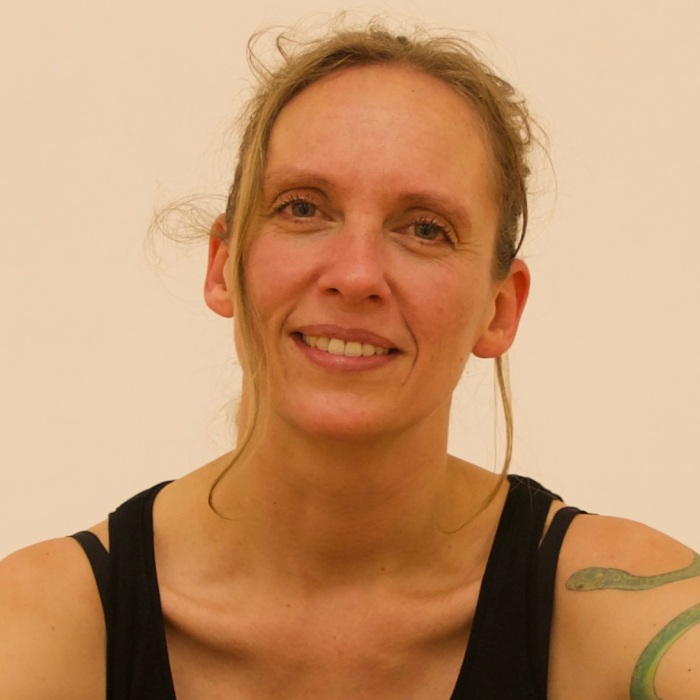
It is hard to believe that Carol P. Christ – Karolina as she dubbed herself in her beloved Greece—has been gone for a year. She remains such a vivid presence in my life—in all of our lives. I think of her and draw strength from those thoughts daily, the way so many women say they think of and feel close to their deceased mothers. For Karolina was indeed a mother to me—a nurturing spiritual mother who initiated me into the ways of the Goddess she adored and, whom she so beautifully defined as “the power of intelligent love that is the ground of all being.”

I first met Karolina in June of 1995 on a bare hotel rooftop in Athens. I had just flown there from New Orleans to join the Ariadne Institute’s Goddess Pilgrimage Tour, a leap of faith inspired by my reading the previous year of Weaving the Visions: Patterns in Feminist Spirituality, a pioneering anthology edited by Carol and her long-time friend and collaborator, Judith Plaskow. That book, along with Carol’s Diving Deep and Surfacing and Judith’s Standing Again at Sinai had spoken to me more deeply than anything I had ever read before. I had grown up in a Middle Eastern Orthodox Jewish family. drawn to spirituality, I had never able to find a place for myself in the deeply patriarchal structures of synagogue or even family rituals … Carol and Judith offered me a way in, and I wanted immediately to embark on the paths they were clearing. I wanted to meet them, to know them,  to learn from them, to share with them. Boldly, I decided to join the Pilgrimage, signing up for my first trip overseas trip, the most costly vacation I had ever granted myself. How could I have known that it would transform my life and bless me with a miraculous, deep friendship?

Continue reading “In Memoriam – Carol P. Christ by Joyce Zonana”

Post-Roe Dirge by Liz Cooledge Jenkins

I have seen a sad thing.

Faces twisted in strange (un)righteous anger outside a clinic

Or sitting around the dinner table laughing

Like the world was not just shaken gravely beneath the feet of half of them

(No, all of them)

(No, all of us)

Or shouts of celebration when a wail of grief is due.

We played the pipe for you and you did not dance.

We sang a dirge, and you did not mourn.[1]

(What is wrong with them?

What has gone so wrong with us?)

Continue reading “Post-Roe Dirge by Liz Cooledge Jenkins”

Crumbs of Our Souls, by Molly Remer

So, what trail of crumbs has your soul been dropping for you? And how might you savor and kiss these fallen crumbs, rescuing them from where they’ve been kicked under the table?

Something that I keep coming back to in recent years is accepting the reality of our lives as they are right now, really inhabiting where we actually are. To be clear, this does not mean settling for injustice or not taking action—it does not mean settling into apathy or turning away from suffering, it means inhabiting our own lives in full, in the present.

My word of the year for this year is attend and with that I mean, pay attention to where you are, pay attention to your life right now, not what you think your life should be, not what you think other people’s lives are, not what you want to pretend to be, but what is your life right now? Can we take an actual unflinching look at the reality of our lives, right now? I invite you to take a brief pause and let yourself inhabit your own life right now, as it is, no need to change anything about it. It is what it is. For example, I hear the distant sounds of my brother mowing. I hear birds. I am looking at full-leafed trees and the drippy little fingers of green pollen on the oaks, the long, green flowers on the mulberry trees. This is the first sunny day and blue sky that I’ve seen in what feels like several weeks (possibly exaggeration). I feel a tightness in my shoulders, but here I am. And, here you are. What do you feel where you are? What do you see where you are? What are you hearing where you are? What is your life like right now?

I feel at strange, tender, and tentative point of reemergence this summer. I know that the pandemic experience has been very different for different people according to your geographic region, according to the culture and climate of the state in which you live, and according to your type of employment or your life’s structure. Many people who are employed in some kind of service industry did not have the luxury of just stepping out of society and retreating to their homes during the pandemic years. For people like me who work at home and who already school their kids at home, it wasn’t that big of a stretch to just further close off my life and just stay home and not go places. It took me practically two years to even miss doing things outside my house externally with other people. So, acknowledging that there are some people who never had the choice of just retreating to their homes and stepping out of society, people who had to keep riding public transportation, people who had to work at restaurants or in stores or in health care, people who are students and had to go to classes. There wasn’t the option to step out and away for some of us. For others of us, the last two years have been almost a kind of hermitage where you’re suddenly just withdrawn from everything and in a type of waiting place. For me, I have in many ways appreciated this withdrawal in its own way, the opportunity become small and closed in. And, now, at the cusp of summer, I’m also starting to recognize that becoming so small and closed in is now beginning to feel tight and confining. As we consider reemergence, we may find it is time for us to decide: What do we want to step back into and what do we want to stay out of?

In Jennifer Louden’s Oasis program (of which I am a long-time member), she spoke of reemergence as a theme and one of the things she noted that I found really powerful is that we may have in some ways forgotten how to exercise our “no” or our boundaries, because we’ve had an automatic built-in, “oh, it’s a pandemic. I’m not going to do whatever.” Now, as we re-emerge, we have to actually say, “No, I still don’t want to do that.” Or, “Yes, I do, let’s try to rebuild that.” What I’m recognizing in myself is that it’s very hard to tease apart what I still actually want to do and what I’ve actually just gotten out of the habit of doing and so actually feel some type of trepidation or anxiety about doing again. For some things that I haven’t been doing, it is not that I truly don’t want to do them again, it’s that I am also holding some kind of fear of stepping back into it. And, these things may be all rolled up together. For example, I am unsure whether I really do not want to have a big summer solstice ritual this year, or whether I just feel nervous about it, because it’s been several years since I’ve had a bigger group ritual and so I’m afraid I don’t know how to do it anymore. Which is it? When is it really your heart or intuition saying, “I laid this down and I want to leave it laid down.” When it is your heart or intuition saying, “This is something I want to pick back up.” What is obligation telling us we should pick back up when inside we know we no longer want it? And, what is fear making us afraid to pick back up that we really DO want to pick back up?

One of the books I just finished this year is A Woman’s Book of Soul by Sue Patton Thoele. It is a book of daily meditations that is a little more Christian in orientation than I usually prefer, but it also has some interesting things in it too. In a section called savoring our souls, Thoele writes: because the demands of day to day life have a way of dulling our spirits and cutting us off from our hearts, it’s essential that we find ways to reinstate solitude into our lives and through it experience the beauty of heart and soul. One day while suffering from solitude starvation, I ran across a poem in which the poet talked about wandering alone through his house savoring and kissing the ‘fallen crumbs’ of his soul. I smiled as I read the poem because it validated the feelings I often have when home alone. I wander. Touching, appreciating, remembering, singing, gathering, and kissing the fallen crumbs of my soul. Very often, this is the time I choose to change the symbols in the miniature Zen Garden given to me by my son, a simple task taking only a few minutes at the most, but nonetheless, a richly replenishing ritual in which I savor my soul. If your soul has been dropping a trail of crumbs as it accompanies your body through its days, how would you like to savor and nourish it? Can you arrange for some solitary time at home in which you sweep up and kiss your soul crumbs? Gently close your eyes and imagine a time in your own home when you are blessed by the renewal of solitude. Cherish it. Wander or sit quietly. Give yourself the gift of enjoying the solitude in ways that warm your heart, fill your spirit, and revitalize your soul. It is a sacred assignment to rescue the crumbs of our souls that have been kicked under the table by too much activity and too little aloneness, to collect and kiss them all better.

The affirmations at the end of this section are: I need and deserve time alone and I am adept at balancing time alone and time with others.

So, what trail of crumbs has your soul been dropping for you? And how might you savor and kiss these fallen crumbs, rescuing them from where they’ve been kicked under the table?

Deep breath, a hand on your heart, let yourself settle into center and then perhaps you may wish to read this prayer aloud:

I dedicate myself to the full living of my own life
in all its joys and complexities.
I dedicate myself to walking my path.
I dedicate myself to being present.
I dedicate myself to brave and joyful wholeness.


May you nourish the crumbs of your soul.

Molly Remer, MSW, D.Min, is a priestess, teacher, and poet facilitating sacred circles, seasonal rituals, and family ceremonies in central Missouri. Molly and her husband Mark co-create Story Goddesses at Brigid’s Grove. Molly is the author of nine books, including Walking with Persephone, Whole and HolyWomanrunes, and the Goddess Devotional. She is the creator of the devotional experience #30DaysofGoddess and she loves savoring small magic and everyday enchantment.

Carol P. Christ’s Legacy: Love Divine, All Loves Excelling

This was originally posted on Sept. 9, 2011

In my last blog I wrote that the image of God as a dominating other who enforces his will through violence–found in the Bible and in the Christian tradition up to the present day–is one of the reasons I do not choose to work within the Christian tradition.  To be fair, there is another image of God in Christian tradition that I continue to embrace.  “Love divine, all loves excelling” is the opening line of a well-known hymn by Charles WesleyCharles Hartshorne invoked these words and by implication the melody with which they are sung as expressing the feelings at the heart of the understanding of God that he wrote about in The Divine Relativity.

Love divine, all loves excelling also expresses my understanding of Goddess or as I sometimes write Goddess/God.  Though I am no longer a Christian, but rather an earth-based Goddess feminist, I freely admit that I learned about the love of God while singing in Christian churches.  Hartshorne wrote that he knew the love of God best through the love of his own mother, and I can say that this is true for me as well.  My mother was not perfect, and she did not understand why I wanted to go to graduate school, my feminism, or my adult political views, but I never doubted her love or my grandmothers’ love for me.  (I count myself lucky.  I know others did not have this experience.)  Like Hartshorne, I also learned about the love of God through the world that I always understood to be God’s body.  Running in fields and hills, swimming in the sea, standing under redwood trees, and encountering peacocks in my grandmother’s garden, I felt connected to a power greater than myself.


Continue reading “Carol P. Christ’s Legacy: Love Divine, All Loves Excelling”

Rites of May, by Molly Remer

It is important that we share these rituals of celebration and affirmation with our sons as well as our daughters. Men, too, should know the power of joined hands in a circle, voices lifted in song, and sweet words of connection surrounding one another on a bright spring day…

I rose early seeking Beltane dewdrops
with which to anoint my brow.
the cupped violet stems and clover
were dry
and I found no dewdrops
in the chickweed stars.
Instead, I put out oranges
for the orioles,
ran my fingers through the dandelions,
and pressed my nose into the lilacs.
I spotted green flowers
on the mulberry trees,
found the first wild pink geraniums
and tender bells of columbine
and came face to face
with the quiet black eyes
of solemn deer in the raspberry bushes.
These things
their own kind of anointing,
their own small and significant
rites of May Magic.

As a family, we traditionally celebrate the May by making a Green Man face in our field, using natural items that we find that day. As a goddess-focused person who walks an almost exclusively goddess-centered/nature-based path, this is one of our few family rituals that centers around more masculine sacred imagery. It is a favorite for my kids—rituals involving multi-age groups should always be as highly participatory as possible. I have written several times for FAR about how my hearth-priestessing has evolved over the years, letting go of more and more control, doing less and less planning, and being more freeform, spontaneous, flexible, and playful. My four children now range in age from 7-18. We have celebrating the turning of the Wheel of the Year for their entire lives. I love how our memories of past rituals inform the present—for example this year’s Green Man had the same rock for a nose that we used for last year’s Green Man.

This year, May Day was bright and sunny with a wild wind. We circled near the driveway, building our Man on the gravel, where his features would stand out against the brown rocks. We gave him antlers formed from cedar branch and white-tailed deer and a crown of a split stump of gray oak. My oldest son trimmed off cedar branches for his beard, my husband pruned the hydrangeas of last year’s dead growth to frame his face, my sixteen year old gathered golden stalks of dry bluestem grass for a mustache, and my 11 and 7 year olds gathered pieces of grass and cinquefoil to trim his hair and beard.

We stood around him in admiration for a few minutes and then I spoke of the bounty, growth, and renewal of this time of year. We stood hand in hand and read the following blessing together (me calling a line and then all repeating it):

A sweet blessing
of the singing sky
to us.

A slow blessing
of the shining flame
to us.

 A strong blessing
 of the crashing wave
to us.

 A soft blessing
of the pulsing earth
to us.

We then offered a wish to one another in turn with a spritz of “Valiant Heart” spray (from Honey and Sage Co). For example, I spritzed my daughter (11) and wished her curiosity and creativity and then she turned to her father and spritzed him wishing him health and prosperity.

I gave everyone four rose petals (whole flowers would have worked well, but I was working on the fly!) and invited everyone to kiss each petal in turn and then offer it to the Green Man (the wind whirled most of our petals away as we released them, which was pleasant as well—our wishes, accepted), based on this past poem:

Find four flowers
and bring them to your lips
one at a time.
One for wonder.
One for joy.
One for love.
One for magic.
Make your promise
invite them in,
one by one
the spell is done.

We sang a few lines together, laughing, from one of Tom Bombadil’s ditties in The Fellowship of the Ring and shouted out, “Happy May!”  after finishing our raucous rendition:

Now let the song begin! Let us sing together!
Of sun, stars, moon and mist, rain and cloudy weather,
Light on the budding leaf, dew on the feather,
Wind on the open hill, bells on the heather,
Reeds by the shady pool, lilies on the water…

We then each took a handful of wildflower seeds and sang “Call Down a Blessing” over them, each of us plugging in a blessing word in our turn.

Call down a blessing
Call down
__________before you
__________behind you
__________within you
and around you.

This song is based on Cathy Parton and Dave Para’s song, but is sung collaboratively with each person choosing a blessing to sing together in the blank space. (A recording of our women’s circle singing this together during a ritual is available here.) We then scattered to plant our handfuls of seeds in whichever place we wished to do so.

This whole ceremony took less than thirty minutes and we closed our largely spontaneous ritual by joining hands and offering our family’s usual closing prayer (learned from our own dear Carol Christ): May Goddess bless and keep us, may wisdom dwell within us, may we create peace.

It is important that we share these rituals of celebration and affirmation with our sons as well as our daughters. Men, too, should know the power of joined hands in a circle, voices lifted in song, and sweet words of connection surrounding one another on a bright spring day.

My oldest son is graduating from high school this month and this week I took him to register for his first college classes. At this threshold moment in parenting, I feel the odd psychological sensation of overlapping generational “timelines,” sometimes feeling like I, myself, have become my parents, while at the same time, feeling like I am a college student myself. But, for now, at this moment, we stand here together under a Beltane sun, laughing together around a Green Man in the stones.

Molly Remer, MSW, D.Min, is a priestess, teacher, and poet facilitating sacred circles, seasonal rituals, and family ceremonies in central Missouri. Molly and her husband Mark co-create Story Goddesses at Brigid’s Grove (brigidsgrove.etsy.com). Molly is the author of nine books, including Walking with Persephone, Whole and Holy, Womanrunes, and the Goddess Devotional. She is the creator of the devotional experience #30DaysofGoddess and she loves savoring small magic and everyday enchantment.

From the Archives: A Handy Spiritual Practice by Barbara Ardinger

Originally posted on February 7, 2021. You read the original comments here.

Here’s a simple spiritual practice that I’ve been doing for longer than I can remember. During the regime of the Orange T. Rex, I started doing it at bedtime to calm my mind so I could go to sleep. We’re hopefully living in a more optimistic and peaceable time now, but that’s no reason not to add a new spiritual practice to our lives. I hope you’ll like this one and will try it for yourself.

We’re accustomed to seeing people praying with rosaries or reciting mantras and counting repetitions with strings of beads. We can do that, too. But how about using a simpler “tool” to keep track of our mantras and affirmations—our own hands?

Continue reading “From the Archives: A Handy Spiritual Practice by Barbara Ardinger”

The Magic of the Ordinary, by Molly Remer

“Nothing is so simple, or so out of the ordinary for most of us, then attending to the present.”

— Ernest Kurtz & Katherine Ketcham, The Spirituality of Imperfection

I often speak of being in the temple of the ordinary, of seeing the enchantment in the ordinary. In the book The Spirituality of Imperfection, the authors write that “beyond the ordinary, beyond material beyond possession, beyond the confines of the self, spirituality transcends the ordinary, and yet, paradoxically, it can be found only in the ordinary. Spirituality is beyond us, and yet it is in everything we do. It is extraordinary. And yet, it is extraordinarily simple.”

This spring, I presented at an event and the concept of “being versus doing” arose. I reminded participants that “being” is not a competitive sport. We cannot not be, we are being all the time. I think sometimes the pressure we put on ourselves to be better, to “do” being better, can be really hobbling. Likewise, the sensation that spirituality is somewhere “out there” or that it has to be bigger than or better than or transcendent instead of present in the ordinary. On a goddess based path, with a feminist orientation, I find that the Goddess herself pervades all of existence, pervades your whole entire life, even the rough and weary places, even the ragged and strange places. Returning to Kurtz and Ketcham, they write: “Now…beyond the ordinary is not meant to suggest something complicated, different, different or self-consciously special. Nothing is so simple, or so out of the ordinary for most of us, then attending to the present. The focus on this day, suggested by all spiritual approaches, attending to the present, to the sacredness present in the ordinary, if we can get beyond the ordinary is, of course, a theme that pervades Eastern expressions of spirituality and other expressions too.”

I know that I often find myself seeking or longing for the special moments, the magic, the flashes of transcendence, and sometimes this can cause me to miss the ordinary, to miss the present, to miss where I am because I’m longing for something else. Adages to the effect of “do what you are doing” and “be where you are” may begin to sound cliché almost and the reason they do is because it’s so simple and so out of the ordinary to simply come back to attending to the present. The present moment is, in my eyes, truly where we find the goddess, in the pulse of presence in the every day. In the book She of the Sea, author Lucy Pearce addresses the question of the transcendent ordinary as well: “I want to write of the oceanic mystery, the soul of goddess magic, the sacred that which lies beyond words, because the repeated deliberate seeking of connection to this is at the heart of what I do and who I am. It is my creative and spiritual practice. I want to speak of this so that you can close your eyes turn inwards and smile knowing, just knowing until our conversation can continue without words…I want to share what I have known and for not to sound strange, yet strangeness is its nature. The soul is not of this world. It’s not rational, the sacred is not logical, but nor is this chaotic, magnificent, contradictory, and complex world of ours. And yet, we insist on pretending that it is and being disappointed, afraid, or bemused when it shows us its reality, again and again.”

The sacred is not logical, and neither is the world itself, but we pretend that it is, and then we get disappointed when we see reality. I originally learned the phrase “don’t argue with reality” from self-help author Wayne Dyer. There can be a whole range of potential experiences that are beyond objective reality or the reality that people sometimes insist is all there is. Jeanette Winterson, in her book Lighthousekeeping writes: “I do not accept that life has an ordinary shape, or that there is anything ordinary about life at all. We make it ordinary, but it is not.”

Maybe we are trying to make things ordinary that are not. My kids are growing up and getting ready to graduate from high school. One of my sons is very into science and loves biology and genetics and he is fond of boiling things down to an “everybody’s just a mass of cells having a collective hallucination” type of rhetoric that leaves little room for the esoteric and little room for inherent meaning. However, for me, I come back to the reality of being human as its own kind of miracle, its own profound magic. The reality of having this body with all these cells, which are doing all these things day in and day out that I don’t consciously know how to do, and yet my body does them every single day. That’s magic, even if we can explain the objective “why” of it. I don’t consciously know how to beat my own heart, but wait a second, yes, I do, because here it is beating every day from birth till death. Some people may be quite attached to maintaining the assertion that life is random and pointless, but this is not the story I see. I see wonder. I see magic. I see a miracle in motion. I am awestruck at the impossible reality of being a bundle of cells typing this essay right now. Yes, I am “only” a bundle of cells and that is absolutely pure magic to me. In fact, your very presence right here, right now is proof of the sacred on this earth in my eyes. May we all love the ordinary and let it whisper of the magic right beneath the skin.

Breathe deep
and allow your gaze
to settle on something you love.
Draw up strength from the earth.
Draw down light from the sky.
Allow yourself to be refilled and restored.
There is good to be done on this day.
Let your own two hands
against your heart be the reminder
you need
that the pulse of the sacred
still beats
and the chord of the holy yet chimes.

Molly Remer, MSW, D.Min, is a priestess facilitating women’s circles, seasonal rituals, and family ceremonies in central Missouri. Molly and her husband Mark co-create Story Goddesses at Brigid’s Grove. Molly is the author of nine books, including Walking with Persephone, Whole and HolyWomanrunes, and the Goddess Devotional. She is the creator of the devotional experience #30DaysofGoddess and she loves savoring small magic and everyday enchantment.

From the Archives: Longing for Hermitage by Elizabeth Cunningham

This blog was originally posted on October 20, 2013. You can read the comments here.

At least since the days of the Desert Mothers in the 4th and 5th centuries CE, there have been women in the Christian tradition (and doubtless other traditions) who have lived lives in religious solitude, whether by choice or circumstance.  In Medieval Europe many churches had anchorholds, small enclosures inhabited by men or women dedicated to a life of solitude and prayer. The word anchorhold implies that the presence of the anchoress or anchorite grounded the church community, but the word derives from the ancient Greek verb (pronounced anachōreō) for to retire or withdraw.  Anchoress Julian of Norwich is still revered as the author Revelations of Divine Love, possibly the earliest surviving book written by a woman in the English language.  Six centuries after her death, her vision of Jesus our Mother continues to challenge, comfort, and inspire.

Continue reading “From the Archives: Longing for Hermitage by Elizabeth Cunningham”

Carol P. Christ’s Legacy: THE LABRYS: A RIVER OF BIRDS IN MIGRATION

Moderator’s Note: Carol Christ died from cancer in July, 2021. Her work continues through her non-profit foundation, the Ariadne Institute for the Study of Myth and Ritual and the Goddess Pilgrimage to CreteThis blog was originally posted July 29, 2013. You can its original comments here.

labrys seal ring

“There’s a river of birds in migration, a nation of women with wings.” Goddess chant, Libana

On the Goddess Pilgrimage to Crete, I explain that many of the names given to “Minoan” (c. 3000-1450 BCE) Cretan artifacts and architecture are products of patriarchal and Eurocentric imaginations, and as such, are misleading.  For example the name “Minoan” was given to the culture of Bronze Age Crete in honor of “King Minos,” who was said to have ruled in Crete a few generations before the Trojan War–several hundred years after the end of the culture to which his name was attached.  In fact, despite his eagerness to find evidence that King Minos ruled at Knossos, the excavator Sir Arthur Evans finally had to concede that the best he could do was to produce a fresco of a “Prince of the Lilies” which he identifed as the image of the male ruler of the culture he called “Minoan.”  Evans’ Prince had white skin, a fact that Evans conveniently overlooked–because according to his own interpretation of “Minoan” iconography, white skin would mark the figure as female.  Mark Cameron, who reviewed Evans’ reconstruction of the fresco, suggested that the Prince is more likely to be a young woman who is perhaps leading a bull to take part in the bull-leaping games.  He also stated that the “crown” belonged to another fresco altogether.

Continue reading “Carol P. Christ’s Legacy: THE LABRYS: A RIVER OF BIRDS IN MIGRATION”

Days Like These, by Molly M. Remer

Sometimes the best rituals
are those we cannot plan,
requiring only pine needles and wind,
open eyes
and a long, slow-sinking sun
settling gently into shadows.
Sometimes the best magic
of all is made with
what is exactly right now,
bluestem grass and gray feathers,
raccoon footsteps
between the trees,
laughter and joined hands,
a faith in the cycles of retreat
and renewal.
This is what we are here for,
days like these.

One crow behind the house greeted me on a frosty solstice morning. Five more slid across the road in front of me as I reluctantly left home to go to the dentist. A red-shouldered hawk glided across the road next and I spotted a kestrel perched on a wire. I drove and sang, memories of our bright candles and solstice spiral the night before behind my eyes, sun bread left rising golden on the counter at home. The dentist has devised a pulley system to hang bird feeders by each of his second story windows and I watch house finches collect sunflower seeds as I lie in the chair. I spot a vulture circling in the distance slow and graceful above the trees. The sky is blue. When I leave the office, I hear a crow’s voice call from across the street and as I drive back home to my family and our winter holiday celebrations, another red-shouldered hawk swoops in front of me, while a red-tailed hawk sits solemnly in a tree by the field, watching the ground. I’m amazed how birds, so unbound, tether me so reliably to the magic of place, to being present with the ensouled and singing world as I move within it and I am grateful.

In the late afternoon on the solstice, my family and I carry the sun bread we have made out to the field by our studio. We join hands and sing and then toss small bits of our golden bread to the sun, calling out our wishes for the year to come and offering our thanks to the spinning world we walk on, beneath this burning sun.

The kids go inside and my husband, Mark, and I walk down the road to finish watching the sun set. It sinks low and slow behind the bare oak trees, growing larger and redder as it goes. It seems to be one of the most drawn out sunsets of this year and we sit down in the frost-crisped dittany by the side of the road, our backs against the oak trees, watching. I turn to look at Mark smiling and say: this is what I am here for, days like these.

I decided to take social media break as 2021 drew to a close, something I’ve wanted to do for a long time, something I’ve needed to do for a long time, and yet, something I’ve always talked myself out of. I need this for our business, I think. It is part of my work. How else will I reach people? I will just post a few more things. While, inside, the hunger to really listen, to de-fragment my mind and re-collect my soul continued to build to a peak of fervency and desire. The blessing and the curse of social media is that everything is in one place. Convenient, yes. Holds you hostage, also yes. Exposes you to more information than you can reasonably hold and process, also yes. The first day of my break, I was amazed how often I was tempted to cheat, how many ways I came up with to sneak around the limit and to just do one little thing anyway. I was also surprised to discover how much extra space there is in my mind and how liberating it is to step away from the clamor of so many other voices. As Cal Newport explains, we all need time each day when we are outside of the influence of other minds. And, I was surprised by how invisible I felt, how unseen and unheard. As the days passed, I felt it though, my scattered pieces coming home. I knew that social media was affecting my focus and my brain functioning, could feel it fragmenting my thoughts, and making my focus and attention jumpy and scattered. In these days of silence, something began to heal inside. I feel a bit invisible, yes, but I also feel whole. I feel like I am coming back online, to my own life.

What was intended only as a ten day break over the winter solstice, extended through the first month of new year and while I’m not saying I’m never going back, I find I am in no rush to re-engage, certainly not in the way I had before.

In the reclaimed attentional space within, I discovered the soulsong of a new book walking up to me, hands extended and eyes wide.

We walk again under long wings of twilight, last vestiges of day sinking purple and mauve into the horizon. Somehow we end up talking about cryptocurrency and NFTs.

Give me dirt and give me stars, I say, as our feet crunch across the brown gravel, our shoulders hunched slightly against the wind. Give me life, right here, where it is.

As we come back up our driveway, we spot a doe at the compost pile, she watches us silently as we turn to make one more lap down the dusky gravel road.

Molly Remer, MSW, D.Min, is a priestess facilitating women’s circles, seasonal rituals, and family ceremonies in central Missouri. Molly and her husband Mark co-create Story Goddesses at Brigid’s Grove. Molly is the author of nine books, including Walking with Persephone, Whole and HolyWomanrunes, and the Goddess Devotional. She is the creator of the devotional experience #30DaysofGoddess and she loves savoring small magic and everyday enchantment.

Note: this essay is excerpted in part from a book in progress, tentatively titled Walking with the Goddess.