A Sojourn in Antartica by Marcia Mount Shoop

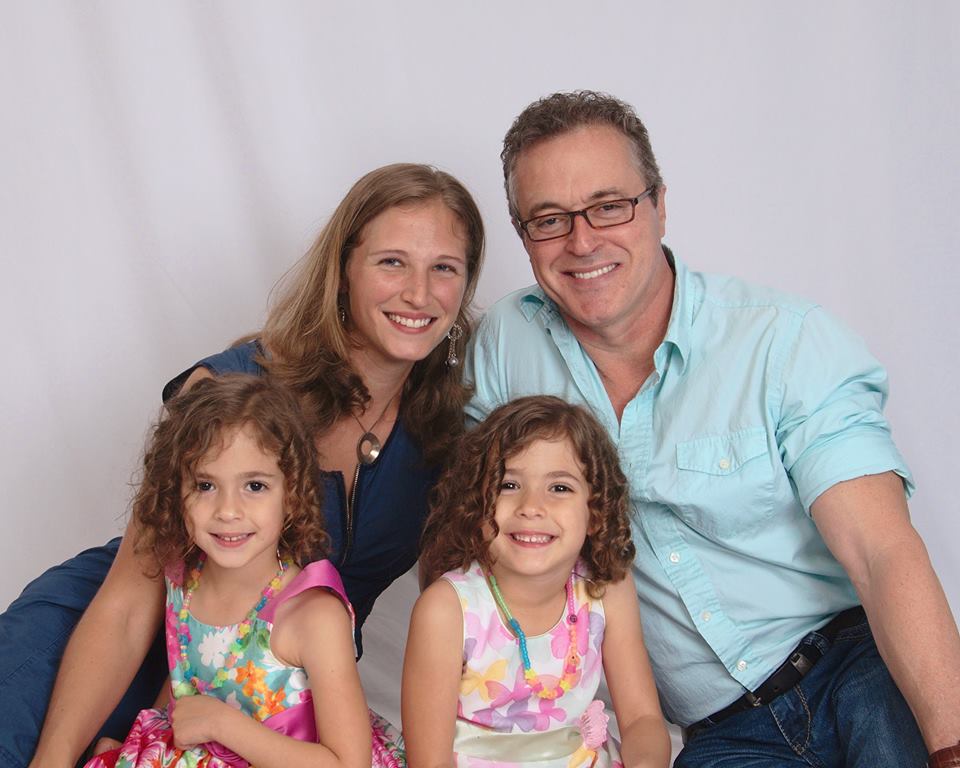
Marcia headshotOk, so it’s not Antarctica, it’s Indiana, but it sure feels like Antarctica lately.

At least it’s what I figure Antarctica must feel like: bone chilling wind that can cause hypothermia and frost bite in a matter of minutes; everything as far as the eye can see white—sometimes no horizon, or blue sky, or any distinction between the celestial world and ours. Continue reading “A Sojourn in Antartica by Marcia Mount Shoop”

“Talking Taboo”: Register for WATER’s Feminist Conversations in Religion Teleconference

Talking-Taboo-Part-TwoWATER’s Feminist Conversations in Religion Series

Presents

“Talking Taboo”
Part Two

An hour long teleconference with

Grace Biskie
Gina Messina-Dysert
Tara Woodard-Lehman
Katey Zeh

Wednesday, February 5, 2014 1-2PM EST

The book, Talking Taboo: American Christian Get Frank About Faith edited by Erin Lane and Enuma Okoro, is creating lots of conversation. WATER is excited to feature two teleconferences to start 2014 by looking at the issues many people consider taboo. Join authors Grace Biskie, Gina Messina-Dysert, Tara Woodard-Lehman, Katey Zeh, and let’s “talk taboo.”

Grace Biskie is a passionate, big-dreaming, extroverted communicator. She holds a bachelor of arts in speech communications and is half way through a Masters of Divinity from Western Theological Seminary. She has served high school and college students in the nonprofit sector for over fifteen years. She blogs regularly at http://www.gabbingwithgrace.com. Currently, Grace is working on her first book entitled, Detroit’s Daughter, a memoir.

Gina Messina-Dysert, PhD, is Dean of the School of Graduate and Professional Studies at Ursuline College. Gina is also Co-founder and Co-director of Feminism and Religion, an international project that explores the “F-word” in religion and the intersection between scholarship, activism, and community. She is the author of the forthcoming book Rape Culture and Spiritual Violence, and coeditor (with Rosemary Radford Ruether) of the forthcoming anthology Feminism and Religion in the 21st Century.  Gina’s twitter is @FemTheologian and her website is http://ginamessinadysert.com.

Tara Woodard-Lehman is an ordained Presbyterian minister. Since 1998 she has ministered to and with young adults and university students. Over the past four years Tara has served as the executive director of Westminster Foundation and Presbyterian Chaplain at Princeton University. Tara also serves on the pastoral staff of Nassau Presbyterian Church in Princeton, New Jersey.

Katey Zeh is an advocate for reproductive justice in faith communities. She wrote her honors thesis on theology, ritual, and motherhood at Davidson College. In 2008, she graduated from Yale Divinity School with her Masters of Divinity. Currently, she directs a grassroots education and mobilization initiative focused on improving global maternal health for The United Methodist Church. Katey serves on the Board of Directors for the Religious Coalition for Reproductive Choice in Washington, DC.

TalkingTabooA recommended resource is the book Talking Taboo, in particular the following chapters:

  •      “A Woman Undone,” by Grace Biskie, pp. 191-198
  •      “No Women Need Apply,” by Gina Messina-Dysert, pp. 93-97
  •      “Broken in Body, Slain in the Spirit,” by Tara Woodard-Lehman, pp. 74-79
  •      “A Pregnant Silence,” by Katey Zeh, pp. 186-190

HOW TO REGISTER

Email “Register Me Teleconference” towaterstaff@hers.com by Tuesday, February 4, 2014 in order to receive dial-in information.

WATER, The Women’s Alliance for Theology, Ethics and Ritual
8121 Georgia Avenue, Suite 310 | Silver Spring, MD 20910
301.589.2509 | water@hers.com | www.waterwomensalliance.org

Please consider making a secure online donation to WATER. Thank you!

Slavery and God/dess by amina wadud

amina 2014 - croppedWell the Golden Globe awards have been handed out.  I don’t have a television, so I didn’t actually watch, but a quick google search gives the results.  Highest honors go to a movie about blacks as slaves and whites as criminals.  That’s appropriate. 

But this is feminism and religion, so let me get to the point.  It’s about a chance discussion on social media about the “merciful god” and historical institutions like slavery (holocaust, or oppressions like misogyny, homophobia, Islamaphobia and others…).

My view of the divine, the cosmos and of the world is shaped by my slave ancestry.  Recent area studies about Islam in America estimate that one third of the Africans forced to the Americas were Muslim.   My first African relative on US soil identified as Moor (another term used for “Muslim”).  But Islam did not survive slavery. Continue reading “Slavery and God/dess by amina wadud”

Yes me! Creating a Website for the Goddess Pilgrimage to Crete by Carol P. Christ

I am grcarol-christateful to the founders of Feminism and Religion for creating a community of which I am part. I am also grateful to them for introducing me to web skills, including how to create a hyperlink, add photographs to a text, choose search terms, and design a web page.  These skills served me well when it came time to design a new website for the Goddess Pilgrimage to Crete.

When I mentioned to a friend that I was looking for someone to design our new website, she responded, “If you want it to represent your vision, you need to do it yourself.”  Later, when one of my colleagues suggested an idea for the website that was definitely not part of my vision, I realized that I could not give the job to anyone else. Still, I didn’t think I had the skills to create a website myself. Continue reading “Yes me! Creating a Website for the Goddess Pilgrimage to Crete by Carol P. Christ”

The Winding Road of Life by Jameelah X. Medina

Jameelah MedinaA while back my family and I went up to the mountains to Lake Arrowhead Village. My metaphorical thinking took me on a fantastic mental voyage replicating our way up the mountain. I give thanks to Allah for the power of thought and imagery.

As we ascended the mountain getting closer and closer to Lake Arrowhead Village, that winding road mirrored the road of life, the life of a Muslim, my life.

Our lives are like winding roads, bending left and right, vacillating between high and low levels of faith , right and wrong, sin and repentance, over-consumption and charity, animalistic and angelic, ignorance and knowledge, pride and humility, blessings and trials, and the small and large defeats and victories in battles with our nafs [ego].

Yes, yes, I know; that road we took was just a road, but the symbolism cannot be denied. That road is like the road of belief, the road of knowledge, the road of love, the road of sabr [patient perseverance], the road of success, essentially, the sirat al-mustaqim, the straight path, though there is nothing physically straight about it. Continue reading “The Winding Road of Life by Jameelah X. Medina”

Imbolc and Transformation by Deanne Quarrie

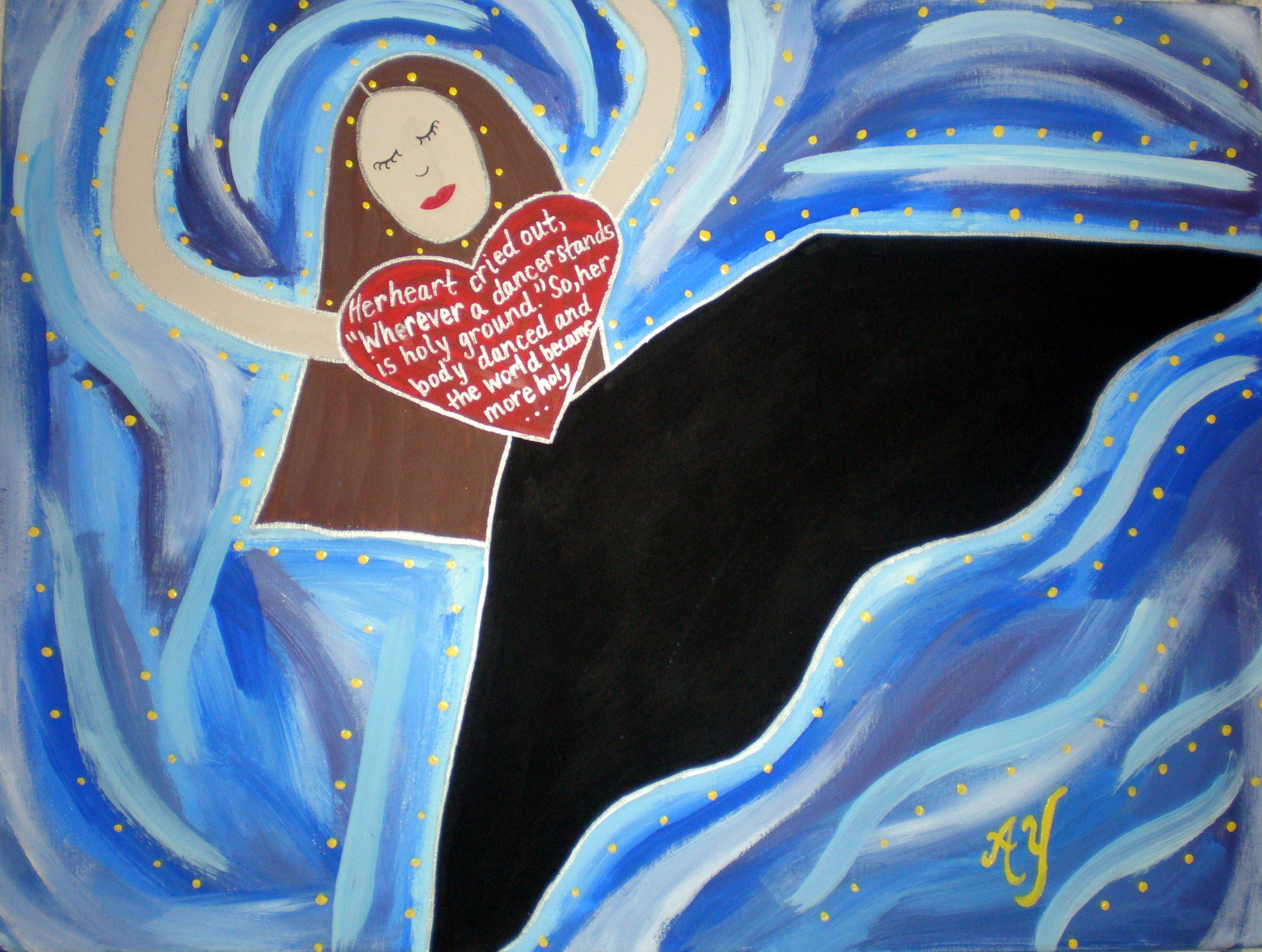
Deanne Quarrie We are entering the season of Imbolc, a liminal time of year in which we experience the turning of the Wheel from winter to spring. Depending on where you live, it can be very difficult to see this change.  In colder climates, winter is not over.  Here in South Central Texas we can have snow and ice as late as the end of February!  I have memories of living in cold climates where winter often continued on into May. What triggered me into an awareness of the coming spring were the beautiful crocus blooms peeking up out of the snow!  Seeing that filled my heart with joy and the promise of spring. Continue reading “Imbolc and Transformation by Deanne Quarrie”

Walking with Gods and Dogs by Marie Cartier

collette): photo by: angela brinskele, long beach pride, Marie Cartier
Marie and Collette, photo by Angela Brinskele

“If there are no dogs in Heaven, then when I die I want to go where they went.”      ― Will Rogers

I spend a lot of time with my dogs – Collette and Malibu. This month I am thinking a lot and walking a lot – and it occurs to me that in terms of enlightenment we have no greater teacher than a dog, or in my case, dogs.

Deepak Chopra said, “According to Vedanta, there are only two symptoms of enlightenment, just two indications that a transformation is taking place within you toward a higher consciousness. The first symptom is that you stop worrying. Things don’t bother you anymore. You become light-hearted and full of joy. The second symptom is that you encounter more and more meaningful coincidences in your life, more and more synchronicities. And this accelerates to the point where you actually experience the miraculous,” (quoted by Carol Lynn Pearson in Consider the Butterfly). Continue reading “Walking with Gods and Dogs by Marie Cartier”

Seriously?! Let’s Blame Feminism for the Creation of a “Wimpy” Nation by Michele Stopera Freyhauf

FreyhaufIt is so easy to blame feminism for the ills of the world – mainly because of continued misconceptions and misunderstandings about the definition or meaning of feminism. Feminism is responsible for poverty, bad leadership, wars, the polar vortex, the list goes on. Feminism is still considered a derogatory term that serves to incite prejudice against those who label themselves as one.  In fact, negative connotations surrounding feminism are exacerbated in today’s culture, especially in the media.  Fox News seems to be the poster child of “femiphobia” – a term coined by Stephen Ducat and defined as “wanting to repress every man’s feminine side and demonize the feminine and gay wherever we see them.” Elisabeth Hasselbeck and Nick Adams, in a recent interview, illustrate this femiphobic viewpoint by blaming feminism for raising a culture of “wimps” and “wussies” and thus compromising the U. S.’s national security and weakening its global presence.  In other words, feminism is to blame for the problems of the world.

According to Adams, men around the world are no longer allowed to be “manly” and that this phenomenon is a “dangerous” problem:

American men are of course very susceptible to it. It’s really important particularly in America given the leadership role that America has in the world that American men be allowed to be men.

What does in mean to be a man and how is Adams defining that stereotype? While I am aware of the discussion of gender identity and roles even gendered stereotypes, this post is not about what those roles mean.  Rather, for this point of discussion, I want to address the issue of masculinity, feminism, and what it means to be a “wimp” as portrayed by popular media.

Original photo: http://poasterchild.deviantart.com/art/Feminism-Not-406854334

With that caveat in mind, I ask the following questions:

  • Is the author suggesting a move to a “hypermasculinity”?
  • Is Adams identifying masculinity with aggression and violence in a world where feminists and perhaps all women are demonized?

In a society dominated by the “alpha male” character trait,male  honor and pride are paramount. Is Fox News telling men to replace so-called passive behavior with pride, abrasiveness, authoritarianism, and arrogance–in such a world if where women are demonized, then assaultand rape will follow.  The call for “real men” or “hyper-masculinity” therefore provides a real potential to move us further towards a misogynistic rape culture of violence–in the direction of barbarianism.

Continue reading “Seriously?! Let’s Blame Feminism for the Creation of a “Wimpy” Nation by Michele Stopera Freyhauf”

Women for a Franciscan World by Dawn Morais Webster

Dawn Morais Webster, the Pope off to his summer palace, Castel Gandolfo. He tells the world he will now become just a “humble pilgrim.”Women: Architects and Engineers of a Franciscan World

This New Year’s Eve I find myself attending Mass at St. Austin’s Church in Austin, Texas. A long way from Hawaii and en route to Argentina which gave us Pope Francis. This Mass is also a celebration of the Solemnity of Mary, Mother of God.

This crossing of many currents is perhaps as eloquent a statement as any on where women have traditionally found themselves in the church—up on a pedestal or totally in service to others. Both exalted and silenced. Tradition has not served women in the church as well as women have themselves served the church and the community through many ministries. The male leaders of the church have been happy to raise their eyes heavenward and sing the praises of Mary and the many female saints while consigning the women around them to positions of pure service, if not servitude. Continue reading “Women for a Franciscan World by Dawn Morais Webster”

How is it That God Speaks? by Kelly Brown Douglas

Rev.-Dr.-Kelly-Brown-Douglas - Version 2A few weeks ago, after delivering a sermon, a young woman approached me and said she had a question about my sermon.  I of course braced myself for the question as I ran my sermon back over in my head trying to remember what I could have said that might have troubled her in some way. As it turned out, hers was a rather thoughtful question, reflective of an insightful theological observation. She said she noticed as I preached that I never used a pronoun for God. She asked if this was intentional. She went on to say that by not using a pronoun for god I forced her to try to image “the way god is, not the way god looks.” I complemented the young woman for her keen observation and astute theological insight. I responded that my avoidance of pronouns when speaking about god was in fact intentional. I explained to her that given the limitations of our finite language in trying to speak of a god who is infinite, that not only are we better served, but perhaps god is also better served when we avoid pronouns, or even nouns when speaking about god.  Why, because we should try to speak about god the way in which god speaks to us.  And so this begs the question: How it is that god speaks?

The god in which I have faith does not speak to us as a static being. Rather, god speaks to us as a dynamic, restless force in our world. This, for me, is what god’s revelation in Jesus is all about.  The gospel of John tells us that in the beginning was the word and the word was with god, the word was god and the word became flesh. Inasmuch as Jesus is the incarnate word of god speaking to us, then for us to speak about god the way in which god speaks is for us to enflesh that very word that became flesh for us.  What then does this mean? How are we to speak about god? Continue reading “How is it That God Speaks? by Kelly Brown Douglas”