Exposure by Elise M. Edwards

Before I feared too much disclosure, but now I seek to channel revelations of personal experiences into exercises that inform the moral and intellectual agency of everyone in the classroom, including me.
I have always been a bit nervous when people share personal experiences in non-intimate settings.  For the past several years, I’ve been in an academic environment where people routinely discuss and reflect upon significant life events.  There were times that I was very uncomfortable listening to classmates discuss abortions, first sexual experiences, and encounters with racism.  Even though they did not use graphic or disturbing language, I questioned the appropriateness of sharing intimate details of one’s life in a classroom.

So when I was preparing to teach my own course on Christian Ethics, I was careful to define a course policy that related to sharing and participation.  In part, it reads: “While students are encouraged to use the course material to reflect on their own experiences and develop their own theological-ethical perspectives, sharing intensely personal reflections is not required  – in fact, it is discouraged to maintain the professional atmosphere of the classroom.“  In class, we discuss conceptions of God and religious faith as they are applied to complex issues like sexuality, racial reconciliation, war, and medicine.  The potential for conflict and personal attack is always present in the classroom because we often have deep commitments and personal beliefs on these issues, so I wanted to curb the amount of personal reflection that occurs in the corporate setting.

Over the course of the semester, though, my perceptions have changed due to well-written memoirs and personal statements I have read recently, the profound statements my students have shared, and the teaching philosophy I am developing.  Whereas before, I feared too much disclosure, now I seek to channel revelations of personal experiences into exercises that inform the moral and intellectual agency of everyone in the classroom, including me. Continue reading “Exposure by Elise M. Edwards”

IN THE NEWS: Global Climate Change by Carol P. Christ

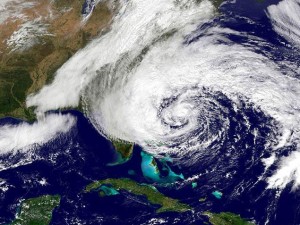
Climate change is in the news again due to the devasting storm known as Hurricane Sandy.  Scientists, activists, journalists, and politicians are telling us that Sandy is not just another “unpredictable event” brought to us by “Mother Nature.”  Will we listen this time?

Hurricane Sandy is a human-made and entirely predictable and sure to be repeated environmental consequence of the use of fossil fuels, especially oil and coal. Burning fossil fuels puts carbon dioxide into the atmosphere. This raises the global temperature in the air, land, and sea. Melting of polar ice caps is a result of the rise in global temperatures. This will cause a 3 foot or more rise in the seas, leading to the permanent flooding of the seacoasts and sea coast constructions, including homes, restaurants and shops, office buildings, and harbors and ports.

The warming of the seas is also producing extreme weather conditions, including high winds and hurricanes, along with colder winters and hotter summers.  Extreme weather conditions will lead to regular storm-related flooding of rivers and sea coasts, erosion of hills and mountains in winter, followed by catastrophic fires in summer.  Prolonged droughts and unseasonal rains will devastate farms and food production. Wildlife habitats will be destroyed. Places where people live will become too hot, too cold, too wet, and generally unfriendly to life.

Continue reading “IN THE NEWS: Global Climate Change by Carol P. Christ”

Fanpire by Tanya Erzen

A girl treats the Twilight series as a holy book, emulates the behavior of the vampire family at its center, and makes a pilgrimage to Forks, WA, the setting of the books.  This could just be a run-of-the-mill Twilight fan.  After all, Twilight, a young adult romance between the exceptionally clumsy 16-year old human Bella Swan, and a vampire named Edward Cullen who has been seventeen since 1918, is beloved by millions of women and girls.   Thirteen million copies of the books have been sold in the United States; 116 million copies, worldwide, with translations into thirty-seven languages. The film adaptations are some of the highest-grossing movies of all time. Continue reading “Fanpire by Tanya Erzen”

Cry The Beloved Country by Carol P. Christ

With the final day of voting in the US election less than 24 hours away, I feel a deep sadness descending on my soul. 

This election will have far-reaching consequences in relation to a number of issues I care deeply about. Among them are health care, social services, a social safety net, a graduated tax structure that taxes the rich and to a lesser extent the middle classes in order to provide services for the poor, equal pay for equal work, a woman’s right to choose, and gay rights.  On these issues there is a clear choice between the two candidates for President and the two parties. 

Democrats believe that health care is a human right, that social services should be provided for those who need them, that taxes should be paid by those who can afford to do so, that women have a right to equal pay and control of our own bodies, and that gays and lesbians should have all the rights of other citizens. Republicans believe that government does not need to provide or control health care, that social services are largely unnecessary, that it is unfair to tax the rich, that equal pay is not important if women have husbands, that the church and state should be making decisions about women’s bodies, and that homosexuality is a unnatural.  There is a clear choice on these issues. 

For this reason, I urge all of you who have not voted yet—and those of you who are considering not voting–to vote, no matter how long the lines are, no matter what intimidation you may face, and no matter what discouragement and disappointment you may be feeling.*

Nevertheless I feel like crying.

I feel sad that just about half of all Americans who intend to vote will be voting for the rich, against the poor, and against women’s—my–independence.  Continue reading “Cry The Beloved Country by Carol P. Christ”

Does Terpsichore Tapdance? By Barbara Ardinger

Goddesses of art and inspiration, the Muses gave their name to our museums, where they are (or should be) worshipped. I feel a special devotion to them. … The ones I really like, though, are the theatrical Muses—Euterpe, Thalia, Melpomene, and Terpsichore, plus maybe Calliope and Errato. I was a drama major (and possibly a drama queen) in college…. Today, I go to the theater as often as I can.

Although my greatest devotion is to the Great Goddess, who is said to have ten thousand names, I find myself more and more adoring the Muses: 

  • Clio, “Fame-giver,” ruler of history and shown with an open scroll
  • Euterpe, “Joy-giver,” the lyric Muse who plays the flute
  • Thalia, famous for her comic mask and wreaths of ivy
  • Melpomene, wearer of the tragic mask and vine leaves
  • Terpsichore, “Lover of dancing,” who carried a lyre and ruled choral music as well as dance
  • Errato, “Awakener of desire,” ruler of erotic poetry
  • Polyhymnia, “Many hymns,” shown as the meditating inspirer of hymns
  • Urania, “Heavenly,” ruler of astronomy who carries a globe
  • Calliope, “Beautiful-voiced,” ruler of epic poetry who carries a tablet and a pen[1] Continue reading “Does Terpsichore Tapdance? By Barbara Ardinger”

That’s Good, Do it Again by Erin Lane

It happens almost every Sunday night. I get a little tickle in my stomach thinking about the week ahead. And all I want to do is call my mom and whine, “Do I have to?” It’s about to be Monday.

The crazy thing is I love my work. But there’s something about what I’ve been calling “the infinite abyss of adulthood” that gets me all turned in on myself every time the week starts anew, the day comes up for air, and the next project begins. I wasn’t until I read Kathleen Norris’s The Cloister Walk that I realized there was a word for my spiritual malaise. It’s what the church fathers and mothers referred to as acedia, a sort of listlessness of the spirit. Norris also attributes this feeling of time’s expanse to our  ”noonday demons.” The sun is high and a warm meal, glass of wine, and good night’s spoon is far off. The road of perseverance appears long and boring and repetitive under the deadpan heat. Continue reading “That’s Good, Do it Again by Erin Lane”

Monthly Highlight: Dolores Huerta: Si Se Puede

Dolores Huerta is a woman who has made history and was honored for doing so by the National Women’s History Museum on October 25, 2012 in Los Angeles, California.  As as a social justice activist and labor leader, Dolores has dedicated her life to ending discrimination. She has focused on improving economic and social conditions for those working in agriculture and is responsible for creating the Agricultural Workers Association and co-founding the United Farm Workers movement.

Dolores coined the slogan “Si Se Puede” for the United Farm Workers to rally support for the movement.  Since it has become widely used by other labor and civil rights movements and was translated into English and used as the Slogan for President Barack Obama’s campaign in 2008.  Continue reading “Monthly Highlight: Dolores Huerta: Si Se Puede”

The Dignified Life of Magdalene Rose: A Pro-Life Story? by Michele Stopera Freyhauf

As I enter this world, I know that I am so very blessed. My life will be one of worth.  As hard as people fought to see me take my first breath, they will fight for my life to be one of dignity and worth.  I am protected in a world that is pro-life – or so I thought.

My mother was raped, but the law did not recognize this violent act as rape because she became pregnant with me.  The law only recognizes legitimate rape as one that does not result in pregnancy.  I entered the world amidst controversy.  I was named Magdalene Rose. Magdalene because of the shroud of controversy that surrounded her – the false accusations of prostitution, the stigma that history assigned to her, and the hope of those who have tried to reclaim her as the first witness to the resurrection, a faithful disciple, and devoted minister.  Rose was chosen for the flower that can bloom even in the face of adversity; one that can push through the snow to reach the sun and spread its petals.

My mother is a single mom  She does the best she can – trying to keep us clothed and fed.  She works so much and I stay many nights with my grandmother or a neighbor.  She seems so tired, so worried, but yet always has a smile to share with me.  I am her blessing, a miracle born out of darkness.

We go to church every Sunday, but strangely, no one will sit by us.  We have to sit in the back.  I wonder why.  Certainly our clothes are a little worn – we rely on hand-me-downs and the thrift shop.  My mother dresses me in the finest dresses she can find, I feel so special. In God’s house, we are shunned.  People refuse to shake our hand even during the sign of peace.  This is the place where we should be welcomed.  This is where they proclaim the Gospel and teachings of Jesus.  Yet, the only sign of Jesus that seems to exist in this community is symbolized on the cross.

Continue reading “The Dignified Life of Magdalene Rose: A Pro-Life Story? by Michele Stopera Freyhauf”

IN THE NEWS: Fr. Roy Bourgeois to Speak at CGU

This week on November 1st and 2nd Fr. Roy Bourgeois will be at Claremont Graduate University to offer discussions on the topics of women’s ordination and the School of Americas Watch.

Fr. Roy is a Maryknoll priest, social justice activist, and founder of the School of Americas Watch.  Here on FAR we have had many discussions and posts about women’s ordination.  However we have had far less about the destruction caused by the School of Americas (SOA) now known as the Western Hemisphere Institute for Security Cooperation (WHINSEC).

Renamed in 2001, this institution is a combat training school for Latin American soldiers located in Fort Benning, Georgia and has been dubbed “School of Assassins.”  Continue reading “IN THE NEWS: Fr. Roy Bourgeois to Speak at CGU”

The Mago Hedge School: Why Remember Mary Daly? By Helen Hye Sook Hwang

Prologue

By writing this, I do not intend to defend Mary Daly’s position in any dispute. A controversial figure, Mary Daly never let go of her fight with those whom she thought on the other side of her feminist war. Like anyone else in history, Mary Daly belonged to her time and culture, and I leave her unresolved issues up to her. What I write here is my fond memory of her, whose feminist thought left an indelible mark on my being as well as humanity as a whole. Daly’s contribution remains to be reassessed from the fresh eye of new generations. In the meantime, I begin to speak for my part. Without Mary Daly’s thought, I would not have been in this place where I stand right now. It has empowered me to actualize my dreams to the fullest as a wo/man who was born and raised in Korea but had come from the One Home in origin.

I first hear of the hedge school
“Have you heard of the hedge school, Hye Sook?” asked Mary. “No, I haven’t heard of it,” I answered. This conversation took place during the conference called the Feminist Hullaballoo held in Santa Fe, New Mexico in 2007. We met there and spent three days as chums. Mary was with another friend, Yvonne Johnson, so the three of us hung out together. It was a very special time for me – I felt as if I were wrapped up in the eye of the storm. (In fact, my life feels so.) At the conference, someone asked me how I came to be invited as a featured speaker. I was among such renowned feminist speakers as Sonia Johnson, Paula Gunn Allen, and Mary Daly herself. They felt like giants to me. I told her that Mary Daly invited me. Mary had asked me if I would like to go and speak at that conference. I did not have an inflated ego. I would not have been hurt if I were not chosen. But I said “Yes” without hesitation. At the time, it felt like another one of the many “outlandish” adventures that I had undertaken throughout my life. In retrospect, however, this was a very special “Yes” to the beginning of my life’s new phase.   Continue reading “The Mago Hedge School: Why Remember Mary Daly? By Helen Hye Sook Hwang”