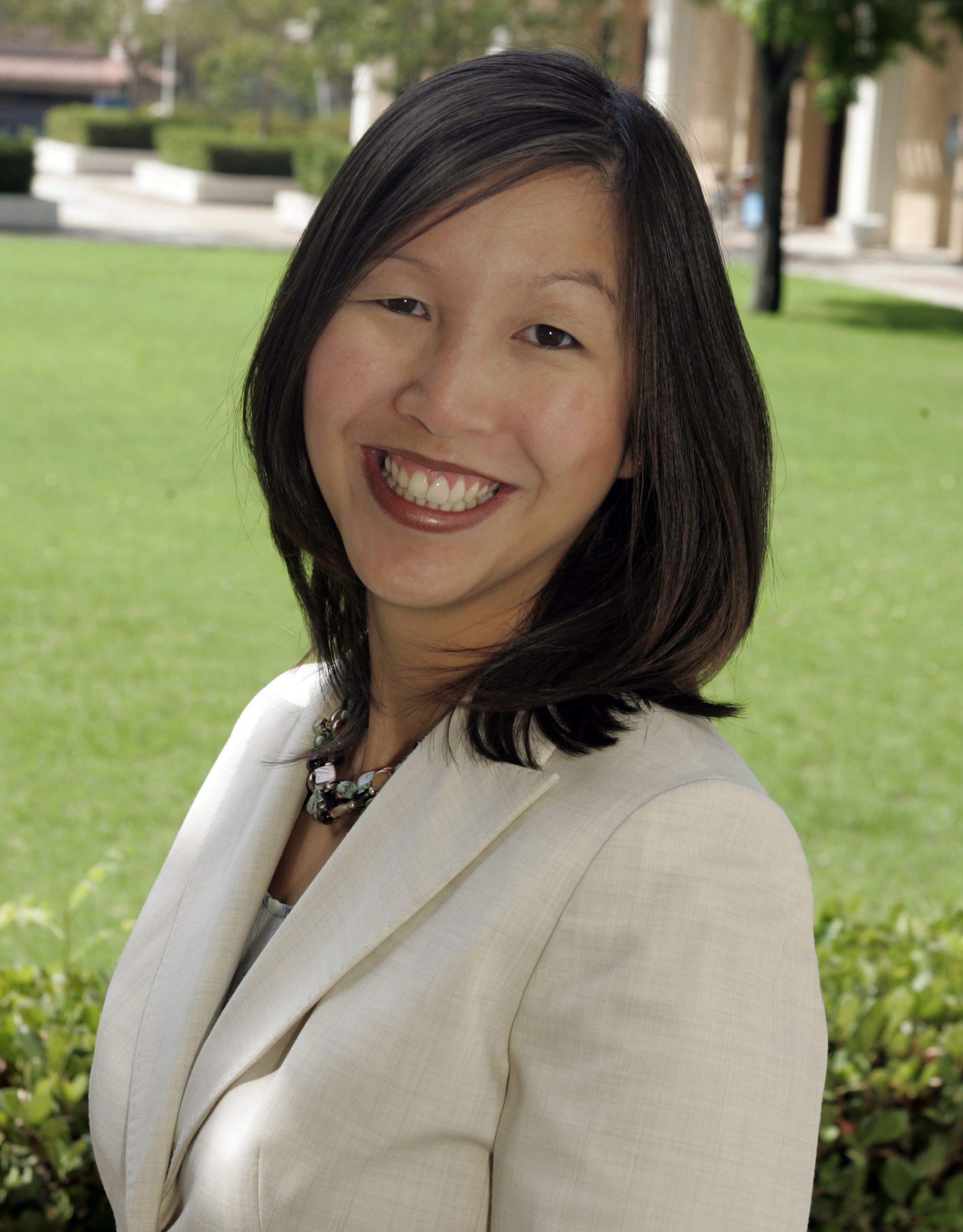
Waking up Muslim on 9/11 by Jameelah Medina

I have often stated that I went to sleep as an African American woman on September 10, 2011 and woke up Muslim on 9/11. It may seem odd to say this since I am a third-generation Muslim; however, my reason for doing so is that my life as an American Muslim now has two main eras: 1) pre-9/11 and 2) post-9/11.

In the pre-9/11 era of my life, I felt more black than Muslim because my color was a point of conflict and controversy throughout my life. I grew up in two areas as a child—an urban area with majority Latinos/as and then in a very rural area with majority whites. In both areas, being black was not so popular. I was called “mayate,”which is a bug but also the Mexican term for “nigger.” I was also called, “tar baby,” “nigger,” “African booty scratcher,” and a host of other hurtful names as a young black child.

In the post-9/11 era of my life, the main part of my identity that people focus on is my religion instead of my color. On 9/11, I went from being a nigger to being a “towel head,” from being a tar baby to being a “terrorist,” and from being the stereotype of an unruly and angry, loudmouthed black woman to being the stereotypically seen-but-not heard, oppressed Muslim woman in need of saving. As a Muslim, I suddenly was a potential threat and un-American, while as a Muslim woman I was also pitied and looked down on as misfortunate for being in a religion that oppresses me. In my life, white privilege and white monoculturalism have turned into Christian privilege and Christian monoculturalism. Continue reading “Waking up Muslim on 9/11 by Jameelah Medina”

1, 2, 3, 4: FEMINISTS DON’T WANT ANOTHER WAR by Carol P. Christ

War is a feminist issue for many reasons, most importantly because war is always war against women.

Patriarchy, war, rape as the “spoils” of war, and the taking of women and children as slaves in the wake of war arose together.  Recent blogs on Feminism and Religion have addressed the war on women—from the rape culture, to Humane Vitae, to the Catholic Church’s and other church’s  attempts to remove birth control from health care, to the tolerance of sexist hate speech in the culture at large. While the issue of Rush Limbaugh calling Sandra Fluke a slut is being focused on in the press, the drums of war are being sounded again in the Middle East:  the US is considering bombing Iran or supporting Israel if it decides to do so.  Feminists must stand together against war and the harm it does to women, children, and all living things.

Military spending is 28-38% of US government spending.  US government spending accounts for 40% of total global arms spending. The US and its allies are responsible for up to 75% of total global spending on the military. It does not take a mathematical genius to figure out that if good-sized chunk of this spending were cut, the US budget could be balanced, the deficit covered, and there would be plenty of money left over for the social good. Continue reading “1, 2, 3, 4: FEMINISTS DON’T WANT ANOTHER WAR by Carol P. Christ”

No One Is Safe from the Parodist (Part 3) by Barbara Ardinger

Vader has lost the helmet and is now old and fat and speaks in a tenor voice. He’s obviously the smartest guy in the room.

I am not the first to mess with Shakespeare. In 1680, a hack named Nahum Tate rewrote King Lear to give it a happy ending (Cordelia marries Edgar and they assume the throne), and in 1699, Colley Cibber “adapted” Richard III. In the 19th and 20th centuries, Shakespeare’s plays were operacized, balletized, and Broadwayized (The Boys from Syracuse, West Side Story) In 1868, French operatic composer Ambroise Thomas wrote a Hamlet in which Ophelia sings a long aria and dies. After wild applause, she gets up and sings some more. I’ve seen this opera. I’ve also seen the Reduced Shakespeare Company in person and on DVD—they do the complete works in an hour and a half—and there’s also The Troubadour Theater Company that does Fleetwood Macbeth, which I’ve seen. They wear kilts and Hobbit feet, Duncan does standup comedy before they kill him, and Lady Macbeth sings Stevie Nicks songs. I have also seen Pulp Shakespeare (“If Shakespeare Wrote Pulp Fiction”), which is based on one of Quentin Tarantino’s hyper-violent—and in this case, hyper-conversational—movies, which I quit watching after about 20 minutes. The rest of the audience got it, though. They laughed a lot. It’s good to have fun with Shakespeare.  Continue reading “No One Is Safe from the Parodist (Part 3) by Barbara Ardinger”

Modesty Codes in Pentecostalism and Mormonism by Amanda Pumphrey

“You look like a lesbian.” “Why do you want to look like a man?” “Hey, boy head!” These were just some of the responses I got from friends and family when I decided to cut off my hair. The gendered connotations that come with how one decides to wear one’s hair are an overarching signifier of the dominant culture’s obsession with normative appearances. Many religious institutions and congregations uphold normative understandings of appearance and dress. Growing up in a conservative town in rural South Georgia and being raised within a Pentecostal tradition came with many challenges regarding gender, sexuality, and dress.

In an earlier post on FAR, I described my experiences with my church and my community regarding sexuality in “Sexual Ethics and Southern Belles.” In this post, I want to further explore those thoughts to discuss modesty codes within my own Pentecostal denomination, The Church of God, and within the LDS Church. Both Mormonism and The Church of God promote modesty codes that are ultimately harmful to girls and women.  Continue reading “Modesty Codes in Pentecostalism and Mormonism by Amanda Pumphrey”

My First Experience at a Women-Only Conference by Grace Yia-Hei Kao

“This ain’t your daddy’s conference!”

I knew that I was going to be attending a totally different type of conference than I had ever been to before when I received the following instructions on additional items to pack: (1) my own mug with which to drink coffee or tea (“we will go green in this conference as much as possible”), (2) 3 oz. of water “from a source of nature near your home” to be offered during “opening worship,” and (3) a small, modest, pre-owned, homemade, or inexpensive “earth-honoring gift for exchange.”

Continue reading “My First Experience at a Women-Only Conference by Grace Yia-Hei Kao”

Beyond “Liberal” Female Piety or “Women Read the Qur’an Too” by Amy Levin

I’m a teacher’s assistant for an undergraduate course at New York University called, “What is Islam?” The other day in class, my professor asked the students whether or not the Qur’an is considered a “book”. Fraught with anxiety over inheriting such a problematic scholarly tradition of defining and delineating what “religion” is, I kept quiet. While my professor was aiming more for something sounding like, “a book is read, while the Qur’an is recited,” I kept thinking about the physicality and sacrality of the Qur’an (among other authoritative religious texts) and the way it is handled, revered, preserved, loved, an constantly under interpretation. It was about a week later when news broke out that U.S. soldiers in Afghanistan were guilty of burning several copies of the Qur’an on their military base, followed by an unfortunate slew of casualties including at least 30 Afghan deaths and five US soldiers. Continue reading “Beyond “Liberal” Female Piety or “Women Read the Qur’an Too” by Amy Levin”

Why Not ‘Feminine Divine’? by Judith Laura

It twists my gut like an intestinal bug when people use the term “feminine divine” or “divine feminine” when what is meant is female deity. I keep thinking that like many gut bugs, it might just go away on its own—but no such luck.

Here’s how I see the history, the herstory, of this linguistic corruption. From what I remember, “divine feminine” (or “feminine divine” or “sacred feminine”) came into usage sometime in the 1980s by people, some of them authors, who wanted to refer to a female deity (or female deities, or female aspects of the divine) but didn’t want to use the word Goddess or wanted to talk about the subject in a non-religious, even not specifically spiritual, context. Often they also didn’t want their views to be construed as feminist. Sometimes these were participants in the New Age movement or people approaching the newly emerging Goddess movement from a psychological standpoint (“it helps women feel better” or “it helps women find themselves”). It was not unusual for them to speak of the “feminine within” for women and the “inner feminine” for men. For women, what was usually meant was that they had an outer feminine and an inner feminine, and that the inner feminine was spiritual. For men, there was the implied constraint that their feminine part was of course tucked away “within” where only they would be aware of it. These ideas seem to be rooted in the Jungian anima-animus concept.

Though I think that helping women “feel better” or “find themselves” may be a worthy goal and is part of the picture for some interested in Goddess, it is not by any means the full picture and it diminishes the power (and empowerment) of Goddess by making the role of the divine less than in other religions or spiritual paths. Continue reading “Why Not ‘Feminine Divine’? by Judith Laura”

Gender and Teaching in Higher Education by Margaret Miles

First thing to say is that your experience in teaching will be different than mine. Then was then (1978); now is now.

My first position (GTU doctorate in history; assistant professor, tenure track) was at the Harvard University Divinity School. My starting pay was 15k and I felt rich because I’d been a grad student! The first thing I needed to know – and didn’t – was that everyone at HDS, students and faculty alike was sure that he/she, but especially she, was an imposter, the one that the search committee or admissions committee had made a mistake in inviting them. I became the first tenured woman at HDS in 1985. At the end of the 80s, still the only tenured woman, with a lot of help from my friends, I initiated a doctoral concentration in Religion, Gender, and Culture.

With a degree and dissertation specializing on Augustine and 4th c. Mediterranean Cnty, I was hired to replace the illustrious (but alas, retired) George Hunston Williams teaching 1700 years of Christian history. I quickly learned not to present myself as an authority on these centuries. Of course I felt this as a terrible lack. But over almost 20 years of teaching at HDS I came to think of not posturing as an authority as a great pedagogical strategy. So even if I knew the answer to a question I learned to say, “Well, let’s see. Here’s how I would go about looking that up.” Then suggest that the student look it up. This helps the student both to get experience in scholarly research and to remember the answer! Continue reading “Gender and Teaching in Higher Education by Margaret Miles”

WOMEN ARE NOT SLUTS, RUSH, DOUCHE-BAG IS NOT FUNNY, JON, AND SEXISM IS MORE THAN “INAPPROPRIATE,” MR. WHITEHOUSE SPOKESPERSON! by Carol P. Christ

Why is it OK to insult women, our bodies, and our sexuality in ways that it is no longer OK to insult other groups?

The recent controversy over Rush Limbaugh’s rant about Sandra Fluke would not be so important if Limbaugh were not the “voice” allowed to say things that Republican politicians cannot say in public. Republican politicians wish to appeal to men who would say exactly what Rush said, while watching Fox News or over a beer with their buddies.

The Virgin-Whore split is alive and well in our culture. Sandra Fluke  finally did get to testify in a hearing called by Nancy Pelosi.  She  assumed a woman’s right to choose when and with whom we have sex and whether and when we will have children, but she did not focus on sexual freedom. One of her examples was a married woman who could not afford birth control and another was a woman who needed birth control pills for reasons having nothing to do with sex or sexual activity. She did not appear in Congress in a mini-skirt (though she should have had every right to do so) but in a business suit. Yet she was called a slut and a prostitute and asked to post porno films of herself on the internet.

What upsets me even more was the response of men in power who would never have said what Rush said, at least not in public. Continue reading “WOMEN ARE NOT SLUTS, RUSH, DOUCHE-BAG IS NOT FUNNY, JON, AND SEXISM IS MORE THAN “INAPPROPRIATE,” MR. WHITEHOUSE SPOKESPERSON! by Carol P. Christ”

It’s not easy being a full-time female missionary for the Mormon Church by Rachel Hunt

Before I was born, but after I was conceived, my father had a dream. In this dream, he knew that I would be a great missionary. And because of this knowledge, (and because he a. didn’t see me in the dream and was b. Mormon*) he thought I would be a boy.

To my mom’s credit, she reminded my dad, “Girls can be great missionaries too,” and to my dad’s credit, he was not disappointed when I did indeed turn out to be a girl. He also never let go of his impression that I would be a great missionary. Perhaps because of this story, perhaps because of hearing his (and my brothers’) mission stories, I grew up sincerely wanting to serve a mission.

It wasn’t until high school that someone first told me that I shouldn’t go on a mission because I was a girl. The words were spoken by my female leader, with the explanation that men were to go on missions and women were to get married. My best friend and I were upset, because we were adamant that we were going, but we brushed it aside, letting it add flame to our desire.  Continue reading “It’s not easy being a full-time female missionary for the Mormon Church by Rachel Hunt”