

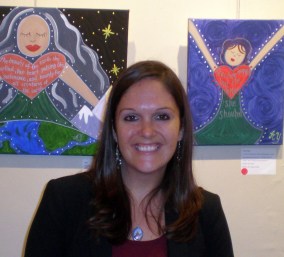
 Each month on Feminism and Religion, I feature a Holy Women Icon with a folk feminist twist. The painting is accompanied by an essay describing the holy woman’s life and the ways she stood for justice and peace, the ways in which she embodied feminism. Thus far, we have explored the stories of holy women that are well-known, perhaps not by the wider public, but by feminists seeking to uncover the forgotten truths of holy women throughout history. They are goddesses, saints, artists, dancers, scholars, clergy, and pillars of the faith: Virginia Woolf , the Shulamite, Mary Daly, Baby Suggs, Pachamama and Gaia, Frida Kahlo, Salome, Guadalupe and Mary, Fatima, Sojourner Truth, Saraswati, Jarena Lee, Isadora Duncan, Miriam, Lilith, Georgia O’Keeffe, Guanyin, Dorothy Day, Sappho, Jephthah’s daughter, Anna Julia Cooper, the Holy Woman Icon archetype, Maya Angelou, Martha Graham, Pauli Murray, La Negrita, Tiamat/tehom, and Mother Teresa, just to name a few.
We tell their stories in our classrooms. Other artists paint them. Many have biographies or autobiographies recounting their lives. Their stories embolden us to stay strong, and continue working for justice and equality. But what of the women whose songs really are unsung, whose stories never grace the pages of our textbooks? What about the “unknown” women who have, indeed, emboldened us, paved the way for us to be who we are, but who most people have never heard of? Many such women are also holy, thus deserving of canonization as Holy Woman Icons.
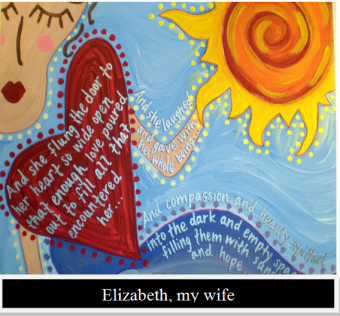 I would like to dedicate this post to all the holy women who fill our lives, yet whose stories we never hear. Because it is not only these seemingly famous women—these heroines of feminism—who are holy and whose stories matter. Continue reading “Painting “Unknown” Holy Women: Commissions, Gifts, and the Unsung Stories of “Ordinary” Women by Angela Yarber”
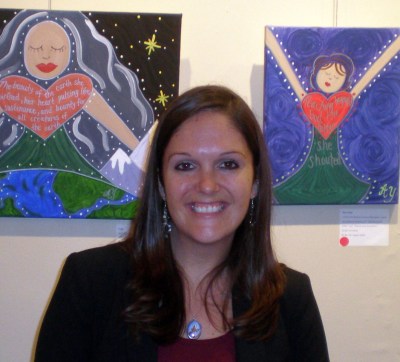 Of all my Holy Women Icons, Mother Teresa joins Blessed Mary in being one of the most familiar, and often the one least cited for the cause of feminism. Joining
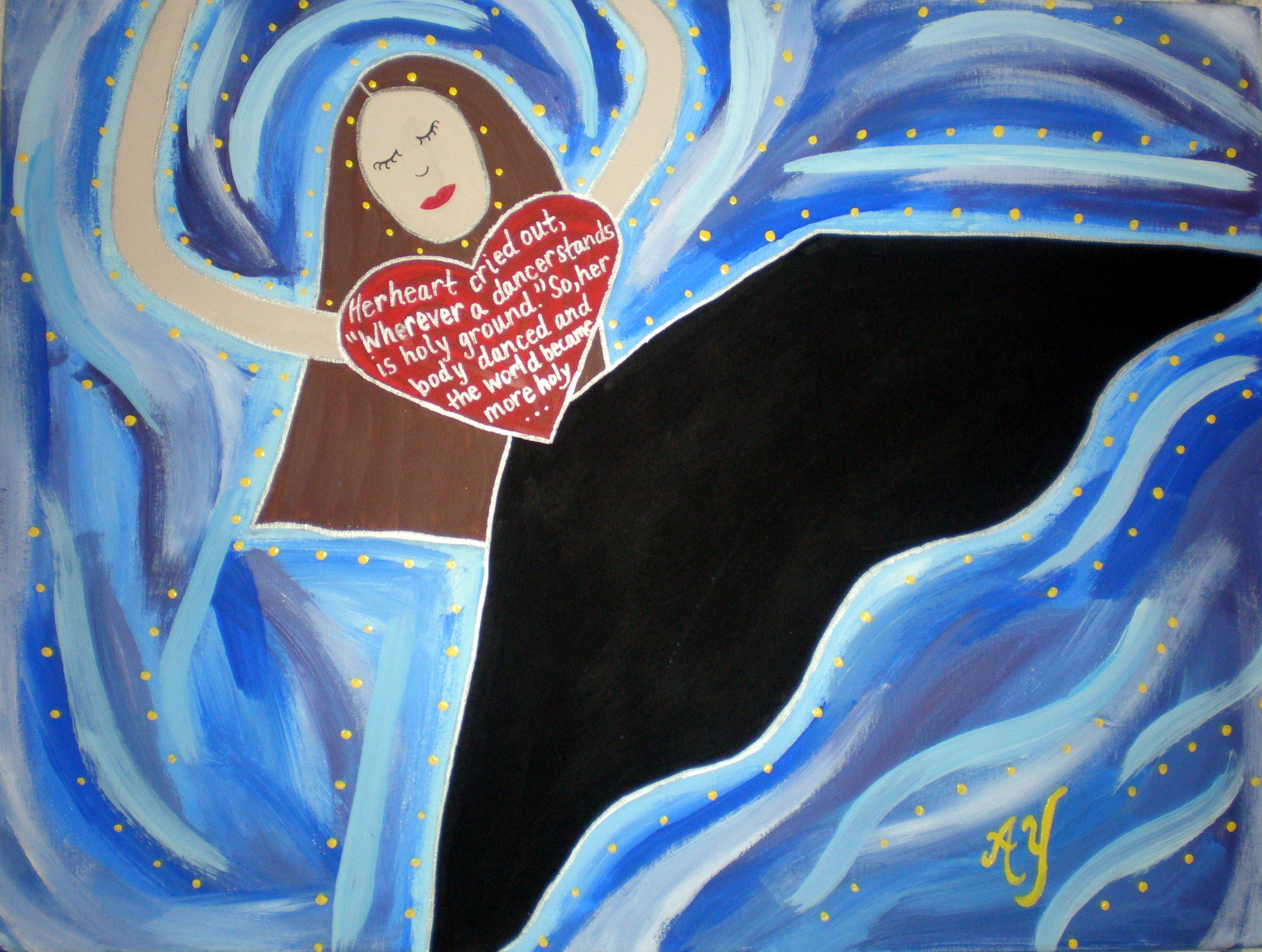
 er midrash on the story
 Feminism and Religion