Women’s Sovereignty and Body Autonomy Beyond Roe v. Wade: Book Review by Beth Bartlett

A Girl God Anthology Edited by Arlene Bailey, Pat Daly, Sharon Smith and Trista Hendren

Women’s Sovereignty and Body Autonomy Beyond Roe v. Wade was not what I was expecting.  Given the title, I thought it would be similar to Robin Marty’s New Handbook for a Post-Roe America – a practical guide for ways to gain access to reproductive care in the wake of the overturning of Roe v. Wade.  Instead, I found, in contributor Mary Saracino’s words, “the howl of ages” – a deeply passionate and spiritual collection of poetry, prose, and visual art expressing  women’s outrage, grief, resistance, and empowerment in response to the U.S. Supreme Court decision of June 2022 denying women the right to abortion care that had been settled law in the U.S. for nearly fifty years.

Continue reading “Women’s Sovereignty and Body Autonomy Beyond Roe v. Wade: Book Review by Beth Bartlett”

Moon Worshippers by Beth Bartlett

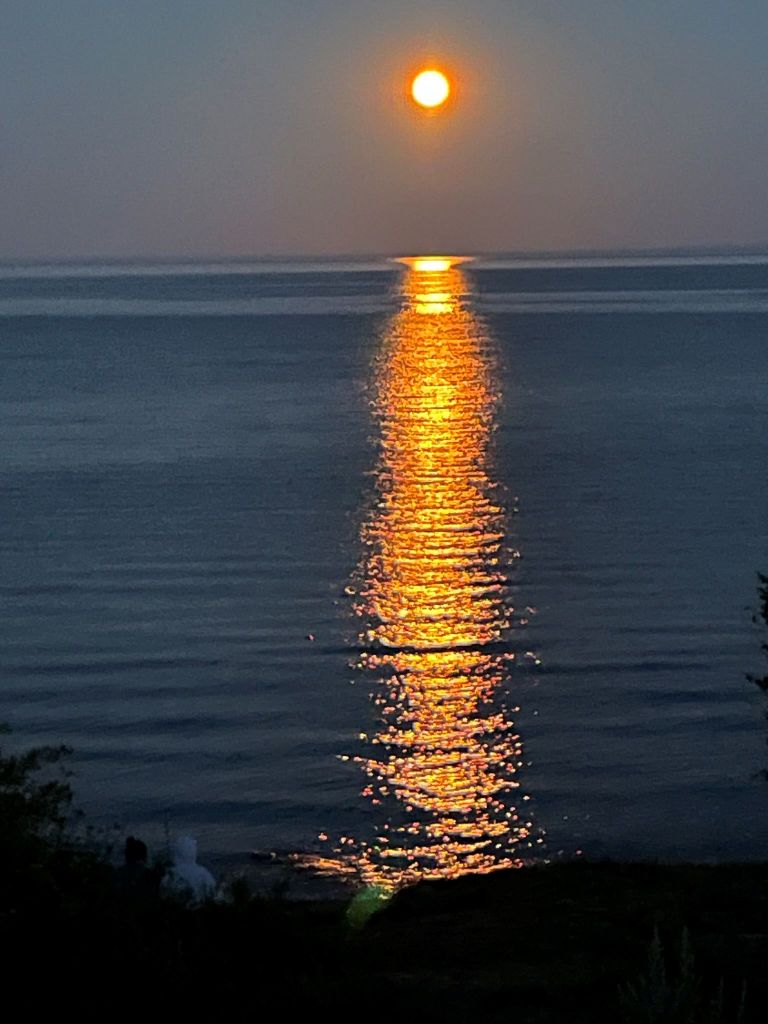
You’d have thought it was the 4th of July the way people were gathering on the shore of the great lake, Gitchee Gumee – some with coolers and lawn chairs, kids and dogs in tow, each claiming their spot — waiting for the viewing as if waiting for the fireworks.  But what we awaited was far more spectacular – the “once in a very blue moon,”[i]  the second full moon in a calendar month, but also a “super moon” – so named because at this time when it is closest to the earth in its orbit it appears larger than usual. Super moons happen a few times a year and blue moons happen every two to three years, but super blue moons are rare. This one was probably the last in my lifetime since the next one will occur fourteen years from now in 2037.

My husband, dog, and our son’s dog, aptly named Luna, made our way to the lake, finding our spot on the ancient rocks, joining the other moon gazers. A feeling of community celebration arose with the moon as we strangers to each other together watched the first light of rising moon with shared anticipation and appreciation. The “blue moon” in fact appeared red as it came up through the hazy atmosphere, but as it rose higher in the sky, just as in the lyrics to the song, “Blue Moon,” the moon turned to gold, casting its golden glow across the waters.  As it rose, it seemed to grow even larger, rounder, brighter.

Continue reading “Moon Worshippers by Beth Bartlett”

Curiosity by Beth Bartlett

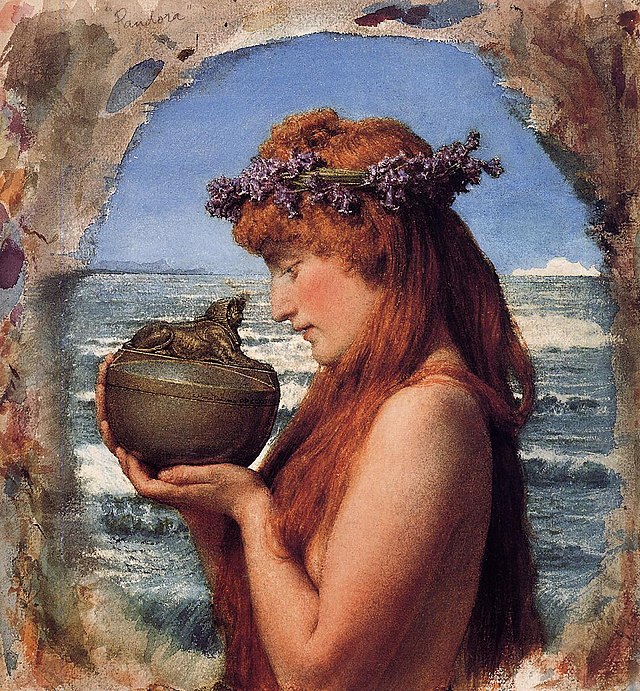
In my last post I mentioned the tale of Prometheus who stole fire from the gods.  Zeus’s punishment of eternal torture was not enough to avenge the offense.[i]  In addition, Zeus punished the entire human race by sending the first woman, Pandora.  Pandora is a woman of “all gifts,” one of which is the curiosity that drives Pandora to open the forbidden jar, unleashing evils and miseries into the world.  Woman as punishment, as the bringer of evil and misery — these themes have shaped the western view of women for millennia.

Continue reading “Curiosity by Beth Bartlett”

Fire by Beth Bartlett

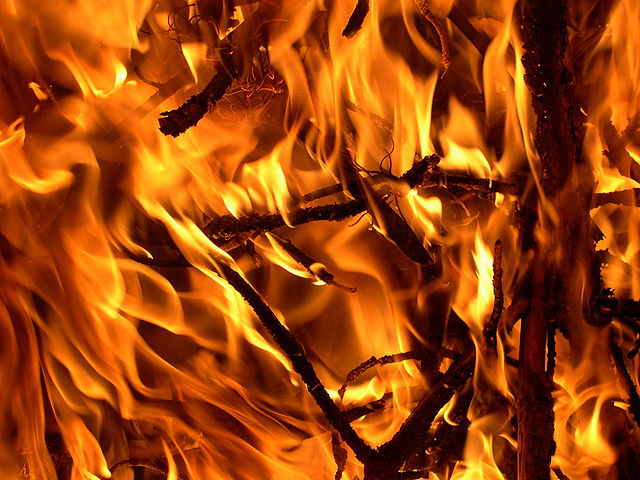
The nature and meaning of fire have been appearing in several disparate aspects of my life lately – in the fire of Celtic spring rituals; in books I’ve been reading[i]; in the fireflies of summer nights and the fireworks of the 4th of July; even as a clue in a game; and most ubiquitous of all – the smoke from Canadian wildfires. So persistent a theme begs pondering.  It first appeared in a Rewilding course as the sacred element of spring in the Celtic wheel of the year. Spring is the time of new beginnings, of the sunrise – the element of fire in the sacred direction of east, of the fires of passion and creativity, and the celebration of Beltane.

Continue reading “Fire by Beth Bartlett”

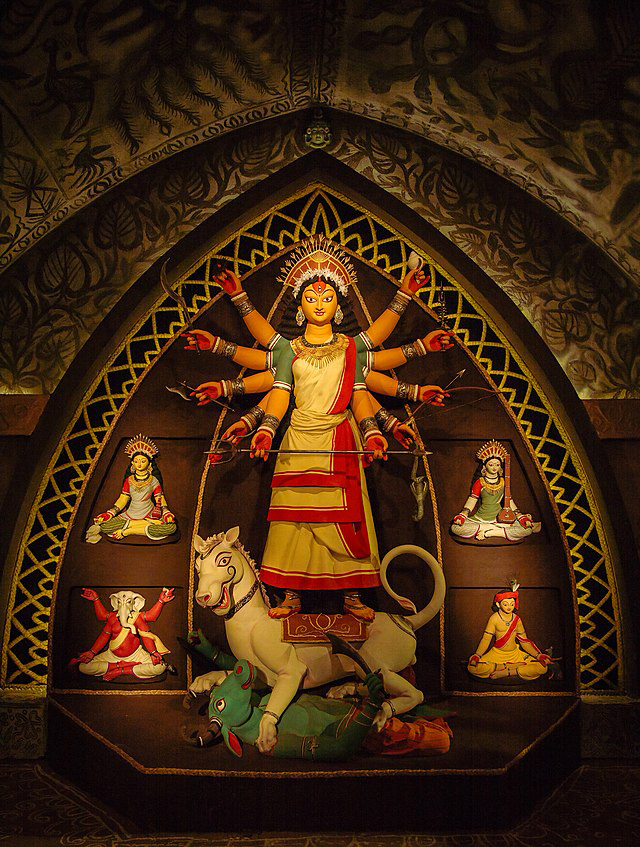
Durga Rising: Feminism as Fierce Compassion By Beth Bartlett

In her FAR post earlier this year,[i] “Why Feminism Needs the Fierce Goddesses,” Susan Foster argues that a “flagging” feminist movement needs the revitalizing energy of the “fierce goddesses” of ancient times to challenge the patriarchal forces that seem to be on the rise as increasingly we find women’s lives and freedoms constrained. She writes, “the dark goddesses of ancient times have been submerged in our psyches, but they serve as a repository of fierce energy, of female rage against injustice.”  She continues, “It’s important and healthy for us as women to reclaim our anger, using it to protect ourselves and fight for our rights in systems that are oppressive.”

Reading this, I immediately thought of Beverly Wildung Harrison’s, “The Power of Anger in the Work of Love,” and China Galland’s, The Bond Between Women: A Journey to Fierce Compassion. Anger as the work of love; fierce compassion.  In this time of mass shootings, insurrection, the ongoing assault on women, LGBTQ, and BIPOC peoples, when rage seems so easily fueled by hate, envy, and greed, it is the rage based in love and compassion that is most needed.  This is the rage of the fierce dark goddesses who are moved to act against injustice, the rage of the feminism I love. With its source in love and compassion, it is a rage that rebels in the best sense of the word – that at once refuses injustice and affirms dignity and respect, that speaks truth to power, that is grounded in solidarity and friendship, and values the immanence of the earth, the water, the body, and the divine spark in all beings.[ii] 

Continue reading “Durga Rising: Feminism as Fierce Compassion By Beth Bartlett”

Common Ground: Part Two:  On Enclosure, the Commons, and Awe by Beth Bartlett

Can we rise to ourselves and see what is in the nature of the soul to see – that we exist on this common ground together?” – Susan Griffin

The ideology, discussed in Part One, that land that is not being cultivated, mined, lumbered, or otherwise used to create goods and capital is ‘waste” continues its devastating effects to this day in mountaintop removal, destruction of old growth forests, fracking and drilling and mining of once pristine lands, plowing the plains into dust and spreading herbicides and pesticides over the land. Devastate – from the Latin devastare, meaning to “lay waste, ravage, make desolate.” Devastate – to de-vast – is to destroy the vastness. And so has the vastness of lands around the world been plundered, laid waste, so as not to “waste” it.

Continue reading “Common Ground: Part Two:  On Enclosure, the Commons, and Awe by Beth Bartlett”

Common Ground: Part One:  On Enclosure, the Commons, and Awe by Beth Bartlett

I spent the first half of my academic career studying and teaching the history of Western political philosophy – the works of Plato, Aristotle, Augustine, Aquinas, Hobbes, Locke, and Rousseau to name a few.  It gave me the best possible grounding in understanding the foundations of patriarchy.  In more recent years, I have used these works to explain the Western paradigm of thought to my ecofeminism students so they could better understand how women, colonized others, and the earth have been defined and dominated based on these assumptions.

Continue reading “Common Ground: Part One:  On Enclosure, the Commons, and Awe by Beth Bartlett”

Becoming Grandma by Beth Bartlett

“We’ve all witnessed the power of a moment when an elder holds a newborn babe. There’s this unique bond that connects these seemingly disparate ages. However, there is nothing more profound than these two ages witnessing one another.”  – Mary DeJong

On Palm Sunday, I held my son’s newborn babe for the first time.  “Who are you?” I asked. I’d wrongly expected my grandson to be a carbon copy of my son newly born, but here he was, a whole new being, entirely himself.  We were certainly witnessing one another as we gazed into each other’s eyes. Did he know me, my voice, my touch?  Or did he also wonder, “Who are you?” I expect we will spend the next several months and years learning who we are to each other.  

Continue reading “Becoming Grandma by Beth Bartlett”

Breath, part 2 by Beth Bartlett

You can read part 1 here.

Much has been written about the last breath, but not much about the first. Recently, I happened to listen to a re-broadcast of an episode of NPR’s Radiolab on “Breath.”  It began with an explanation of the ingenious, miraculous first breath in which we transition from water-dwelling beings in the watery womb to air-dwelling beings outside in the world.  In the water-dwelling fetus, the lungs have no function. Instead, the fetus gets its oxygen from its mother through the placenta and umbilical cord, the oxygenated blood flowing directly from the right to the left chambers of the heart through a hole — the patent foramen ovale — bypassing the lungs that in fetuses are filled with water.  But in the split second of that first breath, the umbilical cord shuts down the flow of oxygenated blood and the patent foramen ovale closes, requiring that the once water-filled lungs now be filled with air.  The right and left sides now forever closed off from each other, from now on, the oxygen-deprived blood that flows into the right side of the heart must be pumped out of the heart into the lungs where it is enriched with oxygen, and then returns to the left chambers of the heart where it is then pumped to every tissue in our bodies.  That first breath enables the continual flow of in-breath and out-breath, for most of us, about 500 million times in our lifetimes. I will never forget that first breath of my own child as he came in to the air-breathing world. That first cry remains, and always will, the sweetest sound I have ever heard. Aware now of all that happens with that first breath, I am filled with an even deeper awe.

Continue reading “Breath, part 2 by Beth Bartlett”

Breath, part 1 by Beth Bartlett

By breath, by blood, by body, by spirit, we are all one.

The air that is my breath . . .is the air that you are breathing.
And the air that is your breath . . . is the air that I am breathing.
The wind rising in my breast . . .is the wind, from the east, from the west,
From the north . . . from the south; Breathing in, breathing out.

So begins singer-songwriter Sara Thomsen’s song, “By Breath,” bringing together many elements I’ve been pondering in the last several days – breath, air, wind, spirit.

Continue reading “Breath, part 1 by Beth Bartlett”