Female Wisdom in Eden: A Guide for Faith-Formed Feminists By Susie Austin

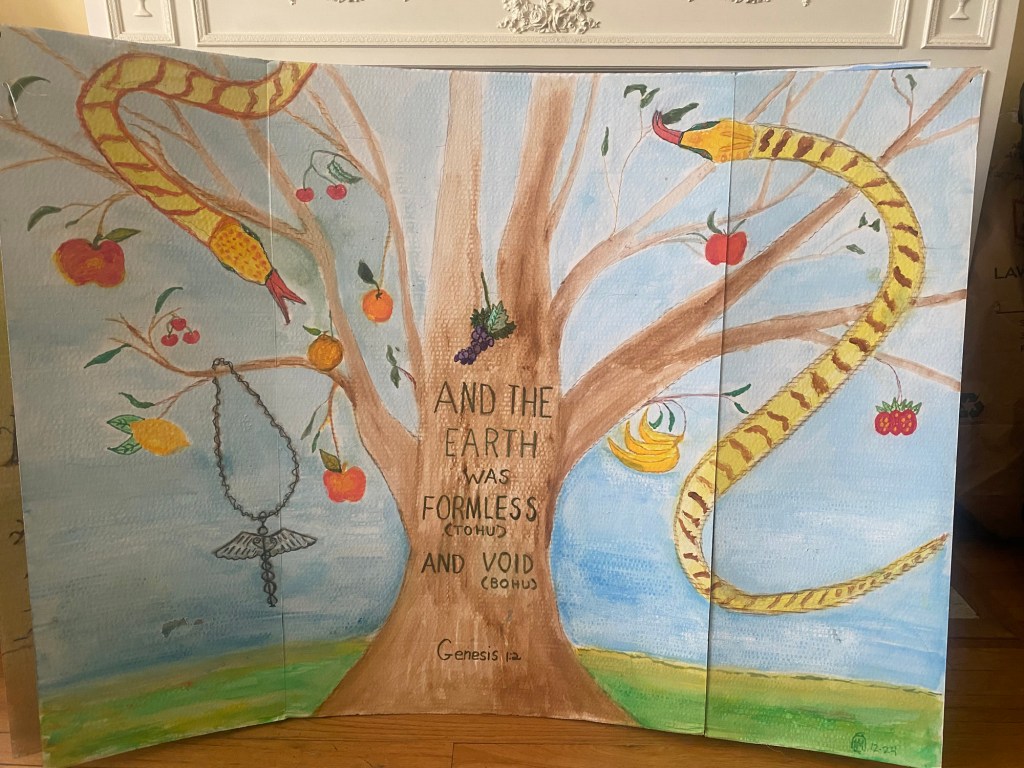
If you were taught that “men lead” is God’s design, this is your permission slip to ask a harder question: what if that teaching was never Eden’s plan — but a wound the world mistook for a rule?

Many of us grew up inside churches that loved us, baptized us, and gave us language for hope—while also wrapping womanhood in shrinking instructions: be agreeable, be modest, be quiet, be helpful. We learned to make ourselves small so that men could feel large. We learned to translate our leadership as “support,” our wisdom as “intuition,” and our authority as “being difficult.” We learned to carry the room’s temperature without ever touching the thermostat.

Feminism — and the women who lived it before it had a name — has always asked religion to remember itself. Not to abandon Scripture or tradition, but to recover what was true before fear called itself theology. Before we rewrite our lives, let’s reread the beginning.

A forgotten reading of the oldest story

Look again at Genesis: the woman sees that the fruit is “desirable to make one wise” (Gen. 3:6). In Scripture’s own poetry, Wisdom is feminine—personified as Lady Wisdom (Hebrew: Chokma) calling us to life (Prov. 8:1-4, 22-31). And Genesis 3:6 ends with four words we usually skip: “who was with her.” Translation: she leads; he lingers.

Continue reading “Female Wisdom in Eden: A Guide for Faith-Formed Feminists By Susie Austin”

From the Archives: The Daughter, the Alliance-Maker (Women in the Book of Daniel, part 2) by Liz Cooledge Jenkins

Note: This is the second in a two-part series reflecting on women in the biblical book of Daniel. This was originally posted on May 21, 2023

The second female character I noticed while taking a deep dive into the book of Daniel appears even more briefly. Daniel 11:6-7 includes her story: “The daughter of the king of the South will go to the king of the North to make an alliance, but she will not retain her power, and he and his power will not last. In those days she will be betrayed, together with her royal escort and her father and the one who supported her. One from her family line will arise to take her place” (NIV). It is a brief story—and not a happy one, in the end. But I think it’s worth reflecting on.

In this chapter of Daniel, an unnamed supernatural messenger gives Daniel a detailed account of a long series of violent power struggles between various kings. Empires accumulate and then are broken up (vv. 3-4). One king is strong, but his commander proves stronger and overtakes him (v. 5). Attacks are victorious, and valuables are seized and carried off (vv. 7-8). Retreats are made (v. 9). Great armies are assembled (v. 10). Kings “march out in a rage” toward battle (v. 11). Armies are carried off, and thousands are slaughtered (v. 12). You get the idea. Everything is violent. Everything is bloody. Everything is one brutal war after another, one brutal kingdom after another, one brutal ruler after another. It all starts to blur together.

Continue reading “From the Archives: The Daughter, the Alliance-Maker (Women in the Book of Daniel, part 2) by Liz Cooledge Jenkins”

From the Archives: The Queen, the Memory-Keeper (Women in the Book of Daniel, part 1) by Liz Cooledge Jenkins

Note: This is the first in a two-part series reflecting on women in the biblical book of Daniel. This was originally posted on May 20, 2023

I recently had the chance to take a deep dive into the biblical book of Daniel. I think it’s the first time I’ve read the whole book of Daniel since I’ve started intentionally attending to the questions of feminist biblical interpretation: Where are women present? Where are women absent? What are they doing or not doing—perhaps prohibited from doing? How does this passage move its readers toward—or away from—gender equity and women’s empowerment? How does it speak to—or deny—women’s full humanity?

            The absence of women in most of the book of Daniel feels glaringly obvious to me.[1] The main characters include the Hebrew exile Daniel, Daniel’s three (male) friends, King Nebuchadnezzar, King Belshazzar, and King Darius. The angels look like men. The divinely appointed eschatological authority figure is described as being like a “son of man.” The particularly oppressive king who desecrates the temple, abolishes the ritual sacrifices, and sets up an “abomination that causes desolation”[2] is definitely male.

Where are the women?

Continue reading “From the Archives: The Queen, the Memory-Keeper (Women in the Book of Daniel, part 1) by Liz Cooledge Jenkins”

SheSpeaks! Eve by Janet Maika’i Rudolph

Author’s Note: I have begun a project called She Speaks! Women of the Bible Have Their Say. As part of this project, I have done five films with some very dedicated actors (friends of mine) who have dubbed themselves the SheSpeaks!Ensemble. I showed 4 of the films at the recent Yerusha Symposium. Based on the comments and reception, the project is now expanding. I am looking to create longer films that include story arcs. The first one will be of Eve. Below is the script for Eve along with the link to the video.

EVE speaks:

Why hello I don’t get visitors very often! Welcome. Come, come sit under my tree, let’s share some tea. I have the most wonderful and flavorful herbs here in my garden.

Look around at my most marvelous paradise. It is all filled with magical treasure. I’ll tell you a secret, the treasure I care for spans both the heavens and the earth. You see, we are at the place where spirit, breath and matter intersect. Where the living beings of earth and the animating forces of the divine join in harmony.

It is so hard to look at your holy book. I can’t imagine why I keep getting blamed for . . .well . . . just about everything.  It’s strange that your world wants to connect me with curses as I am the giver of life. In fact, did you know that my name Eve means life. I don’t understand what has become of you, my children. It is said that I brought a curse to humanity. Do you see life as a curse?  Let me tell you a bit about myself. Perhaps then you will see me differently.

Continue reading “SheSpeaks! Eve by Janet Maika’i Rudolph”

From the Archives: I Sing Asherah Exalted! by Janet Maika’i Rudolph

This was originally posted Dec. 16th, 2021

With this season of the festivals of light upon us (Hanukkah, Christmas, Solstice, Kwanzaa), I wanted to focus on the more joyful aspects of our lives. For that, I have been diving into passages about joy and singing in the bible.

Sometimes when I write these posts, they take me in directions I never thought to go. This post is one of them. The surprise direction I found is in the Psalm below:

Sing unto him, sing psalms unto him: talk ye of all his wondrous works.
Glory ye in his holy name: let the heart of them rejoice that seek the LORD.
Psalm 105:2-3 KJV

Continue reading “From the Archives: I Sing Asherah Exalted! by Janet Maika’i Rudolph”

What an Outdoor Movie Taught me about Biblical Women By Alicia Jo Rabins

Once I went to a free outdoor movie in Miami Beach. The film was projected on the side of the giant concert hall. There was a grassy park with palm trees stretching out from the wall; families brought picnic dinners and cans of beer and stretched out to watch the movie once the sky darkened.

The movie was Star Wars, but as Princess Leah appeared, I was thinking about a different mythic canon. For over twenty years I’ve been studying and teaching stories of Biblical women from a feminist Jewish perspective, and after all this time, I was surprised to find that the way I feel while interacting with these stories was oddly, powerfully similar to the feeling of watching Star Wars projected on the side of a building on this Miami night.

Continue reading “What an Outdoor Movie Taught me about Biblical Women By Alicia Jo Rabins”

The Daughter, the Alliance-Maker (Women in the Book of Daniel, part 2) by Liz Cooledge Jenkins

Note: This is the second in a two-part series reflecting on women in the biblical book of Daniel. For part 1, see here.

The second female character I noticed while taking a deep dive into the book of Daniel appears even more briefly. Daniel 11:6-7 includes her story: “The daughter of the king of the South will go to the king of the North to make an alliance, but she will not retain her power, and he and his power will not last. In those days she will be betrayed, together with her royal escort and her father and the one who supported her. One from her family line will arise to take her place” (NIV). It is a brief story—and not a happy one, in the end. But I think it’s worth reflecting on.

In this chapter of Daniel, an unnamed supernatural messenger gives Daniel a detailed account of a long series of violent power struggles between various kings. Empires accumulate and then are broken up (vv. 3-4). One king is strong, but his commander proves stronger and overtakes him (v. 5). Attacks are victorious, and valuables are seized and carried off (vv. 7-8). Retreats are made (v. 9). Great armies are assembled (v. 10). Kings “march out in a rage” toward battle (v. 11). Armies are carried off, and thousands are slaughtered (v. 12). You get the idea. Everything is violent. Everything is bloody. Everything is one brutal war after another, one brutal kingdom after another, one brutal ruler after another. It all starts to blur together.

Continue reading “The Daughter, the Alliance-Maker (Women in the Book of Daniel, part 2) by Liz Cooledge Jenkins”

The Queen, the Memory-Keeper (Women in the Book of Daniel, part 1) by Liz Cooledge Jenkins

Note: This is the first in a two-part series reflecting on women in the biblical book of Daniel.

I recently had the chance to take a deep dive into the biblical book of Daniel. I think it’s the first time I’ve read the whole book of Daniel since I’ve started intentionally attending to the questions of feminist biblical interpretation: Where are women present? Where are women absent? What are they doing or not doing—perhaps prohibited from doing? How does this passage move its readers toward—or away from—gender equity and women’s empowerment? How does it speak to—or deny—women’s full humanity?

            The absence of women in most of the book of Daniel feels glaringly obvious to me.[1] The main characters include the Hebrew exile Daniel, Daniel’s three (male) friends, King Nebuchadnezzar, King Belshazzar, and King Darius. The angels look like men. The divinely appointed eschatological authority figure is described as being like a “son of man.” The particularly oppressive king who desecrates the temple, abolishes the ritual sacrifices, and sets up an “abomination that causes desolation”[2] is definitely male.

Where are the women?

Continue reading “The Queen, the Memory-Keeper (Women in the Book of Daniel, part 1) by Liz Cooledge Jenkins”

The Problem of Jehosheba: Reading One Biblical Character in Two Different Feminist Ways by Jill Hammer

Tucked away in II Kings 11 is the story of a mother-daughter feud that is personal, political, and ultimately fatal. Jehu, a charismatic military commander, is anointed by Elisha as the next king of the northern kingdom of Israel. Jehu kills the previous king of Israel, Jehoram, and also Jehoram’s mother Jezebel (yes, that Jezebel—the famous/infamous queen). As part of his violent rise to power, Jehu also kills Ahaziah, king of the southern kingdom of Judah. Ahaziah’s death should mean that Athaliah (Atalya), who is queen mother of Judah as well as the daughter of Jezebel, cedes power to a new king and a new queen mother. Instead, according to the Book of Kings, Athaliah has the rest of the king’s sons and grandsons murdered, and seizes the throne for herself. 

All seems lost for the Judean line, except that Jehosheba (Yehosheva), wife of the high priest Jehoiada and sister of the murdered King Ahaziah, saves one of Ahaziah’s sons, along with the child’s wetnurse, and hides them both in the Temple. Jehosehba keeps the boy, Joash, and his nurse in the Temple until he is six years old. At that time, Jehosheba’s husband, the high priest, anoints Joash king, stages a coup, and executes Athaliah as a usurper. Jehosheba’s action saves the Davidic line. The collection of Jewish legends known as Otzar Midrashim lists Jehosheba as one of the righteous women of the Jewish people.

Continue reading “The Problem of Jehosheba: Reading One Biblical Character in Two Different Feminist Ways by Jill Hammer”

Moses and the Rambo Problem by Janet Maika’i Rudolph

Moses is an interesting character is in the pantheon of religious leaders. He is such a major personage, considered the founder of Judaism and yet there are no extra-biblical accounts of his life and his deeds. He only exists in the bible. You’d have thought that such a major event as leading a whole class of people away from Egyptian slavers, would have shown up on the radar of other written or mythical accounts from the time. Nothing!

Even his name is interesting. When the Egyptian princess gathered Moses out of the waters she said:

She named him Moses, explaining,

“I drew him out of the water.”

Exodus 2:10

This is one meaning of his name. But there are others. In Egypt, the land where he was born and raised, the M-SH (variations: m-s or m-ss) root simply means “son.” Or it can mean “child” in a non-patriarchal sense. We see this in other Egyptian names Ramses is the child of the sun god Ra. Tutmose is the child of Tut. 

Continue reading “Moses and the Rambo Problem by Janet Maika’i Rudolph”