Diana Beresford-Kroeger: Integrating Celtic Wisdom and Science, part 2 by Theresa Dintino

Part 1 was posted yesterday

Combining ancient wisdom and western science

At age sixteen Beresford-Kroeger was graduated from her mentorship of the Lisheens and went on to become a scientist, learning medical biochemistry and botany. Eventually she saw that many of the things she learned from the Lisheens elders could be scientifically proven. This offered her delight and reassurance.

One of the first of these was the plant Chrondrus crispus or seaweed named Irish moss. Her Great-Aunt Nellie taught her that it cured tuberculosis and how to prepare and use the gel-like mucilage it released upon being boiled.

In the lab Beresford-Kroeger later discovered that this mucilage has antibiotic properties.

“The feeling this confirmation of Nellie’s teaching gave me is hard to describe. I loved my teachers in Lisheens, but I hadn’t completely ruled out the idea that the things I’d been taught there were just old superstitions. I needed to confirm them for myself. There was always the chance that there would turn out to be nothing of import in the plants they’d emphasized to me, and nothing more to the ancient knowledge than beautiful clouds of vapor”(96).

She began to understand that what she had been taught was an oral tradition and that it existed in no other format and that she was meant to be a bridge between “the ancient and the scientific”(97).

“My teachers in the valley might have indicated that a particular plant was good for poor circulation, which I’d taken to mean heart trouble. I would then know to keep a particular eye out for the presence of any chemical known to benefit the heart. “Well, Diana,” they might have begun, while cradling a small, five-pointed yellow flower in the crook of two fingers. “St. John’s Wort, as you see here, has a strong medicine for nervousness and mental problems.” I would later find out that St. John’s Wort contains phytochemicals such as hyperforin, which increase the effectiveness of dopamine and serotonin in the brain. The plant is as effective as many prescription anti-depressants, and may in some cases be more effective”(98).

Continue reading “Diana Beresford-Kroeger: Integrating Celtic Wisdom and Science, part 2 by Theresa Dintino”

Oran Mor, The Great Song of Creation, Part 1 by Iona Jenkins

Celtic myth tells of the Oran Mor, the Great Song of Creation that upholds life itself.

I remember my sense of wonder and excitement when I first stumbled across this concept in The Mist Filled Path, written by Scottish/Irish/American shaman Frank MacEowen. I began an immediate quest to discover more, but internet searches produced very little information, and as there were no books available relating only to the Great Song, I concluded that perhaps information had been passed down verbally by Bards, slowly receding into the mist as Christianity became more established in the British Isles. Each time I mention the Oran Mor to someone else, they too become energised and enthusiastic, as if they sense the magic reawakening. MacEowen, who certainly encountered it on his own Mist filled Path, wrote:

“The reason we find no evidence of this Celtic Creation story, is because it is a living story – A story that waits for us to remember. In other words, no matter how hard we look, we will not find the story outside ourselves. We have all been woven into the story, it is our story, and it continues to unfold.”
p.113, The Mist-Filled Path, Frank MacEowen, 2002 New World Library

Continue reading “Oran Mor, The Great Song of Creation, Part 1 by Iona Jenkins”

Cerridwen’s Brew; the Psychedelic Priestesses and the Theft of Indigenous Wisdom by Kelle Ban Dea

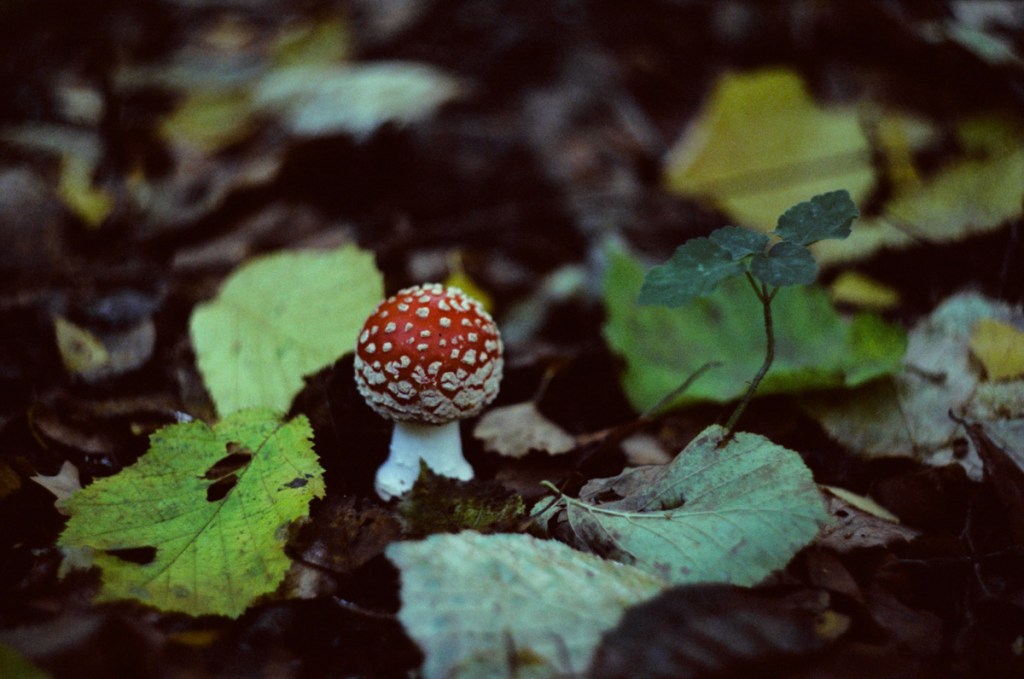
Katerina Shkribey, mushroom. Unsplash stock

Recently I wrote about how the story of Cerridwen and Taliesin is not a muse and hero tale but a tale of stealing from the goddess. Violating her priestesses and exploiting the land.

That is one reading of it. There is another though, which may have some grounding in historical fact and may be a warning to a particular issue gaining prominence today; the rise of the psychedelic industry.

Although neo-Druids, for whom this tale forms part of their core mythology, interpret the awen that Cerridwen brews in her cauldron as the ‘flowing spirit of inspiration,’ the original text makes it clear it is a potion. Cerridwen gathers ‘every kind of charm-bearing herb’ for the potion. Three drops of it turn the boy Gwion Bach into the shaman-bard Taliesin, but the rest is poison.

Continue reading “Cerridwen’s Brew; the Psychedelic Priestesses and the Theft of Indigenous Wisdom by Kelle Ban Dea”

Cerridwen’s Cauldron; Stealing from Old Mother Universe by Kelle ban Dea

Catherine Kay Greenup, blue well
Unsplash stock

The story of how Cerridwen, the witch goddess, brews a magic potion full of awen (inspiration) which is then accidentally imbibed by the boy Gwion Bach, is well loved across the Western world, especially by neo-Druids. Gwion Bach is then reborn as Taliesin, the greatest bard in Britain. It is a typical heroes tale, with Cerridwen as the muse and initiatrix.

Or is it? This tale has always left a funny taste in my mouth, and when I recently read The Broken Cauldron by Lorna Smithers, I understood why. In the oldest version we have of this tale, Gwion Bach doesn’t accidentally taste the awen. He steals it.

Continue reading “Cerridwen’s Cauldron; Stealing from Old Mother Universe by Kelle ban Dea”

Rhiannon as Midlife Queen Mother by Kelle BanDea

We tend to think of Rhiannon as the fairy maiden on the white horse who entices Pwyll, the King and her future husband, into the Otherworld. Or she is the young mother who is unfairly blamed for the death of her own child until he is restored to her. This is Rhiannon’s story as it is most well-known, and she has become a beloved figure due to it. The image of the beautiful fairy woman on the white horse has become equated, to modern neopagan folks and Goddess-women, with the ancient Celtic and Indo-European horse goddesses. Of all the women in the medieval Welsh lore that we know as the four story ‘branches’ of the Mabinogi, Rhiannon is perhaps the most beloved.

But this is only half of the story.

Continue reading “Rhiannon as Midlife Queen Mother by Kelle BanDea”

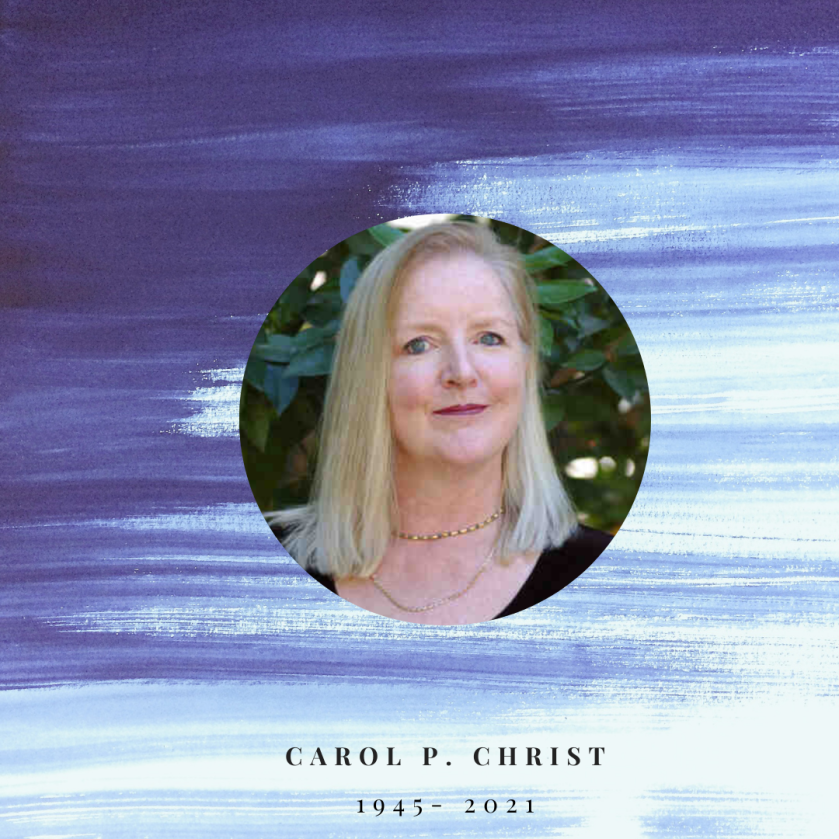
Legacy of Carol P. Christ: The Feast Day of St. Brigid

This was originally posted on Jan 30, 2012

May we remember Brigid on her day in the fullness of her connection to bountiful and life-giving earth by setting a bowl of milk on an altar or special place in the garden on her holy day.  Who knows, a snake just might come to drink from it.

The Christian Feast Day of St. Brigid of Kildare, one of the two patron saints of Ireland, is held on February 1, the pre-Christian holiday known as Imbloc.  It is well known that St. Brigid has the same name as a pre-Christian Goddess of Ireland, variously known as Brighid (pronounced “Breed”), Brigid, Brigit, Bride, or Bridie.  The name Brigid is from the Celtic “Brig” meaning “High One” or “Exalted One.”  Brigid like other Irish Goddesses was originally associated with a Mountain Mother, protectress of the people who lived within sight of her and of the flocks nurtured on her slopes.

Imbloc marked the day that cows and ewes give birth and begin to produce milk.  It was also said to be the day when hibernating snakes (like groundhogs) first come out of their holes.  In northern countries, Imbloc signals the beginning of the ending of winter.  The days have begun to lengthen perceptibly after the winter solstice when the sun stands still and it seems that winter will never end.  At Imbloc spring is not yet in full blossom.  But if hibernating snakes come out of their holes, it is a sure sign that the processes of transformation will continue and warmer days will not be far off.  As Marija Gimbutas says, “The awakening of the snakes meant the awakening of all of nature, the beginning of the life of the new year.”  

Continue reading “Legacy of Carol P. Christ: The Feast Day of St. Brigid”

Branwen, Goddess of Grief by Kelle ban Dea

This midwinter has been a time of sadness so far. Two major deaths in the family, and two baby losses, the grief has come thick and fast for me and my kin this season. At a time when we are usually all gathering to celebrate the rebirth of the light in the dark, my spiritual practice is all at sea, leaving me wondering how I can call on Goddess, on Mother of God, at this time.

Then I remember Branwen.

Continue reading “Branwen, Goddess of Grief by Kelle ban Dea”

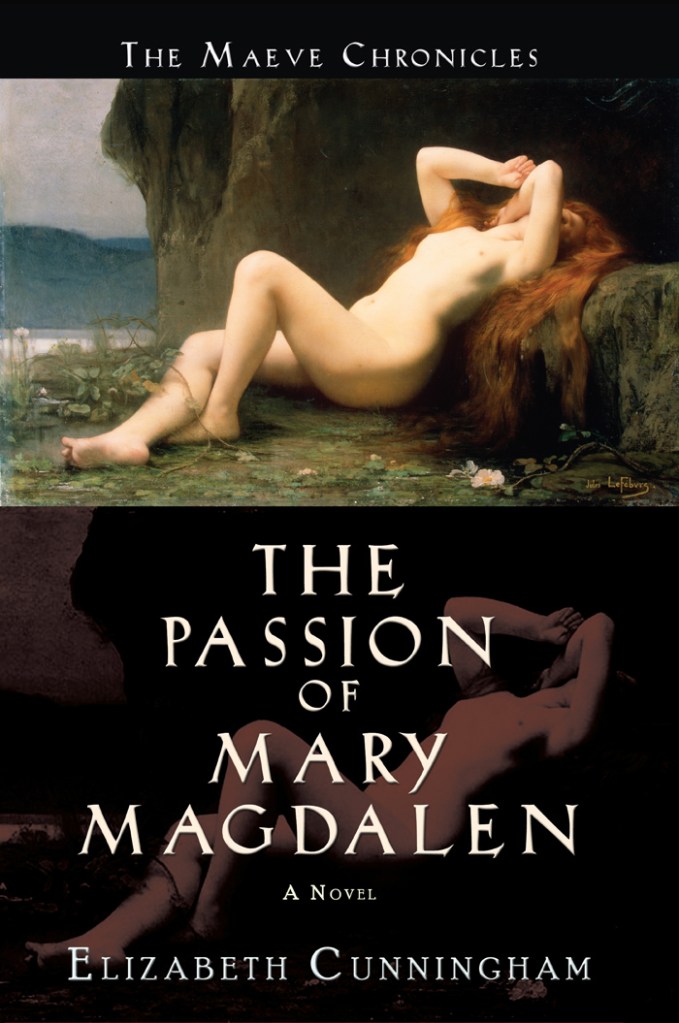
How Mary Magdalen Came into My Life: an excerpt, edited for brevity, from My Life as a Prayer: A Multifaith Memoir by Elizabeth Cunningham

(Author’s note: Mary Magdalen, or Magdalene, comes to people in many ways. To me, she came as an unconventional, fictional character. I worked hard to get the first century setting of her story as accurate as possible. Otherwise, I make no claim to historicity. I respect all the ways in which others know her.)

When I finished writing my novel Return of the Goddess in 1990, I thought I had nothing more to say. Yet, I sensed there was something—someone—missing.

An artist friend suggested I take up drawing or painting for a time—visual art being a form in which I had no experience, skill, and best of all, no ambition. I dabbled in paint and charcoal but soon reverted to magic markers, my childhood medium. 

One day a line drawing in brown marker took shape. An ample woman sat naked at a kitchen table having a cup of coffee. The round clock on the wall read a little after three in the afternoon. (The same time of day I was born.) She told me her name was Madge.

Continue reading “How Mary Magdalen Came into My Life: an excerpt, edited for brevity, from My Life as a Prayer: A Multifaith Memoir by Elizabeth Cunningham”

The Appalachian Cailleach Speaks by Annelinde Metzner   

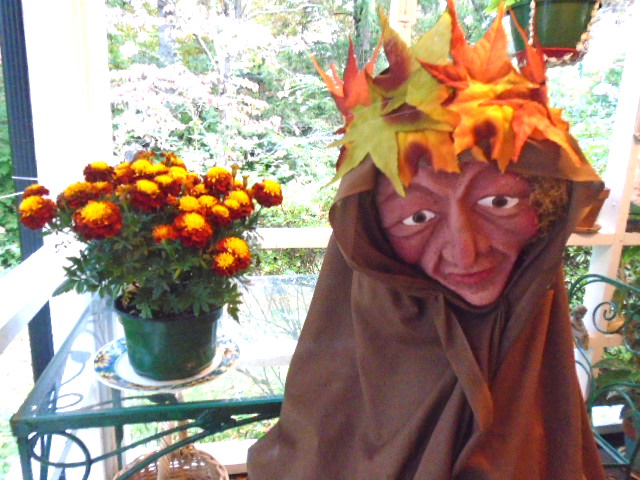
The Cailleach is a Celtic Ancestor-Goddess, a Divine Hag, a Crone who controls the winter winds in the far reaches of remote places. Living in the still-wild mountains of Western North Carolina, I’ve found it is easy to conjure up the Cailleach rising up through a rhododendron “hell.” She certainly took my breath away, and captured my consciousness, when I wrote this poem in 1995. Some years later, Lisa Sturz of the Red Herring Puppets created for me the eight-foot tall, wearable Grandmother puppet you see here. She has appeared in a number of my theater productions to the Goddess, while the poem was being dramatically read, with improvised music on the psaltery. Grandmother is happy to be coming out of my basement once more, for the Samhain service at our Unitarian church here in Black Mountain.

Continue reading “The Appalachian Cailleach Speaks by Annelinde Metzner   “

From the Archives: Brigid, Archetype of Inspiration and Activation by Stephanie Anderson Ladd

Moderator’s note: This marvelous FAR site has been running for 10 years and has had more than 3,600 posts in that time. There are so many treasures that have been posted in this decade that they tend to get lost in the archives. We are beginning this column so that we can all revisit some of these gems. Today’s blogpost was originally posted February 1, 2014. You can visit it here to see the original comments.

Brigid, Goddess of the Fire, greets us on Brigid’s Day, February 1. She is a Celtic sun goddess whose light burns brightly, illuminating the darkness of the land, of a heavy heart, and the dark night of our soul. With her shining light to guide us, we are lifted out of the Underworld darkness where we tend to descend in Winter, to the light of the World above, teeming with life as Spring begins to unfold her wet wings.

Brigid is a beloved goddess throughout the British Isles, particularly Ireland, where she is seen as the Mother of the Land and Her people. As a feminine archetype, she activates our solar, active nature. Much like the sun rising from below the Earth’s horizon, she urges us to come out of hiding and shine our light on the world. This may be done in a quiet manner, such as sitting by the hearthfire and doing needlework, finding inspiration by a walk in nature and writing a poem, moving about the kitchen making soup, getting busy with an art or craft project, or in big ways by taking on new roles as healers, artists, and leaders and calling others to join us.

Continue reading “From the Archives: Brigid, Archetype of Inspiration and Activation by Stephanie Anderson Ladd”