Legacy of Carol P. Christ: Patriarchy As An Integral System of Male Dominance Created at the Intersection of the Control of Women, Private Property, and War, Part 3

carol p. christ 2002 colorPatriarchy is a system of male dominance, rooted in the ethos of war which legitimates violence, sanctified by religious symbols, in which men dominate women through the control of female sexuality, with the intent of passing property to male heirs, and in which men who are heroes of war are told to kill men, and are permitted to rape women, to seize land and treasures, to exploit resources, and to own or otherwise dominate conquered people.

As the discussion of patriarchy* I began last week and the week before shows, patriarchy is not simply the domination of women by men. Patriarchy is an integral system in which men’s control of women’s sexuality, private property, and war (including violence, conquest, rape, and slavery) each play a part. These different elements are so intertwined that it is impossible to separate one as the cause of the others.  Patriarchy is an integral system of interlocking oppressions, enforced through violence, and legitimated by religions.

The model of patriarchy I have proposed argues that the control of female sexuality is fundamental to the patriarchal system.  This explains why there is so much controversy about the “simple matter” of access to birth control and abortion in the US today. It also explains why so much vicious anger is directed at single mothers by politicians and commentators.  Any woman who dares to control her own sexuality is questioning the foundations of the patriarchal system. Continue reading “Legacy of Carol P. Christ: Patriarchy As An Integral System of Male Dominance Created at the Intersection of the Control of Women, Private Property, and War, Part 3”

Legacy of Carol P. Christ: Patriarchy as a System of Male Dominance Created at the Intersection of the Control of Women, Private Property, and War, Part 1

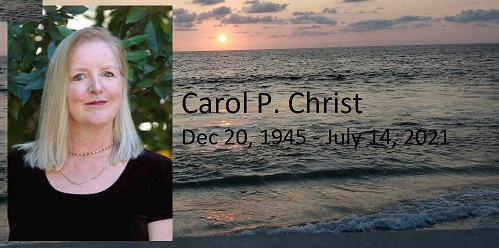
Moderator’s Note:  We here at FAR have been so lucky to work along side of Carol P. Christ.  She died July 14, 2021.  We have been reprinting her blogposts every Monday as that was her “day” for many years. This year we have decided that in honor of Carol we would reprint her important three part series on Patriarchy on three consecutive days. We plan to do this each year. In a world that seems to have gone mad, we feel that this series is crucial to understanding so much of our patriarchal world and it should not be forgotten. 

Recently feminist scholar Vicki Noble commented that this is the best definition of patriarchy she has read–but she hadn’t read it earlier. I am reposting it now in the hopes that all of you will share it with your social media so that it will be more widely known.

Patriarchy is often defined as a system of male dominance. This definition does not illuminate, but rather obscures, the complex set of factors that function together in the patriarchal system.  We need more complex definition if we are to understand and challenge the the patriarchal system in all of its aspects.

Patriarchy is a system of male dominance, rooted in the ethos of war which legitimates violence, sanctified by religious symbols, in which men dominate women through the control of female sexuality, with the intent of passing property to male heirs, and in which men who are heroes of war are told to kill men, and are permitted to rape women, to seize land and treasures, to exploit resources, and to own or otherwise dominate conquered people.*

Marx and Engels said that the patriarchal family, private property, and the state arose together. Though their understanding of the societies that preceded “patriarchy” was flawed, their intuition that patriarchy is connected to private property and to domination in the name of the state was correct.  It has long seemed to me that patriarchy cannot be separated from war and the kings who take power in the wake of war.  Many years ago I was stunned by Merlin Stone’s allegation that in matrilineal societies there are no illegitimate children, because all children have mothers. Lately, I have been trying to figure out why the Roman Catholic and other churches and the American Republican party are so strongly opposed to women’s right to control our own bodies and are trying to prevent access to birth control and abortion. In the above definition of patriarchy, I bring all of these lines of thought together in a definition which describes the origins of patriarchy and the interconnections between patriarchy, the control of female sexuality, private property, violence, war, conquest, rape in war, and slavery.  Continue reading “Legacy of Carol P. Christ: Patriarchy as a System of Male Dominance Created at the Intersection of the Control of Women, Private Property, and War, Part 1”

What’s In A (Last) Name: My Mom’s Solution for Feminist Families

Dan and I celebrated our 25th anniversary recently. I asked my adult daughters whether it might be fun to make a big event of it – a worship service, a reception, an opportunity to see beloved family and friends. My older daughter thought it sounded wonderful. My younger daughter was so moved, she wept.

It’s no accident that our two daughters felt so joyful. Of course, they love us, and want to celebrate, to sing and dance with loved ones. But it’s also part of something bigger. Something they don’t take for granted, ever. Something feminist. And something religious. 

It’s part of a larger story that several people have asked me to write up over the years; so in celebration, I thought now would be a good time. I met Dan as an undergrad in the 90s – he was a grad student in my first biology lab. He had such a nice smile; I thought to myself, wow, he sure is friendly for a guy with a mohawk and a Gwar T shirt. Later, I found out he was a PK, like me. We preacher’s kids are a unique breed. We understand each other. Just rebellious enough to stay sane; otherwise, fairly wholesome. He asked if I’d found a church I liked, and then invited himself along; and the rest is sort of nerdy PK history. Through lots of fascinating post-sermon conversations over late night snacks, we became great friends. After a few years of that, we realized what others had already seen – we were also perfect for each other.

Continue reading “What’s In A (Last) Name: My Mom’s Solution for Feminist Families”

The Pain and Struggle of Gender by Michele Bodle

In the April 2024 issue of Christianity Today, Fellipe Do Vale wrote, “Gender on Earth as in Heaven: Will Our Gender be Removed or Renewed in the Resurrection?”

            The entire issue was dedicated to a conversation between egalitarian and complementarian beliefs regarding gender, which I am not here to argue. However, I will wholeheartedly and fully engage with a quote in the article where Do Vale states the following.

                        There is a long and impressive lineage in Christian history and
contemporary theology that says the best way to envision the
redemption of our gender is to picture its removal….
They say that gender was an attribute given to us only
because God knew humanity would sin. It was meant
to sustain us only until the restoration of creation. Therefore, 
attributes like gender, race, and disability, which they believe
cause the most pain and struggle in this life, will not remain
in the resurrection. 
(Do Vale, “Gender on Earth as in Heaven,” Christianity Today (Aril 2024), p. 24-25.)

Continue reading “The Pain and Struggle of Gender by Michele Bodle”

Life-Giving Blood by Michelle Bodle

“What did you think?” This question was posed to me by a young woman I am mentoring in ministry. After receiving The Book of Womanhood by Amy Davis Abdallah as a gift, she asked me to walk through the book and discuss it with her, as suggested in the introduction. 

            I inhaled deeply before replying that I thought Davis Abdallah was writing from a posture of privilege that she was completely unaware of – and that deeply troubled me.

            Davis Abdallah’s premise is that Christian women need a rite of passage accompanying the journey of getting to know themselves. Piloted at the former Nyack College where Davis Abdallah taught, Woman was a program that sought to develop a Christian right of passage for women focused on relationships with God, self, others, and creation. 

Continue reading “Life-Giving Blood by Michelle Bodle”

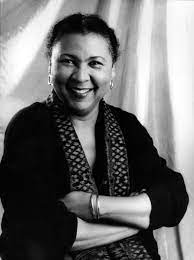
Embodying bell hooks’ theological vision by Liz Cooledge Jenkins

I was recently asked: Who is a theologian you admire? Since I’ve been deeply steeped in the Christian tradition, plenty of Christian theologians could come to mind—Christian theologians, that is, in the sense of humans educated in the Christian theological academy with the theology PhDs to prove it.

 But when I think of theology, these days, I find myself thinking more broadly. Like Kat Armas, who wrote Abuelita Faith as a way of reflecting on and honoring the theological contributions of marginalized women, rather than men who sit in the seats of academic power—and like Sarah Bessey, who writes that theology, at its best, is a field where “everyone gets to play”[1]—I am skeptical of the assumptions Christians often make about who is or isn’t a theologian. And so, when I thought of theologians I look to for wisdom, I thought outside the box. I thought of writer and activist bell hooks.

Continue reading “Embodying bell hooks’ theological vision by Liz Cooledge Jenkins”

Legacy of Carol P. Christ: Body, Nature, Ancestors

This was originally posted on January 23, 2012

Some years ago, womanist theologian Karen Baker–Fletcher asked about ancestors following a lecture I gave on the body and nature.  I have since come to realize that ancestors are a missing link between the two:  we cannot speak adequately of embodiment and interdependence in the web of life without recognizing the ancestors whose lives made ours possible.  Our mothers quite literally gave us our bodies.  All of our ancestors gave us their genes.  Care and callousness with origins going back longer than conscious memory was imprinted on the psyches of our parents and grandparents and transmitted to us.  All of our ancestors give us connections to place.  While many black people in America can recite oral histories that begin with slavery in the United States, I come from a family where stories of origin for the most part were not valued or told.  Both of my father’s parents lost their fathers when they were very young, and my father, who was raised Catholic at a time when Catholics were discriminated against, preferred to think of our family as “American now.”  Like the hero of the film Lost in America, most members of my family dreamed of “melting right into that pot.” In the process we lost stories we need to help us to understand ourselves and the complex realities that “becoming American” involved.

Continue reading “Legacy of Carol P. Christ: Body, Nature, Ancestors”

RELIGIOUS POLITICS by Esther Nelson

As I mentioned in an earlier post, I am a fan of Jim Rigby, a Presbyterian minister, serving a parish in Austin, Texas. I follow Jim on social media and read his posts regularly. I find his take on modern, American Christianity succinct, on-point, and very similar to my own experience growing up with evangelical, fundamentalist missionary parents.

Jim describes his initiation into religion in the following paragraph:

“As a child I learned an a-political version of Christianity. I…was offended if a preacher brought up social issues in a sermon. Religion for me meant a personal relationship with God so I could sing “Jesus loves the little children” but not feel any need to confront the possibility that my nation might be dropping napalm on them. I was taught to pray for world peace but to remain silent about my nation’s polices that made war inevitable. I could talk about Moses telling Pharaoh to set his people free, but was not permitted to break any chains in my own day.”

Continue reading “RELIGIOUS POLITICS by Esther Nelson”

A Serving of Vegetables with Love: Plastic, Poison, and the Simple Salad Solution

Years ago, I remember looking around one day and realizing that I was surrounded by plastic bottles. Of course I already knew it on some level; I had bought them, after all. But it was one of those epiphanal moments – you know, where you kind of freeze, and time seems to slow down, and everything goes a little out of focus. And I realized – yet again – that I had been hoodwinked. That we all have.

Because I felt like I needed every single one of them. Yet somehow – and not that long ago, either – everyone used to get along fine without all these plastic bottles in their lives. Yes, it probably involved more domestic labor; but it also just stemmed from a local, circular economy based on common sense.

Continue reading “A Serving of Vegetables with Love: Plastic, Poison, and the Simple Salad Solution”

That Old, Old, OLD Story – The Warts and Wisdom of the Ancient

My grandmother Clarine was an incredible human being. I absolutely could not be more proud to be her granddaughter. She started her first teaching position in 1927 at age 17. She met my grandfather in seminary; but despite her clear talent and call, the church apparently felt one minister was enough for the family and refused to ordain her. Undaunted, she famously wrote a one line reply to the bishop: Well, Moses got along fine without it, and Jesus got along fine without it, so I’ll be fine without it, too.

Continue reading “That Old, Old, OLD Story – The Warts and Wisdom of the Ancient”