Why Ritual in Turbulent Times? by Terry Folks

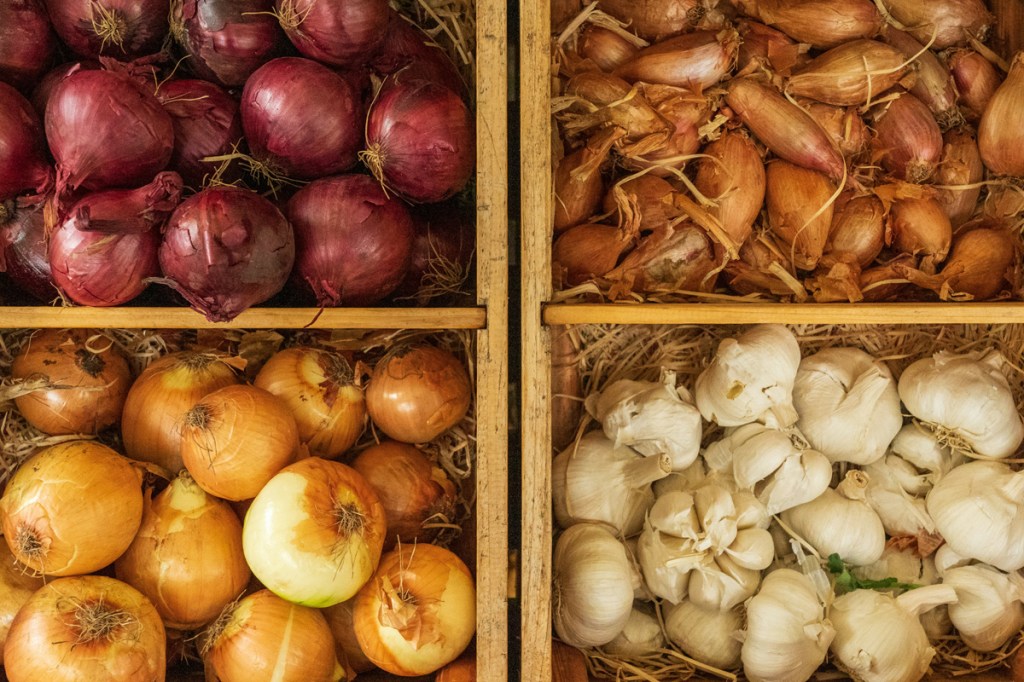
Nick Fewings, Unsplash

It is Autumnal Equinox. Five women gather equidistant apart beneath a giant avocado tree in the garden at Evi’s place near the village of Zaros. This little hamlet is under the watchful loving eye of Psiloritis (Mount Idi) on the Island of Crete in Greece. We leave the solitude of our individual cottages where we have been quarantined to co-create an Autumnal Equinox ritual I have initiated for this occasion. Since we are still testing positive for COVID, we maintain our distance. I have a nasty strain as I’m exhausted, foggy, my nose bleeds, and I’m coughing so much my head hurts. Still … this ritual is important as our morale seriously needs a boost. We are dubbed the five “Corona Sisters” or the “COVID Girls” whose Goddess Pilgrimage on Crete was cut short when we contracted the virus somewhere between our homes in Australia, Canada and the United States, and our arrival in Heraklion a few short days ago. We have renamed ourselves the “Avocado Sisterhood” to acknowledge the blessing of our togetherness, and we represent a quarter of the women participating in Carol Christ’s Goddess Pilgrimage to Crete in 2023.

Continue reading “Why Ritual in Turbulent Times? by Terry Folks”

From the Archives: Sleeping Beauty: An ancient tale for these challenging times by Diane Perazzo

This was originally posted on April 24, 2021

Fairy tales are intwined in our imagination and our spirituality. As Jane Yolan writes, one of the subtlest and yet most important functions of myth and fantasy is to “provide a framework or model for an individual’s belief system.” (1)

In the Reclaiming spiritual tradition, we often use fairy tales in healing and self development work. These stories act as warp and weft as we weave and spin complex ritual arcs and other events that take place at extended Witch Camp sessions. In Twelve Wild Swans, Starhawk points out that fairy stories are “more than just encouraging and inspiring. They are also templates for soul healing from Europe’s ancestral wise women and healers. When the ancient Earth-based cultures of Europe were destroyed, these stories remained.” (2)

Continue reading “From the Archives: Sleeping Beauty: An ancient tale for these challenging times by Diane Perazzo”

From the Archives: Creating Spaces for Grieving and Receiving by Anjeanette LeBoeuf

This blog was originally posted on April 26, 2020.

By now, all aspects of life have been altered or halted. The world as we know it has become radically different as we attempt to get a handle on this disease and stop the rising number of deaths each day. We are enduring trauma on a global and individual level. Trauma carries a myriad of emotions; anger and grief sometimes being the prominent two.  And with the rising uncertainty paired with the increasing amount of trauma and grief we are all experiencing, we need to find ways to talk about our feelings, share, and move forward.

As a global community, as a family, and as individuals we are impacted on all fronts. And the only way through this is that we must grieve. All people, even those that can work from home, those that continue to work ‘in’ the world, and everyone in-between. Everyone’s life has been altered in many ways and degrees. Expectations, plans, and standards of achievements have had to be put aside. We have had to adapt to a different way of life. Prom, tests, graduations, weddings, birthdays, holidays, and even funerals have had to fluctuate between being postponed, cancelled, or reworked to fulfill the lack of physical meetings. Currently over 22 million Americans had applied for unemployment benefits, countless others have seen their hours reduced, been placed on furlough, or sought employment at a company that is considered ‘essential business.’

Continue reading “From the Archives: Creating Spaces for Grieving and Receiving by Anjeanette LeBoeuf”

How Rape Culture Grooms Us for Covid Safety Violations by Trelawney Grenfell-Muir

Imagine this scenario: You agree to meet with some beloved friends or family who are not in your Covid pod. You’re nervous about safety, but you have a detailed discussion beforehand of exactly what Plan you will all follow in order to protect everyone. You decide to meet outside, wearing good quality masks, staying six feet apart. If people want to eat or drink, or remove their masks for any reason, they will go farther from the group, more like 20 feet away. If anyone needs to use the inside space, such as the bathroom, they will be sure no one else is inside and will keep their mask on the entire time.

“We can do this,” you tell yourselves, “We are smart, educated, considerate, careful people who love each other and want to keep us all safe.”

You arrive at the gathering. You greet everyone, masked from the proper distance. You find your seats, six feet from the seats of other pods. Within a minute or two, a beloved friend or relative approaches to give you something, h/er mask hanging down on h/er chin.

Continue reading “How Rape Culture Grooms Us for Covid Safety Violations by Trelawney Grenfell-Muir”

Sleeping Beauty: An ancient tale for these challenging times by Diane Perazzo

Fairy tales are intwined in our imagination and our spirituality. As Jane Yolan writes, one of the subtlest and yet most important functions of myth and fantasy is to “provide a framework or model for an individual’s belief system.” (1)

In the Reclaiming spiritual tradition, we often use fairy tales in healing and self development work. These stories act as warp and weft as we weave and spin complex ritual arcs and other events that take place at extended Witch Camp sessions. In Twelve Wild Swans, Starhawk points out that fairy stories are “more than just encouraging and inspiring. They are also templates for soul healing from Europe’s ancestral wise women and healers. When the ancient Earth-based cultures of Europe were destroyed, these stories remained.” (2)

Continue reading “Sleeping Beauty: An ancient tale for these challenging times by Diane Perazzo”

Breathe with me by Trelawney Grenfell-Muir


Breathe with me.

I know. I know. I understand.
Breathe with me anyway.
It hurts. It’s scary. It’s horrible. It’s relentless. I know.
Just breathe.
Every time we breathe out, our bodies release things we do not want.
So breathe it out. All of it. Let it go.
Deep breath. However you prefer—mouth, nose—just breathe.
What do you need to let go?

For me right now, there’s rage.
All the people refusing the masks, refusing the vaccine, even friends of mine who have watched me suffer with post-COVID syndrome for almost a year, still blaming me somehow for my illness.
Breathe. Let it out. Don’t have to carry it anymore.
There’s fear, too — friends, family, fighting COVID, or taking dangerous, unnecessary risks.
Long, slow breaths. Release. Into the loving matrix of Creation-Life-Love. I can’t hold this anymore. I release it.

There’s grief. Loss. Suffering. Isolation. Pain. Oh, breathe, let the tears flow, let the breaths and the tears just be what they are.
Stress. So much stress. We’re all frayed, so far beyond our limits. Breathe it out. Breathe it out again. Deep breaths – make noise if you want. Moan.
She cradles us in breath, the Divine Womb. She is the Source of our breath, and She is always cradling us, always breathing with us.
Breathe again. Close your eyes. Let your Holy Spirit bathe you in its healing power.
But it doesn’t fix anything, doesn’t DO anything!
I know. But it is enough. Just let it be. Be breath breathing itself.
What if you deserve to let go?
What if you deserve to be cradled in healing Love?
What if you deserve just to be?

Breathe. It sometimes feels so nice. Breath in, breath out.
Your body is letting go of anything you do not want.
You can release it now. Breathe it out. It’s ok.
Anywhere you want to feel your breath is ok. Wherever you want it to go, just breathe it there, and then release.
There’s no way to do this wrong. It’s your breath. It’s your breathing. A gift your body has, a magical, powerful, simple, holy gift. Breathe however feels good and right to you.
No rush. Take your time. As long as you want. As often as you want.
What if you deserve compassion?
What if you deserve to be bathed in healing Love?
What if you deserve to rest in your breath?
Breathe, darling. Close your eyes if you like. With every breath, you are holy.
In my Methodist tradition, which focuses heavily on the Holy Spirit, we sing a breathing hymn I love. Here is my rewritten version:

Breathe on me, Breath of Love,
fill me with Life anew,
restore my soul with ev’ry breath,
to do what Love wouldst do.

Breathe on me, Breath of Love,
so shall I rest, secure,
cradled in Love’s bright healing peace,
and held in compassion pure.

Breathe on me, Breath of Love,
till I am wholly thine,
till body, spirit, all of me,
glows with thy Fire divine.

Breathe on me, Breath of Love,
until my heart is free,
and I perceive my ev’ry breath
is thine Eternity.

—Edwin Hatch (1878), revised.

Our world is so frayed right now. We are all at the end of our rope. We feel the same way most new mothers feel in capitalist patriarchies, in which motherhood means financial strain (or poverty), isolation, anxiety, constant demands, an inability to meet basic physical and mental health needs, and no escape from continuous, relentless emotional and physical labor. Women are expected to embrace this level of self-sacrificial stress in motherhood, as part of our female slave role in capitalist patriarchy, which defines our unpaid, unvalued labor as a natural extension of our biological sex. The burden on women is higher than ever these days, with women and even girls taking the lion’s share of extra household duties so that boys and men can continue in their education and careers. Women are suffering 100% of job losses as well.

In times like these, I keep turning to my faith for comfort and strength. In my tradition, the Holy Spirit is the Divine Breath, the Source of Life, which animates all living things and all Creation as sacred. It comes originally from the Hebrew “ruach,” a feminine noun. So when I take time just to breathe, that is sacred time, allowing my true, divine self to feel its divinity (as Methodism’s founder John Wesley might say). I do not take breathing for granted. After my COVID experience, how could I ever take it for granted again? So, for me, breathing time is holy — “set apart” as a communion, a Eucharist of Grace: life-giving, healing, restorative, and liberative. Almost every night for the past eleven months, I have spent time lying in bed just breathing: feeling the breath of the trees behind me in the woods, allowing their wellness to enter me, breathing out to them whatever I want to let go. In breathing this way, I am able to understand bodily that my breath is Goddess. Goddess who is ever birthing Love and Liberation. The Divine Source of All, who is every justice, every healing, every restoration. My breath is fair economies and safe respected female bodies; it is just relationships and female thriving. This is my breath. This is the Source of the Healing that rebirths every death into Life. This is Goddess.

So, breathe with me, sisters. And brothers. She is here, and we are the ones who breathe her. What if we deserve to be bathed in Healing Love? She knows. She understands.

Just breathe.


Trelawney Grenfell-Muir teaches courses about Sex, Dating, Marriage, and Work in the Religion and Theological Studies Department at Merrimack College and about Cross Cultural Conflict in the Department of Conflict Resolution, Human Security, and Global Governance at the University of Massachusetts, Boston. A Senior Discussant at the Religion and the Practices of Peace Initiative at Harvard University, she holds an M.Div. from the Boston University School of Theology with a concentration in Religion and Conflict, and a Ph.D. in Conflict Studies and Religion with the University Professors Program at Boston University. She currently writes articles, book chapters, and liturgical resources about feminist, nature-based Christianity.

Fierce Friendship and the Holidays by Stephanie Arel

It is the weekend before Thanksgiving, in the ominous year of 2020. The CDC urges people not to gather with others outside of the household on Thursday. COVID infections rise exponentially. Schools are closing, and in the much of the country, winter is foreboding.

If you live in a cold climate, Thanksgiving dinner outdoors is hardly an option. For, Chanukah, Christmas, and New Year’s, we will likely endure the same conditions. I have tried to center myself, mediate, do things to calm my nervous system, using some of my personal tools for stimulating the vagus nerve so as to not feel toxic. I think that is what the cortisol in my body is telling me: slow down, gather, go inward. But I also sense a missingness – a loneliness – alongside a desire to reach out, call people, and connect. (See the effects and remedies for social isolation here.) Away from people, traditions, anticipation of my favorite time of year, I brace for a deeper sense of loss. Continue reading “Fierce Friendship and the Holidays by Stephanie Arel”

Healing Uphill

These are trying times for all sentient beings. We are all carrying the intensity and stress in our bodies and spirits. I feel it. You feel it. In fact, we are feeling it together—sharing an experience even though interpreting and understanding it in our own unique ways. 

As a person of faith, I believe we are on a collective healing journey. As a feminist, I believe that journey continues to involve extended uphill challenges because of intersecting systems of oppression.  And that is how I understand this particular moment in time—a healing journey in a difficult uphill section on the path. As a human collective we are healing uphill. 

Healing uphill can feel like too much to bear sometimes. Healing uphill is the experience of having more and more challenges heaped on your back when you are already tired and struggling to keep going. Healing uphill is like trying to take care of yourself when you lose your job in a global pandemic and one of your kids gets sick and your landlord tells you that you are late on your rent and then your spouse comes home angry and blames you for all the stress and, well… you get the picture. Healing uphill is when you can’t seem to catch a break and things seem to just keep getting worse.  

Continue reading “Healing Uphill”

Embroidery in the Time of Covid by Esther Nelson

In her recent essay on this “Feminism and Religion” site, Ivy Helman wrote:  “Over the past few months, I’ve been struggling to write posts.  This month is no different.  I am currently sitting with four different half-drafts on three semi-related topics, none of which I seem to be able to complete…I write.  I erase.  I rewrite.  I copy bits of one into another to save for some other time.  I’m left with one sentence….”

I think all writers have this experience—writing, erasing, and then rewriting over and over again.  Writing during the current pandemic seems more difficult than ever.  Perhaps it’s because our dealings with the outside world have been drastically curtailed.  Writers need a variety of social interactions and experiences to sort out, reflect upon, and then create into a work of art that appeals and connects with an audience.  At least I find this to be so. Continue reading “Embroidery in the Time of Covid by Esther Nelson”

Sacrificial Gathering in the Long Covid Desert by Tallessyn Zawn Grenfell-Lee

I am a fairly private person; but I do like nice hugs. I grew up in a home that involved so much intentional love and affection that I came to see it as a normal part of any loving relationship. I’m pretty sure I startle my friends sometimes by saying such affectionate things; but they endure, and many of them claim to appreciate a nice hug, too.

I know there are plenty of people who have experienced unhealthy or abusive touch; in fact, I’m one of them. I also know that the way to heal those wounds is usually through healthy touch, in relationships of trust.

Continue reading “Sacrificial Gathering in the Long Covid Desert by Tallessyn Zawn Grenfell-Lee”