Planting Seeds of Change by Nayeli Delgadillo

There are a lot of things that have led to both feminism and my spiritual path. One could say I am still at the start of my journey at 23 years old, and it may be true. I often meet people older than myself, and they are most surprised by two things; the age that I look versus the age that I am, and in that, the maturity of my thoughts. 

I grew up very much in communion with my family, living in a duplex with my extended family only a few feet away. Every month there is at least one birthday, and we  all come together Saturday, for the party, and Sunday for the recalentado (breakfast or brunch consisting of leftovers). It was on these Sunday’s that we would gather and talk about everything. The adults in the family didn’t keep us kids away from hard conversations, but instead included us. Conversations that included topics of racism, education, politics, science, war, religion etc. Me being the youngest cousin, before my sister was born (we are nine years apart), would always listen in and absorb, absorb, absorb. It wasn’t until middle school, and high school, where I was truly introduced to a more serious history of the world, that these conversations started to really unravel and make sense to me. It was toward this time my cousins were also in high school, or just finishing, and so, the conversations became more lively. I started to understand why we spoke about the things we spoke about, even when it seemed like no one else was. 

Continue reading “Planting Seeds of Change by Nayeli Delgadillo”

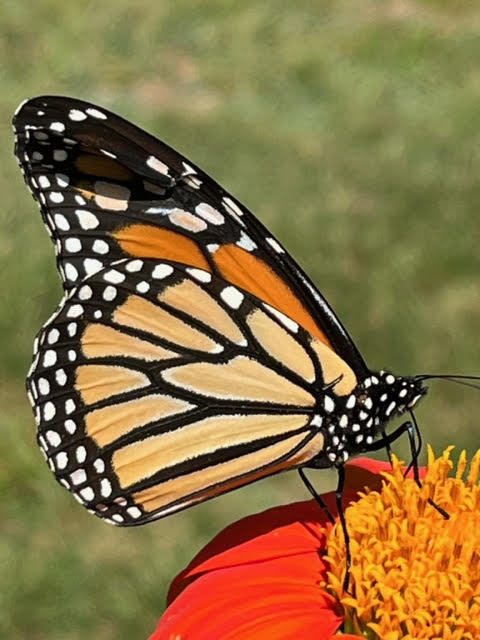
The Monarch That Didn’t Get Away –Butterfly Tagging, part 2 by Sara Wright

Part 1 was posted last week. You can read it here.

Today I learned that everyone is invited to witness butterfly tagging twice a week during the month of September. Efforts to publicize the value and ‘rightness’ of tagging are being stepped up.

Several people agreed with my assessment, namely that tagging creates trauma for the insect – and the idea that this practice may interfere with the butterfly’s ability to survive the 2000-mile journey, winter over successfully and then fly north to reproduce in the spring.

To my knowledge no one else had openly expressed their personal views to those in charge of the organization. However, some folks have come to talk with me. Most of us know that trauma weakens any organism’s immune system making it more vulnerable.

Continue reading “The Monarch That Didn’t Get Away –Butterfly Tagging, part 2 by Sara Wright”

August: A Summer to Reflect, and a Time to Start Letting Go by Sara Wright

This has been an unusual summer. I can still listen to a roaring brook as I fall asleep at night. The flooding has been intense. The humidity is hardest to bare; I am grateful my cellar is finally free of water if not drying out. Our overall weather pattern remains the same; thundershowers almost every day; many clouds and thick morning fog. And tropical hurricane season is underway.

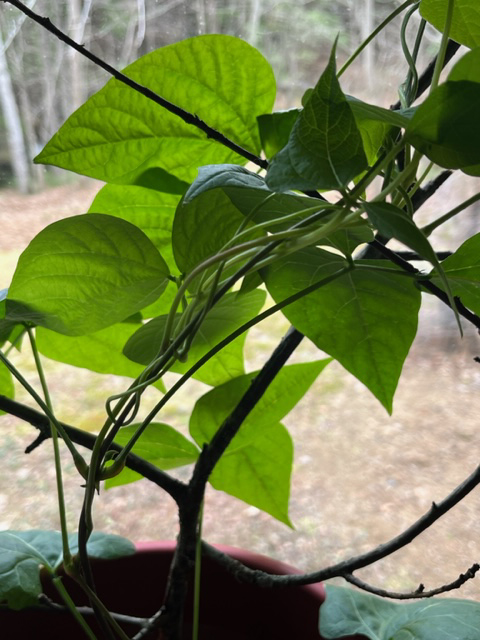
I am grateful for the moss and tall grasses that still glow lemony- lime emerald and sage green. My frog pond is empty except for snails; all the tadpoles have matured into tiny froglets that have disappeared into the dense foliage I have provided for them; ferns and anemones tower over others. A large toad only shows himself/herself  mostly at night when he hunts from the water dish I leave for him. Wild bee balm spikes are in bloom providing bees and hummingbirds with enough food for now. Some bee balm are ragged around the edges but the rain has brought in a second blooming cycle. My magic bean, the one I planted in March (in the house) has masses of deep orange flowers just outside my window. Grape leaves are climbing over the ground and visiting with the bean vine.

Continue reading “August: A Summer to Reflect, and a Time to Start Letting Go by Sara Wright”

Archives from FAR Founders: Rosemary Radford Ruether’s Quests for Hope and Meaning by Gina Messina-Dysert

This was originally posted on December 18, 2013. This is part of a project to highlight the work of the four women who founded FAR: Xochitl Alivizo, Caroline Kline, Gina Messina, and Cynthia Garrity-Bond

Rosemary Radford Ruether is one of the most brilliant theologians of our time and her newly released autobiography, My Quest for Hope and Meaning, is a gift to those of us who have been so touched by her work.  In this intimate and beautiful piece, Ruether shares her personal journey in feminist scholarship and activism.  The autobiography opens with a profound forward by Renny Golden (that is also shared here on Feminism and Religion) and continues with an introduction and six chapters where Ruether guides us through an exploration of the influence of the matriarchs in her life, her interactions with Catholicism, her continued exploration of interfaith relations, her family’s struggle with mental illness, and her commitment to ecofeminist responses to the ecological crisis.

Ruether states that “Humans are hope and meaning creators” (xii), and her autobiography details her own quests for hope and meaning.  She reflects on the incredible impact made by the female-centered patterns in family and community in her life.  According to Ruether, these “matricentric enclaves” grounded and shaped her interest in feminist theory and women’s history.  She also describes the spiritually and intellectually serious Catholicism that she received from her mother and articulates her continued frustration with Vatican leadership that has undermined the efforts of Vatican II.  For Ruether, her ongoing affiliation with feminist theological circles is crucial as she continues to work toward shaping an ecumenical and interfaith Catholicism.

Continue reading “Archives from FAR Founders: Rosemary Radford Ruether’s Quests for Hope and Meaning by Gina Messina-Dysert”

Coming Home:  The Goddess Rises…(part 1) by Sara Wright

The beginning of spring flies in on wings and croaks at my feet.

In four days, the landscape transformed from a dirty white shroud into a palette of heavenly browns. The goddess is manifesting on the first flights of the geese and ducks to open ponds, finally freed from ice. Crocus, emerging sage green bloodroot spikes, trillium, bloodroot, the arrival of phoebes, white throated sparrows, turkey convocations, the mating of the wood frogs, and the tiny amphibians we call spring peepers sing up the night.

 Yet spring in the speed lane is deeply concerning. Temperatures skyrocketed instantly from mid 30’s to 80’s. Although the rivers and streams are still running there is no overflowing water. A few nights ago, we had the first round of light spring showers; then temperatures cooled down and now it is cold again. Many threatened wood frogs, salamanders, red efts, and toads were forced to migrate to ditches and vernal pools, their only breeding places, without warm rain; how this will affect these most vulnerable species remains to be seen. At present the earth is still moist but this drying trend is especially troubling since it has been consistent for several years. I am keenly aware of why the ancient pre -Christian goddess was first celebrated in the spring as the Rising Waters because adequate rain/flooding is the Source of all Life.

Continue reading “Coming Home:  The Goddess Rises…(part 1) by Sara Wright”

Legacy of Carol P. Christ: WANGARI MUTA MAATHAI AND SACRED MOUNT KENYA

This was originally posted on September 23, 2013

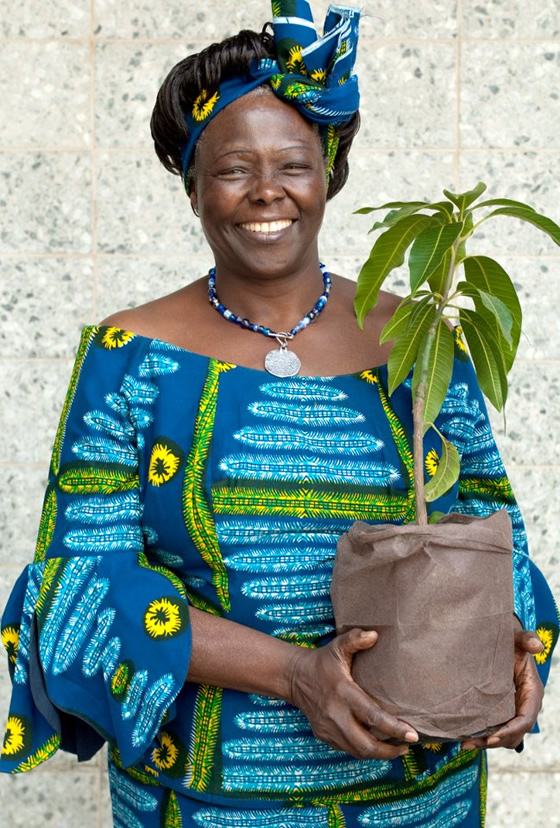
September 25, 2013 is the second anniversary of the death of environmental, peace, justice, and democracy advocate and Nobel Peace Prize recipient Wangari Muta Maathai.

Wangari Muta was born in 1940 in a round hut in rural tribal Kenya.  Wangari’s tribe considered the fig tree to be holy, and she was taught that one is never to cut a fig tree down or to use its branches for firewood.  Wangari spent many happy childhood hours in the shade of a fig tree that grew by a nearby stream.  Fig trees play an important role in the ecological system of the Rift Valley of Kenya.  Their roots penetrate the hard rock surface of the mountains to find underground water, thus opening channels where the water flows upward to fill streams and rivers.

Continue reading “Legacy of Carol P. Christ: WANGARI MUTA MAATHAI AND SACRED MOUNT KENYA”

The Blessing of the Elders by Rachel Thomas

, elders are people who have illuminated my path, inspired me to see my own potential. To open my eyes, all my senses, even those I did not know I had. Elders show bravery and model for us how to be strong.

What is an Elder?

The word elder comes from an Old English word which also meant ancestor or chief. A lot can change in a thousand years and many of us no longer honor older people or seek out them out for advice.

In my experience, elders are people who have illuminated my path, inspired me to see my own potential. To open my eyes, all my senses, even those I did not know I had. Elders show bravery and model for us how to be strong.

My first wise woman teachings came from my family. My mother, and her mother, taught me to be myself, to love being outdoors and the importance of having a garden. Feeling the joy of flowers, cooking with fresh herbs, planting a tree to honor the dead. These are a few ancient traditions of my ancestors that have survived even in a modernized and urban setting.

Continue reading “The Blessing of the Elders by Rachel Thomas”

As I rediscover my connection with the earth, my eco-consciousness inspires me to transform. As I go back to nature, I re-awaken my ancient cellular memories of living in harmony with the earth. I feel called to dance barefoot, play drums, make offerings, bathe in moonlight, harvest with my own hands. As I move forward on a path which is both new and old, it is my beloved elders who have shown me how to find my way.

What is an Elder?

The word elder comes from an Old English word which also meant ancestor or chief. A lot can change in a thousand years and many of us no longer honor older people or seek out them out for advice.

In my experience, elders are people who have illuminated my path, inspired me to see my own potential. To open my eyes, all my senses, even those I did not know I had. Elders show bravery and model for us how to be strong.

My first wise woman teachings came from my family. My mother, and her mother, taught me to be myself, to love being outdoors and the importance of having a garden. Feeling the joy of flowers, cooking with fresh herbs, planting a tree to honor the dead. These are a few ancient traditions of my ancestors that have survived even in a modernized and urban setting.

Continue reading “The Blessing of the Elders by Rachel Thomas”