Old Men Get Away with It: Why? by Carol P. Christ

A few days ago, a friend told me she had just learned that she had a 2x great-aunt who was a beloved and honored single white teacher in the US south in the first half of the twentieth century. The beloved teacher had a school named after her. My friend never heard anything about her distinguished relative while growing up. As a woman without children herself and a teacher, she wished she had. “There are many of us,” she commented.

I offered to do a little research for my friend. Perhaps thinking of my 2x great-aunt who was a single businesswoman, I expected to find that the beloved teacher lived with her mother. What I found was so shocking that it kept me up at night. Continue reading “Old Men Get Away with It: Why? by Carol P. Christ”

Rituals of “Re-birth” Are Based in Matricide by Carol P. Christ

The other night, while I was having dinner with two Greek women friends, one of them asked me what I learned studying theology at Yale. I responded that I learned that woman was created second; that she brought sin and death into the world; and that therefore woman must obey man.

Spurred on by a bit of red wine (on my part) and ouzo (on theirs), our conversation quickly turned into to a dissection of the Greek baptism ritual. I noted that during the baptism of her grandchild, my friend’s daughter was standing outside the church talking to me. When asked why, the young woman stated that the mother had no part in the ritual. This prompted one of us to ask whether the mother was even allowed in the church during the ritual.

In fact, the mother is allowed in the church, but our instincts was not wrong: the mother’s presence is irrelevant.

My mind floated back to a conversation I had with a Jewish feminist friend about her son’s circumcision. She stated that as a feminist she did not agree with a ritual that initiates a baby boy into the Jewish community but excludes girls. She said she did not like the idea that her baby would have his penis cut as a symbol of his entrance into the Jewish community. (Her reasons for agreeing to the circumcision were complicated.)

“But,” she continued, “my experience of my son’s circumcision did not focus on any of that. What became central for me,” she said, “was that I was required to hand my son over to his father and a group of men who would perform a ritual in which I had no part. I understood on a bodily level that they were taking my baby from me. The purpose of the ritual is to break the bond between mother and child.” Continue reading “Rituals of “Re-birth” Are Based in Matricide by Carol P. Christ”

Celibacy Is the Lynch-Pin of Male Dominance according to Matilda Joslyn Gage by Carol P. Christ

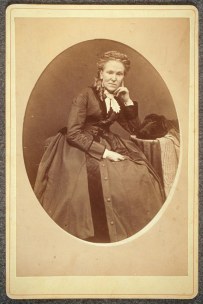
Matilda Joslyn Gage

Matilda Joslyn Gage was an activist in the nineteenth century struggle for women’s rights equal to Susan B. Anthony, and a writer and theorist equal to Elizabeth Cady Stanton. That she is not remembered is due in large part to Susan B. Anthony’s efforts to write her out of history.

Matilda Joslyn Gage was also a scholar of women’s history unrivaled in her time. In Woman Church, and State, Gage argued that “the most grievous wrong ever inflicted upon women was in the Christian teaching that she was not created equal with man.” (page 1) From this it follows that feminists must never lose sight of the role Christian teachings have played and continue to play in the unequal treatment of women.

According to Gage, women’s position in church and state did not improve in the Christian era. To the contrary it declined! Gage proved this thesis in chapters titled: The Matriarchate, Celibacy, Canon Law, Marquette, Witchcraft, Wives, Polygamy, Woman and Work, and The Church of Today. Continue reading “Celibacy Is the Lynch-Pin of Male Dominance according to Matilda Joslyn Gage by Carol P. Christ”

Susan B. Anthony’s Bargain with the Devil by Carol P. Christ

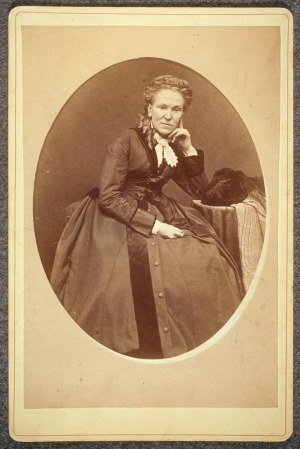
Matilda Joslyn Gage


[T]he most grievous wrong ever inflicted on woman has been in the Christian teaching that she was not created equal to man, and the consequent denial of her rightful place in Church and State. –Matilda Joslyn Gage, Woman, Church, and State, 1893, page 1

I do not approve of their [referring to Gage and Stanton] system of fighting the religious dogmas of people I am trying to convert to my doctrine of equal rights to women. –Susan B. Anthony to Olympia Brown, following the disputed merger of the radical National Women’s Suffrage Association with the conservative American Women’s Suffrage Association in 1889

Most readers of Feminism and Religion know that Susan B. Anthony and Elizabeth Cady Stanton were leaders in the nineteenth century struggle for women’s rights. Fewer will know that Matilda Joslyn Gage was widely understood to be Stanton’s equal as a theorist and Anthony’s equal as an organizer. The fact that Gage’s contributions have been lost to history can be attributed to Susan B. Anthony’s bargain with the devil.

If Anthony’s bargain had affected only the reputation of Matilda Joslyn Gage, that would be bad enough. But Anthony’s decision to merge the NWSA with the AWSA signaled that the women’s rights movement would cease and desist from its policy of naming and indicting Christian dogma as the source and cause of women’s subordination in the law in Christian countries. This decision meant that feminists would no longer have a clear understanding of the forces they were reckoning with. Continue reading “Susan B. Anthony’s Bargain with the Devil by Carol P. Christ”

Firebird’s Song by Sara Wright

In response to Carol Christ’s latest post

She came on the wings of the Owl
flew out of the crack of our imagining,
swooped low over the underground forest
hooing, hooing, hooing
screeching and clacking –
Haunting the night with her song.

I almost didn’t recognize her
inside the feathery brown cape with bars.

On Starry nights while the white moon sleeps
the cloak falls away and behold!
She steps out
in all her Firebird splendor.
Burning, crimson, gold, she crackles — turns blue
white light torching
the fire turned star.
Beaming second sight
she rises out of Earthen ashes Continue reading “Firebird’s Song by Sara Wright”

Endings, Beginnings, and Dreamings by Carol P. Christ

my dream home in Molivos

Fifteen years ago, I bought my dream home in Molivos, Lesbos, one of the most stunning villages in the world. Over the next two years I renovated a listed Neoclassical house that had been neglected for over thirty years, restoring it to its original beauty. One of my friends who visited exclaimed that it looked like a movie set. Someone else said that the final result was “more Greek than Greek.” I thought this would be my forever home. But, as I have discussed in an earlier blog, I came to feel isolated in a small village.

Two years ago, I followed my heart to Crete, renting a lovely apartment in Heraklion, followed by a house near the sea. Then back to Lesbos, travel to the US and Canada, and Crete again after Christmas. I would have been happy to move back to the apartment I had rented the previous year, but this time I would bring my little dog. The apartment under my friend’s house outside Heraklion seemed like a good compromise, but the drive to Heraklion proved treacherous and parking difficult. Continue reading “Endings, Beginnings, and Dreamings by Carol P. Christ”

The Fierce Initiation of Menopause by Mary Sharratt

Modern Western culture despises aging. Aging women are held in particular contempt. Menopause is meant to be something embarrassing and uncomfortable. The pharma industry peddles hormones and other drugs meant to mask our symptoms. Few women see menopause as something to even talk about, let alone celebrate. But some women are reclaiming the dignity and transformation of menopause as a passage to power. Author and herbalist Susun Weed portrays menopause as a spiritual awakening. She likens the fierce waves of heat traveling upward to our brains to the Eastern concept of a Kundalini awakening that ultimately leads to enlightenment and spiritual liberation. Whether or not you agree with this, you will not make it through menopause without some kind of radical change taking place inside you.

I’ve experienced menopause as an initiation by fire. Having chosen not to have children, menopause has proved the most intense and radical embodied experience and transformation I’ve undergone since menarche and puberty. When a hot flash seizes me, I can no longer continue my train of monkey-mind thinking or be an efficient worker bee of global capitalism. All my old ingrained thought patterns are interrupted and come to a halt as I’m forced to focus on the embodied experience of burning up from within. What if this internal fire is literally burning through old ways of thinking and being that no longer serve me? Maybe we’re supposed to be rattled and disturbed so we can change. It’s even called The Change. So many tired old patterns are falling away from me, because I can’t keep up with them anymore. There’s this profound deepening. A sense of what truly matters.

I resist change so much. I long to remain in the comfortable old rut of the familiar, but menopause makes that impossible. It’s a take-no-prisoners wake up call to the reality of passing time and impermanence. It forces me to reexamine my values, where I truly want to spend the remaining time I have on earth. I’ve always been spiritual, but menopause has deepened my commitment to daily spiritual practice. It’s also taught me to embrace my own fierceness. To say what I mean and mean what I say. Menopausal women might find themselves losing the superficial prettiness of youth. We can no longer pass as objectified eye candy in male-stream culture. With our wrinkles and gray hair, we become something scary but also powerful. Crones and witches. We truly do become wise women if we answer the spiritual call of menopause. If we resist the lure of male-stream medicine to brainwash us into reframing this profound transformation and path of power into a disease that must be treated with hormones and face lifts. While some women benefit from hormone therapy and allopathic medicine, I’m against the generic medicalization of the natural processes in women’s lives.

Pregnant women give birth to new souls. Menopausal women give birth to their wiser selves. Like motherhood, menopause sidelines us on the relentless march towards capitalist achievement and forces us to reexamine our true priorities. We live in a 24/7 culture that expects us to be switched on and working at maximum efficiency every day of the year, as if the cycles of the seasons, sun, and moon didn’t exist. Menopause is an invitation to live in harmony with the tides and seasons of our lives. To claim our time and attention and take our lives back.

If older women truly knew how fierce and powerful we were, we could change the world.

Readers might also want to check out my essay: “Life Begins at 42: Saint Hildegard’s Guide to Becoming a Midlife Powerfrau.” 


Mary Sharratt is on a mission to write women back into history. Her most recent novel Ecstasy is about the composer Alma Schindler Mahler. If you enjoyed this article, sign up for Mary’s newsletter or visit her website.

 

This is for colored girls who are movin to the ends of their own rainbows: Ntozake Shange’s Choreopoem of Spiritual Healing by Carol P. Christ

Ntozake Shange’s choreopoem for colored girls who have considered suicide/when the rainbow is enuf has reopened at the Public Theater in New York City to rave reviews.

A scene from the new production of for colored girls

I first saw for colored girls in 1976 after my friend Carolyn Broadaway, who was visiting me in the city, insisted that we must see it.

Here is what I wrote about that experience:

Each of the three times I saw for colored girls performed on Broadway and each of the many times I read it or heard it performed [on the original cast album] on my stereo, I have felt chills of recognition up and down my white woman’s spine—shocks of recognition that tell me that something deep within me has been unlocked as I hear my experience voiced. (103)

Continue reading “This is for colored girls who are movin to the ends of their own rainbows: Ntozake Shange’s Choreopoem of Spiritual Healing by Carol P. Christ”

FAR Project Intern Applications Due Sept. 15, 2019

Enter Katie M. Deaver at the end of 2016. She is the superhero who so smoothly swooped in as Kate stepped back to attend grad school. Katie shared all the values and ethos of FAR – it was the most organic match we could have hoped for. Truly FAR couldn’t have survived without each of them.

FAR is an all-volunteer effort and now, again three years later, we are looking to bring on a next team member. From the very start, we have been of the mindset that the more voices and perspectives we can bring into constructive, community-building dialogue, the better. So…might you be up and ready to contribute to this collaborative feminist task? Continue reading “FAR Project Intern Applications Due Sept. 15, 2019”

Harriet Boyd Hawes, Marija Gimbutas, and the Religion of Ancient Crete by Carol P. Christ

One of the projects I am working on these days is an essay on the religion of ancient Crete for a series of books on various aspects of the Minoan site of Gournia.

Harriet Boyd excavated the Minoan town of Gournia in 1901-1904. She was one of the first woman archaeologists and the first woman to run her own excavation in Crete, to be followed by Edith H. Hall whom she trained. She was also the first to excavate a Minoan town as opposed to a “palace,” providing the first evidence of daily life in Minoan Crete. Harriet Boyd might have continued to excavate in Crete, but her marriage in 1906, followed by the birth of her son soon thereafter, caused her to lose interest in a career as an excavator. Nonetheless, she published the results of her excavations in her book Gournia in 1908 and taught at Wellesley College until she reached retirement age.* Continue reading “Harriet Boyd Hawes, Marija Gimbutas, and the Religion of Ancient Crete by Carol P. Christ”