 This process is rattling my bones and aching my heart. How often have we seen angry men (and sometimes women) abusing women, abusing the earth, abusing the vulnerable, abusing immigrants, abusing power? And yet the pattern never seems to end. In many cases, they not only get away with it, it is actually celebrated.
Some have been called to account – think Bill Cosby. But look how hard it is, how many years, how many accusers it takes for justice to be done. We even have two supreme court justices credibly accused of abuse.
And look at the National Archives’ recent blunder in their exhibit titled “Rightfully Hers.” It was truly no accident that they put up an image of the 2017 Women’s March and blurred out the protest signs. Oh, the irony to blur out women’s voices in an exhibit named Rightfully Hers. Yes, they apologized. But they had to get caught first.
We are now watching this grand human play with no promise of denouement or a finale to result in healing.
We all know what happens when untethered abusers are allowed free reign. Although no future is set in stone, I can no longer listen to people talking about how our abuser-in-chief will inevitably be acquitted in the Senate.
How do we carry on when human justice is denied as it so often is?
The man who raped me was never caught. My father, who abused me, died before I really understood what abuse was. I never confronted him, nor did he pay any earthly justice price. My mother, who stood silently by, would never speak to me about it. She went to her grave never giving me details of things I knew had happened before I was of an age to remember. I know at least some of the tale from family stories and the scars left on and in my body. “This big secret” was the elephant in our room when it came to our relationship. We were never close.
I must learn to live without human justice on this earth. My father was very much like Trump except he never had such a big platform. His response to anyone and anything he didn’t like was to sue. He was loud mouthed and judgmental. He would wake people up in the middle of the night to cater to some whim of his. But wow, if he liked you, he lavished you with his riches. And he was rich at one time. But he had made too many enemies and eventually his lawsuits started turning against him. He died from the effects of alcoholism. He was in debt. Near the end of his life he asked me for a loan. I knew I would never get it back. I figured out the price of my guilt (you know for not loving my father enough) and that’s how much I gave him. It wasn’t much. I was right, I never got it back.
As I’ve written in this blog space before, it reinforces my belief that we each need to find our own healing path, our own pathway through human suffering. And when we come to moments of calm, we need to share our lessons. We need to spread love anyway we can, and we need to fight like hell for those still who can still get justice here on Earth. Everyone has their story of heartbreak whether it be abuse, illness, unimaginable loss, war, extreme poverty, institutional racism, miscarriages of justice, exploitation or any other number of offenses against a person. How can we face it all? How can we experience it all?
As I write this, it is Martin Luther King Day here in the United States. He was a font of wisdom and an exemplar of social action. One of his quotes resonates particularly deeply with me this year. He said, “I have decided to stick with love. Hate is too great a burden to bear.” Yes it is!
I have learned that letting go of pain and replacing it with love is the nature of forgiveness. It is not to forget but to change our own energy around the suffering. And in return for my forgiveness I don’t have to carry the too enormous burden of my history and my family shame. It is the words of MLK Jr that I want to permit to vibrate my bones and heal my heart, not the ugliness of the politics of the moment. And I think that this has global benefits as well. We are more effective when we fight social battles from a place of personal love and health than when we are vibrating the same suffering.
Now that we have our abuser-in-chief here in the US at least brought up to face public charges, I would gladly substitute to him what I could never get from my father – for him to face true justice. By all accounts it won’t happen. The loudest shouter seems to win, and he is the loudest of all.
Rumi wrote a poem called “Joy at Sudden Disappointment”
Someone once asked a great sheikh
what sufism was.
“The feeling of joy
when sudden disappointment comes.”
The eagle carries off Muhammed’s boot
and saves him from snakebite.
Don’t grieve for what doesn’t come.
Some things that don’t happen
keep disasters from happening.
If I may be so presumptuous, I wish he had stopped at his second line. What if that sudden disappointment doesn’t prevent disaster but is at the root of it? Can we still find a place of joy? That is the space where we need to truly heal ourselves and our world. I know I will need to find my own ending to this ugly drama in order to survive it.
In the meantime, I really do hope that both my mother and father are resting in peace.
Janet Rudolph has written three books on the subject of ancient Biblical Teachings. One Gods: The Mystic Pagan’s Guide to the Bible, When Eve Was a Goddess: A Shamanic Look at the Bible, and the just recently released book, When Moses Was a Shaman. For more information visit her website at /www.mysticpagan.com/


 I have been asked to post my contribution to the Parliament of World Religions Webinar: Dignity of Women Across World’s Wisdom.
  In a recent blog on Feminism and Religion,
  I have been facilitating women’s circles in Europe since 2006. This has involved years of deep, challenging, thankful, and fun teaching and learning. During that time, I have collaborated with different facilitators in the fields of art and spirituality and connected with different cultures, experiences that have reinforced a vision of SISTERHOOD.
 As the results from America’s Super Tuesday election primaries came in, I found myself feeling disoriented. I could not focus on any task and found myself obsessively reading the news and checking my Facebook timeline. Many of my friends who had supported Elizabeth Warren were embracing Biden as the next best hope to defeat Donald Trump. Sometime on Thursday, I came across Starhawk’s
  “And a rich old white man shall lead them.” Is this saying found in the Bible or any other collection of sacred texts that those committed to social justice admire? If not, then why are liberal pundits (and even some of my friends) rushing to declare Michael Bloomberg to be the candidate—and perhaps the only candidate—who can save America from Donald Trump?



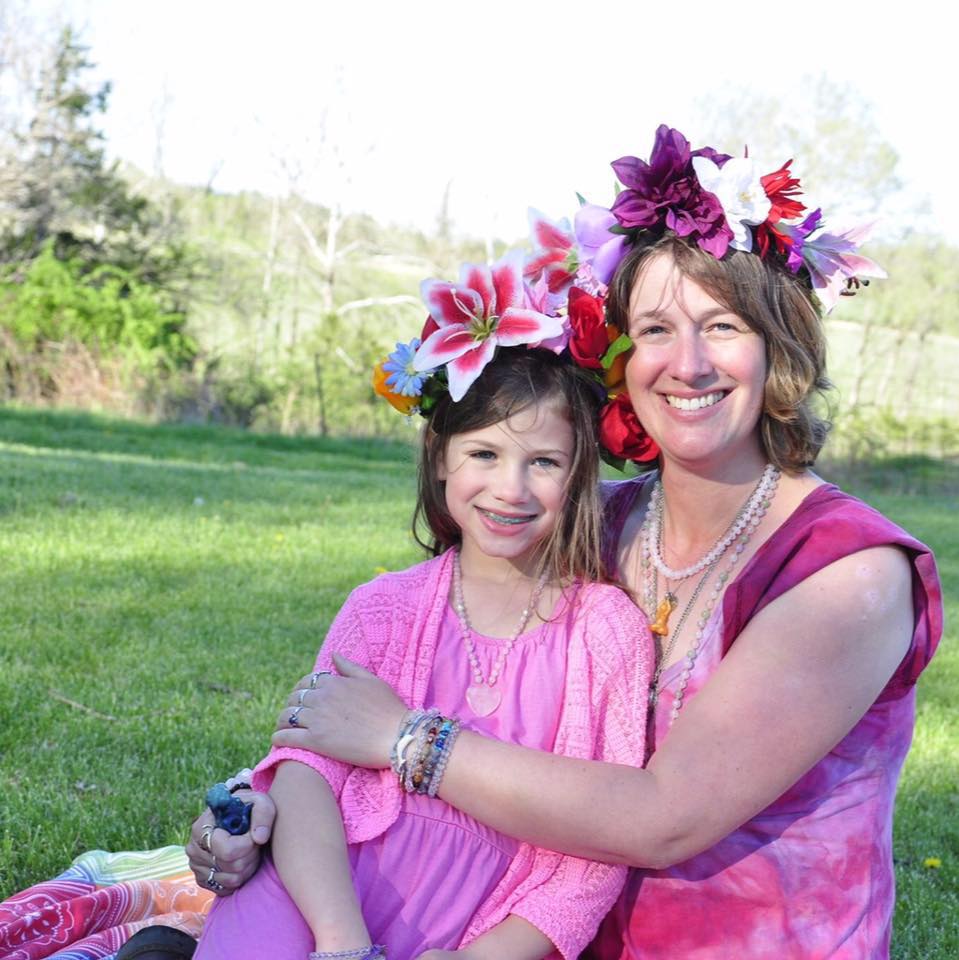 and share since 2008. She plans and facilitates women’s circles, seasonal retreats and rituals, mother-daughter circles, family ceremonies, and red tent circles in rural Missouri. She is a priestess who holds MSW, M.Div, and D.Min degrees and wrote her dissertation about contemporary priestessing in the U.S. Molly and her husband Mark co-create
  It is commonly accepted in American culture that children–boys especially–must go through a “phase” where they hate their mothers in order to grow up. We are told that the mother-child bond is so intense as to become suffocating. We are told that unless children – boys especially – reject their mothers, they will not individuate, become individuals. And nobody, we are told, wants a mama’s boy.*
