Following up on my recent blogs on the roles of women in the Neolithic revolution and on “egalitarian matriarchy,” I have been re-reading Peggy Reeves Sanday’s ground-breaking book, Women at the Center, about the survival of the “adat matriarchaat” (the principles of matriarchy) among the more than four million Minangkabau people of Indonesia.
According to Sanday, the customs of the matriarchaat (the Dutch word has been adopted by the Minangkabau people)—including matrilineal descent, matrilocal marriage, and ownership of the land by the mother clan—have survived accommodation with Islam. This is in no small part due to the fact that one of the principle values of the matriachaat is to conjugate (to come together) rather than to dominate. Rather than viewing Islam as an opposing force, the Minangkabau emphasize the aspects of Islam–such as love and compassion for the weak–that are compatible with their traditional worldview. Through this clever maneuver, the Minangkabau manage to practice Islam while maintaining their traditional egalitarian matriarchy. Continue reading “A Question about “Egalitarian Matriarchy” in West Sumatra by Carol P. Christ”
I want to take this opportunity to tell you I have learned so much from you over these years that I have been privileged to call you “mom.” I watch you, as you get older, as I also get older, and I continue to learn from you. You are always telling me that a person cannot know something truly until they get there; that every decade of life is different; and that life becomes, in the end-game, a process of letting go. I see you, and I know by watching you that this is true.
I remembered you today, from when I was just a child, getting ready to go out for the evening with Dad. You were spraying your hair into an impressive beehive, pulling on stockings, and fragrancing your wrists with Fabergé cologne. You were beautiful then, and you taught me that life should be beautiful, our home should be a place of refuge, and every day was worth celebrating. You used to sing about loving your home, and you maintained it so elegantly. It was lovely to be your child in that home. Thank you. Continue reading “An Open Letter to Mom by Natalie Weaver”
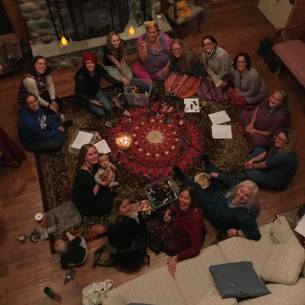
From 1994 until 2012, the Women’s Well, based in Concord, Massachusetts, offered thousands of women the opportunity to participate in women’s circles of all kinds. In the first and second parts of this series, Anne Yeomans, a co-founder of the Women’s Well, and others who co-created the Women’s Well, shared about their experiences with the power and wisdom of the circle and the use of altars and ritual. (Part I and Part II). This third part, explains the guidelines that the Women’s Well developed for their circles. This post is adapted from the Women’s Well website at www.womenswell.org.
We often used the guidelines in our circles. Sometimes the facilitator or holder of the circle would speak of them and then place them around the circle on printed cards, to remind us of the quality of listening and speaking that we were trying to invite in.
These guidelines were originally drawn from the work of Tom Yeomans who developed a way of working in groups, called the Corona Process. It was an approach to group dialogue that came to him in a dream the night after attending a meeting with the great physicist David Bohn, who at the end of his life became interested in dialogue and world peace. Continue reading “Creating Women’s Circles that Heal and Enrich Our Lives by Anne Yeomans and the Women’s Well”
I’m sitting on my meditation pillow for the thousandth time searching for clarity. Initially, going within feels like traversing a jungle; swinging from one thought branch to another. I’m itching for some peace and I’m almost certain this isn’t the way to it. But, I’ve been here before and I won’t quit breathing through the discomfort. I know I will greet the inner goddess soon enough. Getting past the noise is part of accessing her wisdom. The noise teaches me discernment (if I allow it to).
Eventually, the monkey mind gathers up all the branches and turns them into a prodigious figure that blocks the sun inside. Hello darkness my old friend. Inner garbage (fear) makes her entrance. I’m still breathing. Eyes closed. Determined through slow, rhythmic breaths, to move past her. I know I cannot run from her. She’s faster and outwits me every time. Continue reading “Inner Garbage (Fear) vs. Inner Goddess (Love) by Vanessa Soriano”
A month or so ago I wrote that women need to learn what it means to choose our lovers and partners. I have just learned another lesson in this process. When I wrote about the power to choose, I was in love with someone I thought was a good, respectful, and honest man. In other parts of his life, he may be, but in relation to me he was not.
Suffice it to say that this man “neglected” to tell me a very important piece of information about his life. This detail was so unusual that no one could have anticipated it. If he had told me this fact from the beginning, I would never have entered into the relationship with him, and I am pretty sure he knew that. As soon as he did tell me, I ended the relationship. As we were saying goodbye, he tried to seduce me. I opened the door and shoved him out. In the past I might I might have given in, or if I hadn’t, I might have felt that I was the victim, that he rejected me. In a delightful clarity, I felt absolutely no confusion, regret, or ambivalence. I chose. Continue reading “Choosing to End Love by Carol P. Christ”
In their purest form, “egalitarian matriarchies” place the mother principle at the center of culture and society. Their highest values are the love, care, and generosity they associate with motherhood. These values are not limited to women and girls. Boys and men are also encouraged to honor mothers above all, to practice the traits of love, care, and generosity, and to value them in others.
“Egalitarian matriarchal” societies are matrilineal which means that family membership and descent are passed through the female line. They are also usually matrilocal, which means that women live in their maternal home all of their lives. Family groups are usually extended rather than nuclear. Often there is a “big house” in which groups of sisters, brothers, and cousins live together with mothers, aunts, grandmothers, and great-aunts. In what I imagine to have been the original form of the system (still practiced by the Mosuo of the Himalayas), men also live in their maternal house, visiting their lovers at night, and returning home in the morning.
Mosuo women at festival
These societies practice small-scale agriculture. The women are owners and guardians of the land, which is held in common by maternal clans. They are also the guardians of the secrets of agriculture, food storage, and food preparation, which are passed down from mothers to daughters through songs, dances, rituals, and stories that celebrate the Earth as a great and giving Mother. The powers of women as birth-givers and as the guardians of the mysteries of the agricultural cycles are symbolically related to the powers of birth, death, and regeneration in nature and in all creative processes.
Women seated under trees in place of honor at Minoan festival
These social and cultural systems must have first developed at the beginning of the Neolithic era, when “woman the gatherer” first discovered the secrets of agriculture that allowed people to settle down and farm the land. If women discovered agriculture, then it makes sense that they would have been leaders in the first settled communities and guardians or owners of the land they farmed. They would have been the ones to build the first homes on or near the farmland. Sons as well as daughters would have been born in these early settlements.
The males of the families or clans continued to hunt. Over time they became responsible for building and heavy farm labor and for grazing flocks and seeking raw materials away from the settlement. It makes sense that they would be the ones to venture away from the community to gather information and to trade. In a recent documentary, Mosuo men stated that they don’t work as hard as women. This may not have been the case in the past. Today products and raw materials are brought in through the capitalist economy: traditional roles of traders are obsolete. Information gathering was an important part of trade expeditions: this is how new technologies spread rapidly in the Neolithic era; religious and cultural symbols were also shared by traders. Today there are books, newspapers, television, and the internet. Nor are Mosuo men involved in inter-clan negotiations in the People’s Republic of China.
From the division of labor in these societies, an egalitarian system of governance developed in which the elder women or grandmothers supervised the “internal” life of the house or clan. The “internal” domain included family and farm and all of the rituals surrounding birth, puberty, and death, as well as planting and harvesting. Women played central roles in creating and enacting all of these rituals. Through their expeditions and trade activities, elder men, the brothers of the grandmothers and uncles of the next generations, became responsible for the “external” relations of the clan, meeting people from other cultures when they were away from home, and welcoming visitors who arrived on their home territory.
Because of this division of labor, the elder men would have been the ones to meet and greet colonists and invaders and also to speak with storytellers, historians, and anthropologists, most often also men, who were interested in learning about their culture. If foreign men came from patriarchal cultures, they would have assumed that the men who met them were the leaders of their groups. The party line in the field of anthropology, which is followed by academics in other disciplines, is that “men wield the power” in matrilineal societies. I was disappointed to read this when I first started learning about matrilineal societies as a graduate student and to find it repeated in a recent article arguing that Minoan culture might have been matrilineal and matrilocal.
Those of us who have been socialized in patriarchal societies in which “men wield the power” cannot easily imagine alternative systems. When we begin to think about female power, we immediately conjure up pictures where “women wield the power” by going to war, keeping men as slaves, sexually abusing and raping them, and forcing them into subordinate positions. Such images are so abhorrent that we may conclude that patriarchy is not so bad after all. And this stops us from looking for or wanting to envision alternatives.
In 1981 anthropologist Peggy Reeves Sanday challenged these conventional views in her ground-breaking Female Power and Male Dominance. Examining all of the pre-urban societies documented in anthropological records, she discovered that societies that celebrated and valued female power were not female dominant but egalitarian. She also found that societies that celebrated and valued male power were almost always male dominant. They tended to develop in times of external threat (when men became warriors) or environmental crisis (when the female power of the earth was viewed as having failed the community). Though Sanday’s arguments are convincing, they failed to change that anthropological consensus that “men wield the power” in all human societies, including those that celebrate female power and are matrilineal and matrilocal.
What the consensus that “men wield the power” in matrilineal, matrilocal, and matrifocal societies does not recognize is the power women hold in the internal relations of the group. For example, in the Iroquois culture, the councils of female elders that managed the day to day life of the clan were just as important as the councils of male elders that through their “chief” met with European settlers and invaders. In fact, the councils of female elders were slightly more powerful than those of the male elders. Iroquois women could remove male leaders they did not approve of and reject decisions of the male council to go to war. This power of the female council did not mean that Iroquois women dominated Iroquois men. Rather it was an important check-and-balance ensuring that men’s councils could not unilaterally take actions that would negatively affect the internal relations of the clan.
What should we call societies such as these? Obviously we should continue using the terms “matrilineal” and “matrilocal” where they apply. But what term should we use to describe these cultures as a whole? Archaeologist Marija Gimbutas called the egalitarian societies of Old Europe “matrifocal” because she recognized that the term “matriarchal” is usually (mis)understood to mean female dominant; this decision did not protect her work from being criticized for its challenges to the patriarchal consensus.
I dared to use the “m” word after reading Peggy Reeves Sanday and Heide Goettner-Abendroth. I define egalitarian matriarchy as a society and culture organized around the mother principle of love, care, and generosity, in which mothers are honored and women play central roles, and in which men also have important roles and every voice is heard. My new suggestion is that the “m”word always be preceded by the “e” word, in other words that we not use “matriarchy” unmodified, but always write and speak of “egalitarian matriarchies” in order to make it clear that we are not talking about female-dominated societies. This will be my practice in the future.
Recently I traveled in India with my husband who did doctoral research there 48 years ago. I had no goals of my own other than to be open. Back only a short while, I am still pondering the journey. Here are glimpses of the women I saw, often only from a distance, with gratitude for so much kindness.
“Welcome to the City of Joy,” says our guide when we step out of the airport into the warm Calcutta night. “You have arrived on Maha Shivaratri, the Great night of Shiva. This is especially a holiday for women. Every woman wants a husband like Shiva.”
“Ritual that is alive encourages each person to touch what is sacred in their own way, in their own time, through their own unique experience. So there evolves a dynamic dance between guiding and shaping the group’s experience and encouraging and supporting the individual’s experience, so there is a smooth and cohesive flow to the ritual.” –Suzanne Reitz and Sandy Hoyt (Celebrating, Honoring, Healing)
As a practicing priestess, one of the dynamic dances that I engage in is with the power of story. I both find that women’s stories are the vital lifeblood of conscious engagement and power-building with one another and that they can be one of the elements that bogs down a ritual and makes it lose power and magic. This is partially because the dominant culture may teach us to bond using stories in a way that actually drain our energy through “venting,” swapping complaints, trading to-do lists, and through describing behavior, motives, and character of other people. In women’s ritual space, I encourage people to dig deep, but also to share a here-and-now connection of shared experience rather than a there-and-then rendition of past experiences.
Chameli Ardagh in her Create Your Own Women’s Temple manual from Awakening Women explains:
To hold the group and space as sacred is one of the most important guidelines, and the guideline that may bring up the most questions or protests. It goes against our habits as women and against our identification with the small self; we are quite used to creating intimacy through sharing our wounds and problems. The Temple Group is not a place for processing wounds, analyzing ourselves, solving problems, complaining about our lovers, healing our addictions or sharing the stories of the personality. Many women’s circles (and support groups or sharing circles) are focused mostly on the personality. The Temple Group is, in a way, impersonal because it focuses on the larger vast nature of our true self. In the Temple Group we focus not so much on our identity as separate women, but on the whole group as one feminine divine body and expression. The impersonal guideline may sound uncaring at first, but as you explore new ways of being intimate and nourish each other as women, beyond the words, you discover that those are infinitely more fulfilling and caring than the personality talking and processing (p. 61).
I believe that we live in a storied reality and that we are constantly in the process of storying and re-storying our lives and that seeing our lives, and the lives of others, through a mythopoetic lens, can have a radically transformative impact on our experiences and our relationships. I have written about this for FAR in the past and noted that my personal lived experience is that stories have had more power in my own life as a woman than most other single influences. The sharing of story in an appropriate way is, indeed, intimately intertwined with good listening and warm connection. As the authors of the book Sacred Circles remind us “…in listening you become an opening for that other person…Indeed, nothing comes close to an evening spent spellbound by the stories of women’s inner lives.”
So, what is special about story as a medium and what can it offer to women that traditional forms of education cannot?
Stories are validating. They can communicate that you are not alone, not crazy, and not weird. Stories are instructive without being directive or prescriptive. It is very easy to take what works from stories and leave the rest because stories communicate personal experiences and lessons learned, rather than expert direction, recommendations, or advice. Stories can also provide a point of identification and clarification as a way of sharing information that is open to possibility, rather than advice-giving.
Cautions in sharing stories while also listening to another’s experience include:
Are you so busy in your own story that you can’t see the person in front of you?
Does the story contain bad, inaccurate, or misleading information?
Is the story so long and involved that it is distracting from the other person’s point?
Does the story communicate that you are the only right person and that everyone else should do things exactly like you?
Is the story really advice or a “to do” disguised as a story?
Does the story redirect attention to you and away from the person in need of help/listening?
Does the story keep the focus in the past rather than the here and now present moment?
Is there a subtext of “you should…”?
Several of these self-awareness questions are much bigger concerns during a person-to-person direct dialogue such as at a women’s retreat rather than in written form such as blog. In reading stories, the reader has the power to engage or disengage with the story, while in person there is a possibility of becoming stuck in an unwelcome story. Some things to keep in mind while sharing stories in person are:
Sensitivity to whether your story is welcome, helpful, or contributing to the other person’s process.
Being mindful of personal motives—are you telling a story to bolster your own self-image, as a means of pointing out others’ flaws and failings, or to secretly give advice?
Asking yourself whether the story is one that will move us forward (returning to the here and now question above).
This work is beautiful. It is complex. It is multilayered. It is simple. It is hard. It is easy. It is rich and rewarding. It is dynamic and evolving and flowing. It is never the same.
May you be blessed with many stories together.
Note: there is a detailed audio exploration of the themes of this post available here.
Molly has been “gathering the women” to circle, sing, celebrate, and share since 2008. She plans and facilitates women’s circles, seasonal retreats and rituals, mother-daughter circles, family ceremonies, and red tent circles in rural Missouri and teaches online courses in Red Tent facilitation and Practical Priestessing. She is a priestess who holds MSW, M.Div, and D.Min degrees and wrote her dissertation about contemporary priestessing in the U.S. Molly and her husband Mark co-create Story Goddesses, original goddess sculptures, ceremony kits, and jewelry at Brigid’s Grove. Molly is the author of Womanrunes, Earthprayer, and The Red Tent Resource Kit and she writes about thealogy, nature, practical priestessing, and the goddess at Patreon and at Brigid’s Grove.
The blue organdy dress was a present my grandfather bought for me at the end of a summer I spent in San Francisco with my grandparents when I was six-going-on-seven. Was this the first time I crossed my father? Or only the first time I remember? My father had asked his father to buy me a dress for the first day of school. I was taken to the Emporium, a well-known department store in San Francisco. It was there that I spied the blue organdy dress.
Organdy is a thin cotton weave often stiffened with starch that was reserved for party dresses. The dress was palest blue and because organdy is see-through, it came with its own matching slip, also made of blue organdy. The dress had a full skirt and a big sash that tied in a bow at the back. It would have had puff sleeves, and if I remember correctly, eyelet embroidery. It was definitely not suitable for school, nor even for the tree-climbing and running around in the garden I usually engaged in at family gatherings at my other grandmother’s house after church.
I attended my friend’s dinner party (now my beautiful partner) recently in honor of her birthday. It was an intimate gathering of nine, mostly her immediate family, so I felt privileged to be included. At one point during the dinner, her sister-in-law initiated a ritual in which we went around the table taking turns to share words of wisdom in honor of the birthday woman. Her words in particular stayed with me. And looking back, I see how the ritual she initiated was in itself an embodiment of the words she spoke:
Stand in your power. We got you. We have your back.
She said more, but the gist of it all was summed up in those three short sentences. Looking my friend in the eye as she raised her glass in her honor, her sister-in-law’s words meant something. I could feel the truth of them – I have seen the truth of them in her relationship with her. She, along with her wife (who is my friend’s sister), really do have her back and truly do want to see her “stand in her power.” Continue reading “The Power of Black Panther by Xochitl Alvizo”


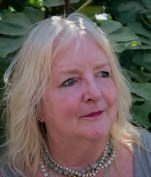 Following up on my recent blogs on the roles of women in the Neolithic revolution and on “egalitarian matriarchy,” I have been re-reading Peggy Reeves Sanday’s ground-breaking book, Women at the Center, about the survival of the “adat matriarchaat” (the principles of matriarchy) among the more than four million Minangkabau people of Indonesia.
 Dear Mom,
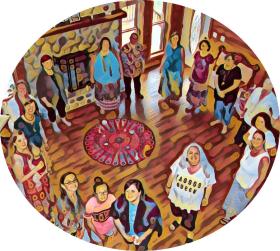 From 1994 until 2012, the Women’s Well, based in Concord, Massachusetts, offered thousands of women the opportunity to participate in women’s circles of all kinds. In the first and second parts of this series, Anne Yeomans, a co-founder of the Women’s Well, and others who co-created the Women’s Well, shared about their experiences with the power and wisdom of the circle and the use of altars and ritual. (
 I’m sitting on my meditation pillow for the thousandth time searching for clarity. Initially, going within feels like traversing a jungle; swinging from one thought branch to another. I’m itching for some peace and I’m almost certain this isn’t the way to it. But, I’ve been here before and I won’t quit breathing through the discomfort. I know I will greet the inner goddess soon enough. Getting past the noise is part of accessing her wisdom. The noise teaches me discernment (if I allow it to).
 A month or so ago I wrote that women need to learn what it means to
  In their purest form, “egalitarian matriarchies” place the mother principle at the center of culture and society. Their highest values are the love, care, and generosity they associate with motherhood. These values are not limited to women and girls. Boys and men are also encouraged to honor mothers above all, to practice the traits of love, care, and generosity, and to value them in others.

 Recently I traveled in India with my husband who did doctoral research there 48 years ago. I had no goals of my own other than to be open. Back only a short while, I am still pondering the journey. Here are glimpses of the women I saw, often only from a distance, with gratitude for so much kindness.
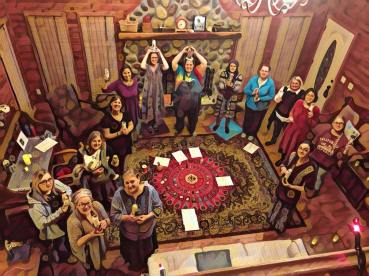 As a practicing priestess, one of the dynamic dances that I engage in is with the power of story. I both find that women’s stories are the vital lifeblood of conscious engagement and power-building with one another and that they can be one of the elements that bogs down a ritual and makes it lose power and magic. This is partially because the dominant culture may teach us to bond using stories in a way that actually drain our energy through “venting,” swapping complaints, trading to-do lists, and through describing behavior, motives, and character of other people. In women’s ritual space, I encourage people to dig deep, but also to share a here-and-now connection of shared experience rather than a there-and-then rendition of past experiences.
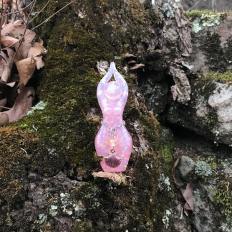 storying and re-storying our lives and that seeing our lives, and the lives of others, through a mythopoetic lens, can have a radically transformative impact on our experiences and our relationships. I have written about
  weird. Stories are instructive without being directive or prescriptive. It is very easy to take what works from stories and leave the rest because stories communicate personal experiences and lessons learned, rather than expert direction, recommendations, or advice. Stories can also provide a point of identification and clarification as a way of sharing information that is open to possibility, rather than advice-giving.
 Note: there is a detailed audio exploration of the themes of this post available
  The blue organdy dress was a present my grandfather bought for me at the end of a summer I spent in San Francisco with my grandparents when I was six-going-on-seven. Was this the first time I crossed my father? Or only the first time I remember? My father had asked his father to buy me a dress for the first day of school. I was taken to the Emporium, a well-known department store in San Francisco. It was there that I spied the blue organdy dress.
 Note: Black Panther movie spoiler alert.
 Feminism and Religion