Truth in Storytelling by Elise M. Edwards

“[ShakespElise Edwardseare] was an alright writer.  I did not always understand him, but some things he said were beautiful and he made some things so clear the way he explained people.  But one thing he was wrong about.  That ‘To be or not to be?’  is not the first question. ‘What is the truth?’ – that is the question!  Then ‘To be or not to be?’  is the second question.”

-from “Feeling for Life “ in Some Soul to Keep by J. California Cooper

This past weekend, I taught a lesson for an adult church group about Christian imagination in the short stories of J. California Cooper. The quote above comes from one of her stories. I was invited to teach a lesson as part of a series on exploring God through literature. It was a delight to participate for several reasons.

Continue reading “Truth in Storytelling by Elise M. Edwards”

DO RELIGIONS HAVE AN “ESSENTIAL” “CENTRAL” CORE THAT IS–OR IS NOT–SEXIST? by Carol P. Christ

Carol Eftalou - Michael HonnegerThough often asked, this is the wrong question.  Every statement about the “essential” or “central” teaching of any religion is based on a prior interpretation rooted in a particular standpoint. Thus, the idea that there is a “central” or “essential” core in any religion is not a matter of fact, but rather a matter of interpretation.

In discussions of religions, we often make global statements about our own and other religious traditions, such as: “Christianity is patriarchal to its core,” or alternatively, “The core teaching of Christianity is to love God with all your heart and your neighbor as yourself.” Or: “The true Islam teaches that God is love,” or alternatively, “Islam always teaches the subordination of women.”

These sorts of claims are made from time to time here on Feminism and Religion too. Every global statement that a particular religion “is” or “ is not” oppressive, calls someone to assert the opposite in the comments. I believe that statements about the “true” nature of any religion should should always be qualified. Continue reading “DO RELIGIONS HAVE AN “ESSENTIAL” “CENTRAL” CORE THAT IS–OR IS NOT–SEXIST? by Carol P. Christ”

CROSSING THE SEA OF DEATH by Carol P. Christ

carol p. christ photo michael bakasI am washing wet clothes cast off by refugees who crossed the Sea of Death, the new name for the channel only 4 nautical miles wide that separates Turkey and Lesbos. A tiny pink long-sleeved shirt with a boat neck, for a girl, size 3 months. The channel was relatively safe in the spring and summer, even though people were pushed into black rubber dinghies wearing illegal life jackets that would not float. A pair of leggings with feet, grey with pink, orange, brown, white, and blue polka-dots, to be worn over diapers. North winds have made the journey treacherous.

I am not on the front lines, pulling wet children alive and dead from the sea. I think my heart would break. Tiny black stretch pants with nylon sequined bows at the knees, size 2 years. My friends were in the harbor when an overcrowded fishing boat collapsed, throwing 300 people into the sea. Two pairs of children’s underpants, one navy blue, the other turquoise. They pulled babies from the waves and tried to revive them. Small stone-washed blue jeans decorated with rhinestones, for a little girl. They were wet and cold. Their clothing was removed. They were wrapped in blankets. Red knitted leggings with black hearts and white reindeer. Some survived after spitting out the sea’s water. Blue leggings with feet, blue with white and beige stripes, for a boy. The newly donated ambulances do not carry oxygen. Continue reading “CROSSING THE SEA OF DEATH by Carol P. Christ”

MORE WAR=MORE REFUGEES: OBAMA IN AFGHANISTAN by Carol P. Christ

Carol Eftalou - Michael HonnegerPresident Barack Obama recently decided NOT to withdraw all troops from Afghanistan before his term of office ends in 2016, as he had earlier promised to do. California Congresswoman Barbara Lee—the only member of Congress to vote against the Afghanistan war 14 years ago in 2001—issued a statement against this open checkbook for an endless war, and introduced measures to stop it from continuing.

In contrast, Democratic front-runners Hillary Clinton (not surprisingly) and Bernie Sanders (to my surprise and disappointment) supported the President. The press has treated the announcement of on-going war as a non-issue. A voice crying in the wilderness, John Nichols of the Nation magazine stated that Barbara Lee has the “clearest vision” on the Afghan War, noting that on this and other national defense issues, “Lee keeps being proved right.” Continue reading “MORE WAR=MORE REFUGEES: OBAMA IN AFGHANISTAN by Carol P. Christ”

Reform? Progress? By Elise M. Edwards

Elise EdwardsIn my class yesterday (a survey of Christian thought and practices), I was lecturing about monastic life in the Middle Ages. Among other points, I mentioned that medieval religious orders provided settings where women could be educated and assume leadership roles (primarily among other women), thinking of Hildegard of Bingen (1098-1179) who was the Abbess of a monastic community in Rupertsberg. Other women medieval writers who developed influential writings, like Mechtild of Magdeburg (ca. 1210-1282) and Catherine of Siena (1347-80), belonged to tertiaries or third orders, which were monastic community for laypersons. This part of the lesson emphasized that monastic reforms around the 12th century opened religious orders more extensively to women and laity.

Still speaking of medieval reforms, I displayed a picture of Francis of Assisi on the screen at the front of the room. I mentioned that Francis was concerned about the poor and the animals and that he has inspired some contemporary Christians, including the current pope who took Francis as his name. We talked about how both St. Francis and Pope Francis are seen as reformers.

Because earlier in my lesson I’d made a point of speaking of women’s experience, when I spoke about the Pope’s name as a possible sign of renewal or reform, Gina Messina-Dysert’s question “What about the women?” came to mind. In her recent post, she responded to the Pope’s exclusion of many issues that concern women in his address to the US Catholic Bishops. Like Gina, I applaud many of the Pope’s reforms but I am confused about how rarely he is criticized for maintaining the long-held Catholic view that disallows women to be ordained as priests.

Let me provide an example: During the Pope’s visit to the US, one of my students described Pope Francis as “very liberal.” When I interjected that he has not supported the ordination of women, the student laughed and said the pope would be accused of heresy for supporting that! While that may be true, my more immediate concern was that in a classroom of students who are mostly supportive of women in ministry, the Catholic restrictions on the priesthood were seen as a part of the tradition not worth challenging. Why is it that preserving male leadership is excused as a part of the tradition while preserving exclusive marriage practices is something to be challenged? They are interrelated.

As we know from blogs and social media sites, many people who support LGBTQ rights were upset over news stories about the Pope meeting with Kim Davis, the county clerk who was jailed for refusing to issue marriage licenses to same-sex couples. Certainly such a meeting is disturbing to same-sex marriage advocates. But is it surprising? At least one womanist ethicist I know, Eboni Marshall Turman, pointed out in a Facebook discussion that the church has long since been public in its support of male privilege and heteronormativity. My intent is not to single out Catholicism for sexist practices. When recently asked about women’s ordination and leadership in Baptist churches in my own town of Waco Texas, I had to admit that even though ordination of women is permissible and practiced in many of the churches, the number of churches that have called women to the position of senior pastor is shockingly few.

My point is this: When we find teachings in particular religious traditions that justify the exclusion of one group, we should expect to find justifications for excluding other groups, too. In the same discussion I referenced above, Eboni Marshall Turman said, ”Oppressions are compounded and intersectional. If they come for me, it is just a matter of time before they come for you. This is basic theological ethics.”

The experiences of varied groups are not the same; our oppressions and marginalizations also differ. But practices of exclusion are constructed on the same logic that values some persons (the in-group) more than others (the outsiders). Therefore, feminists have a responsibility to advance the well-being and interests of other groups (besides women) who are being marginalized.

Another reason for this advocacy is that many women are included in other marginalized groups. To ignore the intersectionality of oppression is to deny its pervasiveness and the realities of women’s lives. This is why feminists of color are often critical of white feminism. (The recent debate over the photo shoot for the movie Suffragette is a new instance of a persistent critique of white or mainstream feminism. See Rebecca Carroll’s piece on “Suffragette’s Publicity Campaign and the Politics of Erasure”).

To counter the limitations of our own experiences and be consistent in our pursuit of equality, feminists should intentionally cultivate practices of solidarity and coalition-building in our work. I, like everyone else, am often unable to see the inconsistencies in my own practices and teachings without others’ experiences to expand my view. This is one reason I value this Feminism and Religion community. Thank you for the wisdom and practices you offer from your own religious traditions and your own experiences of marginalization. You make me a better feminist through your writings and comments.

Perhaps working together, we can bring about religious reforms that our descendants will recognize in the centuries to come.

Elise M. Edwards, PhD is a Lecturer in Christian Ethics at Baylor University and a graduate of Claremont Graduate University. She is also a registered architect in the State of Florida. Her interdisciplinary work examines issues of civic engagement and how beliefs and commitments are expressed publicly. As a black feminist, she primarily focuses on cultural expressions by, for, and about women and marginalized communities. Follow her on twitter, google+ or academia.edu.

Philogyny: Women Supporting Women by Ellen Boneparth

ellen boneparthWhen I set out two years ago to create a nonprofit, based on a small, unexpected inheritance, I thought a lot about the role of giving — both to grantees and to myself as a prime donor. My overall goal was to empower women and girls in the developing world through new projects dealing with their health and education.

I was uncomfortable with the word “philanthropy.” I knew from speaking Modern Greek that “anthropos” means “person” or “man” but what I wanted to do was completely woman-centered. So, I created the word “philogyny” or “loving and caring for women” as a way to draw attention to the impact that support for women can have.

Why women, especially women in developing countries? First, we know from years of research that women are the main caretakers and caregivers in their families and communities. When a woman in a developing country has income, she is likely to spend 95 percent on her own family while a man will typically spend a third to a half of his income on family, the rest, on himself. Secondly, contributions to women’s and girls’ education and health have a significant impact on a community resulting in higher employment, lower fertility rates, and healthier populations.

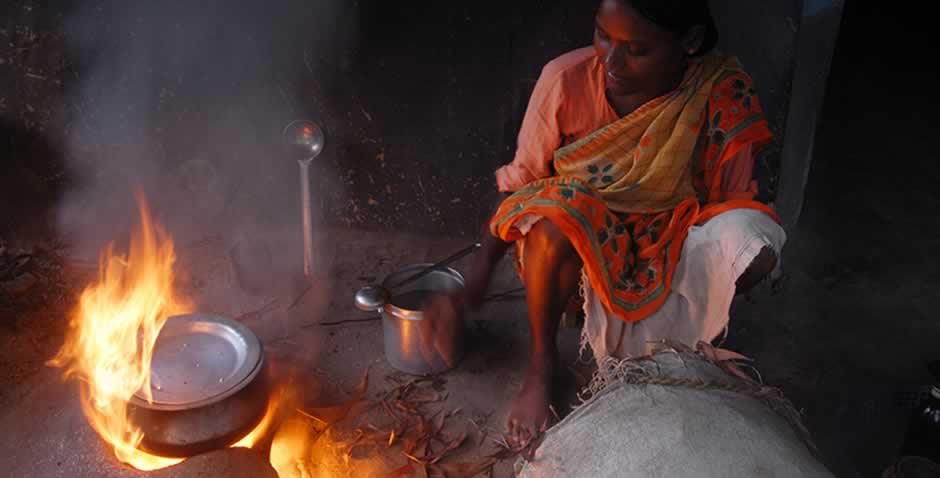
LightMyFireHPAs a new philogynist, I also needed a name for my nonprofit. I wanted to avoid the words most often used in such endeavors — gender, sex, development, empowerment, etc. — and to come up with something memorable that captured the lives of women in the developing world. Thus, LIGHT MY FIRE was born, an image that captures the lives of the two billion women globally who light a fire every day or evening to cook for their families.

What has Light My Fire accomplished in two years? We have given small grants, usually around $5000, to women’s and community organizations in Africa, Asia, Central and South America, and the Middle East. We believe a small grant goes a long way in a resource-poor country. Our total over two years is about $100,000 to 28 programs with some grants made to the same program in both years.

Rather than list all our projects, let me provide an idea of the range of our activities. We have supported programs dealing with: sexual abuse of children in Bolivia; production by women of soya oil in Malawi; girls’ education in Nepal, India and Kenya; health training of Bedouin and Palestinian women and Guatemalan girls; agricultural training of Kenyan women; financial literacy of Ugandan women; employment training for Haitian single mothers. And there is a lot more.

Clearly, Light My Fire seeks practical outcomes. At the same time, however, philogyny has a strongly spiritual element. Giving to women all over the world offers a sense of connection to our planet. We don’t just talk about global sisterhood, we do it. Philogyny also connects the donor to live-giving and life-saving efforts. It is a practice that touches the soul more deeply than the checkbook. To put it simply, giving to women has made me feel good, in fact, better than in any other life work I have done. The gift of philogyny is giving to women and also giving oneself a spiritual boost.

Anyone interested in joining our community of philogynists is welcome to join us: making a donation will make you feel good! Even the smallest amounts can make a big difference in the developing world– our global sisters and our circle at Light My Fire will be deeply grateful.


Ellen Boneparth has enjoyed a range of careers from academia to diplomacy to work in nonprofits dealings with women’s issues. Currently, she is the Director of Light My Fire, a nonprofit promoting women’s and girls’ health and education in developing countries. Her passion for writing has generated 7 novels and 2 memoirs. Her most recent novels, available on Amazon or at Author House, include DO NOT HURRY THE JOURNEY, a love story revolving around Alzheimer’s, and POSITIVE WOMEN, a tale about HIV-positive women in Africa and the obstacles raised by Pharma.

Feminist Interpretations by Elise Edwards

Elise EdwardsI’ve written a few posts recently referencing biblical themes or stories. I’m not a biblical studies scholar; I’m an ethicist and theologian. So I know that ways I use the texts disturb some people who study them from a historical or biblical studies perspective. To say I don’t use the Bible as those scholars do, though, doesn’t mean I don’t have a disciplined approach. I aim to apply a consistent approach to scripture and to encourage my students to do the same.

I get really annoyed when someone proclaims a variation of “The Bible says it; I believe it; that settles it!” in moral debates. Obviously, people within a religious tradition are going to believe there is truth in the scriptures of their tradition. That’s simply how scripture functions. So I’m okay with “I believe it.” I have a problem with the two other parts of the statement – the Bible says it, and that settles it. The assertion that “the Bible says it” masks the task of interpretation that anyone encountering a text takes on. The statement “that settles it,” when adopted in moral debate, rejects the accountability and humility in sharing our interpretations with others. Continue reading “Feminist Interpretations by Elise Edwards”

Dionysian Rites by Carol P. Christ

In today’s blog, I offer an excerpt from A Serpentine Path: Mysteries of the Goddess. The setting is Zaros, Crete, the time of year is mid-October.

We had a scrumptious dinner of fresh fish, salad, fried potatoes, local amber-colored wine, and tiny olives.  Later the two waiters, Themis and Nikos, bearing another pitcher of wine, sat down at our table.

They told us they were best friends and had just gotten out of the army. When they discovered that we were writers, the two young men were intrigued. “Our village has a very interesting history and many interesting customs,” they told us. “If you would like to come back and write about it, we will introduce you to all of the old people.” This conversation was in Greek, but I translated for Naomi. “This must indeed be a very interesting village,” I said to her, “because when they learn that I am a writer, most Greek men will say ‘write about me, I have a very interesting story.’ These men, in contrast, want us to write about their village.”

When we finished our wine, the young men offered to give us a lift back to our hotel on their motorbikes, suggesting we could have a coffee at the hotel bar. When we got to the hotel, they didn’t stop. “What happened?” I asked. “The bar wasn’t open at the hotel, so we’re looking for another place.” I wondered what Naomi, perched on the back of a motorbike and unable to speak Greek, must be thinking—especially since she was afraid of the unknown. We drove through the town and turned down a dirt road, arriving at the Zaros water factory. “We wanted to show you this,” they said sheepishly. “People drink our water all over Crete.” “O.K., “Naomi said, “but then you must take us back.” There were a few workers on the night shift, and the boys told us they had worked there too, before going into the army.

making rakiLeaving the factory, we continued down the dirt road heading away from the town. “Where are we going?” I asked, wondering what we had gotten ourselves into. “Just a minute,” Themis said, as he got off the bike in front of what looked like a small house in the middle of nowhere. “We need to go back,” Naomi said definitively. “Yes, I already said that,” I answered. “Come inside,” Themis beckoned. “We want to show you how they make the raki (the colorless alcoholic drink that had been offered to us in shot glasses us after meals). This is the still,” he continued, as he showed us into a small dark room with a glowing fire. “After the wine is pressed, they put the skins and stems into barrels like those you see in the corner. The mixture takes six weeks to ferment, and then they bring it to a still, where it is heated over a fire. The steam that rises is directed through long curved pipes, and comes out as raki,” he said, pointing to various parts of the mechanism. Continue reading “Dionysian Rites by Carol P. Christ”

Mysteries by Carol P. Christ

Savor an excerpt from A Serpentine Path: Mysteries of the Goddess:

Finding ourselves together in Crete after attending a conference, four friends and I set out to visit the caves of Eilitheia in Amnissos and Agia Paraskevi in Skoteino. As we drove along the coast toward Amnissos, I recalled that caves have been understood as sacred from the dawn of religion. When people knew the earth as their mother, the cave, the opening in the earth was her vagina and womb, the passageway to her deepest mysteries, the secrets of birth and rebirth.

Eilitheia Cave entranceThe Eilitheia Cave is in the hills above the ancient port of Amnissos. We arrived in the morning, accompanied by the guard who came with us to unlock the gate. The cave has one large, long room, with a wide mouth, and a low ceiling. There is a belly stone near the entrance that women rubbed to insure conception. Near the center of the cave, in shadowy darkness, are two stalagmites, one squat and the other tall, surrounded by the remains of ancient walls that enclosed the sacred space. The guard told us that they were worshipped as the Mother, seated, and the Daughter, standing. Their heads were chopped off with the blow of an ax. In the back of the cave there are small pools of water, used for healing

Eilitheia Cave -- StalactitesAs our eyes adjusted to the darkness, we felt that we too had entered into the womb of the Mother. Naomi sat by the Daughter stalagmite, while I leaned against the Mother. We chanted to Her and sang, aware of the bemused but accepting presence of the guard, who retreated to the entrance of the cave. As we turned to leave, Mara crouched at the cave’s entrance to take a picture, her short, full body the image of the Mother Goddess, her wispy blonde hair capturing the light, crowning her like a halo. Slowly, we emerged from the cool depths, the place of ancient mysteries, into the light and warmth of the midday sun.

We visited the Skoteino Cave late in the day, after lunch and a refreshing swim in the sea. To reach the cave, we ascended into the mountains, passed through the small village of Skoteino, and turned right down a dirt road. Above the cave is a small church dedicated to Agia Paraskevi, the patron saint of eyesight. I had been to the cave eleven years earlier with my husband, Roger, on the saint’s name day, July 26th. That day the locals celebrated first in the church, where they decorated the icon of Agia Paraskevi with flowers and lit candles, and then in the cave, where they roasted lamb, sang, and danced. It is likely that this cave has a continuity of worship from ancient times to the present day.

The first time I visited the cave of Skoteino, which means dark, I thought it was a single, huge, high-ceilinged, cathedral-like room, adorned with stalagmites and stalactites. In the meantime, I had learned that beyond the first room, there are three more levels, the final one, totally dark. Mardy offered to lead the way. Two young German men, emerging from the depths, told us the way down was not easy, as there was no clear path.

Skoteino Cave EntranceMarie, unsure of her footing, stayed near the entrance. Naomi, afraid of the unknown, perched on a rock at the back of the first room holding her candle. Mara, Mardy, and I braved the descent. We did not know what awaited us in the dark. With candles and small flashlights, we climbed and slid, sensing a way down. The rocks were cool, damp in some places, but not slippery. There were no sharp edges because the rocks had been smoothed by water. Encouraging each other we reached a place where it looked like the next descent would be though a hole or narrow opening. We still had faint light from the mouth of the cave. The final passageway was unknown, frightening, inviting. We paused, eyes fixed on the dark opening. Mardy broke the silence saying that we should turn back because the sun was about to set.

I made the ascent more rapidly than the others, my body urging me on until I reached the first level. As I walked slowly up the path that meandered through the first large room, I could see two women before me with candles, and two behind me coming up from the depths. I could almost see Persephone coming up from the underworld, torch in hand. Surely it was in a place like this that the Eleusinian Mysteries began.


A Serpentine Path: Mysteries of the Goddess is available in kindle and paperback.  Carol P. Christ leads the life-transforming Goddess Pilgrimage to Crete. Her books include: Goddess and God in the World: Conversations in Embodied Theology, written with Judith Plaskow and She Who Changes and and Rebirth of the Goddess; also with Judith Plaskow, the widely-used anthologies Womanspirit Rising and Weaving the Visions.

Updated on December 26, 2016.

Argument from “Absence” and Absence of Dialogue by Carol P. Christ

Carol in Crete turquoiseRecently in a conversation with a noted archaeologist and his male graduate student assistant, I proposed that the absence of war and the trappings of war, including images of larger than life-size warrior kings, suggested to me that we should not understand the social structure of ancient Crete on the model of patriarchal kingship. “Kings are always warriors,” I said, “yet there is no clear and convincing evidence of organized warfare in ancient Crete. And,” I continued, “because warrior kingship is not a ‘natural state,’ but one achieved through warfare and domination, kings must legitimate and celebrate their power through larger than life-size images of themselves. Such images were common in ancient Sumer and in ancient Egypt, but are not found in ancient Crete.”

The response I received was unexpected: both archaeologists seemed dumbfounded. “Is kingship always associated with war?” they asked. “Yes,” I responded, “this is a conclusion I reached many years ago while studying the cultures of ancient Greece and ancient Israel, and I have recently elaborated this theory in a series of essays on the blog Feminism and Religion ( See “Patriarchy as a System of Male Dominance Created at the Intersection of the the Control of Women, Private Property, and War”).” Continue reading “Argument from “Absence” and Absence of Dialogue by Carol P. Christ”