Because I don’t have the money to fly somewhere else other than …here
Where I can’t get one
I need an abortion and I can’t get one
Because the kid, or the cells of a maybe kid, were put in here by the guy that raped me and if I have to have it, I will kill myself
I need an abortion and I can’t get one
Because I have four kids already and I can’t feed another one
I need an abortion and I can’t get one
Because it’s my dad’s…did you hear me say that? I have never said that. I have never said what he does to me…and now I have to show everyone… if I can’t get this out of me I will…
Yet another of my great feminist and spiritual teachers has died. Rosemary Radford Ruether, ecofeminist Catholic theologian, died on May 21st. Her work challenged my thinking and gave me new understandings and perspectives. She was a prolific writer, authoring hundreds of articles and 36 books, and was the quintessential scholar and historian of world religions and ecofeminist thought and theologies. A scholar of the scholastics, she examined the three strains of Western thought: the Hebraic tradition; Platonic-Gnostic; and Pauline-Augustinian in all their complexities to develop an understanding of the nature of Western thought and its implications for the domination of women, nature, and colonized others. As she described her own approach, she drew out the contradictions and complexities in these theologies, careful “to see both negative and positive aspects . . . and to be skeptical of exclusivist views on either side.”[i] Her thought and writing was ever-expanding, and always striving “to see the dominant system of patriarchy, including its racism, classism, and colonialism, in critical perspective,” and to put herself “in places where in solidarity with its victims, I can see it from its underside.”[ii]To this end, she brought together the ecofeminist theologies of women from around the globe, particularly the global south.[iii] Her thought also grew to include critiques of militarism and corporate globalization. Needless to say, I cannot begin to encompass all of her contributions here. So I will focus on the ways her thought has most deeply influenced and inspired my own, as well as my students’.
I’m on a mission to write women back into history, because, to a large extent, women have been written out of history. Their lives and deeds have become lost to us. To uncover their buried stories, we must act as detectives, studying the sparse clues that have been handed down to us. We must learn to read between the lines and fill in the blanks. My writer’s journey is about reclaiming the lost heroines of history. My quest is to give voice to the ancestral memory of that lost motherline.
My novels address spiritual themes. As a spiritual person, I’m very interested in women’s experience of the sacred. As well as being written out of history, we women, for the past five-thousand years of patriarchy, have been side-lined and marginalized by every established religion in the world. Even in alternative spiritual movements, male teachers and leaders have abused their authority over their female students and followers.
But in every age, there have been women who have heroically rebelled against this patriarchal stranglehold to claim their authentic spiritual experience. Often it has involved looking within rather than without for spiritual guidance.
One of these women was Hildegard of Bingen, the heroine of my novel Illuminations. Born in the lush green Rhineland in present day Germany, Hildegard (who lived from 1098–1179) was a Benedictine abbess and one of the most accomplished people of her time. She founded two monastic communities for women, composed an entire corpus of sacred music, and wrote nine books on subjects as diverse as theology, cosmology, botany, medicine, linguistics, and human sexuality, an intellectual outpouring that was unprecedented for a 12th-century woman. Her prophecies earned her the title Sybil of the Rhine.
Hildegard’s vision of Sapientia, Divine Wisdom.
An outspoken critic of Church corruption, she courted controversy. Though women were forbidden to preach, Hildegard embarked on four preaching tours in which she delivered apocalyptic sermons warning her male superiors in the Church that they must reform their evil ways or suffer divine wrath. But she had to pay the price for being so outspoken. Late in her life, she and her nuns were the subject of an interdict (a collective excommunication) that was lifted only a few months before her death. Hildegard nearly died an outcast, her fate hauntingly similar to that of many canceled women in our contemporary cancel culture.
Hildegard’s theology of the Feminine Divine has made her a pivotal figure in feminist spirituality.
A key concept in her philosophy is Viriditas, or greening power, her revelation of the animating life force manifest in the natural world that infuses all creation with moisture and vitality. To her, the divine was manifest in every leaf and blade of grass. Just as a ray of sunlight is the sun, Hildegard believed that a flower or a stone was God, though not the whole of God. Creation revealed the face of the invisible creator. Hildegard celebrated the sacred in nature, something highly relevant for us in this age of climate change and the destruction of natural habitats.
I, the fiery life of divine essence, am aflame beyond the beauty of the meadows, I gleam in the waters, and I burn in the sun, moon and stars . . . . I awaken everything to life. Hildegard von Bingen, Liber Divinorum (Book of Divine Works)
Hildegard’s philosophy of Viriditas went hand in hand with her celebration of the Feminine Divine. Although the established Church of her day could not have been more male-dominated, Hildegard called God Mother, and said that she could only bear to look upon divinity in her visions if God appeared to her in feminine form. Her visions revealed God as a cosmic egg, nurturing all of life like a womb. Masculine imagery of the creator tends to focus on God’s transcendence, but Hildegard’s revelations of the Feminine Divine celebrated immanence, of God being present in all things, in every aspect of this greening, burgeoning, blessed world.
According to Barbara Newman’s book Sister of Wisdom: St. Hildegard’s Theology of the Feminine, Hildegard’s Sapientia, or Divine Wisdom, creates the cosmos by existing within it.
O power of wisdom! You encompassed the cosmos, Encircling and embracing all in one living orbit With your three wings: One soars on high, One distills the earth’s essence, And the third hovers everywhere. Hildegard von Bingen, O virtus sapientiae
This might be read as an ecstatic hymn to Sophia, the great Cosmic Mother.
Mary Sharratt is committed to telling women’s stories. Please check out her acclaimed novel Illuminations, drawn from the dramatic life of Hildegard von Bingen, and her new novelRevelations, about the mystical pilgrim Margery Kempe and her friendship with Julian of Norwich. Visit her website.
As a graduate student, I was told in every way possible that I could not be a woman and a theologian.
When I was studying for my Ph.D. at Yale in theology in the late 1960s and early 1970s, my skirts were short as was the fashion of the day. The male faculty and students and their wives dressed in ways that would not call attention to themselves or their sexuality. I was also over 6’ tall. When I walked into a room, I was consciously and unconsciously perceived as a threat to a world which these men had simply assumed was “theirs.” Their response was to categorize me as a sexual being (I was once introduced as “our department bunny”) and to erase my mind. I was to discover that the male graduate students were making bets in the dining hall about “where she will sit today.” One of my friends frequently fell down and feigned to “worship” me when I passed him in the hallways. I had never received so much attention from men before and it was flattering.
Child abuse does not have to be physical or sexual. The most widespread forms of child abuse are psychological, and therefore harder to see, acknowledge, and eradicate. As abused children, we unconsciously pass on patterns of abuse visited on us to children, and to others we have power over including students, employees, and even friends and lovers.
The recent visit of a friend who is suffering greatly in a “battle” with her own “demons” reminded me of the important work of Alice Miller. My friend’s “demons” take the form of a persistent self-criticism laced with the feeling that “if only” she did or didn’t do certain things, her world would fall into place. My “demons” generally take a different form, telling me that I am helpless and that there is nothing I can do to ease my suffering.
Such “demons” were not implanted in my friend and me by the devil. They took root in interactions with our own parents, who were not themselves any different from most of the parents of their time and place. Recognizing that our parents were not “bad” people should not blind us to the great harm they did to us. However, when abused children speak of their abuse, the statement that their parents did not intend to harm them usually functions to deflect attention away from child abuse that really did occur. What happened to my friend and me was something like this. In many small and perhaps also a few traumatic interactions, we learned that our feelings do not count. “Don’t talk now, your father is tired.” “Stop making so much noise, your father has a headache.” “Don’t ask your mother for attention, can’t you see that she has more than enough to do with your younger brother.” Harmless in themselves, such messages, when repeated over and over, lead the child to believe that there must be something wrong with the feelings she has.
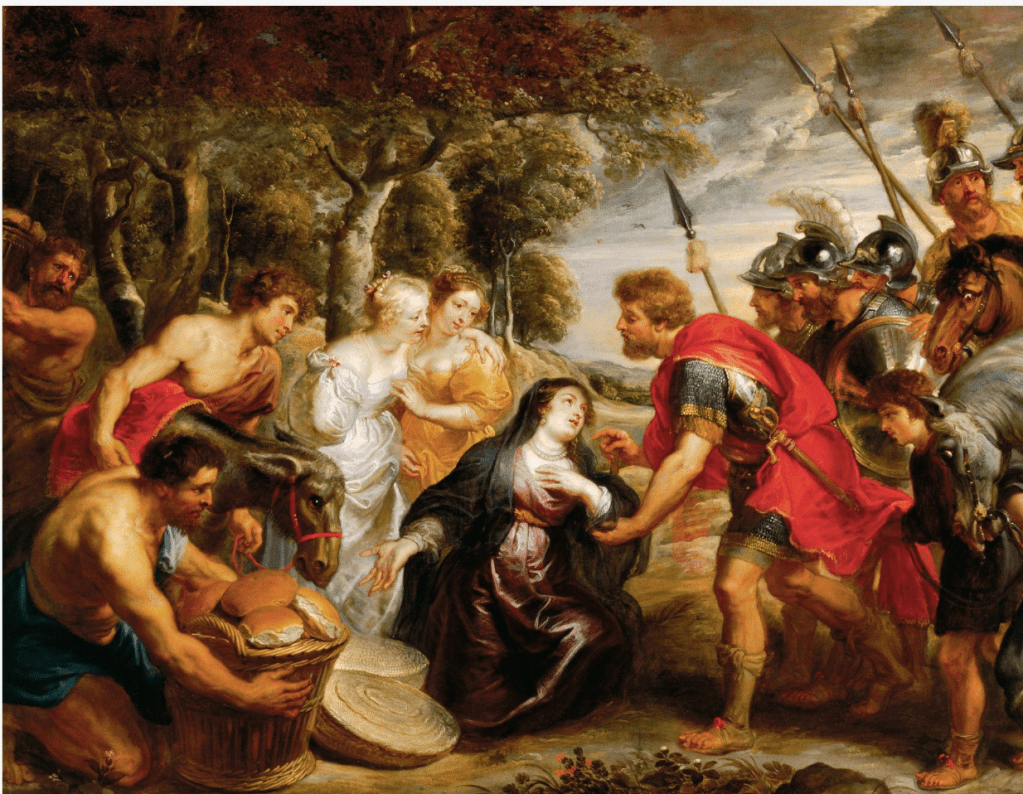
The meeting of David and Abigail by Peter Paul Rubens circa 1630
In these days when so many are afraid and aching for the people of Ukraine, and concerned about the lasting impacts of this war around the world, I cannot help thinking of the wise women of ancient Israel. These wise women, unafraid of confronting dangerous men, used their intelligence and storytelling skill to defuse violent situations between powerful adversaries and restore peace. May their wisdom be felt in the world now.
The institution of “wise woman” appears several times in the Bible. In the Book of Samuel, a wise woman (chachamah in Hebrew, from chochmah, wisdom) steps in when there is a war, or political conflict, to promote peace. In II Samuel 14, after King David’s son Amnon rapes David’s daughter, Tamar, the king does nothing. Tamar’s full brother Absalom takes matters into his own hands and kills Amnon, then flees to another country. David grieves for Absalom but won’t send for him. The wise woman of Tekoa appears before King David, pretending to be a woman whose sons fought, and one killed the other. The story she tells helps to reconcile King David with his son Absalom, at least temporarily.
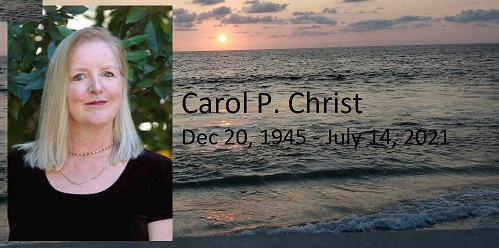
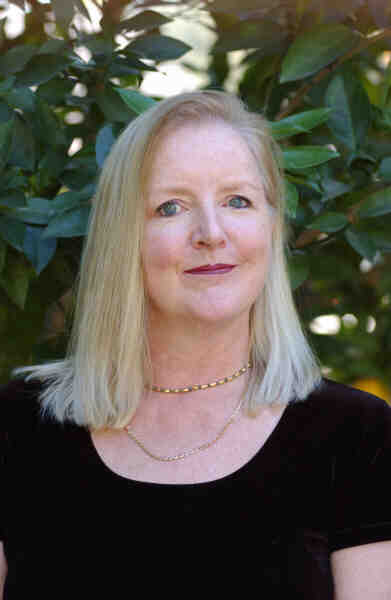
Moderator’s Note: We here at FAR have been so fortunate to work along side Carol Christ for many years. She died from cancer in July, 2021. Her work continues through her non-profit foundation, the Ariadne Institute for the Study of Myth and Ritual and the Goddess Pilgrimage to Crete. To honor her legacy, as well as allow as many people as possible to read her thought-provoking and important blogs, we are pleased to offer this new column to highlight her work. We will be picking out special blogs for reposting.This blog was originally posted March 12, 2012. You can read it long with its original comments here.
Why is it OK to insult women, our bodies, and our sexuality in ways that it is no longer OK to insult other groups?
The recent controversy over Rush Limbaugh’s rant about Sandra Fluke would not be so important if Limbaugh were not the “voice” allowed to say things that Republican politicians cannot say in public. Republican politicians wish to appeal to men who would say exactly what Rush said, while watching Fox News or over a beer with their buddies.
The Virgin-Whore split is alive and well in our culture. Sandra Fluke finally did get to testify in a hearing called by Nancy Pelosi. She assumed a woman’s right to choose when and with whom we have sex and whether and when we will have children, but she did not focus on sexual freedom. One of her examples was a married woman who could not afford birth control and another was a woman who needed birth control pills for reasons having nothing to do with sex or sexual activity. She did not appear in Congress in a mini-skirt (though she should have had every right to do so) but in a business suit. Yet she was called a slut and a prostitute and asked to post porno films of herself on the internet.
I started writing this post a day after news broke that beloved activist, poet, feminist, and academic, bell hooks had passed away. This news comes months after our FAR community lost Carol Christ; another academic, feminist, writer, and maker of history. This post was finished as almost three weeks into a new year has gone by. The advent of 2022 is filled with the last two years’ heavy, unbelievable, heartbreaking, and extraordinary experiences and events.
I remember my first feeling’s of disappointment when Simone Biles pulled out of so many events at the 2021 Olympics. But then I quickly realized that here I was falling for the patriarchal lines that are so much a part of our reality that they become unconscious. Simone Biles taught me. Winning isn’t about slaying your foes (although someone who watches politics here in the US would think so). When Biles withdrew, there were many angry tweets and letters that she wasn’t living up to her promises. Let’s review that. She has been called the GOAT (Greatest Of All Time) of her sport. She is the most decorated gymnast in history. She is only 24. What promise has she broken? To whom? And who are we (meaning the public) to even determine what her promise is?
In a world where the words of black women writers, even our very names are often soon forgotten, it is essential and necessary that we live through writing and teaching the words of our great and good writers, whose voices must no longer be silenced, even by death.[i]
– bell hooks
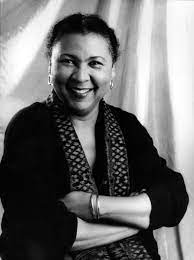
On December 15, 2021, the world lost the great feminist theorist, teacher, activist, and writer bell hooks. As a white feminist theorist, I valued immensely the ways her work widened my partial perspective, challenged my blind sports, and gave me important viewpoints on everything from sexism, racism, classism, pedagogy, militarism, work, and parenting. Her piece on feminist solidarity is the best I know — examining not just the ways we are divided by classism and racism, but also by sexism, addressing the very real and destructive ways that women undermine, abuse, and disregard each other, and how important it is to unlearn this with each other. She used the term “feminist movement,” rather than the feminist movement, knowing it not to be one thing, but rather a verb, a process of moving, changing, and transforming. Championing the power of coming to voice, she spoke truth to power, engaging in honest exploration of often difficult and divisive topics. It was this honest, liberatory voice that spoke throughout her work and made her voice so compelling, and so valuable.