Legacy of Carol P. Christ: TWO TORTOISES IN THE WEB OF LIFE

This was originally posted on March 14, 2014

The Gods made only one creature like them—man.  Greek TV documentary

The sight of a reptile or an amphibian usually provokes, at the very least, a feeling of repulsion in most people. Natural History of Lesbos

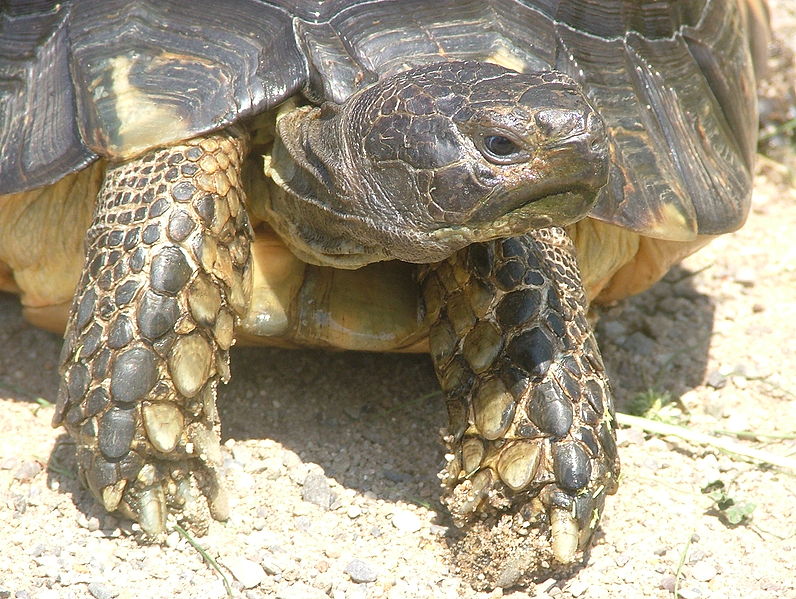
testudo marginata face

In the past days and weeks thetwo tortoises with whom I share my garden have woken up from a long winter’s sleep.  Henry, testudo marginata, has been up for a while now.  More than a month ago when I was cutting back and weeding in the area of the garden where he had been sleeping, Henry roused himself to sit in the sun near me for a few hours each day before creeping back under a shrub.  At first I thought I had disturbed him, but when he came back out day after day while I worked, I began to wonder if he was coming out to say hello.

Continue reading “Legacy of Carol P. Christ: TWO TORTOISES IN THE WEB OF LIFE”

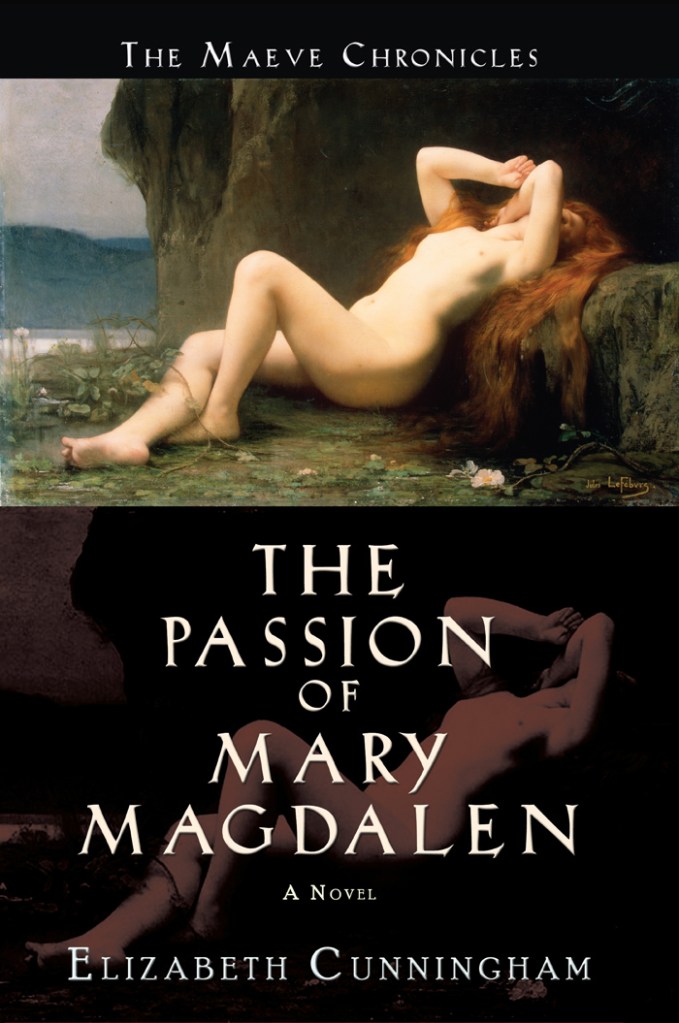
How Mary Magdalen Came into My Life: an excerpt, edited for brevity, from My Life as a Prayer: A Multifaith Memoir by Elizabeth Cunningham

(Author’s note: Mary Magdalen, or Magdalene, comes to people in many ways. To me, she came as an unconventional, fictional character. I worked hard to get the first century setting of her story as accurate as possible. Otherwise, I make no claim to historicity. I respect all the ways in which others know her.)

When I finished writing my novel Return of the Goddess in 1990, I thought I had nothing more to say. Yet, I sensed there was something—someone—missing.

An artist friend suggested I take up drawing or painting for a time—visual art being a form in which I had no experience, skill, and best of all, no ambition. I dabbled in paint and charcoal but soon reverted to magic markers, my childhood medium. 

One day a line drawing in brown marker took shape. An ample woman sat naked at a kitchen table having a cup of coffee. The round clock on the wall read a little after three in the afternoon. (The same time of day I was born.) She told me her name was Madge.

Continue reading “How Mary Magdalen Came into My Life: an excerpt, edited for brevity, from My Life as a Prayer: A Multifaith Memoir by Elizabeth Cunningham”

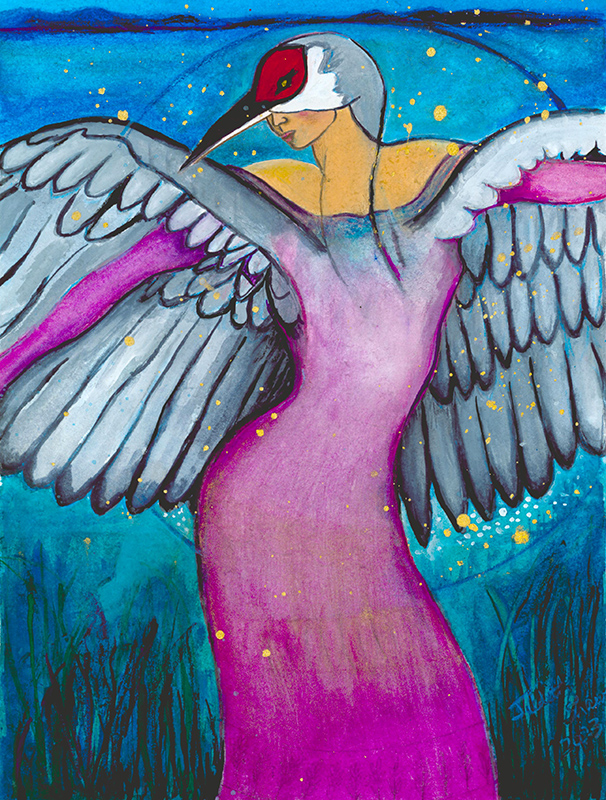
Aviana, 20th Century Crane Goddess by Judith Shaw

People think that goddesses only came into being long, long ago. People think goddesses are only found in ancient mythology. But people are wrong.  I know because I am Aviana, the Wetlands Crane Goddess who helped create the Bosque del Apache Wildlife Reserve of New Mexico. I first manifest on Earth as an Otherworldly force in the early 1900s. It was the migrating birds and waterfowl, in particular sandhill cranes, who called me into being.  

You see before Euro-Americans arrived in the land of the American Southwest, the Rio Grande was a mighty river which flooded every year bringing life and renewal to the land. These wetlands were a favorite wintering habitat of the Sandhill Cranes. They left their summer nesting grounds of Alaska, Canada and the northern United States and headed south for the winter.  Every year in November hundreds of thousand of cranes arrived in New Mexico. Here they fed on grasses and small animals throughout the short winter days. 

Continue reading “Aviana, 20th Century Crane Goddess by Judith Shaw”

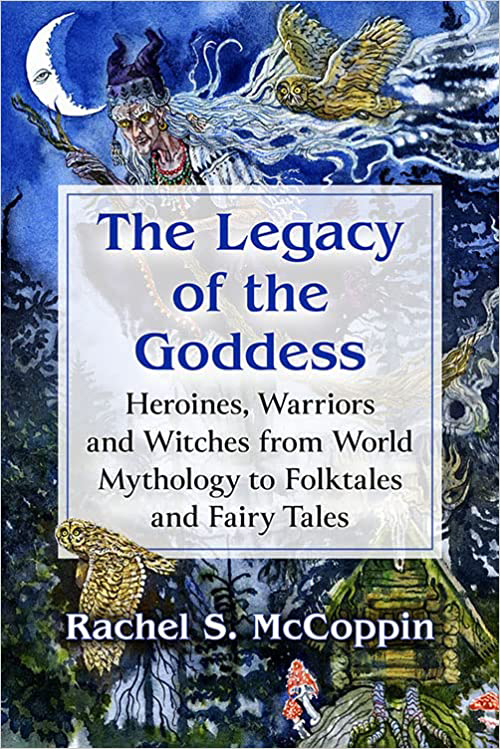
The Legacy of the Goddess: Heroines, Warriors and Witches from World Mythology to Folktales and Fairy Tales by Rachel McCoppin

This is part 1 of a two part posing. Part 2 will be posted tomorrow.

In this blog post, I would like to take the opportunity to discuss my new book, entitled: The Legacy of the Goddess: Heroines, Warriors and Witches from World Mythology to Folktales and Fairy Tales. This book argues that hundreds of folktales and fairy tales from around the world have preserved elements related to goddess worship from the sacred myths of many ancient civilizations.

Powerful goddesses were worshipped in most global cultures for centuries, until, in many regions, episodes of diffusion, conquest, colonialism, etc. caused the worship of these goddesses to be revised, lessened, or in some cases eliminated. To “preserve at least part of the reverence of goddesses, as well as the memory of the powerful religious and social roles women once held as representatives of goddesses”, hundreds of folktales and fairy tales were created, “told, and retold, most often by women storytellers” to impart goddess ideology (McCoppin, 2023, p. 5). Thus, many folktales and fairy tales portray myriad examples of powerful female characters who portray important messages connected to the goddesses and sacred women of ancient mythology.

Continue reading “The Legacy of the Goddess: Heroines, Warriors and Witches from World Mythology to Folktales and Fairy Tales by Rachel McCoppin”

Legacy of Carol P. Christ: Sophia, Goddess, and Feminist Spirituality: Imagining the Future

This was originally posted on September 17, 2018

Though represented by its detractors as an incursion of paganism into

Christianity, and presented as an integrally and intrinsically Christian phenomenon by its supporters, the truth about the Re-Imagining Conference and movement is that it was a product of a wider feminist awakening. The critique of patriarchal religions that emerged in the academy and in churches and synagogues in the late 1960s and early 1970s was part of the emerging feminist uprising. The feminist movement placed a question mark over all patriarchal texts and traditions, secular and religious, and as such was beholden to none.

In the spring of 1971, Roman Catholic Christian Mary Daly published “After the Death of God the Father” in the liberal Catholic magazine Commonweal. She asserted that the God whose death was touted in the “Death of God” movement was an idol fashioned in the image of male power and authority. She called for “the becoming of new symbols” to express the new becoming of women. In the summer of 1971, a group of nuns from Alverno College convened the first Conference of Women Theologians. Besides sparking dialogue about the role of women in religions, the conference endorsed my call to form a women’s group at the fall meetings of the American Academy of Religion, up until then a gathering of several thousand male scholars of religion, with only a handful of women scholars in attendance. At winter solstice, Z Budapest launched the Susan B. Anthony Coven #1 in Los Angeles publishing a Manifesto calling on women to return to the ancient religion of the Goddess.

Continue reading “Legacy of Carol P. Christ: Sophia, Goddess, and Feminist Spirituality: Imagining the Future”

Legacy of Carol P. Christ: Walk in Love and Beauty: A Touchstone for Healing

This was originally posted on July 9, 2018

Nurture life.

Walk in love and beauty.

Trust the knowledge that comes through the body.

Speak the truth about conflict, pain, and suffering.

Take only what you need.

Think about the consequences of your actions for seven generations.

Approach the taking of life with great restraint.

Practice great generosity.

Repair the web

In Rebirth of the Goddess, I offered Nine Touchstones of Goddess Spirituality as an alternative to the Ten Commandments. The Nine Touchstones are intended to inform all our relationships, whether personal, communal, social, or political.

Continue reading “Legacy of Carol P. Christ: Walk in Love and Beauty: A Touchstone for Healing”

Legacy of Carol P. Christ: REMEMBERING MERLIN STONE, 1931-2011

This was originally posted on February 20, 2012

“In the beginning…God was a woman.  Do you remember?”  Feminst foremother and author of these words Merlin Stone died in Feburary last year.

I can still remember reading the hardback copy of When God Was a Woman while lying on the bed in my bedroom overlooking the river in New York City early in 1977.  The fact that I remember this viscerally underscores the impact that When God Was a Woman had on my mind and my body.  Stone’s words had the quality of revelation:  “In the beginning…God was a woman. Do you remember?”  As I type this phrase more than thirty-five  years after first reading it, my body again reacts with chills of recognition of a knowledge that was stolen from me, a knowledge that I remembered in my body, a knowledge that re-membered my body.  My copy of When God was a Woman is copiously underlined in red and blue ink, testimony to many readings.

Continue reading “Legacy of Carol P. Christ: REMEMBERING MERLIN STONE, 1931-2011”

Legacy of Carol P. Christ: Speak the Truth about Conflict, Pain, and Suffering: It Is Not All Love and Light

This was originally posted on July 23, 2018

Nurture life.
Walk in love and beauty.
Trust the knowledge that comes through the body.
Speak the truth about conflict, pain, and suffering.
Take only what you need.
Think about the consequences of your actions for seven generations.
Approach the taking of life with great restraint.
Practice great generosity.
Repair the web

Continue reading “Legacy of Carol P. Christ: Speak the Truth about Conflict, Pain, and Suffering: It Is Not All Love and Light”

Legacy of Carol P. Christ: The Mountain Mother: Reading the Language of the Goddess in the Symbols of Ancient Crete

The blog was originally posted on May 22, 2017

Before he told the story of how his people received the sacred pipe, Black Elk said:

So I know that it is a good thing I am going to do; and because no good thing can be done by any man alone, I will first make an offering and send a voice to the Spirit of the World, that it may help me to be true. See, I fill this sacred pipe with the bark of the red willow; but before we smoke it, you must see how it is made and what it means. These four ribbons hanging here on the stem are the four quarters of the universe. The black one is for the west where the thunder beings live to send us rain; the white one for the north, whence comes the great white cleansing wind; the red one for the east, whence springs the light and where the morning star lives to give men wisdom; the yellow for the south, whence come the summer and the power to grow.

But these four spirits are only one Spirit after all, and this eagle feather here is for that One, which is like a father, and also it is for the thoughts of men that should rise high as eagles do. Is not the sky a father and the earth a mother, and are not all living things with feet or wings or roots their children? And this hide upon the mouthpiece here, which should be bison hide, is for the earth, from whence we came and at whose breast we suck as babies all our lives, along with all the animals and birds and trees and grasses. And because it means all this, and more than any man can understand, the pipe is holy. [italics added]

In this passage Black Elk illustrates the multivalency of symbols: the sacred pipe does not have a single meaning, but many meanings, in fact, more meanings than anyone can understand.

Continue reading “Legacy of Carol P. Christ: The Mountain Mother: Reading the Language of the Goddess in the Symbols of Ancient Crete”

Legacy of Carol P. Christ: Mountain Mother, I Hear You Calling

This was originally posted on July 7, 2014

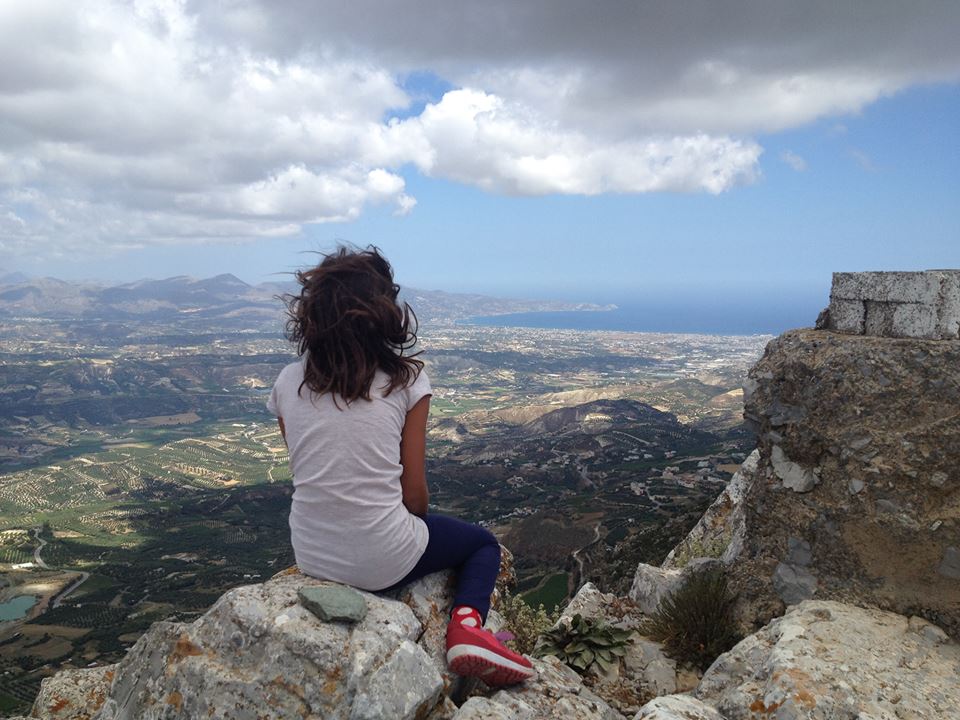
The mountaintop shrines of Mount Juctas in Archanes, Crete are situated on twin peaks, which may have symbolized breasts. Ancient shrines on the northern peak date from 2200 BCE until at least the end of the Ariadnian (Minoan) period in 1450 BCE. A crevice in the rock was filled with offerings of pottery, clay images of women and men in ritual dress, diseased bodies and body parts, sheep and cattle, and other objects. Excavations to a depth of 13 meters did not reach the bottom layers. Many offerings had been burned, suggesting that the objects were first thrown into fire and then dropped into the crevice. People who climbed the mountain for the festivals would have spilled over both peaks and there may have been shrines as well as fires on both of them.

Continue reading “Legacy of Carol P. Christ: Mountain Mother, I Hear You Calling”