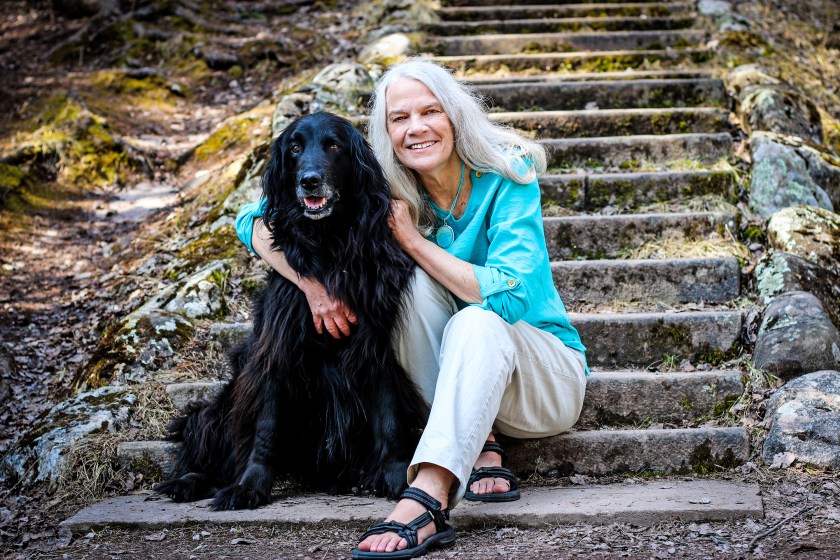
“A new heart I will give you . . . “: Part Two by Beth Bartlett

You can read part 1 here.

Hope: What is a heart transplant if not hope? In granting the possibility of new life out of death, it is the essence of hope. Yet, hopefulness is also knowing death is imminent and finding a way to live well into that knowledge. The impulse of hope encourages us to go on despite the odds. Hope indeed seems to spring eternal. In my darkest days, something would come along and lift me up. Hope is a testimony of the human spirit, lifting us up, refusing to refuse us. This new heart brought hope to me, and I believe that in our going on together, we carry the hopes of my donor’s loved ones as well. 

Continue reading ““A new heart I will give you . . . “: Part Two by Beth Bartlett”

A Fable for the Season by Marie Cartier

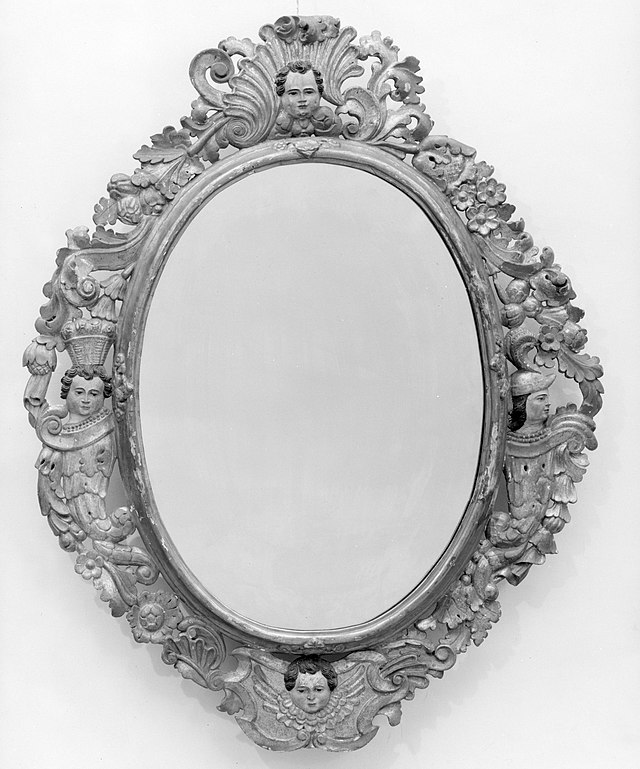
Once upon a time there was a person who only saw themselves in the mirror—even if someone else was passing by in the background, and they certainly never saw the shadows of all the people who had helped them in their life swimming in their eyes. That’s the way it is sometimes—we just don’t see what we don’t want to see.

 And every day this person would look into the mirror, adjust their hair or their jewelry or their collar and then go off to work—never seeing anyone besides themselves.

Until one day they fell. The fell hard over a “stupid, goddamn tree trunk root that some goddam someone should have cut or shaved or done something with –goddamn it.” They said a version of this over and over on their way to the hospital.

And because of that they had to be fed by a nurse. And they had to have their bandages changed. And they had to have a cast put on—several. And they had to have a lot of things happen because it had been a nasty fall and they broke both wrists and their right leg.

Continue reading “A Fable for the Season by Marie Cartier”

From the Archives: Turkey – Abundance, Gratitude and Connection to Mother Earth by Judith Shaw

This was originally posted on October 25, 2020

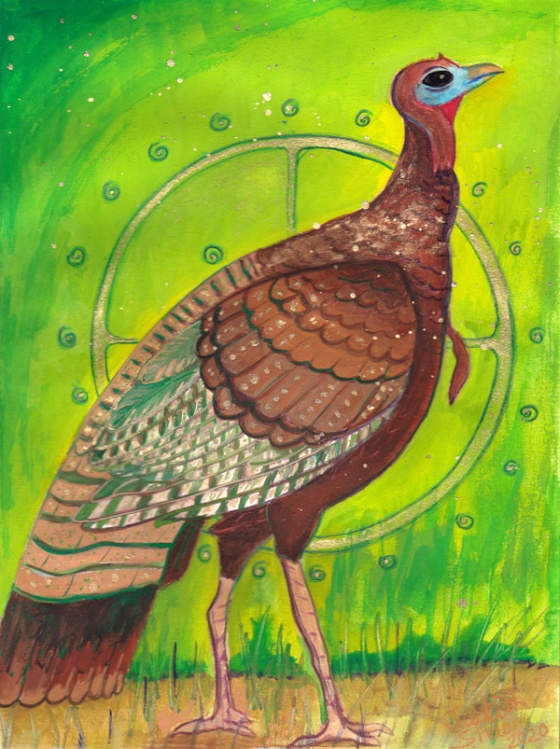
In the United States turkeys are equated with Thanksgiving. But there is so much more to Turkey – a gentle creature who forms strong attachments. Reputed to be dumb, Turkey is in fact quite intelligent and curious, with the ability to solve problems. Turkeys have an excellent understanding of the details of their location which makes them so successful at feeding themselves. They also love to play and to cluck along with music.


wild-Turkey-with-fanned-tail
photo by Tony Castro

Turkeys, indigenous to North America, evolved over 20 million years ago and share a common ancestor with grouse, pheasants and other fowl. Two species of wild turkey exist today – the wild turkey of eastern and central North America of which there are 5 sub-species and the ocellated wild turkey of the Yucatan.

Yet why is turkey named turkey? Strangely enough it was a mistake. English colonial settlers thought turkeys were a type of guinea fowl which England imported from Turkey – thus the name. The Spanish word for turkey is guajolote which is derived from the Nahuatl (Aztec) name huexolotl.

Continue reading “From the Archives: Turkey – Abundance, Gratitude and Connection to Mother Earth by Judith Shaw”

Witches Butter by Sara Wright

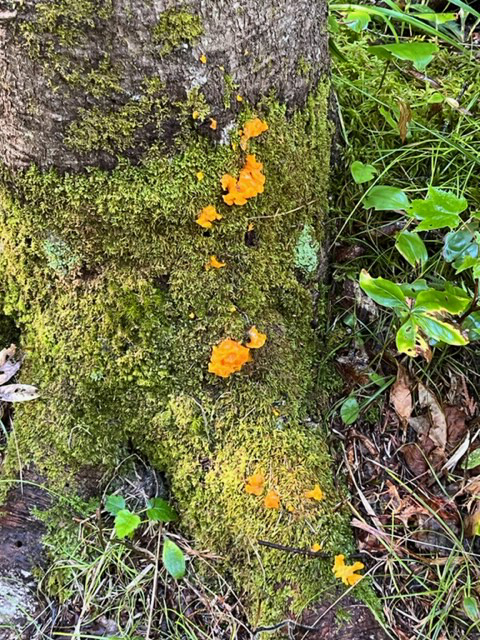
The other day I found the most beautiful fungus on an aging white pine set against deep green moss that was almost arcing over the brook. When I looked up Dacrymyces palmatis I discovered that it’s common name was “Witches Butter.” That figures I thought – this must mean that this plant has medicinal qualities, and of course it does along with the fact that the fungus is edible.

Any time I see the word witch associated with a plant if I am not familiar with it I start digging into research inevitably coming up with the same kind of information – the plant/ tree/ fungus/slime mold is edible and has medicinal value.

The word witch as many of us know has at its root to bend or shape. Shape -shifting by non –ordinary means.

Continue reading “Witches Butter by Sara Wright”

Carol P Christ’s Legacy: Gratitude and Sharing: Two Fundamental Principles of Goddess Spirituality

Moderator’s Note: Carol Christ died from cancer in July, 2021. Her work continues through her non-profit foundation, the Ariadne Institute for the Study of Myth and Ritual and the Goddess Pilgrimage to Crete. This blog was originally posted February 4 2013. You can read it along with its original comments here.

The more I practice the spirituality of the Goddess, the more I understand that earth-based spiritualities are rooted in two fundamental principles:  gratitude and sharing.  We give thanks to the earth for the gift of life. As we recognize our interdependence and interconnection in the web of life, we are moved to share what has been given to us with others. *

When I first began to lead Goddess Pilgrimages in Crete, I was inspired by a line in Homer to begin a pilgrimage tradition of pouring libations of milk, honey, water, and wine on ancient stones. At first I knew the form, but not its deeper meaning.  It gradually dawned on me as I thought about the large number of pouring vessels in the museums, the altar stones, and the Procession Fresco from Knossos, that an important part of Minoan rituals involved processions in which people offered first fruits back to the Mother whose body had produced them, and poured libations on altars.

Continue reading “Carol P Christ’s Legacy: Gratitude and Sharing: Two Fundamental Principles of Goddess Spirituality”

Carol P. Christ’s Legacy: ON NOT GETTING WHAT WE WANT AND LEARNING TO BE GRATEFUL FOR WHAT WE HAVE

Moderator’s Note: We here at FAR have been so fortunate to work along side Carol Christ for many years. She died from cancer in July, 2021. To honor her legacy, as well as allow as many people as possible to read her thought-provoking and important blogs, we are pleased to offer this new column to highlight her work. We will be picking out special blogs for reposting. This blog was originally posted March 26, 2012. You can read it long with its original comments here. Carol mentions a book she was writing with Judith Plaskow at the time with the working title: God After Feminism. The book was published in 2016 under the title of Goddess and God in the World: Conversations in Embedded Theology. You can find it here.

Many women’s dreams have not been realized. How do we come to terms with this thealogically?

Although I am as neurotic as the next person, I am also really wonderful—intelligent, emotionally available, beautiful (if I do say so myself), sweet, caring, and bold. I love to dance, swim, and think about the meaning of life. I passionately wanted to find someone with whom to share my life. I did everything I could to make that happen—including years of therapy and even giving up my job and moving half way around the world when I felt I had exhausted the possibilities at home.

For much of my adult life I have asked myself: What is wrong with me? Why can’t I find what everybody else has? Even though I knew that there were a lot of other really great women in my generation in my position and even though I knew that many of my friends were with men I wouldn’t chose to be with, I still asked: What is wrong with me?

Continue reading “Carol P. Christ’s Legacy: ON NOT GETTING WHAT WE WANT AND LEARNING TO BE GRATEFUL FOR WHAT WE HAVE”

Turkey – Abundance, Gratitude and Connection to Mother Earth by Judith Shaw

judith shaw photoIn the United States turkeys are equated with Thanksgiving. But there is so much more to Turkey – a gentle creature who forms strong attachments. Reputed to be dumb, Turkey is in fact quite intelligent and curious, with the ability to solve problems. Turkeys have an excellent understanding of the details of their location which makes them so successful at feeding themselves. They also love to play and to cluck along with music.

Continue reading “Turkey – Abundance, Gratitude and Connection to Mother Earth by Judith Shaw”

Happiness Habits by Katey Zeh

derek-thomson-406050Finding joy has never been a priority for me in terms of how I structure my life. A long-term goal? Certainly, yes. My path to getting there, however, has been misguided. I’ve held the common belief that if I can achieve and succeed enough, joy–or at the very least, contentment–will find its way to me.

Sometimes I wonder if I was drawn initially to the field of faith-based advocacy because the nature of the work is to resist complacency. The successes are few and far between, and they are never sufficient for achieving the ultimate goal of justice for all. My proclivity to be dissatisfied with progress and to keep on pushing aligns well with the vision of many social justice movements.  

My permanent state of dissatisfaction, which was for some time a motivational force, seeped into how I felt about nearly everything. Whenever feelings of joy or happiness would arise, particularly around work, I often attributed them to a false sense of pride that had caused me to lose focus on the long game. In short, I didn’t believe I deserved to feel joy. Continue reading “Happiness Habits by Katey Zeh”

Gratitude – A Salve to Heal Our Wounds by Judith Shaw

judith shaw photoTomorrow being Thanksgiving in the United States offers an opportunity to reflect on gratitude. With so much anger bubbling up on all fronts is it possible that gratitude could be the salve to heal our wounds?

Continue reading “Gratitude – A Salve to Heal Our Wounds by Judith Shaw”

Learning Gratitude for the Gifts of Life on the Goddess Pilgrimage to Crete by Carol P. Christ

In Crete we are always being given gifts—fresh cherries, ice cold bottles of raki, yogurt swimming in honey, and so much more. Over the years it finally hit me that this spirit of great generosity is a living remnant of the ancient Cretan egalitarian matriarchal tradition of gift-giving.

In egalitarian matriarchal cultures gift-giving is not something reserved for birthdays and holidays. It is a way of life rooted in the primary understanding that life is a gift that is meant to be shared.

Our lives are a gift from our mothers. Our individual lives have are not something we create or created for ourselves. We all emerged from the body of a mother. We were all given the gift of care and feeding by a mother or others. Our mothers did not create themselves. They emerged from the bodies of mothers and were cared for and fed by mothers or others. And so on back to the original mother of the human race, known as the African Eve.

Continue reading “Learning Gratitude for the Gifts of Life on the Goddess Pilgrimage to Crete by Carol P. Christ”