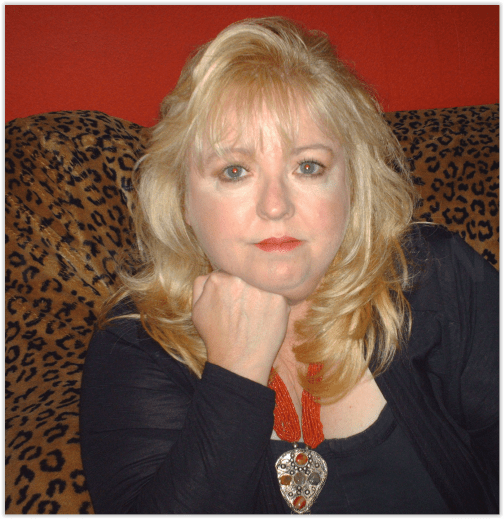
Three poems by Rebecca Rogerson

Don’t Take Me to Church

He never let me eat communion because I wasn’t a catholic, but it was okay for me to eat his dick. My tiny palms forced to stroke him, the same dextrous hands that coloured in the lines. 

I knew his God wasn’t my God. I knew she saw everything there was to see and that he wouldn’t reach salvation; no matter how many Hail Marys he said at mass in Ireland.

The Virgin Mary knew what he stole from me, what they steal from all of us.

I couldn’t fall apart on Sundays at noon when he took me to church—before he took me home after he did what he did—to the little Jewish girl who didn’t know she was Jewish.

I couldn’t remember it because I buried it in Survive, until, it was resurrected by nightmares and demons who professed caring and brought me to altars of despair to vomit up all the darkness, and when there was no more left to cleanse or tear out; light ripped in.


No one talks about the embarrassment that goes along with the telling, sharing and surfacing of sexual violence. How it comes up, how it comes back. How we’re always haunted by the deadbeat dead and grabby grandfathers who try to reach from there into here, pretending they are made of heaven.

I fled a friend’s choir concert because perpetrators keep stealing time, moments, sleep, joy, and friendship, in churches and baths. On my flight, I hunted for nature, soil and anything else that felt most alive in the hilly town of Nelson. Pretending I was like everyone else, I hid the panic that strikes broken hearts.
Continue reading “Three poems by Rebecca Rogerson”

Two Poems by Rebecca Rogerson

ROSE WATER

I am the holy place somewhere in the stars of eternity,
 someone’s daughter who seeks reprieve somewhere.

Yetta changed her name to Mary. She tried to erase her past, not as a Jew, well maybe some of that, but more as a Jew molested by her father—a frum[1], “Monster”, his daughters called him.

On my altar sits my tallit alongside a Menorah with seven brass holders. No stars of David—before or after the decimation of Gaza. Can rose water sweeten our hearts? We pour it graciously in our hands, hoping the lost petals heal our guts and brighten our thoughts. She searches hungrily for hope in glass bottles adorned with Farsi, that cost $4.29 each.

Continue reading “Two Poems by Rebecca Rogerson”

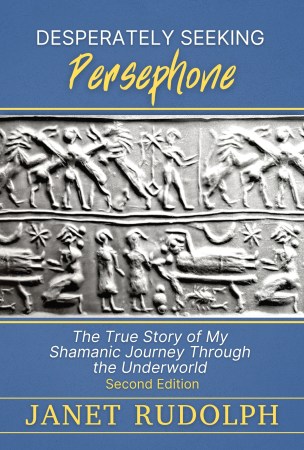
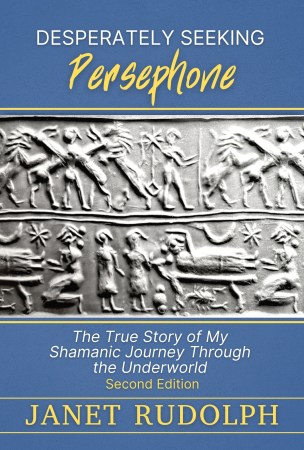
Desperately Seeking Persephone by Janet Rudolph, Book Review by Carolyn Lee Boyd, Part Two

In Part One of this review (posted yesterday), we learned how Janet descended into the Underworld, like Inanna and Persephone, after child abuse and rape, and how she began a decades-long journey back to our own world, healed and empowered. To learn more about her return from the Underworld and how she became the shaman and author she is today, I invite you to join the journey in Part Two as we continue to explore “Signposts” that marked her ascent.

Signpost #3. Be aware, be free, be focused, be here, be loved, be strong, be healed.

Janet’s teachers at the Mystery School had brought together shamanic traditions from throughout then world. Among them was Huna, or Hawaiian Adventure Shamanism as practiced by Serge Kahili King. A summary of Huna is shown in a mantra: Be aware, be free, be focused, be here, be loved, be strong, be healed (114) and “focus on the gifts that come to us through adversity” (116). 

Continue reading “Desperately Seeking Persephone by Janet Rudolph, Book Review by Carolyn Lee Boyd, Part Two”

Desperately Seeking Persephone by Janet Rudolph, Book Review by Carolyn Lee Boyd, Part One

The myths of the descents of the Sumerian Inanna and the Greek Persephone to the underworld have fascinated and inspired women for millennia with their violence and betrayal, leaving behind all you love and that hold you up, and facing your deepest fears, even death. We recognize our own traumas in their struggles and seek guidance as to how to navigate our ascents back to wholeness and well being in their stories.

After her own experience of childhood abuse and stranger rape as a young woman, Janet Rudolph, one of FAR’s co-weavers, also pored over the myths in hopes of finding a helpful account of their journey home. “Once I had tumbled metaphorically, literally and mythically into the thorny quagmire of the underworld, it was devilishly hard to escape. I felt lost. I needed a guide, a role model to find my path outward”(xii). The problem is, Janet says, “The stories of their return are glossed over. There is no detailed story called From the Great Below Back to the Great Above” (15). Until now in Janet’s recently re-published book, Desperately Seeking Persephone.

Continue reading “Desperately Seeking Persephone by Janet Rudolph, Book Review by Carolyn Lee Boyd, Part One”

We Endure Abuse to Survive, Part 2 by Karen Tate

Part 1 was posted on December 18. You can read it here.

But what was the straw that broke the camel’s back in my case? What hurled me into that dark abyss I described earlier? The paranoia, the anxiety, the nightmares and sleeplessness. Not opening my closet in three years or not caring about much of anything. The fear of being alone in a place or in a crowd of strangers.  Fear of going to unfamiliar places. Of driving myself across town. Did it start with the collective trauma and abuse mentioned earlier? I can’t be sure, but therapy definitely points to my attack by an inebriated young woman wielding a stun gun. She looked to be college age. One would never have guessed her capable of such a senseless assault. I told few people about it but it was years before I realized how that event stifled my voice. Yet “they” – the authorities in society – say if we don’t talk about assault right away it must not be true. Or we’ve waited too long to talk. They want us to talk on their timetable about damage done to us when there might not be visible wounds or we even understand the psychological scars that might not have surfaced yet. It was a few years after the attack that I finally sought the help of a therapist and was diagnosed with the PTSD or post traumatic stress disorder that changed my life. 


Continue reading “We Endure Abuse to Survive, Part 2 by Karen Tate”

Memoirs of a Cult Survivor by Chasity Jones

This blogpost is a reflection on my experience creating a podcast series concerning religious trauma experienced in cults as well as how to heal from traumatic cult experiences.

Firstly, I had to be very intentional about the word survivor as opposed to victim. Survivor was the obvious choice because I used to cringe when thinking of myself as a victim. However, As I heal, I can honor both the survivor and the victim, for they are the same. I cannot forget to acknowledge though that some victims do not survive and this is the same concerning cults. Many people at this very moment are in exile or in hiding from their cults when they escape and for that reason some of the people who engaged in this series were forced to engage anonymously.

Continue reading “Memoirs of a Cult Survivor by Chasity Jones”

“Calculated Emotional Violence” and Abuse: Memories of ‘Mother Days’ by Sara Wright

I took the above phrase from a post on FAR (published 5/6/22) after it triggered memories of mother abuse. Like Sedna I was a daughter who was thrown into the sea, her fingers cut off one by one (but not by my father). Abandoned and left to die, Daughter sank to the bottom of the sea. The classic Handmaid’s Tale. In the Inuit story the abused daughter survives, transforming into Mistress and Mother of the Animals. As a woman I have followed in Sedna’s footsteps in that I became a dedicated naturalist with a fierce love for all non-human creatures (and plants), but I have yet to transform my unfortunate family history.

With Mother’s Day approaching, I am forced against my will to think about my calculating, deceitful mother who had little use for women in general, and spent her life criticizing and eventually deleting her only daughter permanently from her life. Trashed.

My first crib memory is one of raw terror – a bewildered baby crying out for a mother that never came. Comfort, compassion, love were withheld. Now at 77 I ask myself: what was wrong with this woman?

Continue reading ““Calculated Emotional Violence” and Abuse: Memories of ‘Mother Days’ by Sara Wright”

From the Archives: Beyond Clenched Teeth: Reflections on Forgiveness by Elizabeth Cunningham

Moderator’s note: This marvelous FAR site has been running for 10 years and has had more than 3,600 posts in that time. There are so many treasures that have been posted in this decade that they tend to get lost in the archives. We are beginning this column so that we can all revisit some of these gems. Today’s blogpost was originally posted January 19, 2014. You can visit it to see the original comments here.

Elizabeth Cunningham

“I forgive you.”

These words make my teeth buzz like the sound of chalk squeaking on a blackboard. I can vividly recall my sister and myself, as children, saying these words through clenched teeth.  Not only were we Christians, we were the minister’s daughters.  We had no choice. The only other words I hated as much: “I’m sorry,” also forced through clenched teeth.

Oddly enough I cannot recall my older brother being told to ask my forgiveness when he and his friend pummeled me. That fell into the category of: “you egged them on.” My mother did used to say of my brother, mournfully and anxiously: “he doesn’t know his own strength.” Which meant: it isn’t his fault that he hurt you.  But my sister and I were supposed to be nice to each other.

Continue reading “From the Archives: Beyond Clenched Teeth: Reflections on Forgiveness by Elizabeth Cunningham”

Beyond Clenched Teeth: Reflections on Forgiveness by Elizabeth Cunningham

Elizabeth Cunningham headshot jpeg“I forgive you.”

These words make my teeth buzz like the sound of chalk squeaking on a blackboard. I can vividly recall my sister and myself, as children, saying these words through clenched teeth.  Not only were we Christians, we were the minister’s daughters.  We had no choice. The only other words I hated as much: “I’m sorry,” also forced through clenched teeth.

Oddly enough I cannot recall my older brother being told to ask my forgiveness when he and his friend pummeled me. That fell into the category of: “you egged them on.” My mother did used to say of my brother, mournfully and anxiously: “he doesn’t know his own strength.” Which meant: it isn’t his fault that he hurt you.  But my sister and I were supposed to be nice to each other. Continue reading “Beyond Clenched Teeth: Reflections on Forgiveness by Elizabeth Cunningham”