On Planning: Reflections on Control and Hope by Ivy Helman

20151004_161012We plan so many areas of our lives. We make big complex plans, like family get-togethers, vacations, business trips, conferences, large events, etc. We also plan weekly, daily and monthly smaller tasks. Some examples are doctors appoints, day trips, sports schedules, weekly dinner menus and perhaps even the clothes we are want to wear for a job interview or the first day of school.

Many plans happen without a hitch and then there are those plans that don’t. Usually we attribute a plan falling through to something unexpected like an illness leading to cancelling vacation or because of some mistake on our part like when we burnt dinner because we forgot we had food in the oven (which has never happened to me!). All of this is assuming we have some level of control over our plans, our lives and, even, our destiny. But how much control do we really have, and likewise, how much control do others have over our lives?

I’m not so sure there is any sort of easy answer to this question. However, if I were to offer my view, I would say it’s a mixed bag. There are so many parts of our lives we have no control over even if we’d like to think we do. We can’t control where and when we were born. It is debatable if we have some control or not over the ways in which our lives are affected by patriarchy, capitalism, racism, classism and the like. We can’t control whether others drive drunk. We can’t control thunderstorms, tornados or earthquakes. Continue reading “On Planning: Reflections on Control and Hope by Ivy Helman”

“Justice, Justice You Shall Pursue:” Finding Hope in Justice-Seeking Movements. by Ivy Helman

20140903_180423For the past few weeks, there has been a lot of discussion about racism in the United States and rightly so. It is clear from the lack of charges and the repetition of similar crimes across the United States by different members of various law force communities that some people because of the color of their skin are immune to the consequences of their actions and others, also because of the color of their skin, are often the victims of such actions. Criticism, here, in the forms of protests, federal inquiries and outrage are essential.

I am reminded of oft-quoted part of the Torah: Devarim (Deuteronomy) 16:20, one that I saw on some of the signs Rabbis carried with them in the protests. “Justice, justice shall you pursue, that you may thrive and occupy the land that the Lord your God is giving you,” (from the JPS translation). G-d tells those early Israelites that justice is a requirement not just for their survival in the Promised Land, but also if they want to have good, long lives. Later tradition, from the Talmud to Rashi and beyond, interpret this passage as a call for a just court system within Jewish society.  Likewise, all who use the system should have the principle of justice in mind.  There is also a lot of conjecture as to why justice is said twice. Many modern scholars call attention to the way in which religion and state were considered one in same for this time period and much of human history. Continue reading ““Justice, Justice You Shall Pursue:” Finding Hope in Justice-Seeking Movements. by Ivy Helman”

Halfway… by Sara Frykenberg

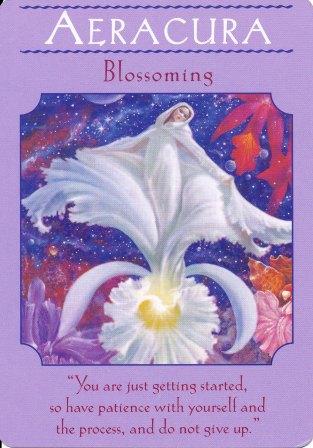
Sara FrykenbergThe title of this post is meant to reflect where I am in the semester, temporally speaking: halfway. Actually, the idea that I am halfway is a bit of a shock to me, considering I feel like I just started! I have a goddess oracle card sitting on my desk that reads: “Blossoming: You are just getting started,” reminding me to be patient with myself as my work takes shape this semester. But seven of fifteen weeks in, I think its time to pull a new card.Aeracura

When the word “halfway” popped into my head, though, I realized this is also a struggle I am having right now. I feel halfway—I answer “yes and no” to every emotional question. I sleep halfway, working even in my dreams. I am halfway okay: one week I am very down and the next, I feel just fine. And sitting on my patio this weekend, unable to sleep, I thought to myself: you are less than halfway full; and realized I that didn’t know what to do to fill myself up.

Continue reading “Halfway… by Sara Frykenberg”

The Burden of Change by Natalie Kertes Weaver

Natalie WeaverAs we embark on a New Year, I find myself customarily cautious.  The New Year, of course, is hugely emblematic of hopeful beginnings, revised behaviors, fresh outlooks, and personal commitments.   Yet, because renewal is so difficult to achieve, I find myself always a bit wary of the New Year talk of resolutions, whose results, like fad diets, tend to be neither sustainable nor genuinely transformative.   I have the same feeling, incidentally, after I get my teeth cleaned or get a car wash in the winter in Cleveland.

I live with hope and the possibility of change in my heart, but I am concerned about the effect of boundless messaging about insufficiency and inadequacy that pervades the culture. We learn over and again that we weigh too much; don’t use our time well enough; invest or use our money unwisely; need a better job; don’t cook healthfully enough; visit the gym too infrequently; aren’t nice enough; spend too little time with our kids; need better things and clearer skin; do too little; do too much; and on and on.  At least for me, socially ritualized self-critique of this sort reflects a profound narcissistic spirituality of self-help and (often failed attempts at) self-improvement.  Such spirituality reinforces the self-absorption and lack of true community that lead us into individualism and over-consumption in the first place.

This year, as I embark on the New Year, I am especially aware of many things I cannot change.  For one, I am watching a good friend die, and there is no longer anything that anyone can do about it.   I am watching my mother’s mobility decrease from a knee injury year’s ago.  I am watching my children get older, and I hear surprising things that come from them from the environments they inhabit beyond the walls of my home.  I learn more acutely what I already know, namely, that they will and must live in a world much larger than my own invention.  I am watching my own self deepen into the reality of multi-generational familial responsibilities, as I grapple with what it takes to run a home, care for children, and meet others’ basic needs.   I know I am not alone.  I read student papers in my adult education class over the break, and the weight of their realities is tremendous.  How tyrannical it seems to insist that we add to these realities of ours some kind of burden of change between 11:59 and 12:01!

I have come to believe that much, probably all, of the spiritual life that leads to redemption (or liberation or salvation… whatever we wish to call it), is about reconciliation with that which one cannot change, with what is imperfect, with what we would have as otherwise.  There is an enormous need for us to release control over life itself and to forgive ourselves the relative impotence we experience in the face of it all.  In an even greater leap, somewhere along the way we must also forgive or reconcile with God for the gaping distances between that which is and that for which we hope.

I eschew welcoming the New Year as a series of televised media extravaganzas that make me feel somehow bad-about-myself-yet-wildly-energized-about- how-much-better-I-can-be (especially if I use the right products).  Rather, the New Year might more helpfully be greeted as a gentle continuation, one next persistent push in the sequence of the tide’s rush against the shore.  It is just another moment in a larger history that carries on independently of us.  We cannot change the seascape; we cannot outrun it; the tide will bring in all sorts of beautiful things that we did not make and also dangerous things that we cannot sidestep.  It will be what it will be.

What we can do is notice it better.  For my part, I can quietly adjust my perspective near and far, and then perhaps I might also quietly find my values realigning with my more intentional vision.  I might thereby experience the beginnings of a soft metanoia toward more mindful creatureliness.  And, here, I might also begin to become the proverbial change, within my limited spheres of influence, that I wish to see in the world.

Constructive agency must begin in the prayerful appreciation of limited creaturely life.  It is only then, I suspect, that one might have a chance at sustainable, transformational being in oneself, in relationship to others, and in the world.  It begins, however, with letting go of Luciferian ambitions for a more prefect world of our own design.  My New Year’s meditation, then, is this:  I will try to accept being a human creature: a finite, earth-dependent, truly human animal.  I will try to understand the balance between what I can and should do as a responsible, moral being on the one hand and where aspiration becomes an idolatry of dominion on the other.  I will try to understand limitation as its own sort of revealing grace and eject constructions of fall and punishment that badly theologize what is mere creaturely disappointment at not being God.  I will try in earnest to understand and to live in these words:

“Do not worry about your life, what you will eat or drink, about your body; or what you will wear… Look at the birds of the air; they do not sow or reap or store away in barns, and yet your heavenly Father feeds them.  And why do you worry about clothes?  See how the lilies of the field grow. They do not labor or spin.  Yet… not even Solomon in all his splendor was dressed like one of these. Who…by worrying can add a single hour to his life?… Seek first his kingdom and his righteousness, and all these things will be given to you as well.  Therefore do not worry about tomorrow, for tomorrow will worry about itself.  Each day has enough trouble of its own.” (Matt. 6: 25-34)

Natalie Kertes Weaver, Ph.D., is Chair and Associate Professor of Religious Studies at Ursuline College in Pepper Pike, Ohio. Natalie’s academic books include: Marriage and Family: A Christian Theological Foundation (Anselm, 2009); Christian Thought and Practice: A Primer (Anselm, 2012); and The Theology of Suffering and Death: An Introduction for Caregivers (Routledge, 2013). Natalie is currently writing Made in the Image of God: Intersex and the Revisioning of Theological Anthropology (Wipf & Stock, 2014).  Natalie has also authored two art books: Interior Design: Rooms of a Half-Life and Baby’s First Latin.  Natalie’s areas of interest and expertise include: feminist theology; theology of suffering; theology of the family; religion and violence; and (inter)sex and theology.  Natalie is a married mother of two sons, Valentine and Nathan.  For pleasure, Natalie studies classical Hebrew, poetry, piano, and voice.

 

Tikvah v’hashamayim (Hope and the Heavens): A Jewish Perspective on Redemption by Ivy Helman.

headshotThe Torah is bursting with hopes over-fulfilled.  Abraham and Sarah hoped for a child and gave birth to a nation.  The Israelites hoped for freedom from slavery and eventually received an entire Promised Land.  We understand hope and, in so many ways, we live on it, as hope has sustained us for thousands of years.  Today, our hopes inspire our actions and motivate us to work for peace, justice and equality.   In Jewish terms, we call this goal or vision of a better world in the here-and-now: redemption.

Yet, redemption does not just appear out of thin air or because we wish it.  Redemption and the hope of it requires work and cooperation with the Source of All Life.  As Deuteronomy 30:19 says, “I have put before you life and death… [therefore] choose life…”  This cooperation could be a simple commitment to tikkun olam, repairing the world (some times translated as social justice).  For others, choosing life could mean more observant religious practice.  It could also be a combination of the two.  In the end, though, I think both hope and redemption require choosing life in some form or another.

Just as how we choose life depends on who we are, how we achieve this redeemed world depends on how we understand G-d’s redemptive power.  Some of us think redemption will come through the moshiach (a savior), Continue reading “Tikvah v’hashamayim (Hope and the Heavens): A Jewish Perspective on Redemption by Ivy Helman.”

“Am I Crazy?” Loving Laura Dern by Carol P. Christ

carol p. christ 2002 color“Am I crazy?”

“No, just full of hope. You got more hope than most people do. It’s a beautiful thing to have a little hope for the world, you know.”

This question was posed by Amy Jellicoe, played by Laura Dern, at the end of the HBO television series Enlightened.  Unemployed, single, and in debt after she was fired for “whistle-blowing” on the corrupt activities of the corporation where she worked, Amy wondered if she had done the right thing.  The answer of her ex-husband Levi  brought tears to my eyes.

In many ways, I am Amy.

Let’s begin with the obvious.  When I was young, I was slender and pretty and exceedingly tall, with long blonde hair—I imagine I looked like Amy.  I couldn’t take my eyes off Laura Dern. There just aren’t many women in the world as tall as I am. Because of that I don’t know what I look like to others.  In the series, Laura Dern is taller than just about everyone else, including the men, and she seems not to care, because she often wears high heels.  Continue reading ““Am I Crazy?” Loving Laura Dern by Carol P. Christ”

On Love, Theodicy and Domestic Violence by Ivy Helman

ivyandminiLast week, I introduced my students to the theological concept theodicy.  Theodicy is a theological explanation of why suffering and evil occur that usually includes some kind of defense of divine attributes.  For example, if G-d is all-knowing (omniscient), ever-present (omnipresent), all-powerful (omnipotent) and all-loving then how do we explain hurricanes, illness, mass murder, airplane crashes and other forms of evil and suffering?  This is quite difficult because, as my students point out after a few minutes of discussion, most explanations are often unfulfilling or inadequate.  The discussion turns quite quickly to two reactions.  Either, G-d isn’t what we thought G-d was or science does a better job explaining these examples of evil and suffering.  Science explains that hurricanes happen because of various environmental factors or a plane crashes because of mechanical problems. Even the concept of humanity’s freewill as the cause of evil often circles back to G-d’s creation of humanity and leaves students unsettled.  If G-d created within humanity the possibility of evil, how, then G-d can be all-loving?

The love/evil dichotomy is often the real conundrum of theodicies in monotheism.  This has been pointed out by numerous theologians throughout the ages.  How do we account for evil when there is only one divine Being?  How can an all-good, all-loving Being clove-1345952464afLreate or even be responsible for evil?  Which leads to the next question, is evil the absence of love?  These are extremely difficult philosophical and theological questions.

To explore then, we should start where it is often suggested that we learn most about love: family, close friends and intimate relationships.  Take this for example.  Continue reading “On Love, Theodicy and Domestic Violence by Ivy Helman”

Remembering 9/11 and Doing What We Do by Marie Cartier

photo credit: Lenn Keller

I remember 9/11. I was having phone sex with a woman from Chicago that I was seeing and I had just come back from Chicago to Los Angeles the night before. I was on the phone with her…and we were doing what people do…we were doing what we do when we are in love long distance…and then she said to me, “Turn on the T.V…” and I did. And the towers were collapsing. Jesus.

Days later I remember all of us lighting candles all across the city and coming  together…it was such an incredible time of coming together and then it got ugly and full of war.

I remember all these images of people at first “being there” for us in the U.S.—even Native Islanders in Papua New Guinea singing and playing I think a conch shell and then it got ugly and full of war. Continue reading “Remembering 9/11 and Doing What We Do by Marie Cartier”

On Winning and Not Winning in the “Fight” for “Justice” in the Web of Life by Carol P. Christ

The reason for hope is not the rational calculation that we will be able to save the world. The reason for hope is that it is important for us to try.

A few days ago, the United States Supreme Court upheld the deeply flawed heath care law passed by Congress. (I will not call it “Obamacare” as I do not believe Obama “owns” the concept of universal health care any more than Lyndon Baines Johnson or even Martin Luther King “owned” the concept of civil rights.) As a progressive I view universal health care as the only truly just health care system.  Still, I consider the Supreme Court decision a “victory.”

The same day the Supreme Court decided, I received a copy of a letter from the Greek government accessing 81,950 Euros in fines against the road-building company that violated the highly protected Natura wetlands while constructing the 36th National Road in Lesbos. Another “victory.”

Two weeks ago the cause of “justice,” as I see it, was not served when the center-right party New Democracy Party gained the majority in the Greek elections and became the central player in a coalition government. With New Democracy in coalition with the center-left Pasok, it is unlikely that corrupt politicians and tax evaders will be made to repay the money they have stolen from the Greek people. At the same time, it is likely that the Greek people in the middle and lower classes will be made to pay even more than they already have for the failure of a corrupt system of government.  The Green Party missed gaining 8 seats in Parliament in the first election by 4000 votes. In the second election we lost ground, while the fascist Neo-Nazi party that calls itself The Golden Dawn, garnered 18 seats. Continue reading “On Winning and Not Winning in the “Fight” for “Justice” in the Web of Life by Carol P. Christ”