Thinking about Goddess and God by Judith Plaskow and Carol P. Christ

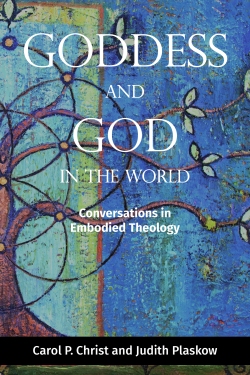
Goddess and God in the World final cover design

Talking about our deepest beliefs and feelings can be surprisingly intimate. In our new book Goddess and God in the World, we discuss our different theologies and challenge each other’s views. In the conclusion, we consider whether there is any way to judge between our positions. While we believe that theologies are rooted in experience, we also insist that they must make sense of the world we share and provide the orientation we need as we face the social, political, and environmental crises of our time.

Theologically, we disagree on two fundamental issues: whether divinity is personal or impersonal; and whether divinity is good or inclusive of good and evil. Does one of our views meet our criteria for adequacy more fully than other?

Does the notion of a personal or impersonal deity make more sense of our experience of the world? Carol argues that if consciousness and intelligence is a fundamental aspect of human existence and is found in varying degrees throughout the web of life, then it makes sense to think of divinity as also having consciousness and intelligence. Judith responds that the notion of a personal deity seems to her a holdover from the biblical picture of God and that she can find no evidence in her experience or reflection that a divine individual who is conscious and intelligent exists. We seem to be at a standoff here. There is some consolation in recognizing that this is a fundamental divide in the history of religions, but this insight does not resolve our disagreement.

Does one or the other of our views offer better guidance in making moral decisions? Judith argues that her view places moral responsibility firmly in human hands, which is where it belongs. Carol agrees with Judith that humans and other individuals are the ones whose decisions will determine the fate of the world, and she finds recognition of the interdependence in the web of life sufficient grounds for moral decision-making. But she would add that the love and understanding of a divine individual inspires her to love and understand the world and to promote its flourishing. Judith believes that the idea of one divine presence that enlivens and unites the universe is a sufficient basis for ethical action.

Our other major theological difference concerns whether divinity is good or inclusive of good and evil. Judith argues that if divinity is inclusive of the world, it must be inclusive of both good and evil. Carol counters that if divinity is reflective of what is best in ourselves and in other individuals in the world, then divinity must be good, not evil.

Does one of our views provide better moral guidance? Carol argues that a divinity who is good inspires us to try to make the world better. Judith replies that the notion that divinity is good leads us to idealize ourselves and to forget or deny our capacity to do evil. Carol feels that a clear focus on the world is sufficient to remind us of our capacity for evil.

Does one of our views offer a more adequate account of the existence of evil in the world? Judith asserts that the idea that divinity is the ground of both good and evil provides a better answer to the problem of evil: the potential for both good and evil are inherent in the creative process that is the foundation of life. Carol believes that the world is created by a multiplicity of individuals, including the divinity. The capacity for good and evil is inherent in the creative process that structures the world. The divinity is good but not omnipotent. What we call evil is created by individuals other than the divinity. Judith replies that this view does not adequately account for the origin of evil.

Is there any way to choose between our different positions? Each of us is firmly convinced that her view is clear, consistent, coherent, and comprehensive, that it takes full account of the complexity of human experience, and that it provides the moral orientation we seek….Each of us has tried without success to win the other over to her perspective. In the process, we have gained a deeper appreciation of each other’s views and clarified our own. This is as far as we have been able to go. We acknowledge that, in the end, we cannot know which, if either, of our theologies expresses the nature of ultimate reality or provides the crucial ethical guidance we need. Our views have been shaped by our standpoints, including personal, communal, cultural, and historical factors, and this means that they are relative and partial. Because we cannot see into the future, we cannot know the long-term effects of either of our theological worldviews.

At the same time, we are unwilling to throw up our hands and declare that all theological perspectives are of equal value. We firmly reject the fundamentalist insistence that particular texts, traditions, or truths are universally and eternally valid. This position denies that people create and interpret traditions, and it has repeatedly led to intolerance and violence. We continue to insist that the views of divinity we have articulated make more sense of the world as we know it and provide better orientation as we face the problems of our time than the traditional views we have criticized. On the one hand, all theologies—and all worldviews—are relative to experience and limited by human finitude. On the other hand, they can be examined, evaluated, and debated in relation to their understanding of the world and the kind of life they make possible for both the self and others.

Excerpted from Goddess and God in the World: Conversations in Embodied Theology–order now. Ask for a review copy (for blog or print) or exam or desk copy. Post a review on Amazon.  Share with your friends on social media using the links below.

carol p. christ photo michael bakas

Carol P. Christ and Judith Plaskow are co-authors of Goddess and God in the World and co-editors of Womanspirit Rising and Weaving the Visions. Judith wrote the first Jewish feminist theology, Standing Again at Sinai, while Carol wrote the first Goddess feminist theology, Rebirth of the Goddess. Judith is co-founder of the Journal of Feminist Studies in Religion. Carol leads the Goddess Pilgrimage to Crete. Space available on the fall tour!
Embodied Theology: Goddess and God in the World by Carol P. Christ and Judith Plaskow

Goddess and God in the World final cover designToday is the official release date for Goddess and God in the World: Conversations in Embodied Theology. It just so happens that August 1 is also a day for celebrating the harvest. An excerpt from the Introduction introduces the embodied theological method” we hope will turn the field of theology upside down.

People who reject the popular image of God as an old white man who rules the world from outside it often find themselves at a loss for words when they try to articulate new meanings and images of divinity. Speaking about God or Goddess is no as longer simple as it once was. Given the variety of spiritual paths and practices people follow today, theological discussions do not always begin with shared assumptions about the nature of ultimate reality. In the United States, the intrusion of religion into politics has led many people to avoid the subject of religion altogether. In families and among friends, discussions of religion often culminate in judgment, anger, or tears. Sometimes the conversation is halted before it even begins when someone voices the opinion that anyone who is interested in religion or spirituality is naïve, unthinking, or backward—or, alternatively, that religious views are a matter of personal preference and not worth discussing at all.

Talking about divinity is also surprisingly intimate. Continue reading “Embodied Theology: Goddess and God in the World by Carol P. Christ and Judith Plaskow”

The Emergence of Feminist Theology: Remembering our Roots by Judith Plaskow and Carol P. Christ

Goddess and God in the World final cover designThis blog is an excerpt from our new book Goddess and God in the World which will be published by Fortress Press in just one week — on August 1. As we look forward to its release, we remember the critical works that started us on a journey of discovery that continues to unfold. In a jointly written chapter, we describe the beginnings of feminist theology.

Feminism was welling up from under during [the late 1960s]. We became feminists early in graduate school but did not discover feminist theology until we were preparing for our comprehensive exams. As Judith was later to write, feminism placed a question mark over absolutely everything for us: the maleness of God, the male authorship of the Bible, and the male perspectives from which virtually all theologies had been written. Three key essays set the stage for future work in the field, including our own. We have already mentioned these essays, but it is important to address the challenges they posed to traditional theology, and our own responses to them, in more detail here. Continue reading “The Emergence of Feminist Theology: Remembering our Roots by Judith Plaskow and Carol P. Christ”

“God is Not a Man, God Is Not a White Man” by Carol P. Christ

“The pictures that line the halls speak volumes about the history of racism and sexism and they shape the future in powerful ways.”–Simon Timm

The author of these words recently posted a short video on Youtube entitled “Mirror Mirror on the Wall: The Legacies of Sexism and White Supremacy at Yale Divinity School.”* The video begins with a catchy little ditty with the words, “God is not a man, God is not a white man.” It tracks paintings and photographs of professors and other luminaries in the field of theology on the walls of the Yale Divinity School. By Timm’s count: 99 white males, 6 women, and 3 blacks. The single black woman is counted in both categories.

Continue reading ““God is Not a Man, God Is Not a White Man” by Carol P. Christ”

Jewish Feminists and Progressives Protest the Man Who Could Become America’s Hitler by Carol P. Christ

carol p. christ photo michael bakasJust before I went out on Friday night in Lesbos, my friend and sister feminist theologian Judith Plaskow emailed me from New York: “Right now we’re headed down to the Plaza Hotel to attend and try to disrupt a Trump luncheon!” That night, a friend asked me how I felt about Donald Trump. I threw my hands in front of my face and said: “I’m really glad I am not an American anymore.” Of course I am an American, but sometimes I don’t want to be one.
The next morning, I received an update from Judith: “We were part of a small group from Jews for Racial and Economic Justice in New York City who got inside the Trump fundraising luncheon and disrupted it. We were interviewed afterwards by CBS news, AP, Reuters, and the Philadelphia Inquirer.” Continue reading “Jewish Feminists and Progressives Protest the Man Who Could Become America’s Hitler by Carol P. Christ”

DO RELIGIONS HAVE AN “ESSENTIAL” “CENTRAL” CORE THAT IS–OR IS NOT–SEXIST? by Carol P. Christ

Carol Eftalou - Michael HonnegerThough often asked, this is the wrong question.  Every statement about the “essential” or “central” teaching of any religion is based on a prior interpretation rooted in a particular standpoint. Thus, the idea that there is a “central” or “essential” core in any religion is not a matter of fact, but rather a matter of interpretation.

In discussions of religions, we often make global statements about our own and other religious traditions, such as: “Christianity is patriarchal to its core,” or alternatively, “The core teaching of Christianity is to love God with all your heart and your neighbor as yourself.” Or: “The true Islam teaches that God is love,” or alternatively, “Islam always teaches the subordination of women.”

These sorts of claims are made from time to time here on Feminism and Religion too. Every global statement that a particular religion “is” or “ is not” oppressive, calls someone to assert the opposite in the comments. I believe that statements about the “true” nature of any religion should should always be qualified. Continue reading “DO RELIGIONS HAVE AN “ESSENTIAL” “CENTRAL” CORE THAT IS–OR IS NOT–SEXIST? by Carol P. Christ”

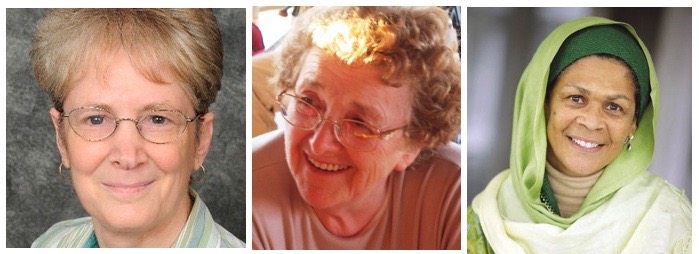
Feminism and Faith by Judith Plaskow, Rosemary Radford Ruether, and amina wadud

Foreword Image.001 (1)“Feminism saved my faith” is the concluding phrase of one of the writers in Faithfully Feminist, and though not everyone would say it that way, most of these women have found feminism and faith vibrantly interrelated. The contributors to this anthology articulate a range of reasons that feminists might choose to remain within a patriarchal religious tradition. They also remind us that women reconcile their faith and feminist identities in diverse ways. This volume testifies to the dynamism within the religious communities of Judaism, Christianity, and Islam in the United States, and to their internal diversity. This diversity allows for the contributors to engage in a process of their own development as feminists of faith that interacts with similar processes of development going on in their religious communities.

The overriding common bond for these women of faith is the shared conviction that the conflict between religion and feminism is real— even when it is generated by other people’s expectations that those two identities are separate and irreconcilable. Once each woman arrived at a place where she no longer felt an imperative to abide by an either/or dichotomy, she was able to define the terms of her religion and feminism for herself and to own both identities as significant.

Multiply the individual accounts in this volume by tens of thousands, and the effect of these women’s decisions and the concerted actions for change that have flowed from them has been enormous. For example, feminism has profoundly altered American Judaism in the last forty-plus years. Women are ordained in all branches of liberal Judaism and, in all but name, in modern Orthodoxy. New denominational prayer books written in English use inclusive language and incorporate writings by women. Feminists have written Torah commentaries, designed rituals for important turning points in women’s lives, and created new scholarship on women that contributes to a fuller history of the Jewish people.

Likewise, Christianity has been significantly impacted by the work of feminist theology. While some branches continue to refuse leadership roles to women, many others have acknowledged that every person embodies the spirit of Christ and have embraced the ordination of women. In 2006 the Episcopalian Church ordained its first woman bishop, the highest office in the church. Inclusive language has found its way into the prayers and rituals of many churches and feminist commentaries have shifted thinking on scriptural interpretations. Dialogue within and across branches of Christianity are expanding borders, and movements like Woman Church and online feminist spaces have created opportunities for women to claim agency and participate in roles that have been traditionally withheld.

In the long road to Islamic feminism, women have sometimes lacked agency to define either Islam or feminism. Traditional definitions of these words which operate as a constraint on work within Islam towards justice, equality and dignity; feminism was connected to Western imperialism and invasion into Muslim-majority nation states, and centuries of patriarchal control and interpretation stifled women’s efforts to claim Islam for themselves. This is changing, aided by campaigns such as the 2009 launching of the Musawah movement for equality and justice in Muslim family law. A new freedom is emerging that allows Muslim women the dignity and honor of defining Islam and feminism for themselves—no matter how little they might know of global discourses and historical traditions. All that was necessary was to, identify as a believer and expect a life of justice within that belief. Islam has also witnessed women-led prayers and a move toward inclusive prayer spaces.

The profound changes feminists have inspired and worked for do not mean that all problems have been solved and that women’s subordination is a thing of the past; there is plenty of work for a new generation. The difficulties with overcoming the glass ceiling and balancing work and life that women within the larger society face also bedevil women in all three religious communities. Panels, boards, and publications often exclude women’s voices completely or have only token female participation. Ordained women in Judaism are paid less than their male counterparts and rarely become senior rabbis in large or prestigious congregations. If women “choose” to serve smaller synagogues —the explanation often tendered to explain these gaps—that is partly because the expectations surrounding the rabbinate have not kept pace with its changing demographic, and women who want to combine rabbinic work with raising a family face considerable obstacles. Christian ordained women face similar obstacles within the priesthood and continue to be denied leadership roles in some branches, including Catholicism and Mormonism. Similarly, Muslim women are often excluded from panels at religious conferences and are underrepresented on the boards of religious institutions. The idea of women leading Muslim prayers remains controversial. And too often, discussions about women’s role in Islam still revolve around the issue of hijab, or covering.

The challenge for feminists today is passing on feminist insights and gains to the next generation. Is women’s history being incorporated into elementary and high school texts, or are students being taught the same parade of male names and faces? More particularly for Jews, Christians, and Muslims, when a girl or woman wants to mark some nontraditional ritual occasion, is it clear where to turn for resources? Do most Jews, Christians, and Muslims even know that it is possible to create new rituals that feel deeply meaningful and religiously authentic?

Finally, when teachers—and parents—talk about God, how is God imagined? Are children still growing up thinking about God as a distant male figure, or are they offered a range of images, and emboldened to create their own? Are children being encouraged to talk about and challenge passages in and interpretations of the Torah, Bible, and Qur’an that are misogynist or otherwise unethical? Are they developing critical tools that will allow them to engage with and transform difficult parts of tradition?

The next generation of feminists should consider a move beyond rhetoric and terminology towards substance and personal affirmation. Identifying as feminists of faith helps forge global alliances towards meaningful dialogue across difference—even the differences within. It is only when these deeper levels of change are addressed that the question, “Why stay?” will cease to be relevant.

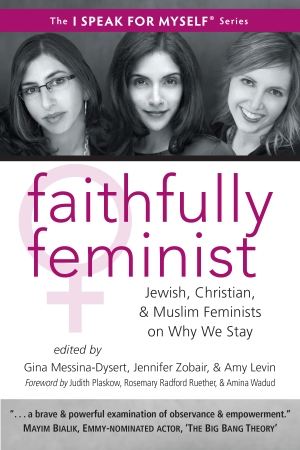
FF_front-cover_FINALThis essay is the Foreword for Faithfully Feminist: Jewish, Christian, and Muslim Feminists on Why We Stay edited by Gina Messina-Dysert, Jennifer Zobair, and Amy Levin.  

For more on Faithfully Feministclick here.

Join the conversation on Twitter using the hashtags #FaithfullyFeminist and #WhyIStay.

Related Articles:

9 Badass Feminists of Faith You Should Know

Mayim Bialik Endorses Faithfully Feminist

Why We Stay

Judith Plaskow is Professor Emerita of Religious Studies at Manhattan College and a Jewish feminist theologian. Co-founder and co-editor of the Journal of Feminist Studies in Religionshe is co-editor of Womanspirit Rising and Weaving the Visions and author of Standing Again at Sinai: Judaism from a Feminist Perspective and The Coming of Lilith: Essays on Feminism, Judaism, and Sexual Ethics 1972-2003.

Rosemary Radford Ruether, Ph.D. is Professor of Feminist Theology at Claremont Graduate University and Claremont School of Theology.  She is also the Carpenter Emerita Professor of Feminist Theology at Pacific School of Religion and the GTU, as well as the Georgia Harkness Emerita Professor of Applied Theology at Garrett Evangelical Theological Seminary. Rosemary has enjoyed a long and distinguished career as a scholar, teacher, and activist in the Roman Catholic Church, and is well known as a groundbreaking figure in Christian feminist theology.  Ruether is the author of multiple articles and books including Sexism and God-TalkGaia and GodWomen Healing Earth and The Wrath of Jonah: The Crisis of Religious Nationalism in the Israeli-Palestinian Conflict. Her most recent books include Catholic Does Not Equal the Vatican: A Vision for Progressive Catholicism(2008), Many Forms of Madness: A Family’s Struggle with Mental Illness(2010), and Women and Redemption: A Theological History, 2nd ed.(2011).

amina wadud is Professor Emerita of Islamic Studies, now traveling the world over seeking answers to the questions that move many of us through our lives.  Author of Qur’an and Woman: Rereading the Sacred Text from a Woman’s Perspective and Inside the Gender Jihad, she will blog on her life journey and anything that moves her about Islam, gender, and justice, especially as these intersect with the rest of the universe.

Experiencing Divinity in the World by Carol P. Christ

carol mitzi sarahAs I work on revisions of the new book, Goddess and God in the Worldthat Judith Plaskow and I are writing, I am thinking again about John Cobb’s notion of the “two ultimates” as two different ways of thinking about divinity. Cobb suggested that religions have defined the nature of ultimate reality as personal and as impersonal, as God and as the ground of being. The ground of being is the impersonal ultimate: the metaphysical principles that structure all of life, principles that he described as creativity or the creative process.

Judith describes God as the impersonal creative process and views personal language for divinity as metaphoric or symbolic. I define Goddess as personal, yet also view the impersonal ultimate, the creative process, as sacred. For me, this raises the question of the relationship between Goddess and the creative process.

In Cobb’s view, the two ultimates are co-eternal: the personal God did not “create” the creative process, nor was the personal God “created” by the creative process. Rather, for Cobb, God as the personal ultimate, like all other individuals, participates in the creative process. What then is the creative process? Although the term “creativity” has multiple meanings, in process philosophy it has a specific one.

Whitehead’s description of the creative process is rooted in the insight of modern science that the most basic components of our universe are particles of atoms that defy being categorized as either matter or energy, but seem to move and change, depending on their relationships. It is from the relationships of these tiny individuals that the evolutionary process of our universe began. This insight led Whitehead to recognize that the nature of reality (or being) is not fixed and static (as Western philosophers before him had concluded) but is always moving, changing, or “in process.” Whitehead’s understanding of the creative process is summed up in his much-quoted phrase, “the many become one, and are increased by one.”

The creative moment in the creative process (which is in fact every moment in the life of an individual) is the moment when the individual (whether particle of an atom, cell, animal, human, or divinity) in an act of creative freedom unifies the world (the many) into a new synthesis (the one): this new synthesis adds a new fact to the world (the many is increased by one). This is an abstract description of the creative process in its most basic form. In fact, however, we do not experience the world in the abstract, but in the concrete.

In this moment I (Carol) remember my past (many different Carols situated in many different worlds and some of the books I have read) as I shape this sentence (with my hands on my computer acting in concert with the feelings of my body and the thoughts that are flowing in my mind) and unite myself and my world in a new synthesis (which is this sentence). As I do so, I add a new fact to the world (the many are increased by one), a sentence that may be read by others in the future, therefore influencing their lives.

The reader who reads my words (you) reflects on them in relation to her or his memory (your memories of your past selves in your past) and asks if what I am saying makes sense: in the moment that she or he (you) decides if it does or it doesn’t, a new fact is added to the world (the many are increased by one), an opinion that in turn may be expressed to someone else (the many is again increased by one) who in turn responds to it (the many is increased by one more).

Though this description of the creative process focuses on mental actions, our mental processes are not divorced from our bodies and feelings, and the relations of mind, body and feeling are complex. In some creative moments, feelings are primary, while in others the body leads. This second richer description of the creative process is still an abstraction. We do not generally experience life as a series of moments but as a flow in which one moment is indistinguishable from the others; nonetheless, we can recognize that our lives are made up of a series of moments in which we along with others create the world anew.

Sometimes we take a longer and broader view of the creative process, recognizing patterns and cycles within the world that we share with other than human life. Traditional peoples, for example, often speak of or invoke the creative processes of birth, death, and regeneration that are the basis of life on this earth. This is also an important way of describing the ground of being because it situates human creativity within the creativity of the web of life. In our time we might also speak about the evolution of life. Taking a long view, we experience the sacrality of the web of life.

I experience—feel and sense—the personal ultimate, the presence of Goddess as intelligent love in my body, mind, and spirit and in all bodies, minds, and spirits, as I go about my everyday life. She is always there: feeling the love and joy I feel; supporting and understanding me when things are difficult; inspiring me to share the grace of life with everyone and everything. I also feel the power of the impersonal ultimate, the creative process that supports the creativity or freedom of all individuals who interact with each other in the web of life. For me the two ultimates—Goddess and the web of life—are both real.

Though the two ultimates are separate in the abstract, in the concrete experience of those of us who affirm a personal divinity, they are intertwined because the personal divinity is experienced through the creative process that is the basis of life. Thus, at one and the same time, I experience myself and divinity within me, other individuals and the divinity with in them, the creative process and the divinity within it.

I celebrate the creative process and its fruits, the powers of birth, death, and regeneration and the evolutionary process as a whole, as the ground of all being as well as the Goddess I experience as a personal, intelligent, loving, compassionate presence who cares about me, all other individuals in the world.

Carol leads the life-transforming Goddess Pilgrimage to Crete (facebook and twitter).  Carol’s books include She Who Changes and and Rebirth of the Goddess; with Judith Plaskow, the widely-used anthologies Womanspirit Rising and Weaving the Visions; and forthcoming in 2016, Goddess and God in the World: Conversations in Embodied Theology.

Gender, Friendship, Collaboration, and Unacknowledged Authorship by Carol P. Christ

Carol in Crete croppedIn recent weeks Judith Plaskow and I have been revising the manuscript of our new book Goddess and God in the World in preparation for sending it to the publisher. Yes, we have a publisher. We signed a contract with Fortress Press a short time ago. The book should be out in 2016.

We have been hard—and I mean very hard—at work revising the four chapters in the book that are jointly written. The versions have been going back and forth and forth and back as we revision what we want to say and revise each other’s revisions of the drafts we have. We both want the final manuscript to say things just right and it is very hard not to make one more set of (alleged) improvements.

In the process we have realized that while we often disagree on words and wording, we have come to think alike on a wide variety of issues to the point that it becomes hard to say who had the ideas first. In addition we have both become so familiar with each other’s positions that we can each easily articulate both sides of our dialogue on the issues on which we disagree.

All of this has gotten me to thinking again about authorship and co-authorship and original and shared ideas. This train of thought led me back to the subject of Judith’s and my first essay together originally titled “Against My Wife” but published as “For the Advancement of My Career: A Form Critical Study in the Art of Acknowledgement.”  We discussed 5 formulaic tropes used in acknowledgements to wives in academic books, ending with “the wife as unacknowledged co-author.” Continue reading “Gender, Friendship, Collaboration, and Unacknowledged Authorship by Carol P. Christ”

Good Theology is Feminist Theology by Carol P. Christ

carol christJudith Plaskow and I are just now completing the draft of the manuscript of the book we have been working on for the past 2 ½ years. It has a new title: Two Views of Goddess and God for Our Time.* I have been thinking of little else for the past few weeks. An editor who is considering our book said that she was hoping we could address our book to an audience larger than the feminist theology community. Thinking about this, a light dawned: if feminist theology is right that traditional theology denies the full humanity of women, then good theology must be feminist theology. Our work is not tangential to the theological mainstream, but is at its center.

We have revised the Introduction and Conclusion to the book with the assumption that our work should appeal not just to other feminists, but to a wide range of intelligent readers and thinkers. The fact that we were asked to participate in a dialogue about the nature of God in Tikkun magazine’s Summer 2014 inspires us to hope that we are right that feminist theology is becoming part of the progressive theological mainstream.

We began our new book because – though we agree about many things – we disagree about God and Goddess. After working together for decades with shared commitments to feminism, justice, the environment, and the flourishing of life, it was a bit of a shock to come face to face with our differences on such a major theological issue as the nature of divinity. We began our discussion with a shared critique of the God of Biblical traditions as a dominating male other. We agreed that this God has justified not only male domination of women, but other forms of domination as well, including myriad forms of injustice and war. We questioned the theological doctrine of divine omnipotence in light of the holocaust, the on-going domination of one half of the human race, and other oppressions including slavery, colonialism, and war.

But as we articulated our own views of divinity in light of this critique, our views diverged: Judith concluded that God is an impersonal power of creativity that is the ground of all being and becoming, including all good and all evil. Carol understands Goddess as the intelligent embodied love that is the ground of all being and becoming, a personal presence who cares about the world and all individuals it, but who does not have the power to intervene with a mighty arm to set things straight.

We both can give reasons for our views, and in the course of our theological discussion in our book, we give many. Our different views of Goddess and God are significant both theologically and personally. Is God or Goddess good? Or does the divine power include both good and evil? Does Goddess or God care about the fate of the world and our individual lives? Or are love, care, and understanding qualities that are not appropriately attributed to divinity? Is there someone listening to us when we worship, pray, or meditate? Or is addressing Goddess or God a metaphoric way of speaking that inspires feeling in individuals and communities but not in a divine individual? Is the notion that Goddess is love likely to inspire us to love the world more deeply and to promote its flourishing? Or does the notion that God includes both good and evil remind us more clearly of our own capacities to do both?

The fact that we could not agree about the nature of Goddess or God despite our many attempts to persuade each other with rational arguments, led us to conclude that the philosophical, theological, and moral reasons we give in justification of our views are only part of the story. All of these reasons are situated in our individual bodies and in communities and histories. We do not believe there is any simple link between experience and theological views. On the other hand, our experiences form the matrix from which we all begin to think theologically. As we develop our theological views, we constantly test them against our experiences, asking if they ring true, if they help us make sense of our personal, communal, and social lives.

In the first chapters of our book Judith and I locate our theologies in the contexts of our lives. We not only articulate our views of Goddess and God, but also situate them in community. Judith is committed the feminist transformation of Judaism, while I am one of the early voices of the feminist Goddess movement. In the concluding chapters we probe and query each other’s views–from experiential, rational, and moral perspectives. We are hoping to model the kind of feminist dialogue we would like to see more of—one that crosses religious boundaries and is not afraid to probe the differences in standpoints and theological views.

We also hope that our book will inspire a lively feminist–and wider–dialogue about the nature of divinity—something that has been oddly missing heretofore in feminist theology. Engaging in a thoroughly open and honest theological debate is not always easy—even among friends. But we can both testify that doing so has not only illuminated important issues in feminist theology, but also has strengthened our friendship.

*Much this essay is adapted from a draft of the book.

Carol P. Christ is looking forward to the fall Goddess Pilgrimage to Crete which she leads through Ariadne Institute.   Space available.  Carol can be heard in a recent interviews on Voices of the Sacred Feminine, Goddess Alive Radio, and Voices of Women.  Carol is a founding voice in feminism and religion and Goddess spirituality. Her books include She Who Changes and Rebirth of the Goddess and with Judith Plaskow, the widely-used anthologies Womanspirit Rising and Weaving the Visions.  Follow Carol on GoddessCrete on Twitter.