I recently completed a chapter for a book on Latinx theologies; it’s the second edition of the Wiley-Blackwell Companion to Latino/a Theology, edited by Orlando O. Espín, but this time with the slightly changed title of Companion to Latinoax Theology—aiming to be more inclusive in its umbrella term. The project has 35 contributors and covers everything from interreligious dialogue and care for creation, to race, racism and latinoax cultures, as well as chapters on such subjects as Christology, the bible, and ecclesiology. My particular chapter was about the intersection of gender, feminisms, and Latinoax theologies—not surprising. But what I loved in the process was a particular emphasis that emerged—decoloniality, like a thread woven throughout the chapter as it evolved; and this I now see as a necessity for Christian theologies. Let me explain.
For every American concerned with Civil Rights this indeed is a sad day. It means states and municipalities—particularly those in the former Confederacy—will in the days following the decision be introducing new legislation which will have the effect of disenfranchising black voters. Those of us who consider the right to vote fundamental in a democracy must rise up, with time, with money, and if necessary with our bodies in peaceful protest.
Tomorrow is a special day for me. It is Juneteenth. On June 19, 1865, news finally reached Galveston, Texas that slavery had been abolished. This was of course two and a half years after Lincoln issued the Emancipation Proclamation. While the actual impact of the emancipation for the enslaved remains a source of historical discussion if not debate, the fact of the matter is that the proclamation of emancipation and the reality of freedom for black women and men did not necessarily coincide. To be sure, for a variety of reasons, the Emancipation Proclamation did not have an immediate impact on the daily lives of enslaved women, men and children. While the “official” historical records marks January 1, 1863 as a day of emancipation, the historical record for the descendants of enslaved men and women marks June 19, 1865 as the day of freedom. For, it was on this day that the last slaves were free
Following the murders of Trayvon Martin and Tamir Rice, Kelly Brown Douglas released her book, Stand Your Ground: Black Bodies and the Justice of God. In this critical work, she details the embedding of structural violence within the doctrine of American Exceptionalism and the deep rooted racial injustice that our nation was founded upon.
Over the last several months, our world has changed. We’ve witnessed great tragedy and there is so much to grieve. COVID-19 intruded upon our lives abruptly forcing the realization of our misplaced priorities. However, systemic racism has always been here, tightly woven into the fabric of our society; yet privileged voices have failed to answer the call for justice.
As so many risk their health and safety to march for racial justice; to exclaim that Black Lives Matter and that George Floyd’s life was indeed sacred (as was Raychard Brooks, Breonna Taylor, Freddie Gray, Sandra Bland, Philandro Castile, Alton Sterling, Eric Garner…#SayTheirNames), we must consider our own responsibility in perpetuating oppressive structures that condone the trend of public lynchings.
Following the murders of Trayvon Martin and Tamir Rice, Kelly Brown Douglas released her book, Stand Your Ground: Black Bodies and the Justice of God. In this critical work, she details the embedding of structural violence within the doctrine of American Exceptionalism and the deep rooted racial injustice that our nation was founded upon. She explains it was not a book that she wanted to write; rather, as a mother of an African American son, it is a book she was compelled to write. In doing so, Kelly has laid bare the sin of our nation. Five years later, her witness continues to demand our attention.
I reached out to Kelly and asked if she would be willing to talk with me about her book and she graciously agreed. Thus, for this post, I am sharing the wisdom of Kelly Brown Douglas, vlog style, knowing that, in this moment, it is her words that we all need to hear.
Gina Messina, Ph.D. is an American feminist scholar, Catholic theologian, activist, and mom. She serves as Associate Professor and Department Chair of Religious Studies at Ursuline College and is co-founder of FeminismAndReligion.com. She has written for the Huffington Post and is author or editor of five books including Women Religion Revolution. Messina is a widely sought after speaker and has presented across the US at universities, organizations, conferences and on national platforms including appearances on MSNBC, Tavis Smiley, NPR and the TEDx stage. She has also spoken at the Commission on the Status of Women at the United Nations to discuss matters impacting the lives of women around the globe. Messina is active in movements to end violence against women and explores opportunities for spiritual healing. Connect with her on Twitter @GMessinaPhD, Instagram: @GinaMessinaPhD, Facebook, and her website ginamessina.com.
In a recent post I wrote about finding God in music. I confess, I cannot remember the last time I set foot in a church. As a woman, I continually grapple with the foundational messages of Jesus and Catholic Social Teaching and the disconnect with the power structures that seek to control the ways we love and find justice. I long to participate in the culture I grew up in, but cannot support the weaponization of the tradition.
Lately, I’ve come to realize that the messages I connect to I find in music. There are particular songs that offer me the guidance, philosophy, and ideas around meaning and purpose that I resonate with. One of those is “Where’s the Love?” by the Black Eyed Peas.
I’ve been listening to it on repeat lately because it is the sermon I need to hear; it speaks to me and even though it was recorded quite a while ago, it is still relevant. I think it is fair to say that in our current socio-political culture, people are “acting like they got no mamas.”And by the way, I include myself in that statement. Like anyone, I sometimes get so caught up in believing that my way is the only way, I forget to listen to what others have to say.
We are in the midst of a political civil war and are so busy yelling past each other, we’ve forgotten how critical unity is to shaping a healthy government that serves its purpose – caring for the people. Continue reading “Where’s the Love by Gina Messina”
It is in our hearts –one’s sense of superiority exists within. We are all and each capable of hate and bigotry.
It is considered the appropriate and necessary response to say that there is no room for it “here” – that we will not tolerate, in this case, white supremacy – here. Except here is exactly where it exists; here in our country, in our cities, in our communities, laws, structures, churches, homes, hearts and mind. The thread of a people’s sense of supremacy (power to dominate or defeat) has been woven into the fabric of this colonialist nation from the very beginning of what has come to be known as the United States of America. Continue reading “On the Events of Charlottesville, VA by Xochitl Alvizo”
I have been struck in this new year by the reactions to the recently released movie Selma. There has been a palpable recognition by those of who have seen it, that “the more things change, the more they stay the same.” Many have wondered if they are watching about events some 50 years ago, or events some five months ago in Ferguson. The question is why do we remain trapped in this same cycle of sin, where we are alienated from the god who is freedom and thus alienated from our own humanity.
While the answer to this question is complex, one of the reasons we remain trapped in this cycle of sin is because of the way we deny the past and dismiss the future. I have no doubt that until we hold ourselves morally accountable to our past and dare to take prophetic responsibility for our future, then our present realities will continue to be defined by the worst of who we are and not the best of who god calls us to be. Continue reading “Moral Accountability, Prophetic Responsibility, and Selma by Kelly Brown Douglas”
In my church tradition, we have just entered the 3rd week of Advent. In today’s blog I share just a brief excerpt from the sermon which I preached on Sunday. I hope it at least inspires reflection on where we go from here as a nation, as a people and our responsibility in moving forward. I preached:
On this 3rd Sunday of Advent the stories and testimonies of four women have in many ways pricked the collective consciousness if not the conscious of our nation. These women, mothers all—are names that we sadly have become all too familiar with. They are Sybrina Fulton, the mother of Trayvon , Leslie McFadden, the mother of Michael, Gwen Carr, the mother of Eric and added to the list most recently Samira Rice, the mother of 12 year old Tamir. To call the names of these women and their sons, is to be confronted with the unsettling if not frightening times in which we now live and thus to be reminded of the ways in which our world is broken, the ways indeed in which the sacredness of our very humanity has been betrayed by our separation one from one another. Yet, it is into this unsettled time of brokenness that this season of Advent comes. Continue reading “To Be an Advent People by Kelly Brown Douglas”
Just as crises can reveal the strengths of our infrastructure, so too can they reveal the weaknesses. At the same time, a crisis can disclose the enormity as well as the limitations of our humanity. Even as the current Ebola crisis may have shown forth the strong points of the U.S. healthcare infrastructure, it clearly exposed some of its vulnerabilities.
The same can be said in relation to our humanity. From the time that Mr. Thomas Eric Duncan was diagnosed with the Ebola virus, cries to close “the borders” to those traveling from West Africa began. As two of Mr. Duncan’s caretakers contracted the virus, the cries to close “the borders” between the “United States” and West Africa became shrill.
The futility and impracticality of such a measure seems to make little difference to those who call for closed borders. At stake, they say, is the health and wellbeing of our U.S. citizenry. Even when marked by sincere concern, I find the call to close U.S. borders a troubling indication of the limitations of our humanity. A story in the life of Jesus makes this plain.
In the social-religious context of Jesus’ day, there was a long history of conflict between Jews and Samaritans. Jews had constructed images of Samaritans as an indecent and ritually impure people. Samaritan women were considered the most impure of them all. Multiple narratives of power intersected on the bodies of Samaritan women—ethnic, gender, and cultural. Put simply, they represented at once an inferior “race,” gender and religion. Thus, the social spaces of Jewish men and Samaritan women were to remain separate. Jewish men in particular had to protect themselves from the contamination of Samaritan women. Generally speaking, Samaritans were a feared and thus demonized people.
By most accounts, Jesus did not have to pass through Samaria on his journey from Judea to Galilee. This was considered a circuitous route. It was also considered a dangerous route given the antagonism between Jews and Samaritans. Again, Samaritans were considered dangerous enemies to the Jews, and most certainly ritually impure. However, Jesus crossed the borders into Samaritan space anyway. By going into Samaria, Jesus placed himself in the midst of those most feared, if not demonized, in the Jewish world. He ignored all the prevailing animus directed toward the Samaritans and dismissed notions of them as an unclean and dangerous people. He flagrantly rejected the social-religious hysteria about Samaritans by going out of his way to enter their space. He refused to let the “madness” of his times to blind him to the divine humanity of the Samaritans, or to overwhelm his own divine humanity. He, therefore, crossed the constructed human borders to bring healing and salvation to the Samaritan woman. This story is of course only representative of a ministry that consistently crossed borders of fear and stereotypes to affirm the humanity of those who were lepers in Jesus’ day. Simply put, Jesus’ compassion was no respecter of borders. Continue reading “Thinking Out Loud About Protecting Our Borders and the Ebola Crisis by Kelly Brown Douglas”
In these last several weeks, the horror that one out of four women will encounter domestic violence- sometimes referred to as “intimate partner” violence- in their life time has come to the national forefront. Indeed, women are more likely than men to be killed by their “intimate partner:” one in three women who is a victim of homicide is killed by an intimate partner. While sixty percent of domestic violence incidents occur in the home, this is not where domestic violence begins. It is the perhaps inevitable result of a culture of violence against women. It is the violence that violence creates.
This is a culture of violence in which women’s work continues to be grossly undervalued. One third of all women are living in or near poverty, what has been described as “the brink of poverty.” Two-thirds of minimum wage workers are women. The average white woman is paid 77 cents for every dollar her male counterpart man makes; for African American women it is 64 cents and Hispanic women 55 cents for every dollar made by white men. Women devote more than double the hours as men to “unpaid interactive children care.” Women over 65 “are twice as likely as men of the same age” to live in poverty—primarily because they are full or part-time caregivers. A 2013 “State of the World’s Mothers Report” ranked the United States 30th of the 30 best countries in the world to be a mother, based on indicators such as economic status, political opportunities and universal health care. And what this report makes most clear is that the status of children reflects the status of their mothers. This means that at least 28 million children are living in poverty in the United States.
As for physical violence, one in four college aged women experiences an attemptted or actual date rape. Forty-two percent of women who have been date raped consider suicide. In the Shriver Report, Sister Joan Chittister suggests that in the United States, “rapes in military and rapes on college campuses go unpunished because ‘boys will be boys,’ and winning wars and football games are more important than protecting the integrity of the women who are victims of rape.” These statistics represent nothing less than systemic and cultural violence against women and their children.[i] And, such violence is a sin. Continue reading “Domestic Violence: The Sin that Sin Created by Kelly Brown Douglas”



 In a recent post I wrote about
 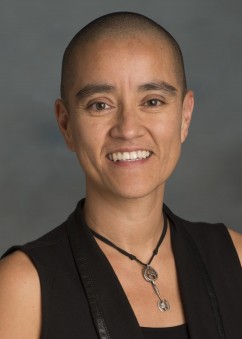 It is in our hearts –one’s sense of superiority exists within. We are all and each capable of hate and bigotry.
 I have been struck in this new year by the reactions to the recently released movie Selma. There has been a palpable recognition by those of who have seen it, that “the more things change, the more they stay the same.” Many have wondered if they are watching about events some 50 years ago, or events some five months ago in Ferguson. The question is why do we remain trapped in this same cycle of sin, where we are alienated from the god who is freedom and thus alienated from our own humanity.
 Just as crises can reveal the strengths of our infrastructure, so too can they reveal the weaknesses. At the same time, a crisis can disclose the enormity as well as the limitations of our humanity. Even as the current Ebola crisis may have shown forth the strong points of the U.S. healthcare infrastructure, it clearly exposed some of its vulnerabilities.
 Feminism and Religion