

‘Four thousand years ago, in the ancient Near East, women were poets, drummers, scholars, dancers, healers, prophets and keepers of sacred space.’ In The Hebrew Priestess (2015), Rabbi Jill Hammer argues that as the Israelite cult became more centralised, leadership roles were restricted to men and women’s spiritual leadership was gradually repressed. Yet, as Hammer and co-author Taya Shere demonstrate, ‘the remnants of the priestesshood remain for those who seek them out.’ Combining a close reading of biblical and rabbinic texts, alongside other contemporary sources and archaeological evidence, Hammer has identified thirteen models or netivot of feminine Jewish leadership, which she argues persisted, albeit in altered and marginalised forms, into the medieval, early modern and even modern periods. My own research supports these conclusions, suggesting that Hammer’s netivot framework provides a useful lens by which to better understand Jewish women’s traditions that, in a patriarchal culture, have often been marginalised.
Continue reading “Priestesses of the Shtetl? The Jewish Women Spiritual Leaders of Eastern Europe by Annabel Gottfried Cohen”Tag: Kohenet
Three Women Sit on a Stone: Images of Fate in a Jewish Incantation by Jill Hammer
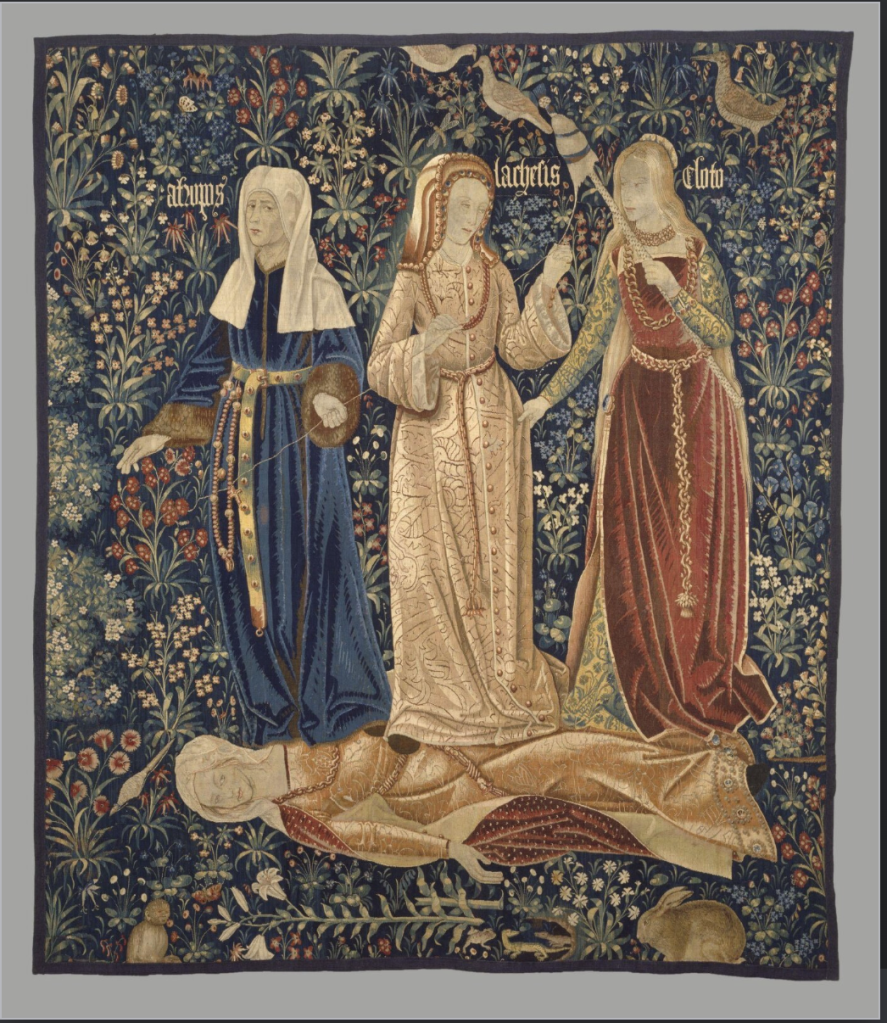
There is an old Yiddish incantation, documented from the 18th century forward, that features three mysterious women. It is a folk spell warding off the evil eye–the negative influence that may come either from demons or from the jealousy and spite of others (or both). Fear of the evil eye is the reason it was traditional not to compliment cute babies or talented people—because the evil eye might be attracted to such beauty or talent and cause harm. The evil eye, to give a personal example, is the reason my father, who was normally not a religious person, refused to allow my mother to shop for a crib until I was born, lest the evil eye notice they were going to have a baby and prepare some terrible fate for me.
Continue reading “Three Women Sit on a Stone: Images of Fate in a Jewish Incantation by Jill Hammer”The Problem of Jehosheba: Reading One Biblical Character in Two Different Feminist Ways by Jill Hammer

Tucked away in II Kings 11 is the story of a mother-daughter feud that is personal, political, and ultimately fatal. Jehu, a charismatic military commander, is anointed by Elisha as the next king of the northern kingdom of Israel. Jehu kills the previous king of Israel, Jehoram, and also Jehoram’s mother Jezebel (yes, that Jezebel—the famous/infamous queen). As part of his violent rise to power, Jehu also kills Ahaziah, king of the southern kingdom of Judah. Ahaziah’s death should mean that Athaliah (Atalya), who is queen mother of Judah as well as the daughter of Jezebel, cedes power to a new king and a new queen mother. Instead, according to the Book of Kings, Athaliah has the rest of the king’s sons and grandsons murdered, and seizes the throne for herself.
All seems lost for the Judean line, except that Jehosheba (Yehosheva), wife of the high priest Jehoiada and sister of the murdered King Ahaziah, saves one of Ahaziah’s sons, along with the child’s wetnurse, and hides them both in the Temple. Jehosehba keeps the boy, Joash, and his nurse in the Temple until he is six years old. At that time, Jehosheba’s husband, the high priest, anoints Joash king, stages a coup, and executes Athaliah as a usurper. Jehosheba’s action saves the Davidic line. The collection of Jewish legends known as Otzar Midrashim lists Jehosheba as one of the righteous women of the Jewish people.
Continue reading “The Problem of Jehosheba: Reading One Biblical Character in Two Different Feminist Ways by Jill Hammer”Was Sefer Yetzirah Written by a Woman? Jill Hammer
This year, I published a book called Return to the Place: The Magic, Meditation, and Mystery of Sefer Yetzirah (available from Ben Yehuda Press, benyehudapress.com). Sefer Yetzirah, or the Book of Creation, is an ancient Jewish mystical work (written in approximately the sixth century CE, though scholars offer dates from as early as the 1st century CE to as late as the 9th century). This brief, cryptic, poetic book describes the process by which God creates the universe. God engraves letters, which are also the elements and fundamental forms of being, into the cosmos. These engraved letters act like energetic channels between the Creator and the Creation, allowing creative intention to flow from the One to the Many. The book instructs the mystical practitioner to develop awareness of this creative process and seek to embody it, thus allowing energy to flow back from the Many to the One.
This flowing between One and Many is called retzo vashov, running and returning—the constant ebb and flow between unity and multiplicity. Sefer Yetzirah says of the elements that “God’s word in them is running and returning.” This means that the divine intention moves within creation, and the elements shape themselves in response to this intention. In Sefer Yetzirah, as in most Jewish texts, the Creator takes a male pronoun. However, the elements—water, air, and fire, since the book has a three-element system rather than the more common four elements— all have female pronouns. These three elements, often identified with the Hebrew letters Aleph, Mem, and Shin, are sometimes known within the text of the book as the three mothers. And, God’s breath or spirit, the ruach elohim chayyim or breath of the living God, which gives rise to all the other elements, also take female pronouns. Not only that, but Wisdom, the feminine entity who is the sum total of all the engraved pathways between God and the world, is also feminine. We can say with certainty that the text gives the feminine unusual primacy, compared with other Jewish texts of the time. We also don’t see in this text any of the misogyny that is common in ancient texts of this time period. Continue reading “Was Sefer Yetzirah Written by a Woman? Jill Hammer”
Jewish Hair, Witch Hair, and the Problem of Identity by Jill Hammer
 This is a time of increased vulnerability for many minority populations in the United States: people of color, immigrants, LGBT people, native peoples. The policies and rhetoric of the current administration have left all these groups exposed to hostility. Women are also feeling the pressure, as the gender split in voting in the past election suggests. And, Jews also are facing increased visibility. In addition to the murders in Pittsburgh, anti-Semitic incidents around the country have increased in the last few years. All this has me thinking about visibility, chosen and unchosen.
My father, an Ashkenazi Jew with curly black hair, green eyes and dark skin, came from an immigrant family that arrived here in the early 20th century from the region of Poland known as Galicia. His mother in particular valued assimilation into American identity, and prized blond hair as a sign of this identity– she in fact later dyed her black hair blond. His aunt had blond hair and it was considered a family coup. (There’s much to say here about developing an assumed American identity of whiteness, as well as the presumption of Christianity.) When I was a little girl, I had blond hair and blue eyes. My father used to call me his blond-haired, blue-eyed girl.
“No,” I would insist. “My hair is brown and my eyes are green.” Continue reading “Jewish Hair, Witch Hair, and the Problem of Identity by Jill Hammer”
Challenging Christian Feminists to Re-Imagine the Goddess by Carol P. Christ
 From the 1993 Re-Imagining Conference:
Our mother Sophia, we are women in your image:
With the hot blood of our wombs we give form to new life.
With the courage of our convictions we pour out our life blood for justice.
Sophia-God, Creator-God
let your milk and honey pour out,
showering us with your nourishment.
From my reflections on the Re-Imagining Conference presented at Hamline University on Novemeber 1, 2018:
One reason the creative re-imagining of God as female has not taken hold in churches and synagogues is fear of paganism and the Goddess. The creators of the Re-Imagining Sophia ritual took great care to guard against this charge by connecting it to Bible and tradition. Commenting on the reasons for the backlash against the Re-Imaging Conference, Sylvia Thorson-Smith stated:
One was the liturgical use of the biblical image of Sophia – but blown up as evidence of Goddess worship. Second was the milk and honey ritual – an ancient part of early Christianity, but attacked as a pagan substitute for communion.
While I understand her reasons for doing so, “the lady doth protest too much, methinks.” Continue reading “Challenging Christian Feminists to Re-Imagine the Goddess by Carol P. Christ”
The Hebrew Priestess: A Book Review by Joyce Zonana
 Weaver, Prophetess, Shrinekeeper, Witch; Maiden, Mother, Queen, Midwife; Wise-Woman, Mourning-Woman, Seeker, Lover, Fool . . . . Thirteen possibilities for the female self, thirteen aspects of the Goddess, thirteen archetypes for the Hebrew (or any other) Priestess . . . thirteen fact- and dream-filled chapters in Jill Hammer and Taya Shere’s thrilling—and much-needed—new book, The Hebrew Priestess: Ancient and New Visions of Jewish Women’s Spiritual Leadership.
Nearly fifty years ago, anthropologist Raphael Patai introduced readers to the Hebrew Goddess, documenting the influence of Near Eastern Goddess religions on the practices and beliefs of the ancient Israelites. Since then, feminist scholars of religion, along with poets and novelists, have offered brilliant new interpretations of Torah and Talmud, creating feminist midrash and liturgy that open the ancient patriarchal faith to modern (and perhaps also ancient) notions of female authority and autonomy. At the same time, the increasing presence of women rabbis has transformed the congregational, communal Jewish experience for many women and men.
But what we have not had is a shamanic, visionary form of Jewish practice—“earth-based, embodied, ecstatic, energetic” (9)—that integrates ancient and contemporary Goddess spirituality with Judaism: while we have had female rabbis, we have not had formally trained and recognized Hebrew Priestesses.


Enter Jill Hammer, who in the compelling Introduction to her book recounts with passion and precision her own meandering but steady journey to the Goddess and her establishment, with co-author Taya Shere, of the Kohenet Hebrew Priestess Institute, a school dedicated to ordaining contemporary Hebrew Priestesses, kohanot. “Kohenet,” although it does not appear in the Bible, is the ancient Hebrew word for “priestess.” Continue reading “The Hebrew Priestess: A Book Review by Joyce Zonana”
 Feminism and Religion