The Motomami Theology: “Segundo chingarte, lo primero Dios.”* Part II

*“God comes first. Fu*king you, a close second.”

In Part 1 of this post, I described my first encounters with Rosalía’s music and visual arts, which are controversial for many, but I find them wonderful. I mentioned how she integrated God, mainly Catholic references and images, into a story of love and suffering in El Mal Querer. But I finished emphasizing my surprise when I listened to the album Motomami, since she managed to combine reggaeton (sexual-indecent music) and her views of God.
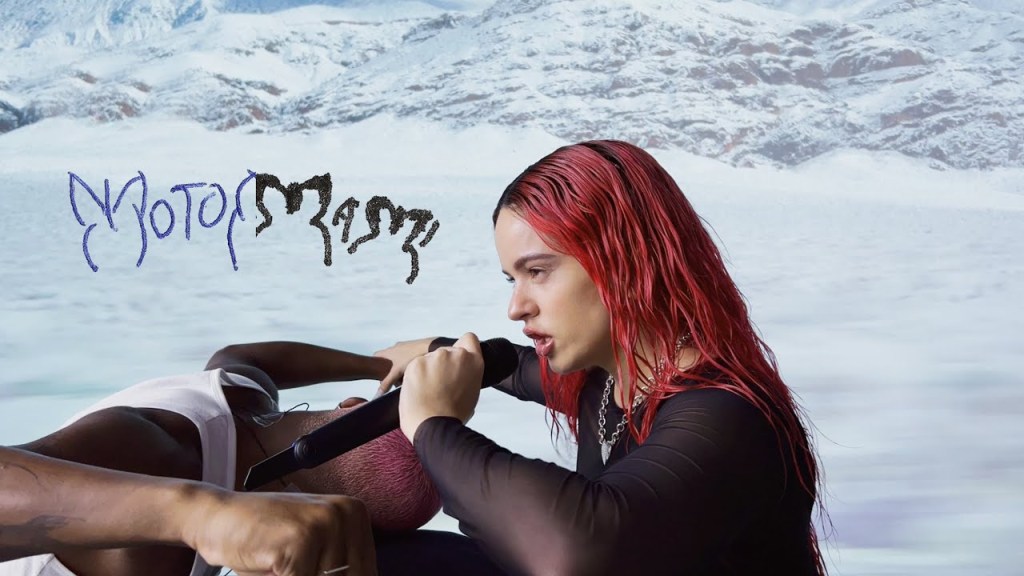
So, here is my attempt to describe Rosalía’s theology in Motomami. (Before I start, let me say: yes, I heard every song multiple times collecting references of God or the Christian tradition, so I hope you enjoy it.) Rosalía understands God as someone who controls our destinies amid grief and joy. In Como un G she says “It’s sad when you want something, but God has different plans for you” (“Qué pena cuando quieres algo pero Dios tiene otros planes pa’ ti”.) In Diablo, she says, “What God gives, God takes back” (Si Dios te lo da, te lo quitará), referring to her fans who first loved her but afterward became haters. God also protects us from an evil former partner when she says in Despecha‘ “May God forbid I go back to you” (“Que Dios me libre de Volver a tu la’o). God also is our help and supports our choices. Rosalía brings this concept talking about her identity as a woman, her freedom and autonomy in Saoko: “I know who I am, and I don’t forget where I’m going. I’m driving while God guides me. I am mine and I transform myself” (“Sé quién soy, y a dónde voy nunca se me olvida. Yo manejo, Dios me guía.)

Continue reading “The Motomami Theology: “Segundo chingarte, lo primero Dios.”* Part II”

The Motomami Theology: “Segundo chingarte, lo primero Dios.”* Part I

*“God comes first. Fuc*king you, a close second.”

I went to Rosalía’s promotional concert for the Motomami album in Boston a month ago. I knew some songs from her 2018 album El Mal Querer (Bad Love), a musical masterpiece. That album made Rosalía a visible star in the constellation of musicians and composers in Hispano-American mainstream music. The album has a particular story that Wikipedia explains very well:

The album was written by Rosalía and co-produced with El Guincho on an initial low budget as an independent artist. Presented as experimental and conceptual, revolving around a toxic relationship, the album was inspired by the anonymous 13th-century Occitan novel Flamenca. Therefore, every song on the album is conceived as a chapter of the book. It served as the singer’s baccalaureate project, graduating from Catalonia College of Music with honors. [Read more here]

In El Mal Querer, Rosalía mixed electronics, contemporary dances and rhythms, and traditional flamenco sounds and movements in a beautiful musical and visual collage. Some musically conservative audiences characterized the album as the “profanation” of traditional flamenco music, but there’s no doubt that Rosalía brought the genre back to life and made it mainstream again.

Continue reading “The Motomami Theology: “Segundo chingarte, lo primero Dios.”* Part I”

Can I get an “Amen” up in here? by Laura Montoya 

I am a great evangelist. I used to evangelize in Pentecostal settings until I was 22. Then, I left my church to evangelize about feminist issues to every woman that crossed my path. Rhetoric is a gift I received when I was a kid and that I inherited from my grandpa and my dad. But during the COVID lockdowns, it was hard to socialize, and my evangelization skills turned toward making my friends and family join the privileged fan base of Ru Paul’s Drag Race. One by one, I convinced my sister, cousins, neighbors, and best friends to watch the reality show, and they did with astonishing devotion. Every week, two or three of us gather in someone’s living room wearing masks to watch episode after episode after episode. Our debates about the queens in the show could last all night long. Who had the best performance? Did you like their lip-synching? “That elimination was so fair/unfair!” 

Continue reading “Can I get an “Amen” up in here? by Laura Montoya “

A Bombshell, Bogotá Style – Part 2 by Laura Montoya

The events of sexual harassment I shared with you in Part 1 of this post happened in my first paid-job experience. Just like Margo Robbie’s character in the movie Bombshell, my encounter with Mr. M. was like hitting the wall of the harsh world’s reality. It was a tough welcome  to the adult workplace. After my first experience of harassment, I thought that feeling uncomfortable and guilty due to a man’s behavior wouldn’t happen to me again; especially since my second job was in a Christian organization. Bombshell!

I grew up in a very conservative Christian family in the Pentecostal tradition. In my teenage years I was an active member and leader in a church in Bogotá’s downtown. After that, I was a student leader in a Christian group in my university for seven years. After leaving the first job, I was a very-VERY- Pentecostal girl in my twenties, ready to take on the world again! The main requirements for my new job with the Christian organization were to know the Pentecostal culture and to have experience leading groups in peace-building projects. I was proficient in both, so, hurray – welcome job number two into my life! But what I didn’t realize was that this job would require me to welcome this new boss to it too.

Continue reading “A Bombshell, Bogotá Style – Part 2 by Laura Montoya”

A Bombshell, Bogotá style – Part 1 by Laura Montoya

Last weekend I watched the 2019 movie Bombshell. I had not heard about it, and I ended up seeing it for the suggestion of Prime’s “you might enjoy this” algorithm. I had no idea about the story of Gretchen Carlson and Megyn Kelly’s legal battle for sexual harassment against Fox News’ master Roger Ailes. The movie was not very long, but it was intense. It portrayed really well the misogyny expected to be found in such a workplace led by a mighty, egotistic man like Roger Ailes.

Bombshell – 2019

A good part of the movie, we join Kayla Pospisil, Margot Robbie’s fictional character, in her quest to become a host in the news. So we go with her into Roger’s office and witness what an interview with that man was. It was about “loyalty” and intended to “prove” that she had what it took to earn a place in one of the most competitive work environments. **Content warning: description of workplace sexual harassment to follow** Obviously, it meant that she had to sleep with him because how else could a woman with a hot body prove she is competent? Immediately she was forced to show him her legs because legs sell good on T.V., and then we get to see her underwear because he was too turned on and couldn’t stop himself. **End Content Warning** Thanks to Robbie, we also feel the panic, surprise, and horror of a naïve girl trying to get a dream job in the real world.  

Continue reading “A Bombshell, Bogotá style – Part 1 by Laura Montoya”

¡La Vida es la Lucha! – Women in the Colombian Protests by Laura Montoya

*Trigger Warning – Reference and description of distressing violence against women at the hands of police*

Alison Melendez was 17 when she was sexually abused last week by a group of Colombian policemen. She was captured for allegedly being part of the protest groups in Popayán, a city in the south of my country Colombia, South America. The next day Alison was found dead. The official version states that she committed suicide. In the social networks, there is a video of four policemen carrying Alison to the detention center, each holding one of her extremities. One can hear Alison screaming, “Four were necessary to carry me? Four against one woman? Cowards!” The next day – before she was found dead – she posted on Instagram that she was not part of the protests that night. She was walking to a friend’s house when the police showed up. She started recording their actions, they saw her and went mad, so they captured her. When she resisted, four of them took her to the police station. In the post, Alison mentions how they groped her to the soul.” In the video, one can see how her pants came off while they were carrying her, and the policemen did not care. They just kept walking. The last time we see Alison in the video is inside the station. Then cameras were turned off.

*End Trigger Warning*

Alison is one of the 18 cases of sexual violence reported during the protests that started last April 28 in different cities of Colombia. In addition, there are 87 reports of violence and abusive behavior against women protesting. Alison’s case has been more visible, but it is easy to find several videos of police officers beating, harassing, and capturing women in the protests on social media. We have been witnessing this terrible violence full of indignation and impotence, despite protesting is our legitimate right as citizens. 

Continue reading “¡La Vida es la Lucha! – Women in the Colombian Protests by Laura Montoya”